After more than 20 years of reading nutrition research, Uwe Knop says his kitchen looks nothing like a laboratory. He may skip breakfast when he is not hungry, drink black coffee, and later choose chili, garlic, or coleslaw because he enjoys them and feels well afterward.
That relaxed approach grew from a question he hears repeatedly after lectures. “What am I supposed to eat now?” His answer is not another list of forbidden foods, but a three-part framework built around diversity, availability, and behavior.
Why one study is not enough
Nutrition headlines often turn one finding into a sweeping rule. A food is praised on Monday, questioned on Friday, and replaced by a new “must-eat” ingredient the following week. He argues that a single paper should be treated as one puzzle piece, not a final verdict.
The reason is easy to miss. An observational study can show that two things occur together, but it cannot prove that one caused the other.
Randomized trials are stronger for testing cause and effect, yet long-term diet studies face practical problems such as measuring what people really eat, keeping them on assigned diets, and following them for enough time.
The 3-V principle
The first V stands for diversity. The idea is eating a broad range of foods instead of letting every alarming headline push an entire food group off the plate. In his view, variety reduces the pressure placed on any one ingredient and the temptation to chase every food trend.
The second V is availability. What sits in the refrigerator, pantry, or fruit bowl is usually easier to eat than what must be bought and prepared from scratch. In a cross-sectional survey of 4,942 U.S. adults, seven of 11 home-environment features were associated with meeting fruit and vegetable intake targets.
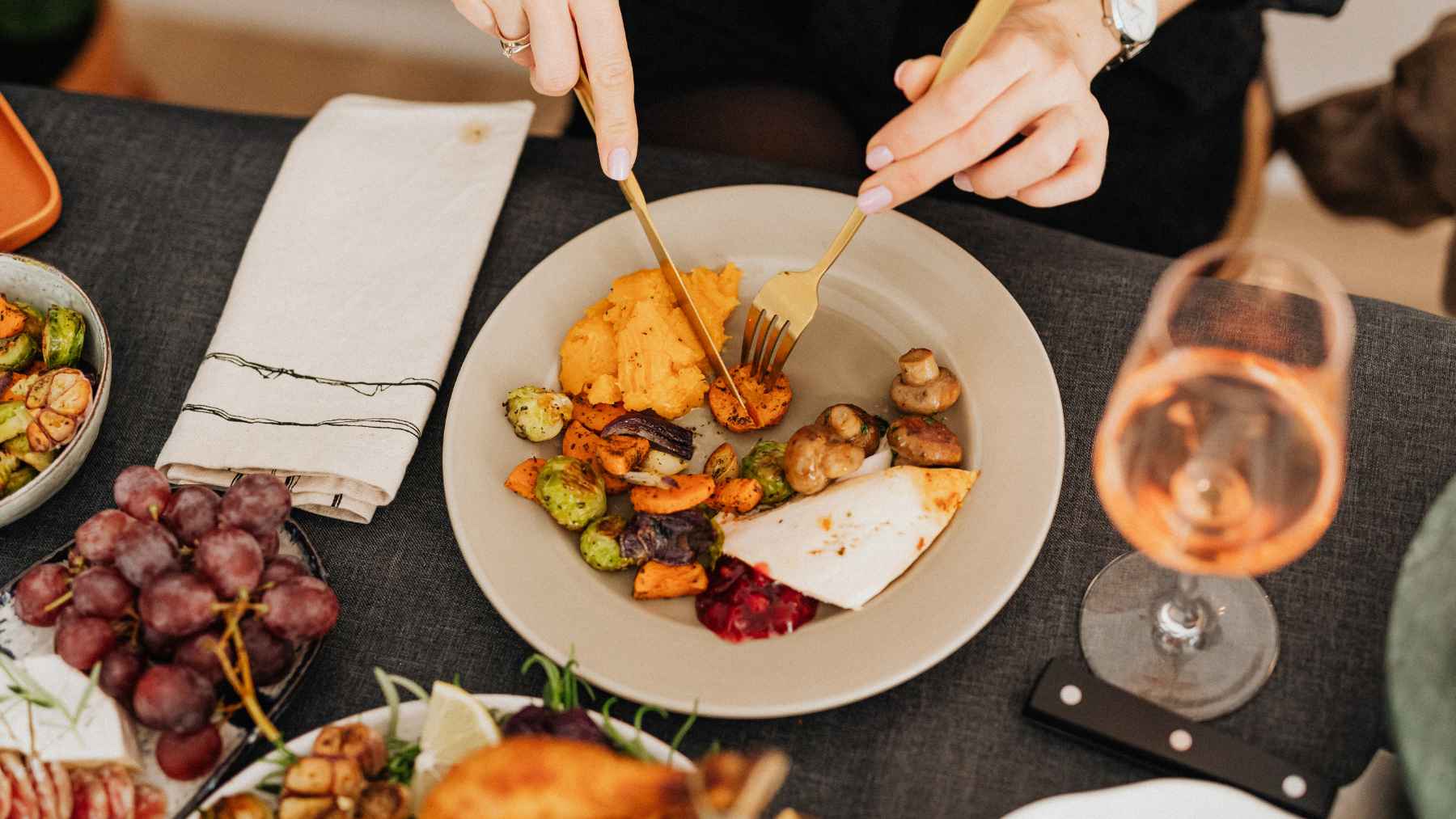
The third V is behavior. One perfect salad cannot cancel months of habits, just as one slice of cake does not define a person’s diet. What matters most is the pattern that repeats through busy workdays, family dinners, rushed mornings, and quiet weekends.
How it fits established guidance
The 3-V principle is a personal framework, not a replacement for nutrition science. Current U.S. dietary guidance also emphasizes overall eating habits and foods that are rich in nutrients, including vegetables, fruits, whole grains, protein foods, dairy, and healthy fats, while advising people to reduce highly processed options.
There is an important difference, though. Federal guidance describes a broad health-promoting pattern, while the 3-V approach focuses on making that pattern livable for an individual. A plan that ignores taste, budget, cooking time, culture, or family life may look flawless on paper and still collapse by Wednesday.
Why fixed rules feel easier
“Never eat after 6 p.m.” sounds reassuring because it removes the need to think. Paying attention to hunger, fullness, digestion, and well-being requires more observation and more honest judgment. That can feel messy, but real life is messy too.
He calls this approach “culinary body intelligence.” The idea is to combine scientific knowledge with personal feedback rather than obeying either one blindly.
It does not mean every craving is a medical instruction, and people with diagnosed conditions or prescribed diets still need individualized professional advice.

A market filled with fresh produce reflects the emphasis on food variety and long-term eating habits promoted by nutrition researcher Uwe Knop.
Three ways to begin
For one week, replace the forbidden-food list with an observation log. Note which meals left you comfortably full, energized, or satisfied, and which ones brought discomfort, unusual hunger, or a quick energy crash.
Before adopting a new rule, test it against your actual schedule. Does it work with your commute, grocery budget, family meals, and available cooking time? A rule that fights daily life usually loses.
Also, keep trying unfamiliar foods and dishes. Curiosity builds a wider menu, and a wider menu makes it easier to find nutritious options that you genuinely like. Diversity becomes a habit instead of a chore.
A filter for nutrition headlines
Before changing your diet because of one report, ask what kind of evidence produced the claim. Was it an observational association, a controlled intervention, or a broader review of several studies? The answer does not make the research worthless, but it changes how confidently the result should be applied.
Then ask two practical questions. Does the advice suit your body and routine, and would you still follow it after the headline disappears? Those checks can prevent a lot of unnecessary anxiety and keep one dramatic story from rewriting every meal.
The quieter conclusion
The message is less exciting than a miracle ingredient, which may be exactly why it is useful. Healthy eating depends to a large extent on repeated patterns, and access to affordable, nutritious food remains a major part of whether those patterns are possible in the first place.
More nutrition knowledge does not have to produce more control, guilt, or kitchen rules, and used carefully, it can produce better questions, steadier habits, and a little more calm around the dinner table.
The 3-V framework comes from an expert commentary rather than a clinical trial, so it should not be treated as a tested standalone diet.
The expert commentary was published by FOCUS Online.