Are you wide awake before breakfast, or do you only feel fully alive after sunset? A new Mediterranean chronodiet plan turns that everyday difference into a meal schedule, with six menus split between morning “larks” and evening “owls.”
The idea is not to reinvent the Mediterranean diet. It is to adjust timing. The plan offers three menus for early risers and three for nocturnal people, changing the size and rhythm of breakfast, lunch, snacks, and dinner rather than swapping healthy foods for gimmicks.
A diet with a clock
Chrononutrition is the study of how food timing interacts with the body’s internal clock. That clock helps manage sleep, hunger, body temperature, and how well the body uses blood sugar.
In practical terms, this means the same dinner may land differently at 6 p.m. than at 10 p.m.
Chenjuan Gu and colleagues at Johns Hopkins University tested those two dinner times in healthy adults and found that the later meal pushed digestion into the sleep period and was linked with higher nighttime glucose and lower fat burning.
What larks should eat
For larks, the plan puts more fuel in early. Breakfast is abundant and comprehensive, often built around Greek yogurt with oats, berries, and walnuts, or whole-grain toast with ricotta, honey, and seasonal fruit.
The logic is easy to understand. Morning people tend to get moving early, so the plan gives them slow carbohydrates, protein, fiber, and healthy fats before the day picks up. Lunch stays Mediterranean, with farro or brown rice, chickpeas, vegetables, chicken, tuna, or extra-virgin olive oil.
Dinner is lighter and earlier. Baked fish with grilled vegetables, turkey with salad, or an omelet with spinach is meant to feel like a soft landing, not a second lunch. Nobody sleeps well after a meal that sits like a rock.
What owls should eat
For owls, the day starts more gently. The plan suggests a lighter breakfast, such as Greek yogurt with banana and chia seeds, kefir with fruit, or a smoothie with milk, oats, and berries.
Lunch remains balanced but not heavy, with brown rice and chicken, quinoa and salmon, whole-grain pasta with chickpeas, or vegetables with olive oil. Then dinner becomes more complete but still digestible, such as salmon with spinach and potatoes, turkey with basmati rice, or scrambled eggs with zucchini and toast.
There is one guardrail. The plan advises keeping meals within about 12 hours, which may help prevent grazing late into the night.
In a randomized trial led by Humaira Jamshed at the University of Alabama at Birmingham, adults with obesity who ate earlier within an eight-hour window lost more weight over 14 weeks than those eating over 12 or more hours, though the authors said larger studies are needed for fat-loss questions.

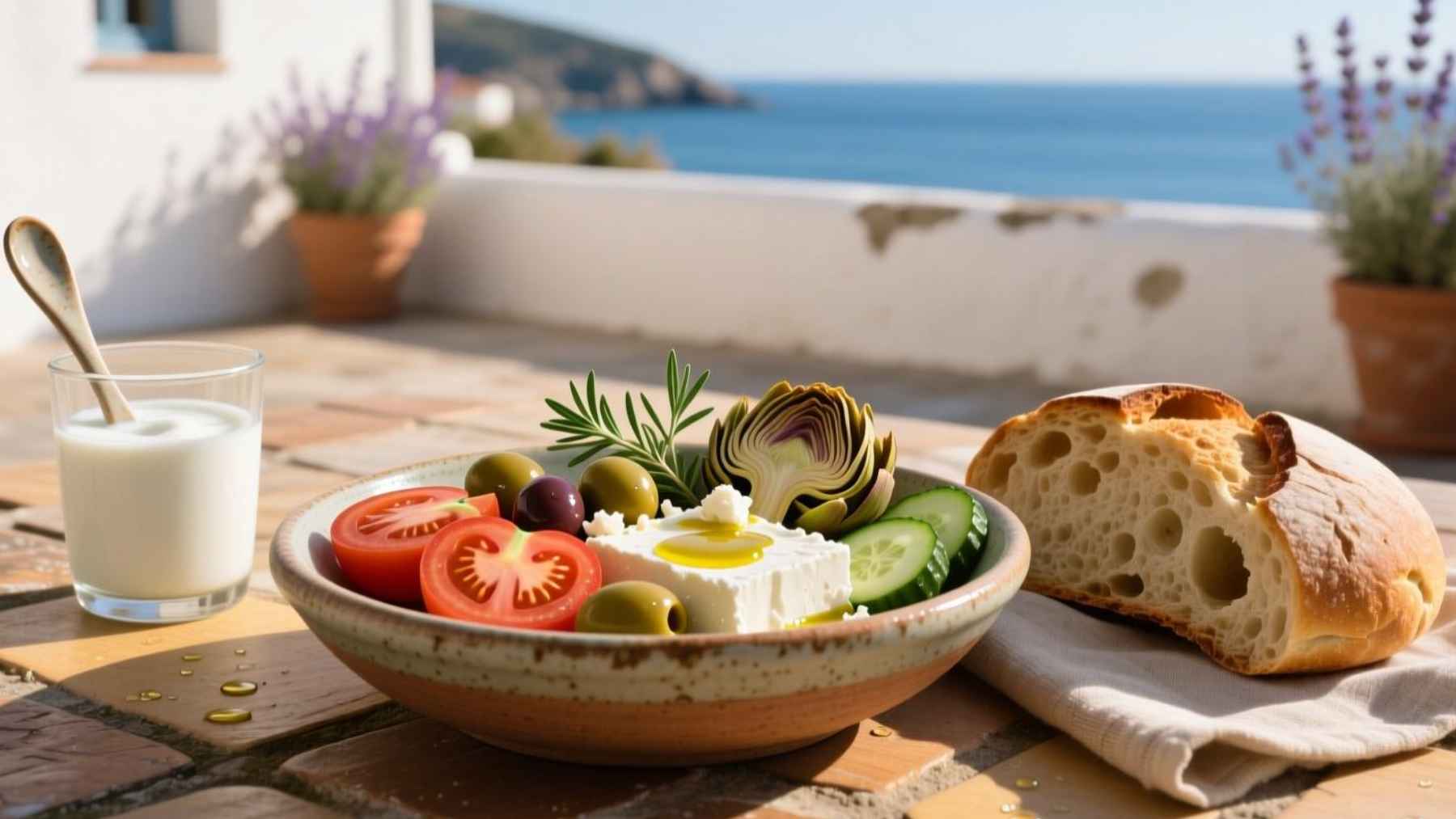
The Mediterranean chrono-diet adjusts the timing and size of meals for early risers and night owls, combining Mediterranean foods with chrononutrition principles to better align eating patterns with the body’s internal clock.
Mediterranean foods still do the heavy-lifting
The clock gets the spotlight, but the foods still count. The menus repeat classic Mediterranean staples, including fish, olive oil, whole grains, legumes, vegetables, fruit, nuts, yogurt, and eggs.
That matters because the Mediterranean diet is one of the best-studied eating patterns. In the PREDIMED trial, 7,447 high-risk adults in Spain were assigned to Mediterranean diets supplemented with olive oil or nuts, or to reduced-fat advice, and the Mediterranean groups had about 30 percent fewer major cardiovascular events after reanalysis.
At home, this is less exotic than it sounds. It may mean oatmeal before school, tuna and cherry tomatoes at lunch, yogurt in the afternoon, and fish or eggs at night. Simple food, carefully timed.
Not a one-size-fits-all plan
Here is the nuance. Being an owl does not mean late-night snacking suddenly becomes a health strategy. It means the plan tries to meet later energy peaks without turning dinner into a heavy, greasy meal right before bed.
It also is not a prescription. People with diabetes, digestive disease, eating disorder history, pregnancy, or medications that affect appetite or blood sugar should treat the plan as a conversation starter with a clinician.
For most healthy readers, the bigger lesson is practical. Ask when you feel alert, when you get hungry, and when your meals make sleep better or worse. The answer may shape your plate as much as the food itself.
A personalized Mediterranean plate
The Mediterranean chronodiet’s strongest angle is that it does not ask everyone to act like a 6 a.m. person. It recognizes that school, work, family schedules, and biology do not always line up neatly.
Still, the plan keeps a familiar compass. Eat mostly whole foods, make breakfast and dinner match your rhythm, use snacks to avoid crashes, and keep ultra-processed late-night eating in check.
The main chronotype-based Mediterranean Diet framework has been published in Current Nutrition Reports.