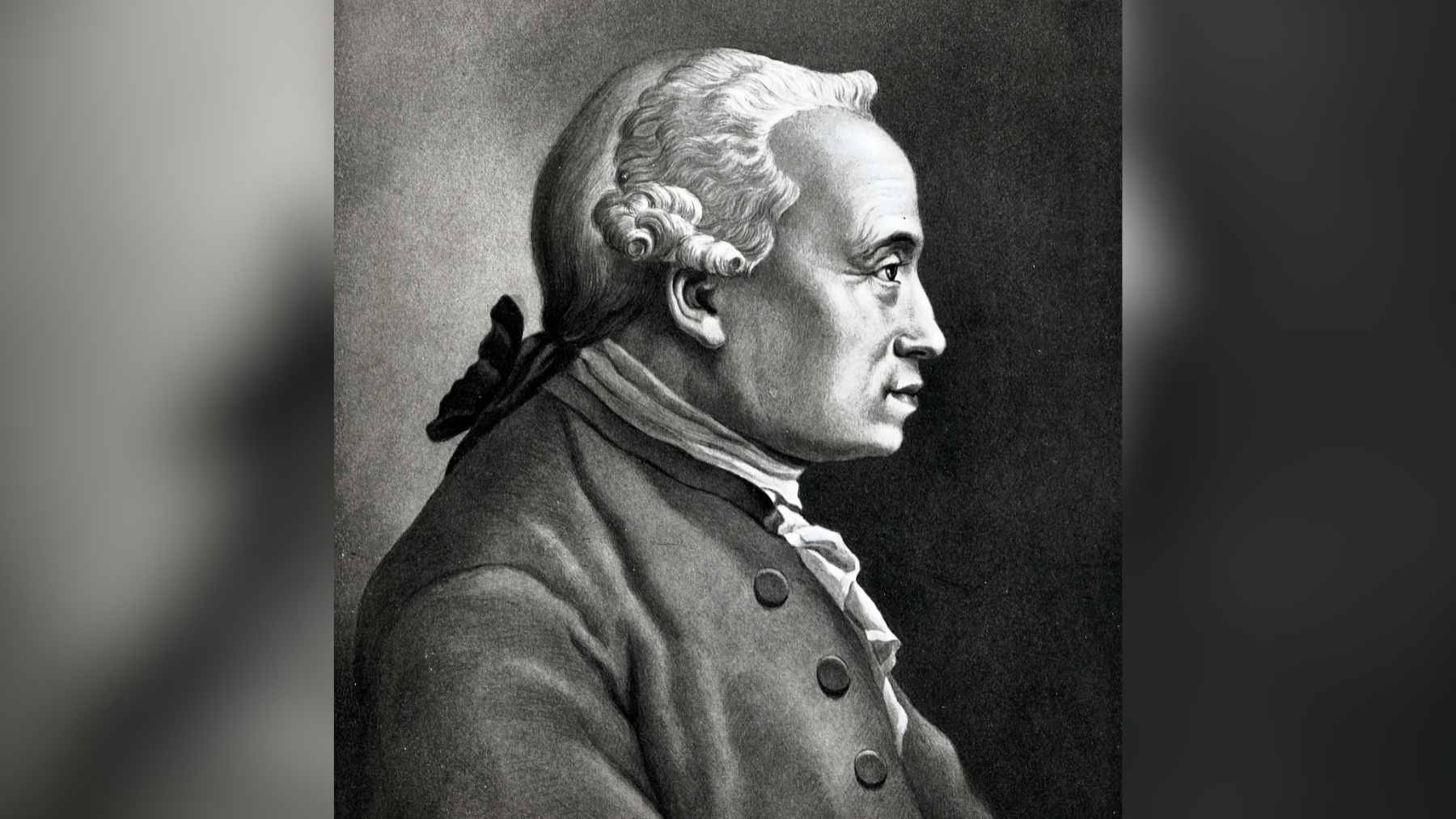
Is freedom simply doing whatever you feel like? A line widely attributed to Immanuel Kant says, “A human being is not truly free when they break every rule, but when they choose to obey reason within themselves.” The wording turns an everyday idea of liberty upside down.
There is an important caveat. The exact sentence is safest understood as a modern paraphrase, not a verified quotation from the German philosopher’s published works.
Still, it captures the core of his argument that freedom depends on rational self-government, moral responsibility, and the ability to resist impulse.
The quote is a paraphrase
The philosopher lived from 1724 to 1804 and became one of the defining thinkers of the Enlightenment. In his 1785 Groundwork of the Metaphysics of Morals, he connected freedom with autonomy, duty, and universal moral law.
Standard academic accounts of his ethics use related formulations, but not the widely shared sentence about breaking every rule.
One established passage defines autonomy as “the property of the will by which it is a law to itself.” That makes the popular line a useful summary, but it should not be presented as a word-for-word quotation without a primary source.
Freedom is not impulse
For the philosopher, acting on every desire is not the highest form of freedom. A person driven by anger, greed, fear, social pressure, or the need for approval may be making choices, but those choices are still being controlled by forces they have not rationally examined.
Think about an angry message typed late at night. Pressing send may feel like freedom in the moment, yet the action can be little more than obedience to irritation. Real self-command begins when a person pauses, considers the principle behind the act, and decides whether it can be defended.
The law comes from within
This is where autonomy matters. The word means self-rule, but it does not mean inventing any rule that happens to suit you. The point is that a rational will gives itself a moral law that should apply consistently to every person in comparable circumstances.
Its opposite is heteronomy, which means being governed by something outside rational self-legislation. That outside force might be a threat, a reward, an appetite, or even a rule accepted only because an authority issued it. Obedience becomes freedom only when reason can justify the principle as one’s own.
A test for everyday choices
The categorical imperative offers a practical test. Before acting, ask whether the rule behind your choice could reasonably become a rule for everyone, and whether the action respects people as ends in themselves rather than using them merely as tools.
Suppose someone considers lying whenever the truth is inconvenient. If everyone followed that rule, trust and promises would lose much of their meaning. The test does not provide an effortless answer to every moral problem, but it forces a person to look beyond immediate advantage.
Why duty can feel free
Duty sounds restrictive, which is why the quote can seem puzzling at first. The restriction is different, however, when it comes from a principle a rational person recognizes, rather than from a passing urge or someone else’s command.
In that sense, self-discipline is not the enemy of freedom, it is part of it.
This does not mean feelings are worthless or that a good action must be cold. Defenders of this ethics note that sympathy, love, and other emotions can accompany moral action. The key is that a person should not abandon what is right simply because desire points elsewhere.
Two ways of seeing ourselves
The philosopher also described human beings from two standpoints. In the phenomenal world, meaning the world we experience, actions appear within chains of natural causes. From the intelligible or noumenal standpoint, we think of ourselves as agents who deliberate, choose, and accept responsibility.
This should not be imagined as two physical universes stacked beside each other. Scholars still debate whether the distinction means two worlds or two perspectives on the same person. Either way, it helps explain why science can study behavior while moral life still asks, “What should I do?”
Not a defense of blind obedience
The popular quote does not say that every social rule, workplace policy, or law deserves obedience. A command can be irrational or unjust. What matters is whether its underlying principle can be justified universally and whether it respects the dignity of other people.
That is why autonomy can support criticism as well as compliance. Refusing an unjust order may be more rational and responsible than following it. At the end of the day, the question is not whether a rule exists, but whether a free and reasonable person could honestly stand behind it.
What the quote gets right
The line’s strongest insight is simple: freedom is not the absence of every limit, and breaking rules is not automatically courageous. A person becomes freer, in the Kantian sense, when reason rather than impulse guides the will.
That freedom carries a cost. It asks people to examine their motives, accept responsibility, and follow principles even when a shortcut looks easier.
The main work behind this interpretation was published in 1785 under the title Groundwork of the Metaphysics of Morals.