One in three people worldwide may carry Toxoplasma gondii without realizing it. The single-celled parasite usually causes no obvious illness, yet it can remain in the body for life and sometimes damage the eyes, harm an unborn baby, or become dangerous when immunity is weak.
This is not a rare infection hiding at the edges of medicine.
An international team is now asking the World Health Organization to formally recognize toxoplasmosis as a neglected tropical disease.
The call was led by ophthalmologists João Furtado of the University of São Paulo and Justine Smith of Flinders University, who say recognition could bring better surveillance, prenatal prevention, research funding, and treatments.
The lead author said the infection is “often seen as inevitable” even though its transmission routes are known and it can be controlled.
How the parasite reaches people
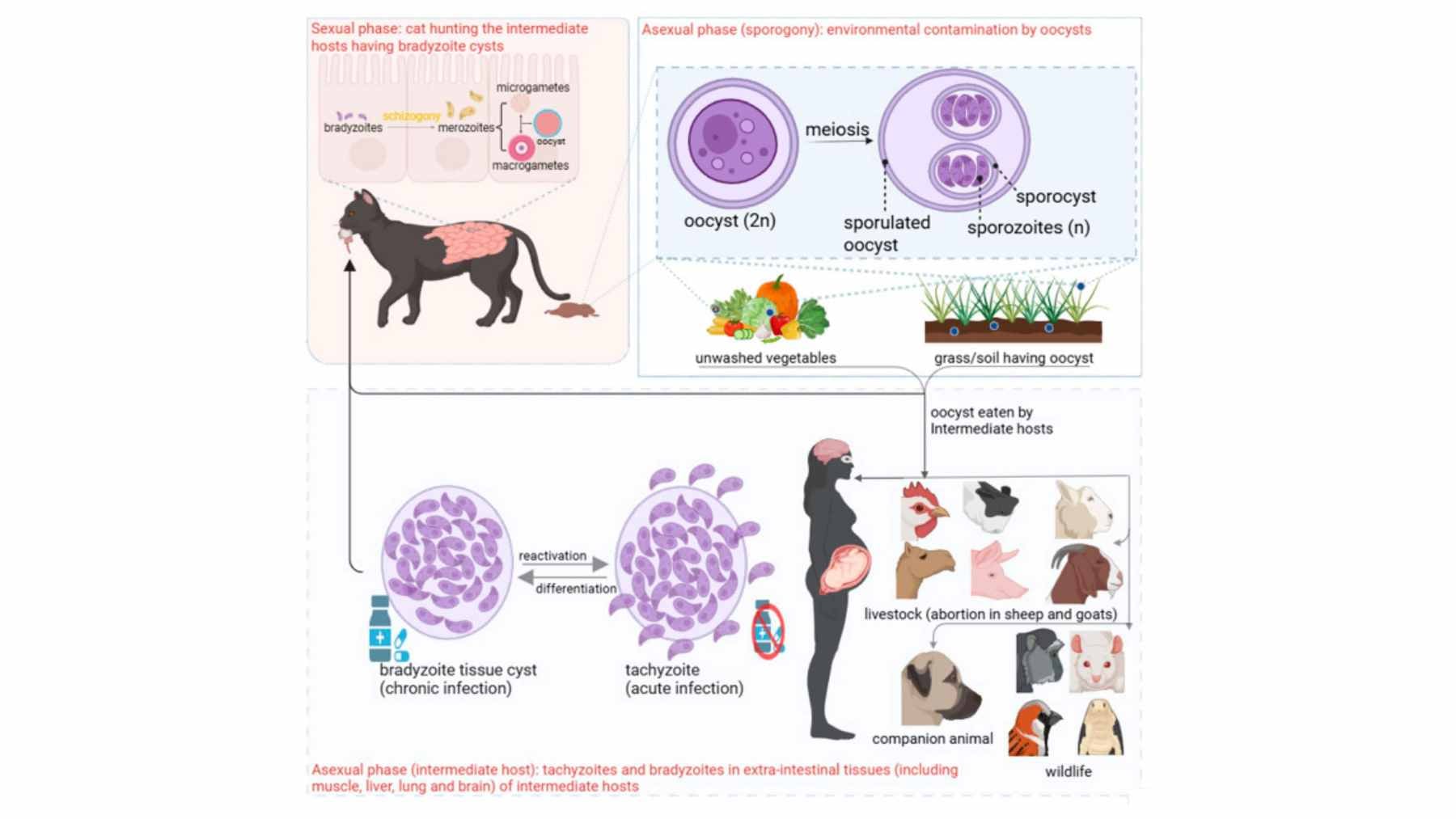
Toxoplasma is a parasite, meaning it survives by living inside another organism. Cats are the only hosts in which it completes the sexual part of its life cycle, and infected cats can release microscopic forms in feces that contaminate litter, soil, water, and produce.
People become infected by accidentally swallowing those forms, not simply by touching a cat.
Undercooked pork, lamb, venison, and some shellfish can also carry the parasite. A cutting board used for raw meat may become part of the chain when hands, knives, and surfaces are not washed. In essence, kitchen habits and clean water matter at least as much as the litter box.
Prevention is mostly ordinary work. Cook meat to a safe internal temperature, rinse produce under running water, wash hands after handling raw meat or soil, and wear gloves for gardening or litter duties, especially during pregnancy.
Why infection often stays hidden
Most healthy people never notice the infection. Some develop swollen lymph nodes or a brief flu-like illness, but the immune system usually pushes the parasite into a dormant stage inside tissue. Those hidden cysts can persist for decades, sometimes for the rest of a person’s life.
That quiet state is why estimates rely on antibodies in blood rather than reported illness. Federal data indicate that about 11% of Americans age six and older have been infected, while more than 60% of people have been exposed in some populations elsewhere.
Climate, food customs, water safety, and age help explain the wide range.
Pregnancy and eyesight carry the heaviest toll
The greatest danger comes when someone is newly infected during or just before pregnancy. The parasite can cross the placenta, causing miscarriage or lasting damage to a baby’s brain and eyes, even when the mother feels fine. A 2013 global review estimated about 190,000 congenital infections each year.
Toxoplasma can also inflame the retina, the light-sensitive tissue at the back of the eye. The inflammation may leave scars, reduce vision, and return later, making toxoplasmosis the world’s leading infection inside the eye.
The 2026 Viewpoint cites a burden of about 1.7 million healthy years lost, largely from congenital infections.
Could it also affect behavior
Could a parasite that usually stays quiet also influence the brain? In rodents, the evidence is striking because infected animals can lose their normal avoidance of cat odors, a shift that may make them easier prey and help the parasite return to its feline host.
Human findings are more subtle. A 2021 analysis of 13 studies and 13,289 healthy people found small but significant links between infection and weaker processing speed, working memory, short-term verbal memory, and executive skills.
However, most data were observational, so they cannot show that the parasite caused the differences.
Research has also found an association with schizophrenia, but association is not diagnosis or proof of cause. Genetics, poverty, other infections, and access to care may all shape the results, and scientists still need stronger long-term studies.
The burden is not shared equally
Toxoplasmosis occurs worldwide, but its harshest effects tend to land where safe water, sanitation, food controls, and prenatal care are hardest to reach.
A survey conducted from 1997 to 1999 in northern Rio de Janeiro found antibodies in 84% of the lower-income group, compared with 23% of the upper-income group. Drinking unfiltered water sharply increased risk.
That pattern supports the case for neglected tropical disease status. The agency’s current portfolio focuses on conditions tied closely to poverty and tropical environments, while the new paper argues that toxoplasmosis is also widespread, preventable, controllable, and underfunded.
It is not currently included on the official list.
What recognition could change
Official designation would not erase the infection overnight. It could place toxoplasmosis in global monitoring, help countries add prevention to maternal and primary care, and support new diagnostics, vaccines, and safer food and water systems.
The authors also warn that adding another disease could strain limited resources, so any expansion would need clear priorities.
No licensed human vaccine exists, and current drugs treat active stages but do not remove encysted parasites. That makes prevention the practical front line. For families, the message is not to fear cats, but to cook food well, keep water and produce clean, and handle litter with care.
The official Viewpoint has been published in PLOS Neglected Tropical Diseases.