Exercise is often sold as something you start before summer, after a sore back, or when a doctor raises an eyebrow at a checkup.
Felipe Isidro, an exercise science professor, is pushing a different idea. The choices that shape independence at 70 are often made between 40 and 60, when many people still feel fine.
His point is not about chasing a bigger body or a lower number on the scale. It is about keeping enough physical “margin” to climb stairs, carry groceries, regain your balance when tripping up, or get up from the floor without help. “Future autonomy is not improvised at 75,” Isidro says, describing middle age as the “silent years.”
Why the 40s matter
For the most part, the 40s and 50s do not feel like an emergency. Work is busy, family life is full, and exercise often gets squeezed into whatever space is left.
That is exactly why this stage can be risky. The loss of function usually does not arrive like a broken switch, but fades quietly, one small task at a time.
Isidro puts it plainly when he says, “You do not lose function all at once, you lose margin.” Research by Kieran Reid and Roger Fielding at Tufts University also found that muscle power tends to decline earlier and more sharply than strength.
Muscle power is the hidden issue
Strength is the ability to produce force. Muscle power is the ability to apply that force quickly, like standing up from a chair without rocking forward or reacting when your foot misses a step.
What good is muscle if it does not help you move when life asks for speed? A person may look fit and still lack the quick response needed for stairs, uneven sidewalks, or a sudden trip in a parking lot.
The American College of Sports Medicine also highlights power training in its updated resistance training guidance. The idea is not to train to exhaustion, but to use manageable resistance and move with intent during the lifting part of the exercise.
Training should become more useful
After 40, Isidro says the goal should shift from simply doing more exercise to training better. That means building useful strength through ordinary patterns, such as getting up from a chair, climbing stairs, carrying bags, bending safely, and lifting objects with control.
The body adapts to what it is asked to do. If it is never asked to produce force, that ability fades, just as a parked car does not stay road ready forever.
Power work should be simple and controlled, especially for beginners. A few quick but safe movements, done with plenty of rest and without reaching fatigue, may help train the fibers that react when balance is suddenly challenged.
Balance deserves its own session
Balance is not just something people lose after retirement. It is a skill, and skills need practice.
Standing on one leg near a counter, shifting weight slowly, or stepping in different directions can all teach the body to stay organized when the ground is not perfect. That matters on wet sidewalks, crowded sidewalks, and those small curbs that appear at the worst moment.
The CDC reports that more than 14 million older adults in the United States, or about one in four, say they fall each year. A fall can spark a downward spiral, meaning more fear, less movement, weaker legs, and then more risk.
Cardio should not feel like punishment
Cardiovascular training still matters, but Isidro favors low to moderate intensity for many people. That is the zone where you can keep a conversation going, the kind of effort that feels steady rather than frantic.
The CDC describes moderate intensity in similar everyday terms. During that level of activity, a person can talk but not sing, which makes the “talk test” a simple tool for judging effort without lab equipment.
Walking can help, but “move more” is too vague to be a real plan. In practical terms, walking should have a purpose, a pace, and a progression, not just another stroll squeezed between emails and errands.
The goal is future freedom
At the end of the day, this kind of training is trying to protect ordinary freedoms. Getting out of a low chair, bringing groceries inside, crossing a busy street, or staying steady on a wet sidewalk may not look like athletic performance, but it is.
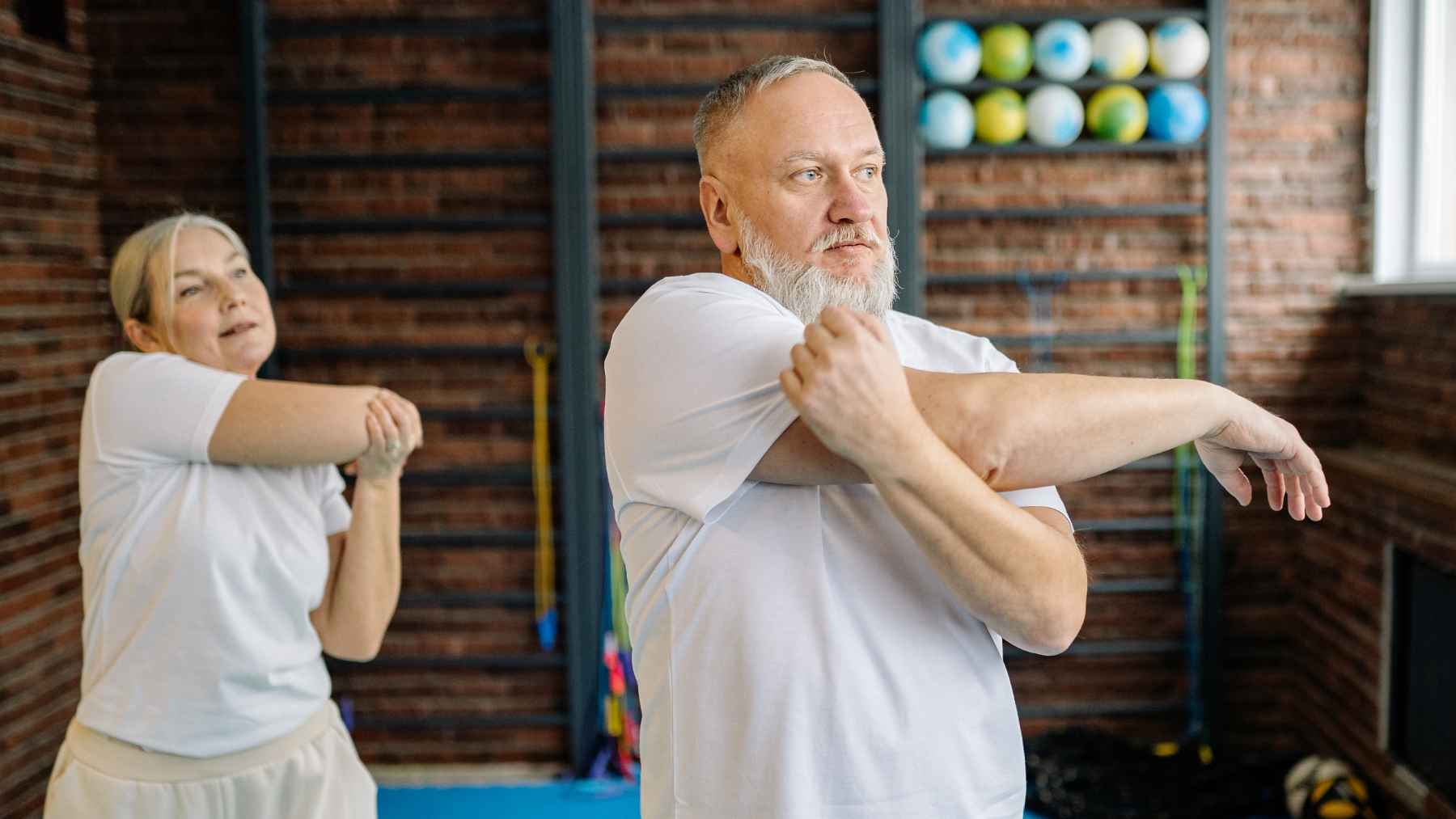
The public health guidance cited here recommends that adults get at least 150 minutes of moderate aerobic activity each week and do muscle strengthening on at least two days. For older adults, it also recommends varied exercise that challenges balance and functional movement.
This isn’t a sign to panic during your quiet years leading up to your 70s but an opportunity to make better use of this window.
The main scientific guidance cited in this article has been published by the World Health Organization.