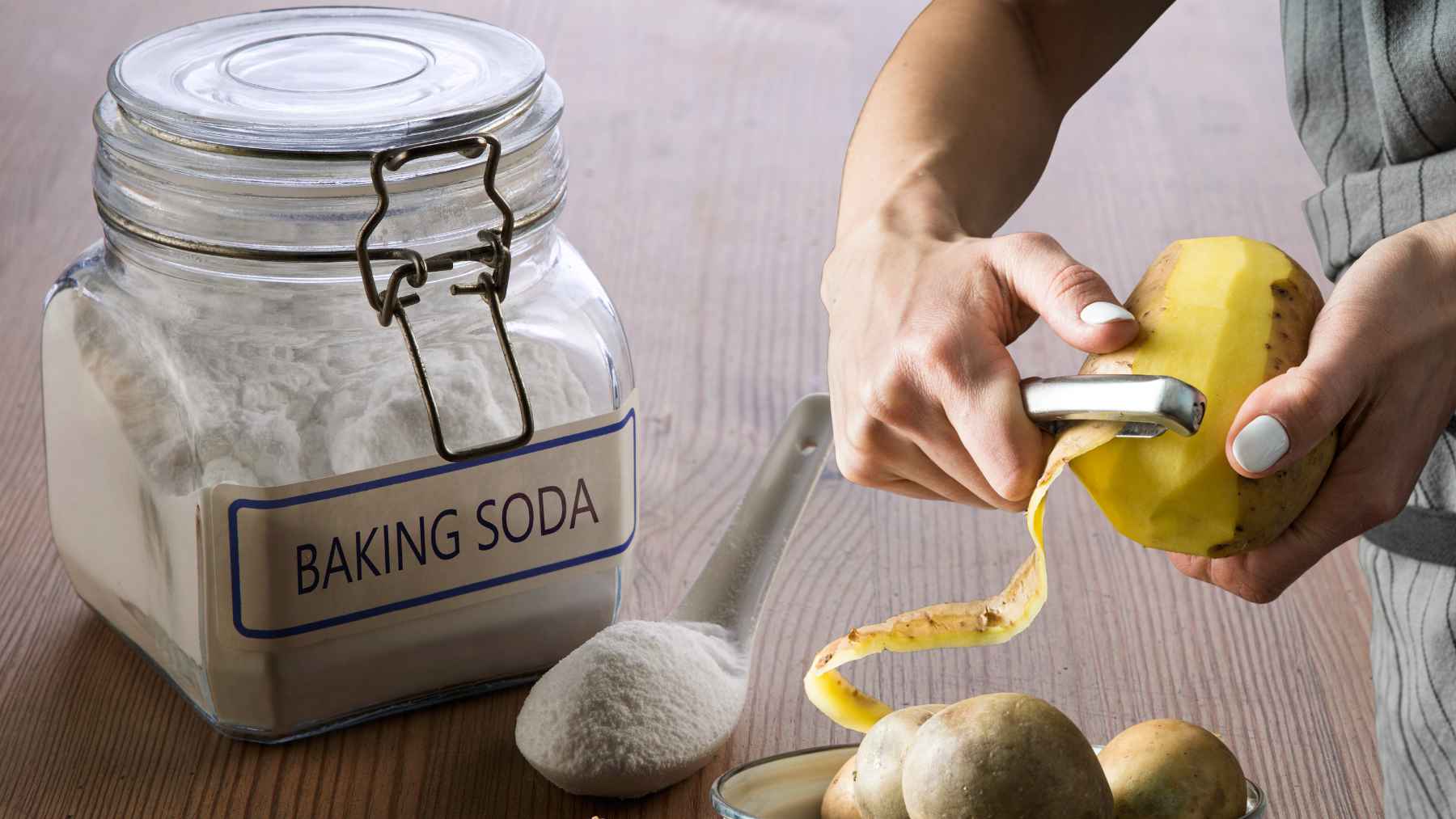
That little pile of potato peels usually headed for the trash may have a second job in the kitchen. Mixed with baking soda, it can become a simple paste that helps lift light rust from metal pans, pots, and utensils without reaching first for harsher cleaners.
The idea is not magic. Potato peels contain natural compounds that can help loosen rust stains, while baking soda adds gentle scrubbing power.
For people trying to cut waste, save money, or avoid strong chemical smells around food prep areas, the trick has an obvious appeal. Still, it works best on light surface rust, not badly damaged metal.
Useful properties of potato peels
Rust forms when iron or steel is exposed to moisture and oxygen over time. In everyday life, that can happen after a pan is left damp in the sink, stacked before it dries, or stored in a humid cabinet.
The National Park Service identifies moisture and oxygen as major enemies of metal objects, which is why even a small wet spot can become a problem.
Potato peels are useful because they contain oxalic acid, a naturally occurring organic acid. PubChem, a database run by the National Institutes of Health, lists oxalic acid among substances used in cleaning and metal-cleaning products for removing rust, grease, and wax.
That does not mean a potato peel is as strong as a commercial rust remover. It simply means the chemistry points in the same direction, but in a much milder household form. And for a rusty skillet corner, mild may be exactly the point.
How baking soda helps
Baking soda, also called sodium bicarbonate, brings a different kind of cleaning action. It is slightly alkaline and has a gritty texture, so it can help loosen surface dirt without the bite of a harsher scouring powder.
The University of Georgia Extension describes baking soda as a mild cleaning alkali that is safe for many home surfaces, though not ideal for aluminum because it may darken the finish.
In practical terms, the potato peel helps soften the rust stain, while the baking soda helps rub it away. Think of it as a two-part job: one ingredient works on the stain, the other gives your hand some extra traction.
The result is a paste that can be useful on steel items, iron pans, and some kitchen tools. It should not be treated as a universal cleaner for every surface. When in doubt, test a small hidden area first.
How to try it at home
The method is simple. Sprinkle baking soda over the rusty area, then rub it with a piece of potato peel or crushed potato peels. Add just enough moisture to make a paste, but do not soak the pan.
Let the mixture sit for several hours or overnight if the stain is stubborn. The next morning, scrub the area under running water with a brush or sponge, then rinse well. Dry the item right away and completely.
That final drying step matters more than people might think. A pan that looks clean but stays damp can begin rusting again quickly. In other words, the fix can undo itself if the last step is rushed.
Cast iron needs extra care
Cast iron pans are famous for lasting for decades, but they are also quick to punish bad habits. Leaving them in water, putting them in the dishwasher, or stacking them while damp can damage their protective layer and invite rust.
The University of Illinois Extension recommends hand-washing cast iron, drying it thoroughly, and re-seasoning it if rust appears. Seasoning means adding a thin layer of oil and heating the pan so it forms a protective coating against moisture.
At the end of the day, caring for cast iron is mostly about keeping water from lingering. Wash it, dry it, warm it briefly if needed, and store it where air can circulate. Not glamorous, but it works.
Other natural options
Potato peels and baking soda are not the only low-cost tools people use against light rust. Lemon juice and white vinegar can also help with minor stains because they are acidic. But stronger is not always better, especially on cookware.
Vinegar, for example, may help loosen mineral buildup or light corrosion, but leaving metal in acid too long can cause new problems. The safer approach is controlled contact, gentle scrubbing, full rinsing, and fast drying.
There is also a limit to what any home remedy can do. Deep pitting, flaking metal, or rust on items that touch food may need a more careful decision. Sometimes restoring the surface is possible, and sometimes replacement is safer.
A cleaner with limits
This trend fits into a larger shift toward using kitchen basics instead of buying a different cleaner for every task. That can reduce waste and cost, and it can be easier on people sensitive to strong odors. Who does not like solving a small household problem with something already on the counter?
But the best version of this tip is realistic. Potato peels and baking soda can help with light rust on suitable metal surfaces. They are not a miracle cure for every rusty tool or badly neglected pan.
Used carefully, though, the method gives food scraps a second life and reminds us that some old kitchen tricks have real chemistry behind them. Simple does not always mean silly.
The main article has been published in LA NACION.