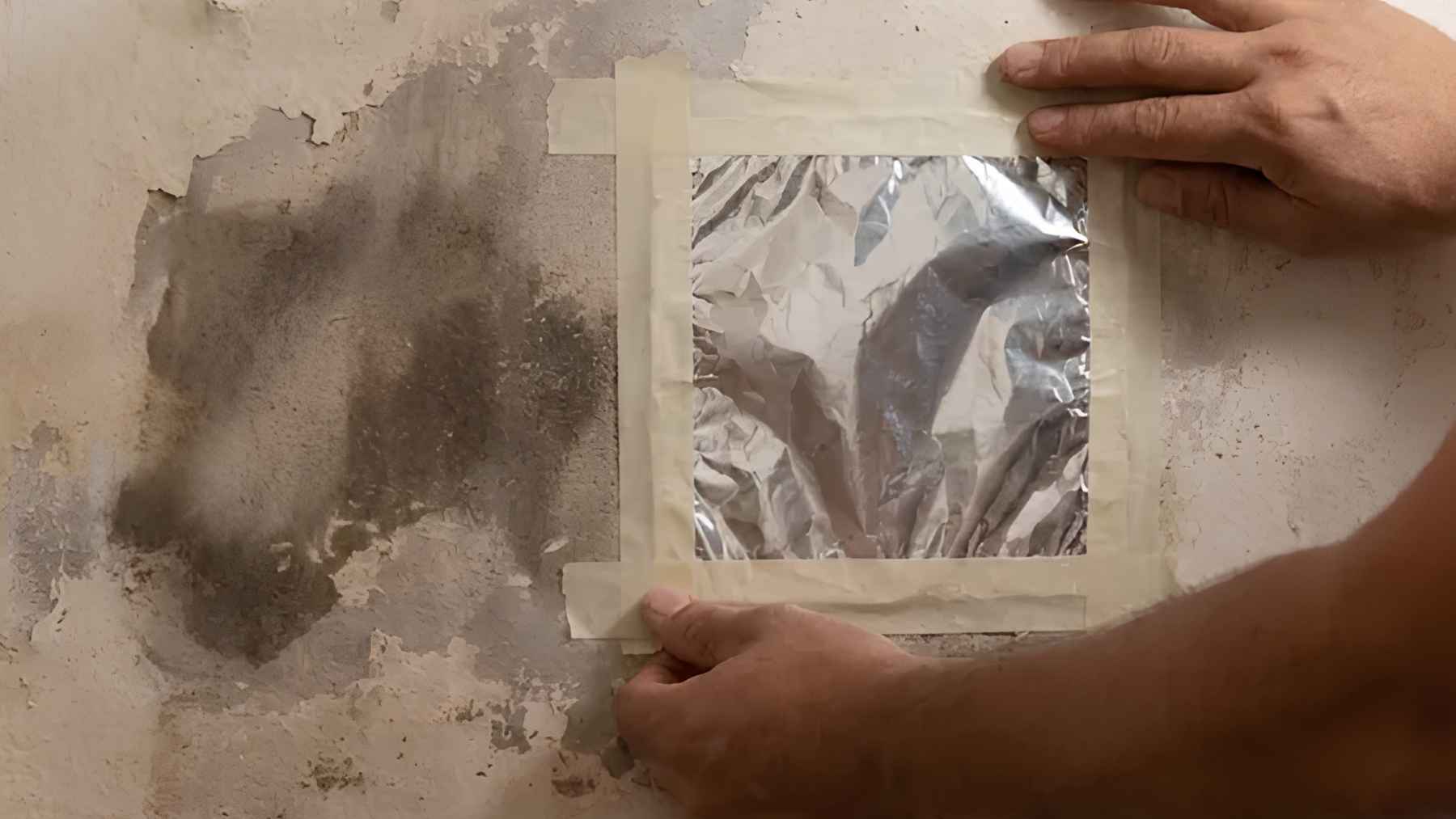
A dark stain on a wall can be easy to ignore, at least at first. Then the paint flakes, the room smells musty, and a small patch starts to reveal a once hidden problem.
Is it just damp indoor air, or is water moving inside the wall? That is where a simple sheet of aluminum foil comes in.
Architects and building specialists recommend taping it to a suspect spot for 24 to 48 hours because it can help separate surface condensation from deeper wall moisture. “This method works,” the advice says, because it turns a vague warning sign into a clearer clue.
Why aluminum foil helps
Aluminum foil works because it creates a temporary barrier over one small area of the wall. When it is taped tightly along every edge, air can no longer move freely across that patch.
It works because moisture has to show itself somewhere. If droplets appear on the side facing the room, the issue is likely condensation. If moisture appears on the side touching the wall, it may point to water coming through the wall material.
What the signs look like
Wall moisture rarely starts with a dramatic leak. For the most part, it begins with small clues like peeling paint, blistering finishes, dark stains, loose wallpaper, or that musty smell people notice when they walk into an older room.
The University of Minnesota Extension lists window condensation, mildew, mold on interior surfaces, and peeling or blistering paint as common signs of excess moisture in a home. In practical terms, the wall is not just “looking old,” it may be telling you that water or humid air is winning.
How to do the test
Start by choosing a small area where the wall looks damp, stained, or damaged. Wipe it with a dry cloth so dust or surface moisture does not confuse the result.
Then cut a piece of household aluminum foil slightly larger than the suspicious spot. Tape all four edges firmly to the wall, keeping the center flat and sealed. Leave it alone for 24 to 48 hours.
A phone photo before and after can help. Small changes are easy to miss, especially when you pass the same wall every day.
How to read the result
When you remove the foil, check the side that touched the wall first. Drops, dark marks, or white powdery residue on that inner face can suggest moisture is coming from inside the wall or from the material behind it.
If the inner side is dry but the outer side is damp, the problem may be condensation. That is the same basic process you see on a bathroom mirror after a hot shower, or on a cold window when indoor air is too humid.
Still, the test is not a final diagnosis, but a low-cost clue. The bigger question comes next.
When it needs attention
The U.S. Environmental Protection Agency says “the key to mold control is moisture control,” and it advises drying water-damaged areas within 24 to 48 hours to help prevent mold growth. The agency also notes that cleaning mold without fixing the water problem usually means the mold will come back.
That is why spreading stains, active mold, crumbling plaster, strong odors, visible cracks, or repeated damp patches should not be brushed off. At that point, the issue may involve a roof leak, poor waterproofing, foundation water, or a pipe hidden behind the wall.
How to prevent it
Moisture often comes from ordinary routines. Cooking, showering, drying clothes indoors, and poor air circulation can all add water vapor to the home, especially in kitchens, bathrooms, basements, and rooms with cold exterior walls.
The Minnesota Department of Health points to leaking roofs, high humidity in bathrooms and kitchens, leaking pipes, basement flooding, water pooling near the foundation, and condensation on windows or exterior walls as common sources.
It also recommends exhaust fans, maintained gutters, quick leak repairs, and better air movement in colder parts of the home.
A cheap clue, not a cure
The appeal of the foil test is obvious. It costs almost nothing, takes a day or two, and does not require a moisture meter or a contractor visit.
But it should not replace professional help when damage is obvious or persistent. Think of it as an early warning tool, not a repair.
The main public guidance on household mold and moisture has been published by the U.S. Environmental Protection Agency.