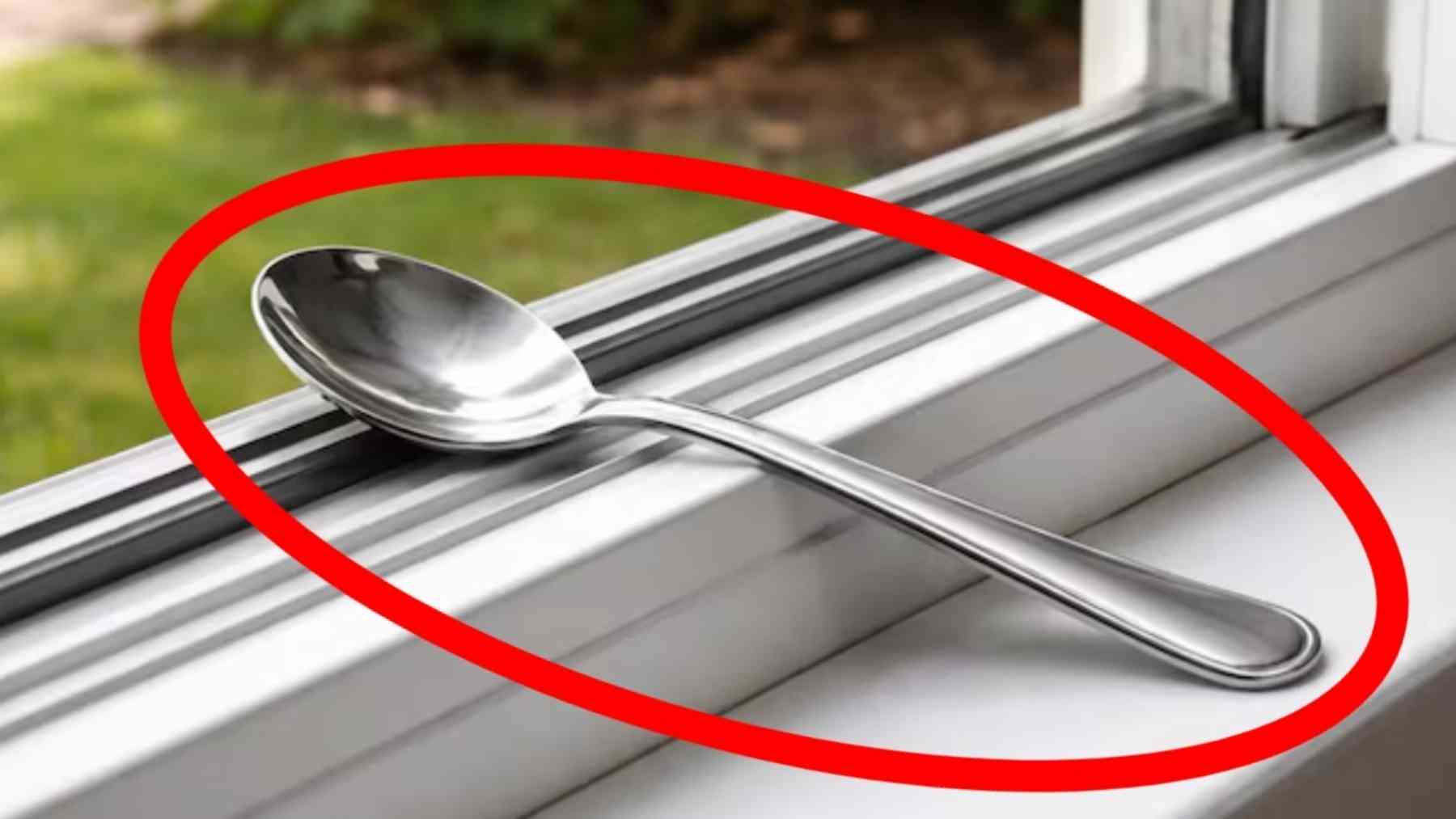
A metal spoon on a window frame sounds more like a kitchen superstition than a wellness tip. Still, this small home trick has gone viral because it points to a problem many people notice every morning, especially in cold or humid weather (foggy glass, damp corners, and that musty smell that never quite goes away).
The idea is simple. Place a stainless steel spoon on the window frame, with the handle facing indoors and the curved part facing outward, so moisture may collect on the colder metal instead of spreading across the glass. But health experts would likely give one important warning first. A spoon may help you spot condensation, but it does not solve a moisture problem inside the home.
Why the spoon trick went viral
Condensation happens when warm, moist indoor air meets a cold surface, such as a window. The vapor turns into water droplets, and those droplets can run down the glass, pool near the frame, and feed the kind of damp environment where mold likes to grow.
The spoon trick is based on that same idea. Because metal changes temperature quickly, it may become a cold point where some moisture gathers. Useful? Maybe in a small way. A cure for humidity? Not really.
What it can actually tell you
Think of the spoon as a low-tech warning sign. If droplets form on it quickly, or if your window is wet every morning, your room may have more moisture than it can handle.
That matters because the U.S. Environmental Protection Agency says “the key to mold control is moisture control.” The agency also notes that mold will not grow without water or moisture, which is why damp windows are not just a cleaning nuisance. They are a clue.
Why indoor humidity affects health
A humid home can feel uncomfortable, but the bigger concern is what happens when dampness sticks around. The CDC says exposure to damp and moldy environments may cause health effects in some people, including stuffy nose, sore throat, coughing, wheezing, burning eyes, and skin rash.
People with asthma, mold allergies, weakened immune systems, or chronic lung disease may be more vulnerable. That is why a wet window should not be ignored, especially in bedrooms, bathrooms, kitchens, and poorly ventilated rooms where people spend hours breathing the same indoor air.
The numbers to remember
The CDC recommends keeping indoor humidity “no higher than 50%” throughout the day, using an air conditioner or dehumidifier when needed. EPA training materials also advise keeping indoor relative humidity below 60%, ideally between 30% and 50% when possible.
Those numbers are more helpful than guessing by touch or smell. A basic hygrometer can tell you whether the room is in a healthy range, while the spoon only shows that condensation may be happening near one cold surface.
What to do before mold appears
Start with the everyday sources of moisture. Long showers, boiling water, indoor clothes drying, too many plants, and humidifiers set too high can all add water vapor to the air.
The EPA recommends using exhaust fans in bathrooms and kitchens, venting clothes dryers outdoors, fixing leaks, and using dehumidifiers or air conditioners in hot, humid climates. It also says homes need a source of fresh air and a way to expel excess moisture.
When the window is the problem
Sometimes the issue is not only the air. Cold glass, poor insulation, damaged seals, and weak circulation can make moisture collect in the same place every day.
In practical terms, that means moving furniture away from cold walls, opening interior doors to improve airflow, and warming cold surfaces with insulation or better window protection. The EPA says increasing surface temperature or lowering air moisture can help prevent condensation.
When a spoon is not enough
A spoon will not fix a roof leak, a damp basement, a plumbing problem, or moisture trapped behind a wall. It also will not remove mold that is already growing.
The EPA advises cleaning up mold promptly and fixing the water problem. It also recommends drying water-damaged areas and items within 24 to 48 hours to help prevent mold growth. Wait too long, and the problem can move from “annoying” to expensive.
A better home routine
After cooking or showering, open a window briefly when outdoor conditions allow, or run the exhaust fan long enough to clear steam. Wipe wet window frames, check corners for dark spots, and avoid letting towels or laundry dry in small closed rooms.
Small habits help, especially during winter or sticky summer heat. But the real target is not the spoon, the glass, or the puddle on the sill. It is the moisture cycle behind them.
What health experts want you to remember
The World Health Organization has linked indoor dampness and mold with increased respiratory symptoms, allergies, and asthma. Its guidance says the most important way to avoid related health effects is to prevent or minimize persistent dampness and microbial growth inside buildings.
So yes, the spoon trick may be a harmless way to notice condensation. But the healthier move is to measure humidity, improve ventilation, fix leaks, and act before mold gets comfortable.
The official guidance was published on EPA.