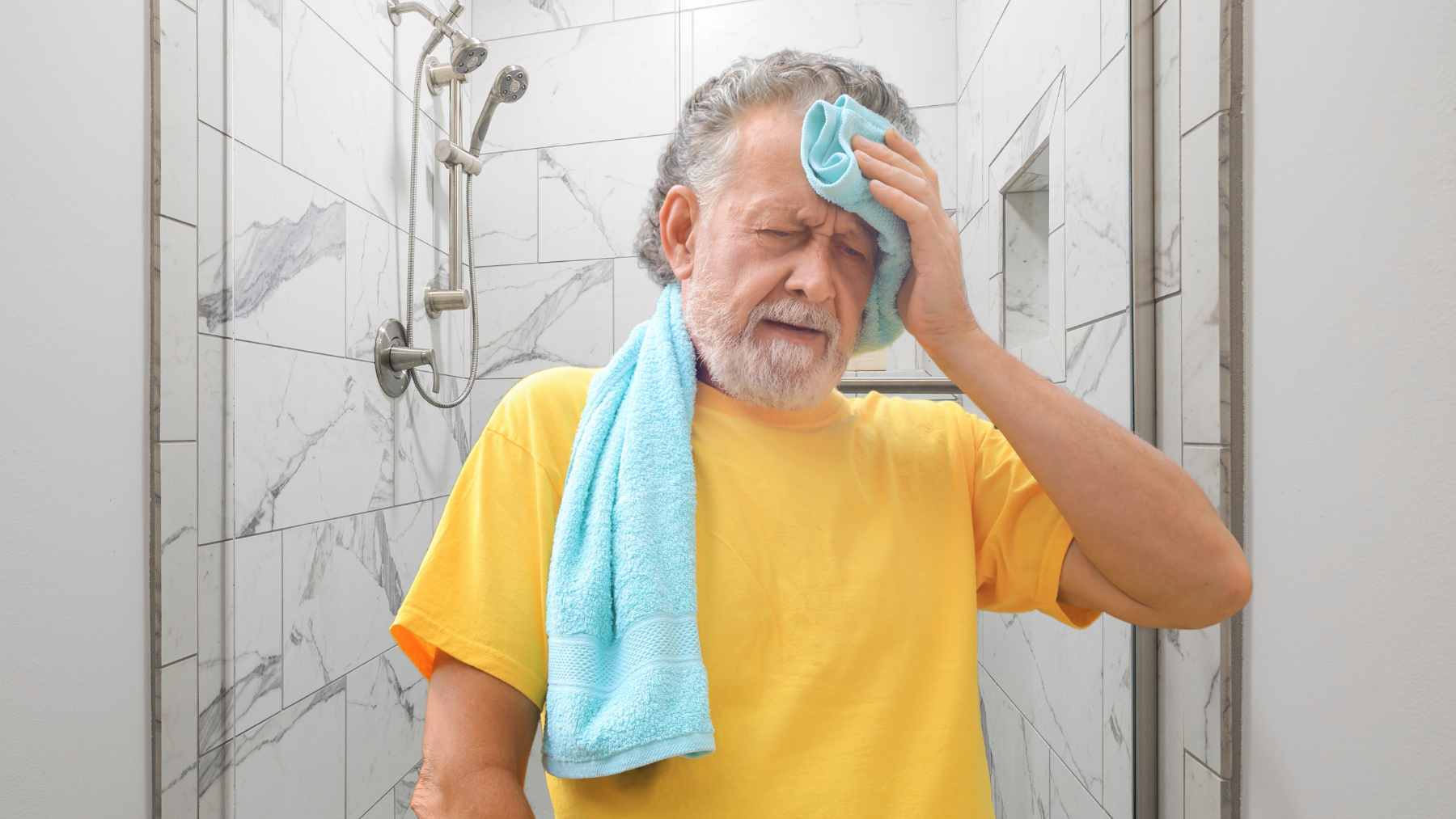
Most people grow up hearing that a daily shower is part of being clean. After 65, that old habit may need a second look, because aging skin often becomes thinner, drier, and more easily irritated.
The healthier routine is usually not a shower every day, and not a full shower only once a week either. For many older adults, a short, warm shower every two or three days, with daily cleaning of key areas, can protect the skin while still keeping odor and infection risk under control.
Why showers change after 65
The skin is the body’s outer shield. It keeps moisture in, blocks many germs, and helps protect against everyday irritants such as soap residue, sweat, dust, and cold air.
With age, that shield can lose water more easily and produce less of the oil that helps it stay comfortable. MedlinePlus says aging skin becomes thinner, more fragile, and drier, which helps explain why the same shower routine can suddenly start causing tightness or itching.
The healthiest rhythm
So, how often should someone over 65 shower? For the most part, dermatology advice points to one full shower every two or three days, especially for people with dry or sensitive skin.
Dr. Elizabeth Gordon Spratt of University Hospitals says one shower every two to three days is sufficient for many older adults, because skin tends to be drier and frequent bathing can make that worse.
On the days in between, the smarter move is a gentle wash of the face, armpits, groin, feet, and any sweaty skin folds.
Short and warm works best
A healthy shower after 65 should feel more like a quick reset than a long soak. Dermatologists often recommend warm water, not hot water, and a shower that lasts about 5 to 10 minutes.
Why does that matter? Hot water can strip away natural oils, and long showers give soap more time to dry the skin. Mayo Clinic guidance also recommends limiting water exposure, using warm water, rinsing well, and applying moisturizer while the skin is still damp.
The skin barrier matters
The key idea is the “skin barrier,” a simple name for the outer layer that helps keep skin sealed and protected. When that barrier dries out, skin can itch, crack, sting, or become more vulnerable to irritation.
This is why more cleaning is not always better. Baylor College of Medicine dermatologist Dr. Oyetewa Asempa explains that too many long or hot showers can strip natural oils and lead to dryness, irritation, and eczema flares.
Clean the right places
On non-shower days, a washcloth can do a lot. Focus on the places that collect sweat and odor, including the armpits, private area, feet, under the breasts, and deep skin folds.
That may sound too simple, but it is practical. A full scrub of arms, legs, back, and chest every morning is not always needed for a person who is not sweating heavily, working outdoors, or dealing with a medical issue.
The bathroom risk
For older adults, showering is also a safety issue. Wet floors, stepping over a tub wall, poor lighting, and fear of slipping can turn a basic routine into a stressful moment.
The Centers for Disease Control and Prevention says more than one in four adults 65 and older reports falling each year, and falls are the leading cause of injury in this age group. That is why bathroom safety belongs in the hygiene conversation, not as an afterthought.
Small changes help
A nonslip mat, grab bars, brighter lighting, and a sturdy shower chair can make bathing calmer and safer. In practical terms, that means less rushing, fewer awkward movements, and more confidence when the floor is wet.
The National Institute on Aging recommends grab bars near toilets and in the tub or shower, along with nonskid mats or strips on surfaces that may get wet. These changes do not make a bathroom look medical. They make it easier to stay independent.
Products should be simple
The product shelf matters, too. Strong perfumes, deodorant soaps, rough scrubs, and harsh cleansers may leave older skin feeling tight instead of clean.
Gentle, fragrance-free cleansers are usually the better choice. A cream or ointment after showering can seal in water and reduce that itchy feeling that makes people want to scratch at night.
When to shower more
This rhythm is not a strict rule for everyone. A person may need more frequent rinsing after exercise, during sticky summer heat, after gardening, or when sweat and sunscreen have built up.
Medical needs matter as well. Incontinence, open wounds, infections, eczema, psoriasis, and some treatments can change the routine, so those situations call for advice from a clinician.
A gentler idea of clean
At the end of the day, this is not about lowering hygiene standards. It is about matching hygiene to the body someone actually has at 65, 75, or 85, not the body they had at 25.
The best routine is steady, gentle, and realistic. Shower less often if the skin asks for it, wash key areas daily, moisturize, and make the bathroom safer before fear turns into avoidance.
The main guidance used for this article has been published by the American Academy of Dermatology Association.