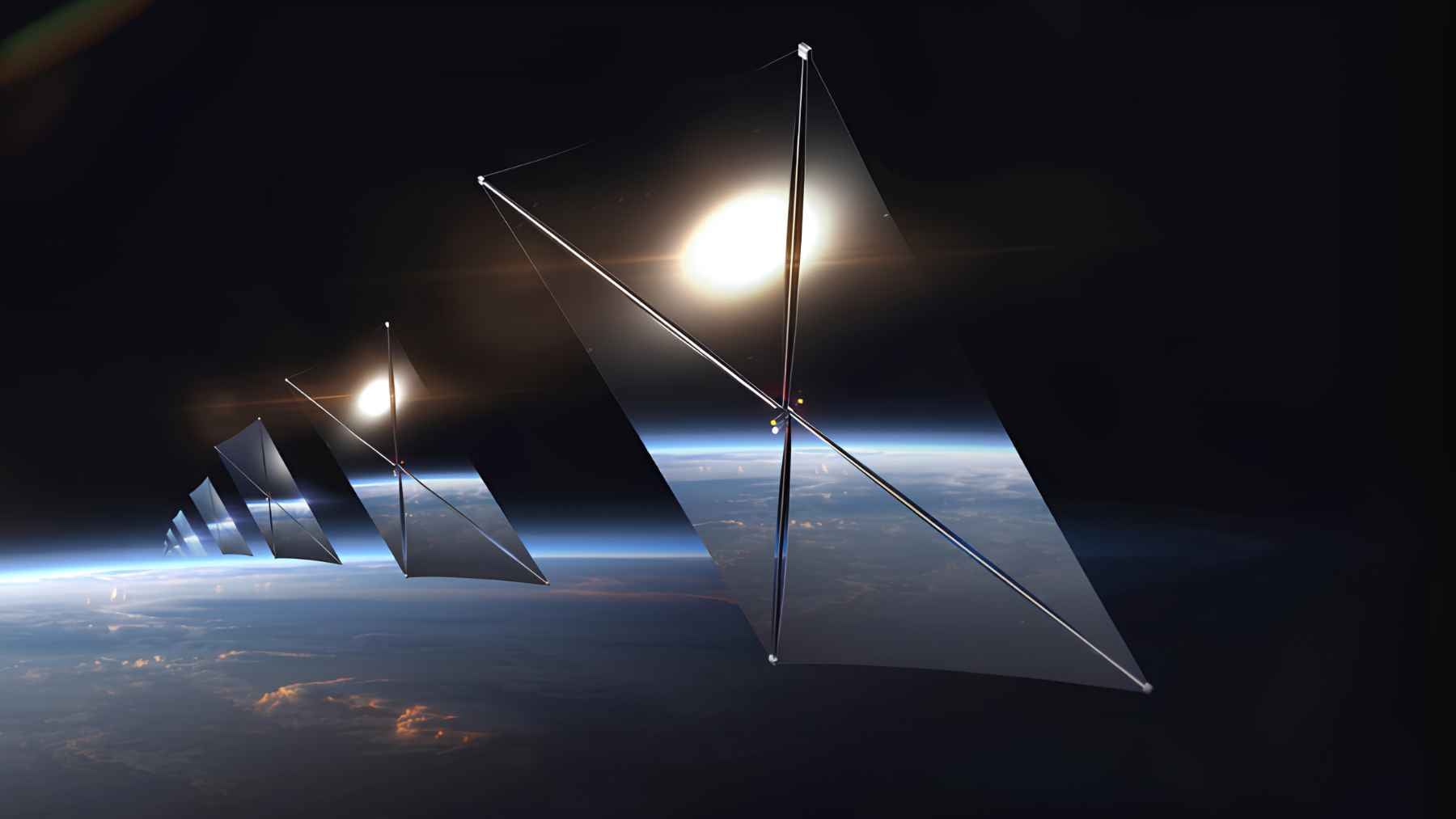
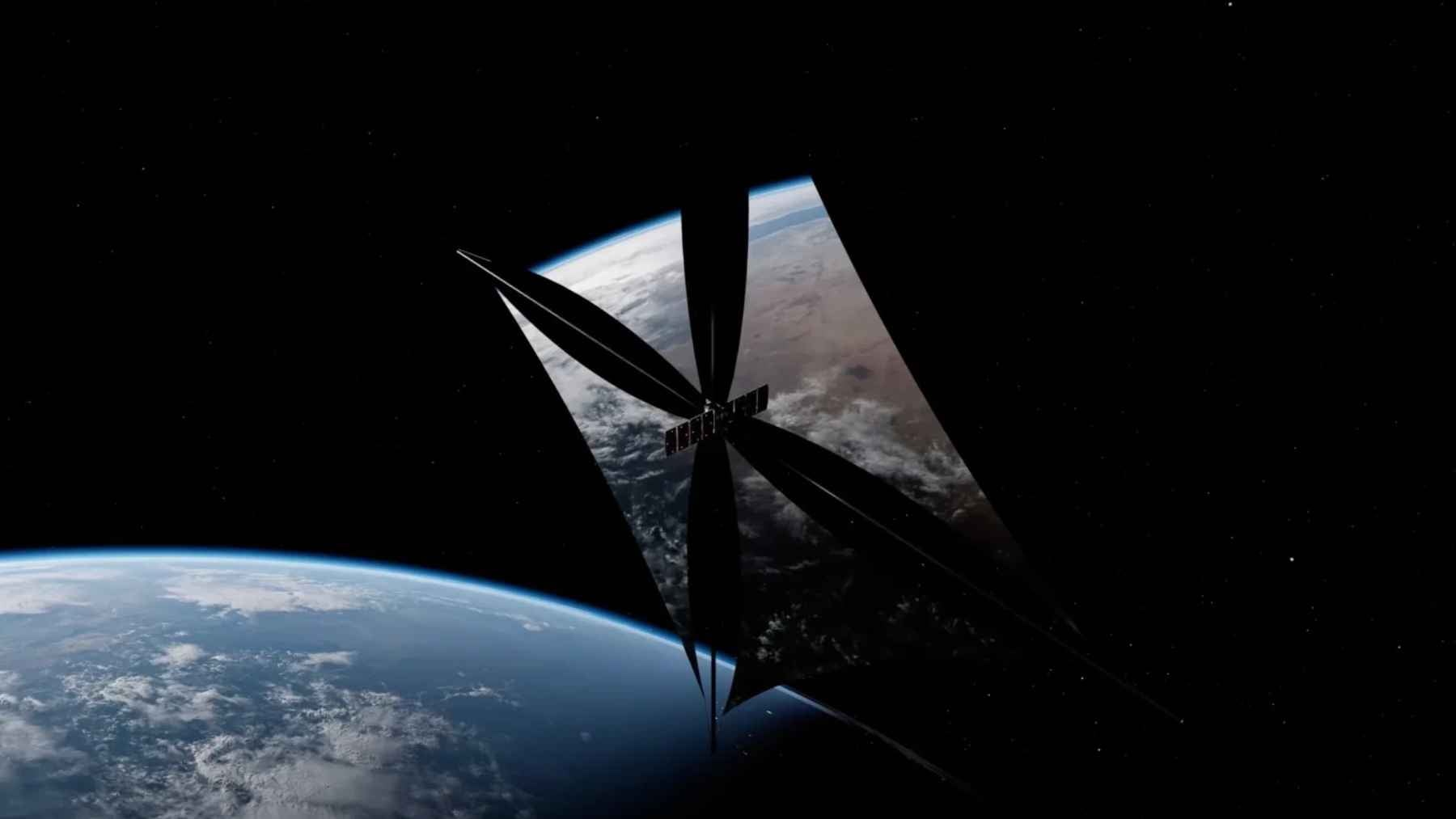
The United States has authorized Reflect Orbital to deploy and operate Earendil-1, a demonstration satellite built to redirect sunlight onto Earth after dark. The craft is expected to unfold a steerable mirror about 59 feet on each side, then aim a roughly 3.1-mile-wide patch of light at selected locations from low-Earth orbit.
The approval covers one test satellite, not the California startup’s proposed constellation of more than 50,000 spacecraft. Still, the decision carries a much larger message because the FCC said light pollution, optical astronomy, and most non-radio environmental effects fall outside its regulatory authority, a conclusion that opponents are now asking the full Commission to reverse.
What Earendil-1 will do
Earendil-1 is authorized to operate at about 388 miles above Earth after entering orbit. Its thin-film reflector will be motorized and steerable, and Reflect Orbital says the first demonstrations are meant to provide moonlight-like illumination for only a few minutes while engineers measure performance and safety.
The company wants to sell “sunlight on demand” to solar farms, industrial sites, emergency crews, agriculture, events, and defense customers. Its military link is already real, since Reflect Orbital announced a $1.25 million AFWERX small-business contract in 2025 to study responsive lighting and energy resilience for Air Force operations.
Why the FCC said yes
The FCC’s Space Bureau granted the license on July 9, 2026, finding that a limited test would support American technological leadership and help determine whether the concept is viable.
The authorization is for radio communications, spacecraft control, data downlinks, and orbital-debris compliance, with a two-year license term beginning after Earendil-1 is successfully placed in orbit.
More than 1,800 people submitted letters, while scientific and environmental groups asked the agency to reject the project or add safeguards. The Bureau nevertheless concluded that the mirror’s optical effects were too far removed from its spectrum authority, and it declined to require a full environmental assessment under federal law.
Astronomers see a different risk
Astronomers argue that a deliberately bright spacecraft is not comparable to an ordinary satellite that happens to reflect sunlight. The American Astronomical Society warned that Earendil-1 could saturate sensitive detectors, interrupt federally funded observing programs, and pose eye-safety concerns for people using larger telescopes.
Reflect Orbital has committed to coordinating with NASA, the National Science Foundation, and the wider astronomy community, including work on exclusion zones near research sites.
But the FCC declined to impose several requested protections, such as an independent brightness standard, a public pointing schedule, and a roughly 100-mile buffer around registered observatories.
One test could become 50,000
Reflect Orbital’s public roadmap grows from two satellites in 2026 to more than 1,000 by 2028, more than 5,000 by 2030, and more than 50,000 by 2035. The company says larger constellations could extend solar production after sunset and eventually provide light comparable to workplaces or daylight for longer periods.
That future network has not been approved, and the FCC said any later application would be judged separately. The concern is the logic behind the first ruling, since critics say a regulator that cannot review the light from one mirror may also struggle to assess the cumulative glow from thousands.
Darkness is an ecological resource
Research on ground-based artificial lighting already links nighttime illumination to altered migration, feeding, reproduction, and predator-prey behavior, while a field experiment published in Nature found 62% fewer nocturnal pollinator visits in lit plots and a 13% reduction in fruit set for a focal plant.
That study did not test an orbital mirror, so it cannot prove Earendil-1 will create the same effects. It does show why conservation groups want location data, brightness limits, seasonal restrictions, and independent monitoring before the technology scales, especially around wildlife refuges and migration routes.
Human effects remain uncertain
Nighttime light can suppress melatonin, delay sleep, and shift the human circadian clock, although most health evidence concerns repeated or sustained exposure rather than a brief moving beam. That distinction matters, and so does the lack of real-world data for a system designed to deliver sunlight from hundreds of miles above the ground.

Reflect Orbital says the demonstration will generate those missing measurements and that it plans public data, independent reviews, strict brightness and duration limits, and coordination with affected communities. The company also says it is prepared to change course if evidence does not support wider deployment.
The approval is now under review
On Aug. 6, DarkSky International, the American Bird Conservancy, Environment America, and Public Employees for Environmental Responsibility filed a formal Application for Review through Earthjustice. They want the full FCC to reverse the Space Bureau’s order and require a lawful public-interest and environmental review before Earendil-1 begins operations.
As a fallback, the groups proposed 16 binding conditions, including advance public notice, a brightness cap, independent measurements, exclusions over protected habitats, limits during bird migration, aviation coordination, and a rapid fail-safe for the mirror. DarkSky says there is no fixed timetable for the full Commission to act.
A small satellite with a large precedent
Earendil-1 may prove technically useful, environmentally manageable, both, or neither. The practical takeaway is that a real-world test can answer engineering questions, but it should not quietly become a substitute for deciding who is responsible for the night sky before commercial scale arrives.
For now, the United States has approved the radio system that controls the mirror, while the legal authority to review the light itself remains disputed.
The formal challenge and official statement appear on DarkSky International.