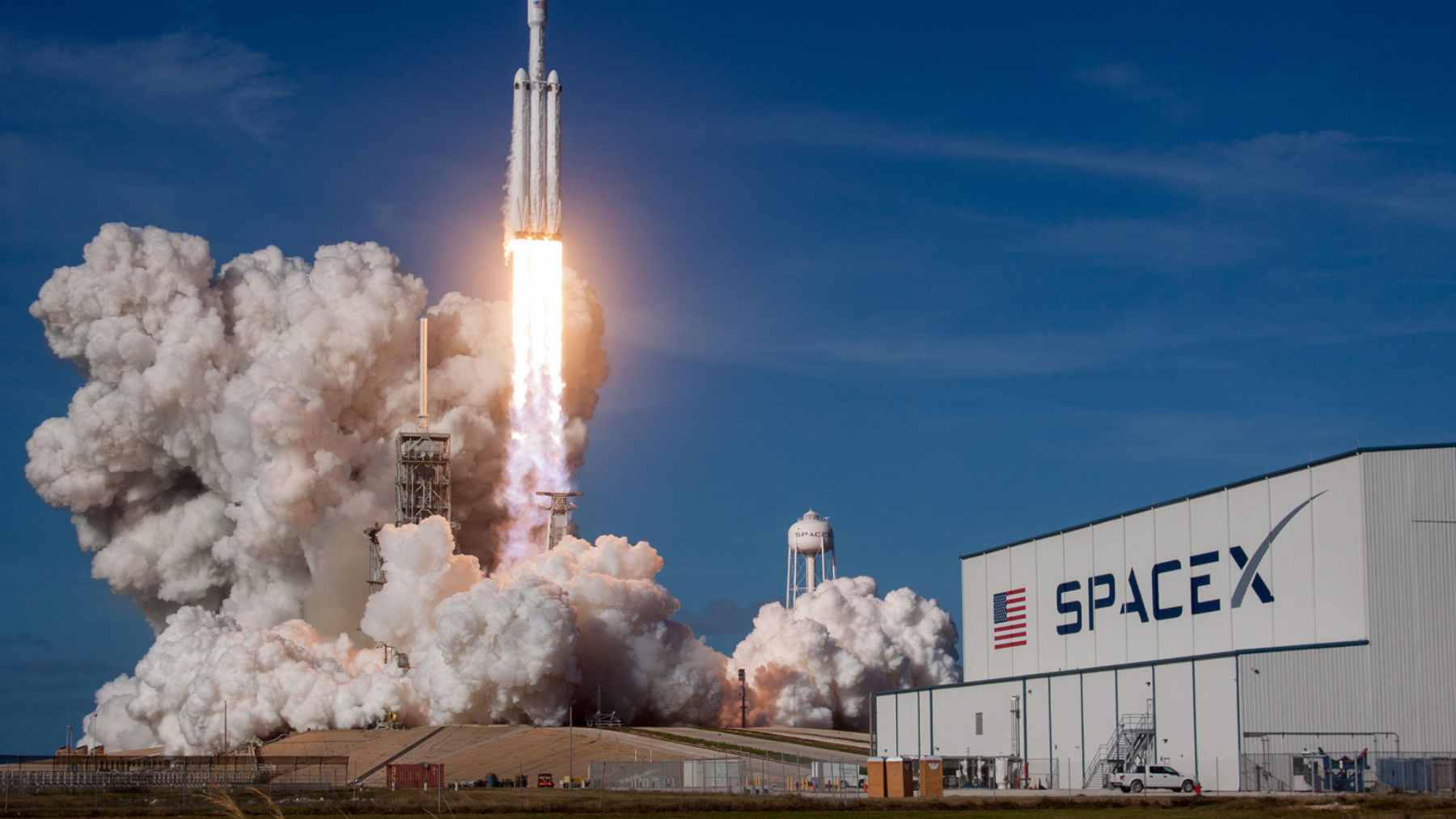
SpaceX has moved from a closely held aerospace company to a stock that ordinary savers can own without placing a single trade. After its record Nasdaq debut, the MSCI index added the company to major global benchmarks, prompting funds that follow the MSCI USA, MSCI World and MSCI ACWI indexes to adjust their holdings.
That change matters beyond Wall Street. It brings SpaceX’s rockets, Starlink network, national security work and still-uncertain atmospheric footprint into retirement accounts and broad-market ETFs, even when investors only thought they were buying “the market.” The key point is simple: index inclusion is a market decision, not a green seal of approval.
A record IPO reaches passive funds
SpaceX priced 555,555,555 Class A shares at $135 each and began trading under the ticker SPCX on June 12. After underwriters exercised their full option, the company sold 638,888,888 shares and raised about $85.7 billion in gross proceeds.
The stock opened at $150, an 11% jump from the offer price. It closed the latest trading session at $145.30, leaving it about 7.6% above the IPO price. That is a useful reminder that automatic demand from index funds does not remove ordinary market risk.
MSCI’s “fast-track” rules allow a very large IPO to enter its standard global index family after 10 trading days when listing, ownership, market value and available-float tests are met. The usual three-month trading-history and liquidity requirements are waived, which put SpaceX into the relevant benchmarks from June 29.
How SpaceX appears in a retirement account
So, what does that look like in a retirement account? MSCI does not own SpaceX shares and it does not manage the ETFs that track its benchmarks. It supplies the rules and constituent lists, while fund managers build products designed to mirror them as closely as possible.
In practical terms, a saver holding a broad MSCI World fund may now own a small slice of SpaceX automatically. A BlackRock MSCI World ETF listed the company at roughly 0.09% of assets on July 9. Tiny for one household, yes, but meaningful when repeated across a large pool of savings.
SpaceX’s enormous headline valuation does not translate directly into an equally enormous index weight. MSCI uses free-float-adjusted market value, so tightly held shares do not count in the same way as stock that can be readily bought and sold. Think of it as a huge building with only a few doors open.

A rocket company classified as telecom
MSCI placed SpaceX in the Communication Services sector and the “Alternative Carriers” sub-industry. Its reasoning was that Starlink’s satellite broadband business supplies most consolidated revenue and is the company’s main earnings contributor, even though rockets remain central to its identity.
That classification matters because an investor may encounter SpaceX in a communications fund rather than an aerospace or industrial fund. It also shows how one stock can bundle very different exposures, including consumer internet, reusable launch technology, artificial intelligence infrastructure and government missions.
The defense connection is not theoretical. The U.S. Space Force has awarded SpaceX national security launch work, including a $178.5 million task order announced in April 2026 for two launches carrying missile-tracking satellites. Broad index ownership can therefore bring defense exposure along with the more familiar Starlink story.
The environmental risk is now portfolio risk
SpaceX itself warns that regulators may pay closer attention to emissions and other byproducts from rocket launches in the upper atmosphere. Its securities filing says additional regulation could hurt operations, which turns an environmental question into a financial risk for shareholders.
Scientists are also beginning to measure effects that were once mainly modeled. A study published in February 2026 detected a tenfold increase in lithium atoms about 60 miles above Earth following the uncontrolled reentry of a Falcon 9 upper stage. Researchers described it as the first direct lidar observation of upper-atmosphere pollution from reentering space hardware.
Another 2026 study projected that satellite megaconstellations could account for 42% of the space sector’s climate impact by 2029. The researchers stressed that the total effect remains small compared with major pollution sources on the ground, but soot injected high in the atmosphere can linger for years and exert an unusually strong effect.
The trouble is, the science is still catching up with the launch rate.

Standard indexes are not sustainability screens
Here is the distinction many savers may miss. MSCI says its standard IPO process is rules-based and centered on market eligibility, company size and freely tradable shares. It does not require a company to pass a climate or ESG screen before joining MSCI World or MSCI ACWI.
MSCI also says sustainability, climate, factor and thematic indexes may apply different rules or wait until more company data is available. In other words, SpaceX can sit inside a conventional global fund while being absent from a more selective screened product. The label on the ETF matters.
That is why “passive” does not mean value-neutral. A fund may follow its benchmark mechanically, but the index provider still chooses the methodology and the saver still chooses which benchmark to own. No alarm is needed, but a quick look at the holdings page can prevent surprises.
What savers should keep in mind
For most people, SpaceX’s initial weight in a broad world fund is too small to transform portfolio performance by itself. That exposure could grow if more shares become freely tradable, so the company’s role in retirement portfolios may look different after the first months of public trading.
Investors with firm environmental or defense-related limits should compare a fund’s benchmark, exclusions and latest holdings instead of relying on its marketing name. Those comfortable with the exposure should still remember that SpaceX combines high-growth technology, government contracts, launch risk and emerging environmental regulation in one security.
At the end of the day, the biggest change is not that every saver suddenly chose SpaceX. It is that a rules-based index made the choice inside many portfolios.
The official index announcement was published on MSCI.