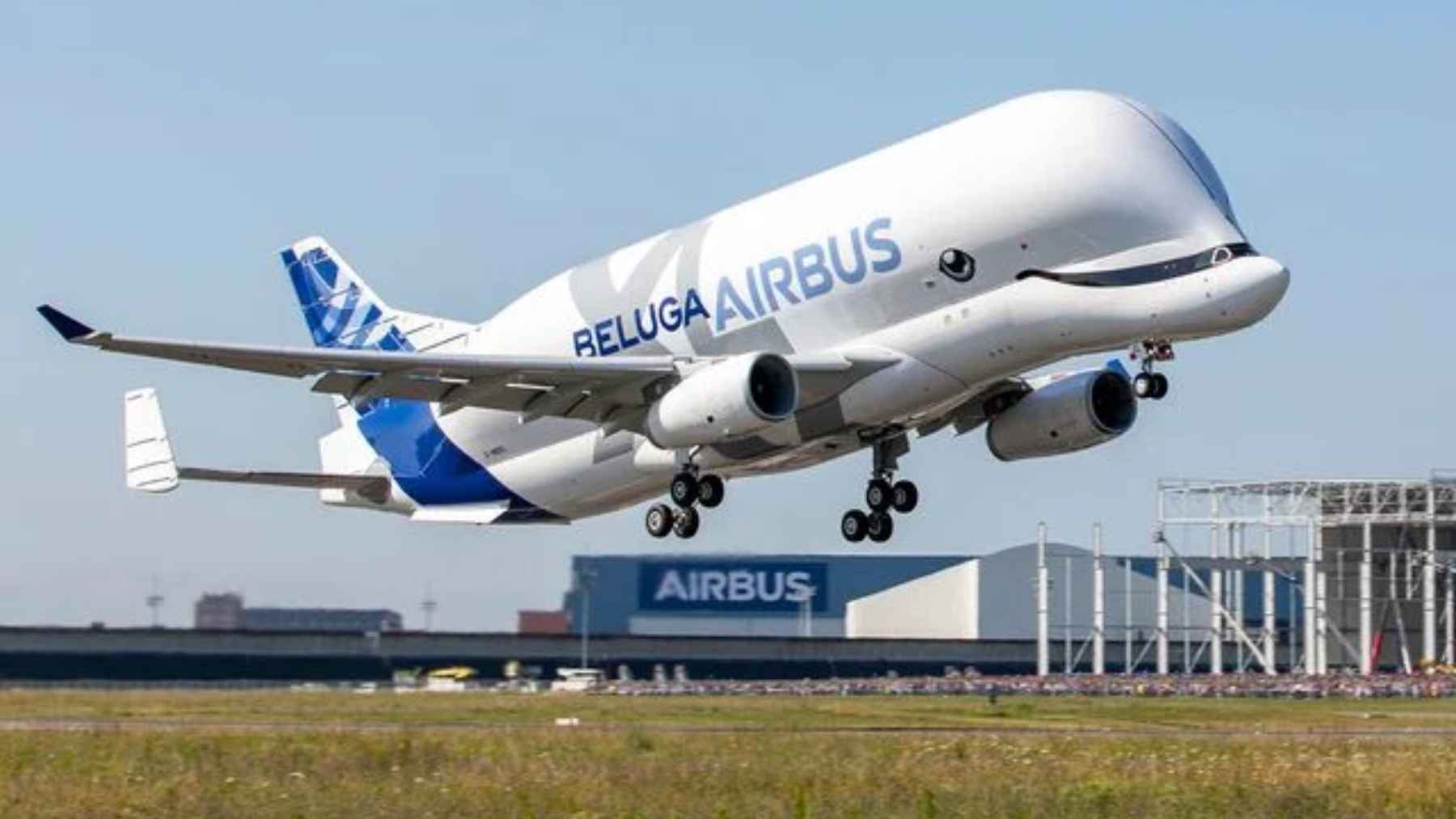
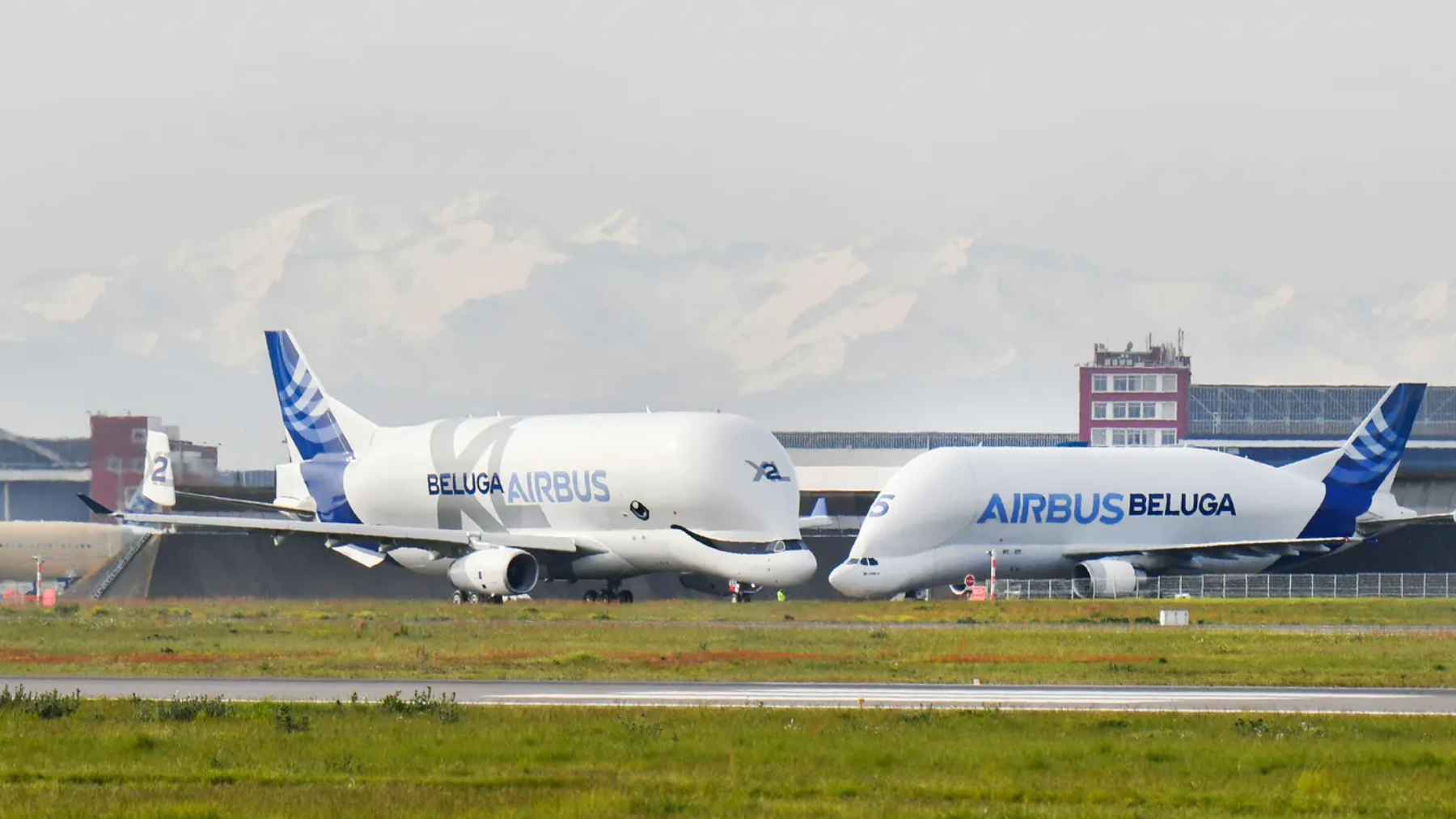
When Airbus’ BelugaXL appears over Getafe, Spain, work briefly seems to pause. The huge white freighter looks less like a conventional airplane than a smiling whale, but behind that friendly shape is one of Europe’s most important industrial machines.
Its main advantage is simple. The BelugaXL can carry far more aircraft structure in one trip than the older BelugaST, helping Airbus move bulky parts quickly while potentially reducing the number of flights needed for the same volume of cargo.
That does not make the airplane a climate solution on its own, but it does make the flying whale a revealing case study in how speed, production pressure, and emissions collide inside modern aerospace.
A flying factory link
The BelugaXL connects Airbus plants that each build different pieces of an airplane. One working rotation can take the freighter from Toulouse to Getafe, then onward to Broughton in the United Kingdom with A350 wing covers produced at Illescas near Toledo.
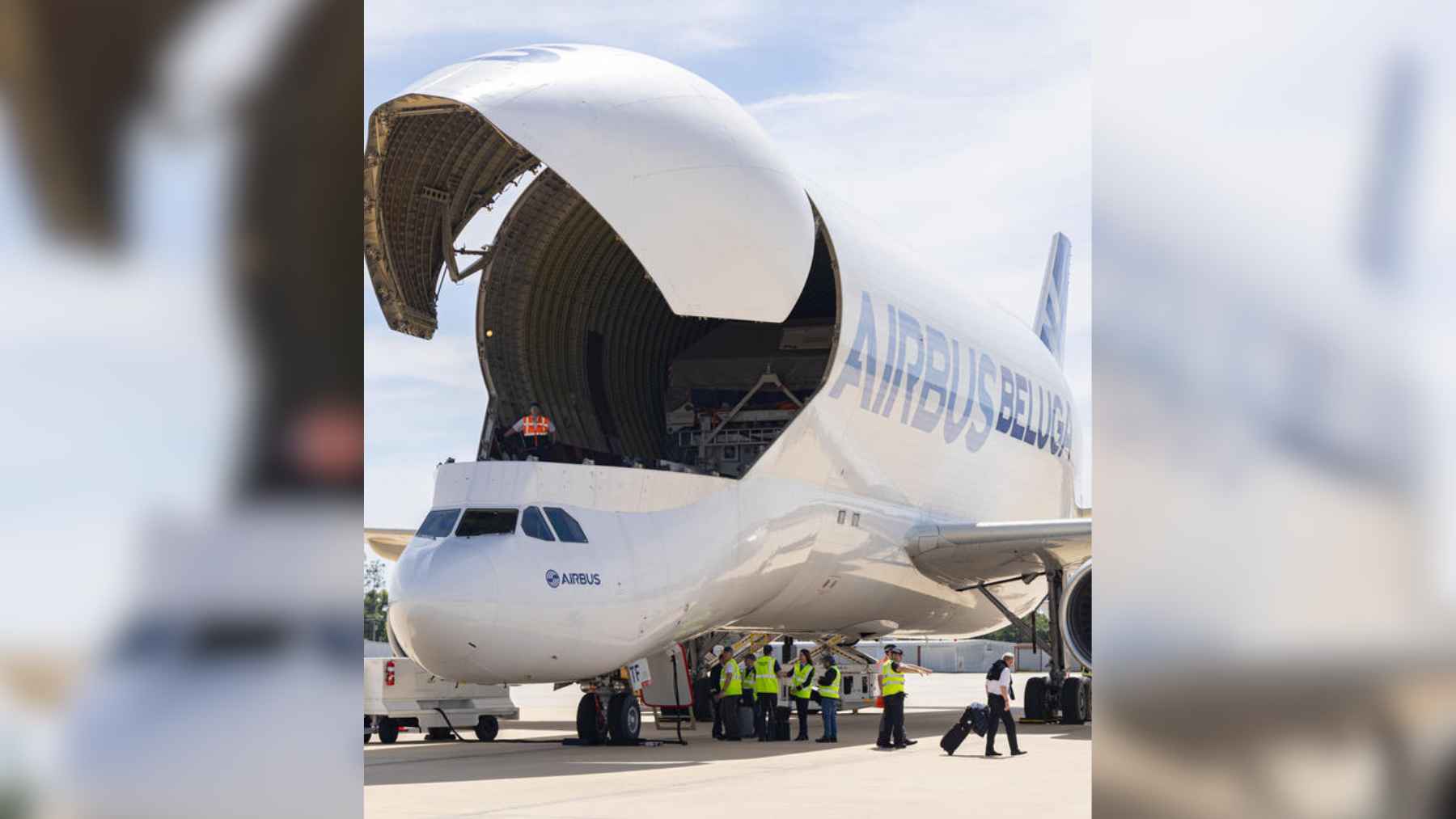
On the ground, a front cargo door roughly 26 feet high opens above the lowered cockpit. Crews unload one outsized component and prepare the next, sometimes turning the airplane around in a little more than two hours. It is closer to a moving factory corridor than ordinary air freight.
Why its size matters
Airbus operates six BelugaXL aircraft across 11 European destinations. Each one is about 207 feet long, roughly 62 feet high, and able to carry a maximum payload of about 112,000 pounds over approximately 2,485 miles.
The cargo hold can comfortably fit two A350 wings that are each nearly 98 feet long. Its predecessor could carry only one, which helps explain why Airbus says the newer model offers 30 percent more transport capacity. In practical terms, a fuller airplane can mean fewer trips per pair of wings.
That is the efficiency argument. Still, the real environmental result depends on how full each flight is, the route flown, and the fuel used. A giant hold delivers an environmental gain only when the extra space is utilised to reduce the number of trips rather than being left unused.
The fuel question
Air transport is the fast lane in Airbus’ industrial network, especially when an assembly line is waiting for a component. Airbus forecast in 2024 that annual BelugaXL flying time would climb from 6,500 hours that year to 9,500 hours in 2027.
That would be an increase of roughly 46 percent in three years. It does not automatically mean emissions will rise by the same amount, but it makes load planning and lower-carbon fuel more important. More efficient trips can still be outweighed, to some extent, by a much busier schedule.
Airbus has used sustainable aviation fuel in its Beluga operations since 2019. The company says this fuel can reduce life-cycle emissions by up to 80 percent compared with conventional jet fuel, although the result varies with the feedstock and production pathway. Airbus also acknowledges that the fuel remains more expensive and less widely available.
Air cannot do everything
The BelugaXL’s range is well suited to Europe, but it cannot directly tie together every Airbus factory around the world. Components moving to final assembly sites in Alabama or Tianjin still depend heavily on ships, while road and rail remain important even within Europe.
That mixed system may look less dramatic than a whale-shaped airplane crossing the sky, but it matters. Sea and rail can handle heavy cargo with different time and energy tradeoffs, while the BelugaXL is reserved for parts whose size, timing, or value justify air transport.
At the end of the day, the best logistics network works more like a varied toolbox than a single multitool.
Familiar controls, unusual abilities
The BelugaXL is based on the A330-200 Freighter, although its upper fuselage, cargo bay, rear section, and tail were extensively redesigned. The cockpit keeps many familiar A330 systems, which reduces the training gap for pilots moving onto the specialized aircraft.
“If you know how to fly an A330, you can fly a BelugaXL without major difficulty,” pilot Yannick Le Quellec said in Getafe’s announcement. The airplane also has a practical industrial advantage because it can serve shorter runways.
The report puts Broughton’s runway at about 5,250 feet, compared with roughly 6,560 feet that a conventional A330 typically needs for a comfortable landing.
Production pressure is rising
The BelugaXL is becoming more important because Airbus is trying to build airplanes faster. The company delivered 793 commercial aircraft in 2025 and ended the year with a record backlog of 8,754 aircraft.
Airbus still expects to reach between 70 and 75 A320-family airplanes per month by the end of 2027. It is also targeting five A330s per month in 2029 and 12 A350s per month in 2028. Those targets place more pressure on factories and every transport link between them.
Getafe is part of that chain. The Spanish facility produces horizontal tail stabilizers for several Airbus families and the rear fuselage section of the A350. When one site accelerates, the rest must keep pace, and that is where the BelugaXL earns its place.
The flying whale becomes the staple
From mid-2027, Airbus says the six BelugaXLs will become its sole fleet for moving major aircraft components as the older BelugaST generation leaves that role. The transition gives the larger freighter even more responsibility and raises a straightforward question. Can Airbus increase output without letting the environmental cost of internal logistics grow just as quickly?
Carrying two wings instead of one can improve efficiency, while sustainable fuel can lower life-cycle emissions. Yet neither benefit is automatic.
What matters is the full system, including load factors, fuel sourcing, route planning, and the balance between air, sea, rail, and road.
The press release was published on Airbus.