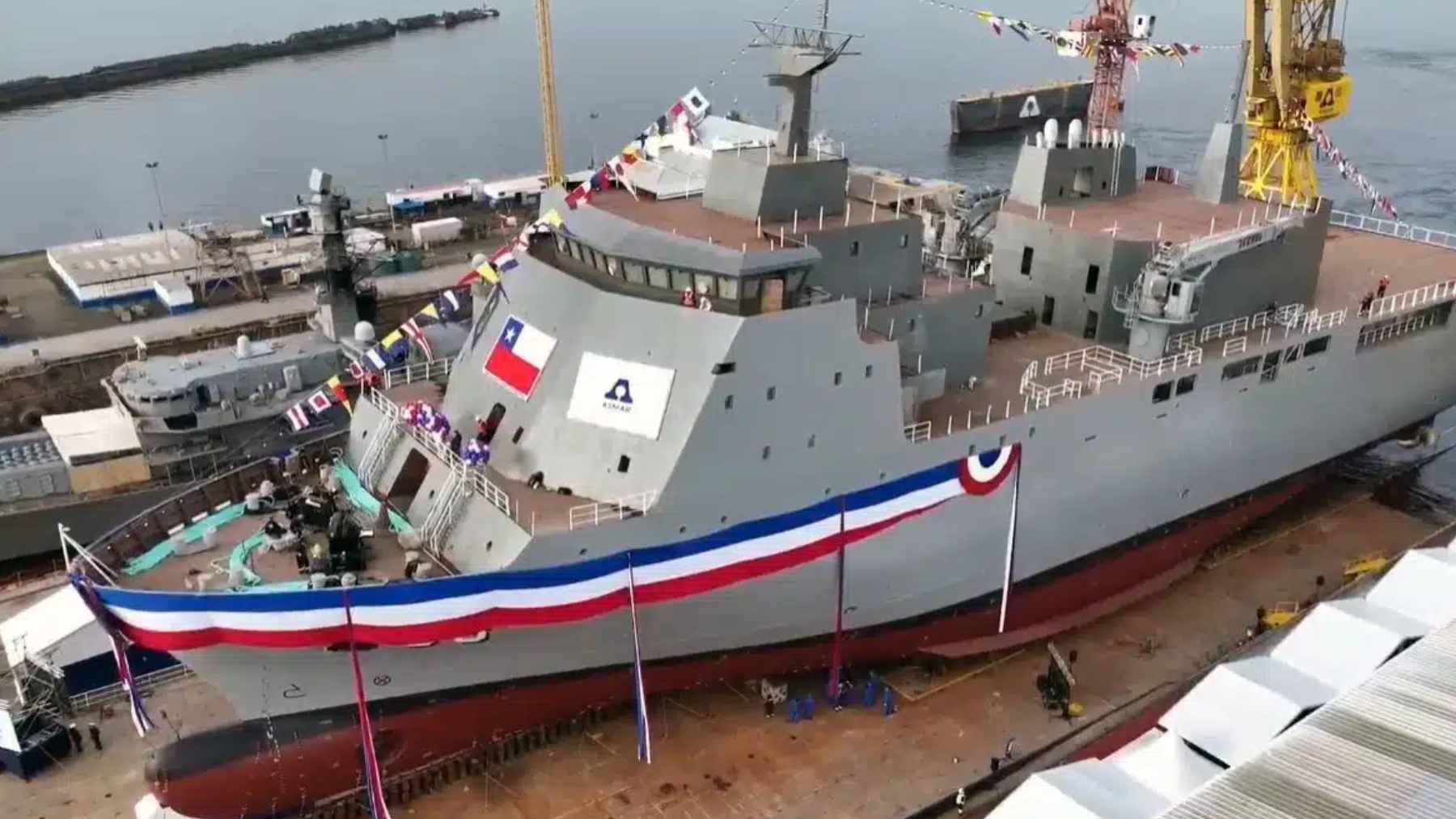
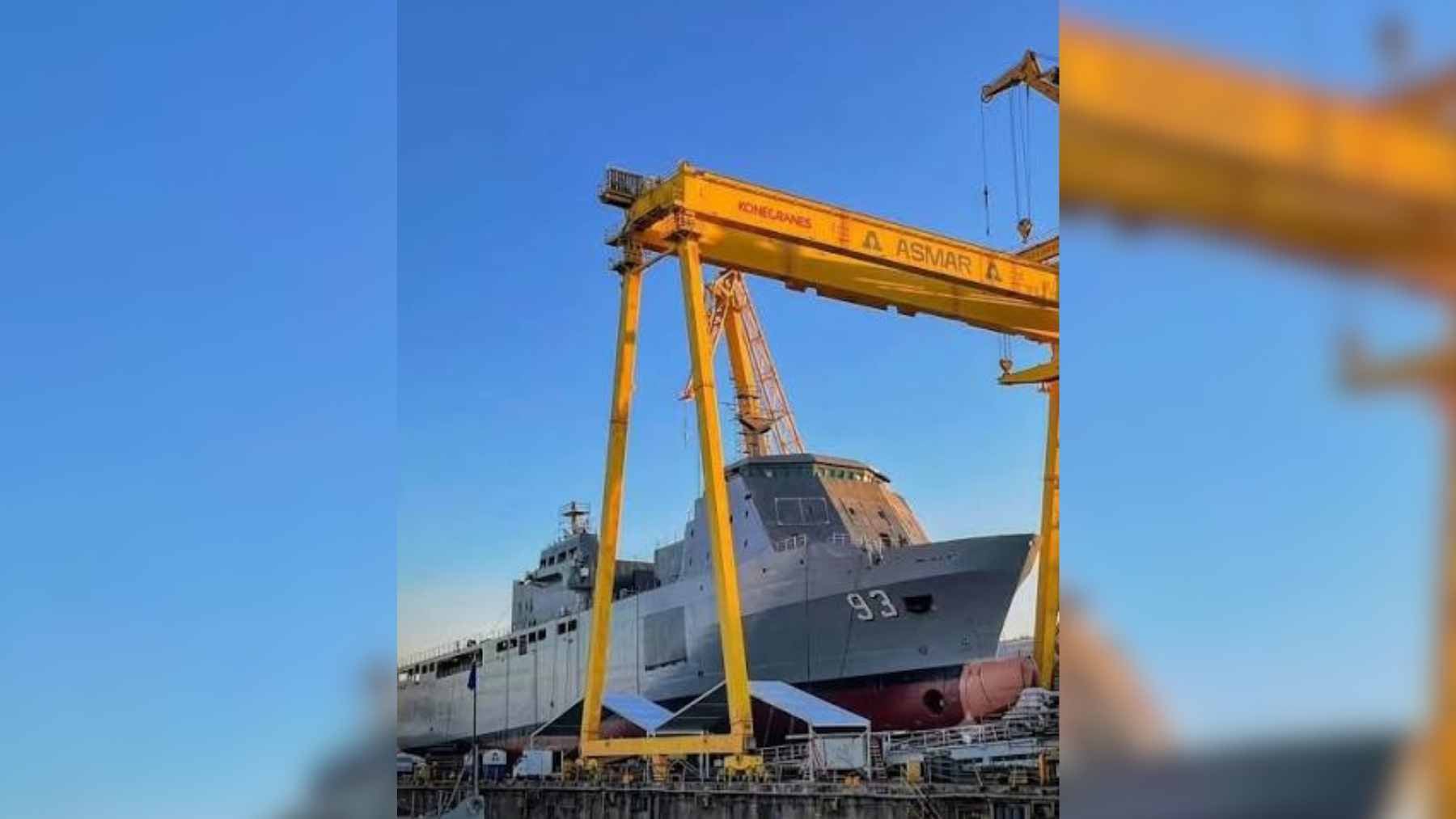
Chile has just pushed a new kind of national asset into the water. The LPD 93 “Magallanes,” a 361-foot multipurpose naval ship built at ASMAR’s Talcahuano yard, is not only a military platform, but also a floating tool for disaster response, remote-zone logistics, Antarctic summer operations and scientific support.
That is why this launch matters beyond the defense world. ASMAR is building the “Magallanes” while also starting work on its sister ship, the “Rapa Nui,” creating a rare two-ship workload for Chile’s state-owned shipyard and lifting expectations that 2026 revenue will beat the roughly $210 million posted in 2025.
In practical terms, Chile is trying to turn shipbuilding into both a security policy and an industrial engine.
A ship with two jobs
The “Magallanes” was launched on June 18 at ASMAR Talcahuano, in a ceremony attended by Chilean President José Antonio Kast and senior naval officials. The Chilean Navy described the vessel as the first unit built under the National Continuous Naval Construction Plan.
What does that mean in everyday language? It means the ship is meant to carry troops and equipment when needed, but also to reach isolated communities, move supplies, evacuate people and respond when floods, fires, earthquakes or other emergencies cut normal routes.
That dual role gives the project its environmental angle. Climate pressure is making disaster response and logistics in hard-to-reach areas more important, and ships like this can become part of the public safety toolkit.
Built for the far south
The “Magallanes” and “Rapa Nui” are big vessels by regional standards. Each is about 361 feet long, 72 feet wide and 45 feet deep, with a displacement of roughly 8,805 U.S. tons.
Both ships are designed for multipurpose work, including amphibious operations, logistics for isolated areas, disaster response and summer operations in Antarctic waters. That last part matters because Antarctica is not just another destination on a map. It is a harsh, fragile region where weather, distance and environmental rules make every mission more demanding.
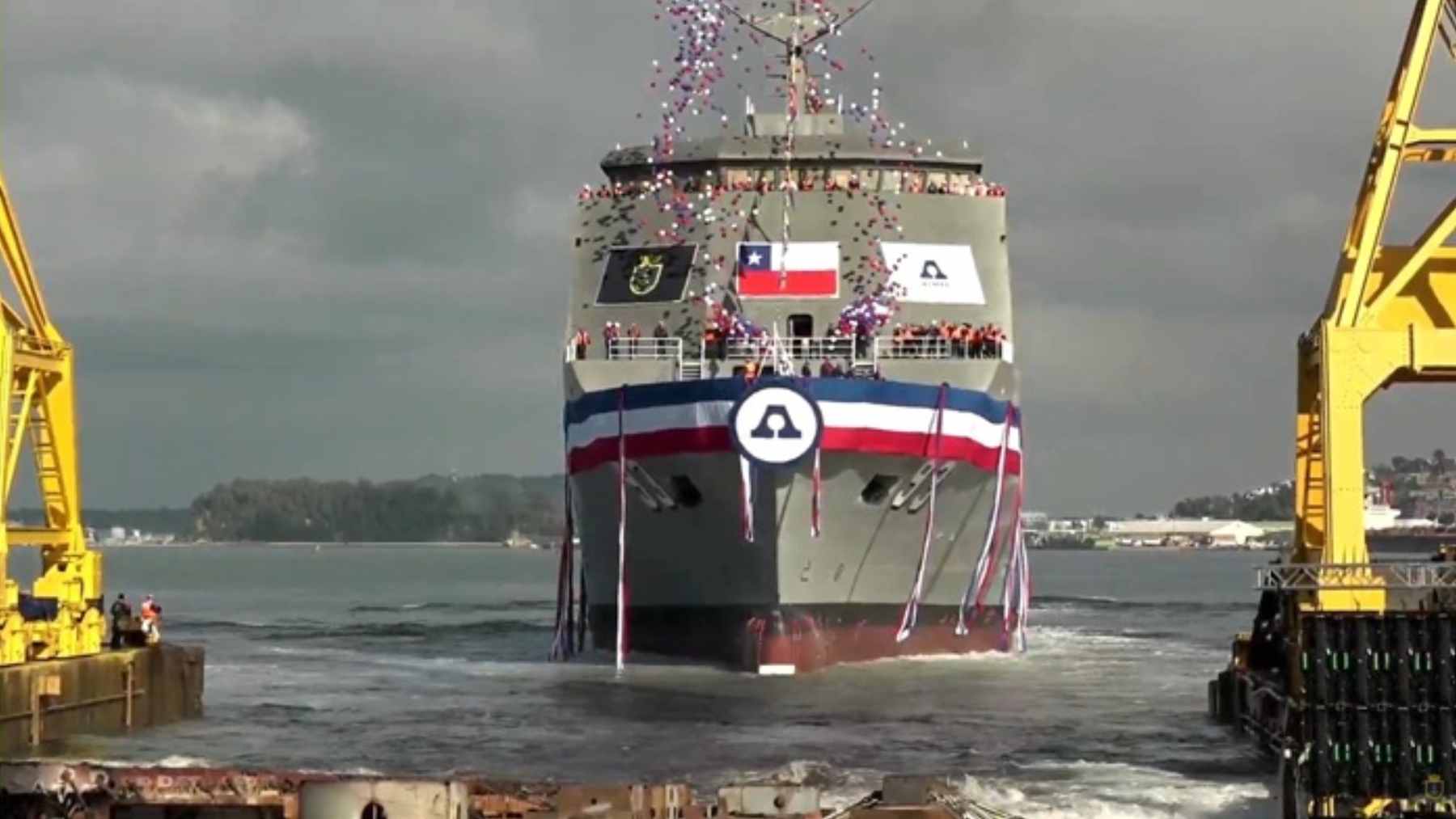
The Navy says the “Magallanes” will now move into the next phase, including outfitting, systems integration and operational testing before it joins active service. The launch looked dramatic, but the hard technical work is not over yet.
ASMAR’s unusual business case
ASMAR is not a private startup chasing a quick contract. It is an autonomous state-owned company whose main job is to repair, overhaul and build ships for the Chilean Navy. Its roots go back to the old naval arsenals of 1895, according to the business report provided for this story.
Still, the company also does outside work when it has spare capacity. About 20% of its sales come from third-party repairs, including merchant ships, fishing vessels, public works barges and even maintenance work on two trains serving the Puerto Montt, Puerto Varas and Llanquihue route.
That may sound like a strange mix. Ships, barges and trains are very different machines, but the common thread is heavy engineering in places where reliability really matters.
The money behind the metal
The first phase of Escotillón IV, the project covering the first two multipurpose ships, was signed with the Chilean Navy in August 2022 for about $409 million. ASMAR’s director, Rear Adm. José Miguel Hernández, told Pulso that the project is demanding the company’s maximum productive and operational capacity in naval construction.
In 2025, ASMAR reported net income of $18.9 million and EBITDA of $26.5 million, even as shipbuilding faced higher costs, longer delivery times and difficulty obtaining some materials and equipment. That is a familiar problem across defense manufacturing. Steel, electronics, engines and control systems do not move on wishful thinking.
The most striking number may be zero. ASMAR’s 2025 annual report says the company had no long-term financial obligations at year-end, giving it low leverage, strong solvency and flexibility to face new investment projects.
Technology under the deck
A modern naval ship is not just a hull with engines. It is a web of sensors, command systems, navigation tools, communications equipment and power management technology.
That is where SISDEF, ASMAR’s technology subsidiary, comes in. The unit develops systems for the Escotillón IV ships and generated about $15 million in sales in 2025, up from $10.6 million in 2024 and $7.2 million in 2023.
ASMAR also has Sociber, a repair venture owned equally with Spain’s state shipbuilder Navantia. That partnership generated $13.5 million in revenue and $1.78 million in profit in 2025, both higher than the year before. It is a quiet reminder that shipbuilding is also about alliances, know-how and access to markets.
The environmental test
There is one important caveat. A multipurpose military ship is not automatically a green ship, and the available information does not present the “Magallanes” as a zero-emission vessel. Readers should keep that distinction in mind.
Even so, ASMAR’s own annual report says the company maintained international certifications for quality, environment, and occupational health and safety across its three plants. The report also says ASMAR uses online controls to provide instant management information, helping improve decisions at different levels of the company.
At the end of the day, the environmental relevance here is less about a miracle fuel and more about resilience. When a country with long coastlines, remote islands and Antarctic responsibilities builds ships that can move people, supplies and aid, it is investing in the machinery needed when normal infrastructure fails.
What happens next?
The next major milestone belongs to the “Rapa Nui.” The second ship has already begun construction and is expected to touch the water in the first half of 2029. If the schedule holds, Chile will have a pair of locally built multipurpose vessels that can serve defense, logistics and emergency missions.
For ASMAR, the challenge is keeping this workload from becoming a one-time surge. The Navy says the “Magallanes” reflects a long-term policy intended to renew maritime capabilities, strengthen national shipbuilding and support technological development for decades.
So, is this just another defense launch? Not quite. It is a test of whether a state shipyard can link military needs, industrial policy and environmental resilience without losing control of costs.
The official statement was published on Armada de Chile.