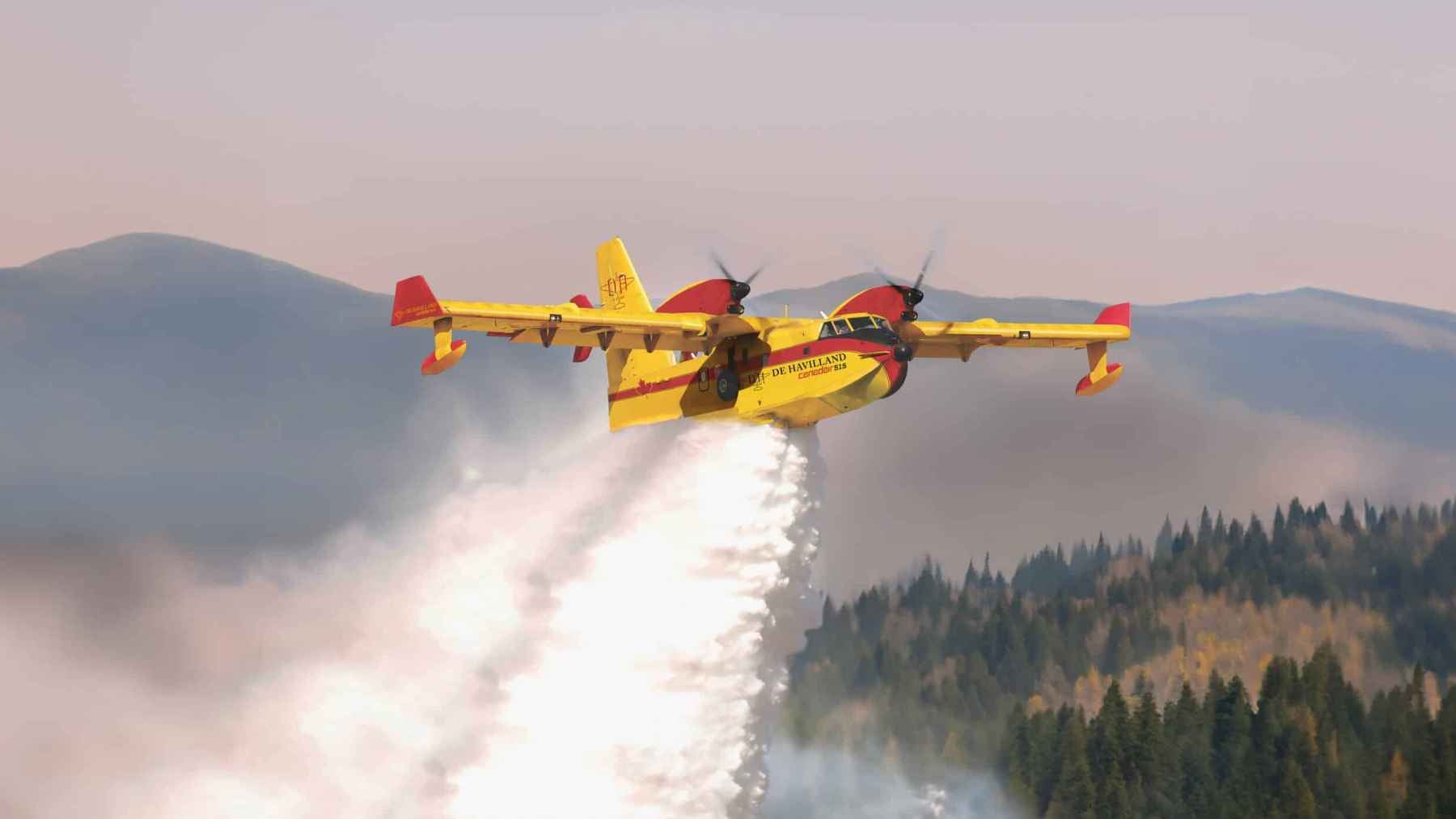
Spain’s water-bomber commitment is now taking shape on the factory floor, as De Havilland assembles its first new firefighting aircraft design in decades, a modernized variant of a plane retired years ago.
Europe’s next generation of wildfire aircraft has moved from procurement files to the factory floor. De Havilland Canada says the cockpit and hull of the first DHC-515 have been joined, the mid-fuselage is complete, and the program’s first 93.8-foot wing box has been finished at its Canadian facilities.
For Spain, this is more than an industrial milestone. The country has ordered seven DHC-515s for the Air and Space Force’s 43 Group, with service expected to begin in 2028, while the European Union is building a permanent shared fleet for fire seasons that are becoming harder to contain.
The first aircraft is taking shape
The latest production update shows the forward fuselage already formed and the center section moving into integration. It is the clearest sign yet that a program announced years ago is becoming a real aircraft rather than a promise on a procurement schedule.
“We’re building more than an aircraft; we’re strengthening the future of aerial firefighting,” De Havilland Canada CEO Brian Chafe said. The company describes the DHC-515 as the only purpose-built amphibious firefighting aircraft currently in production.
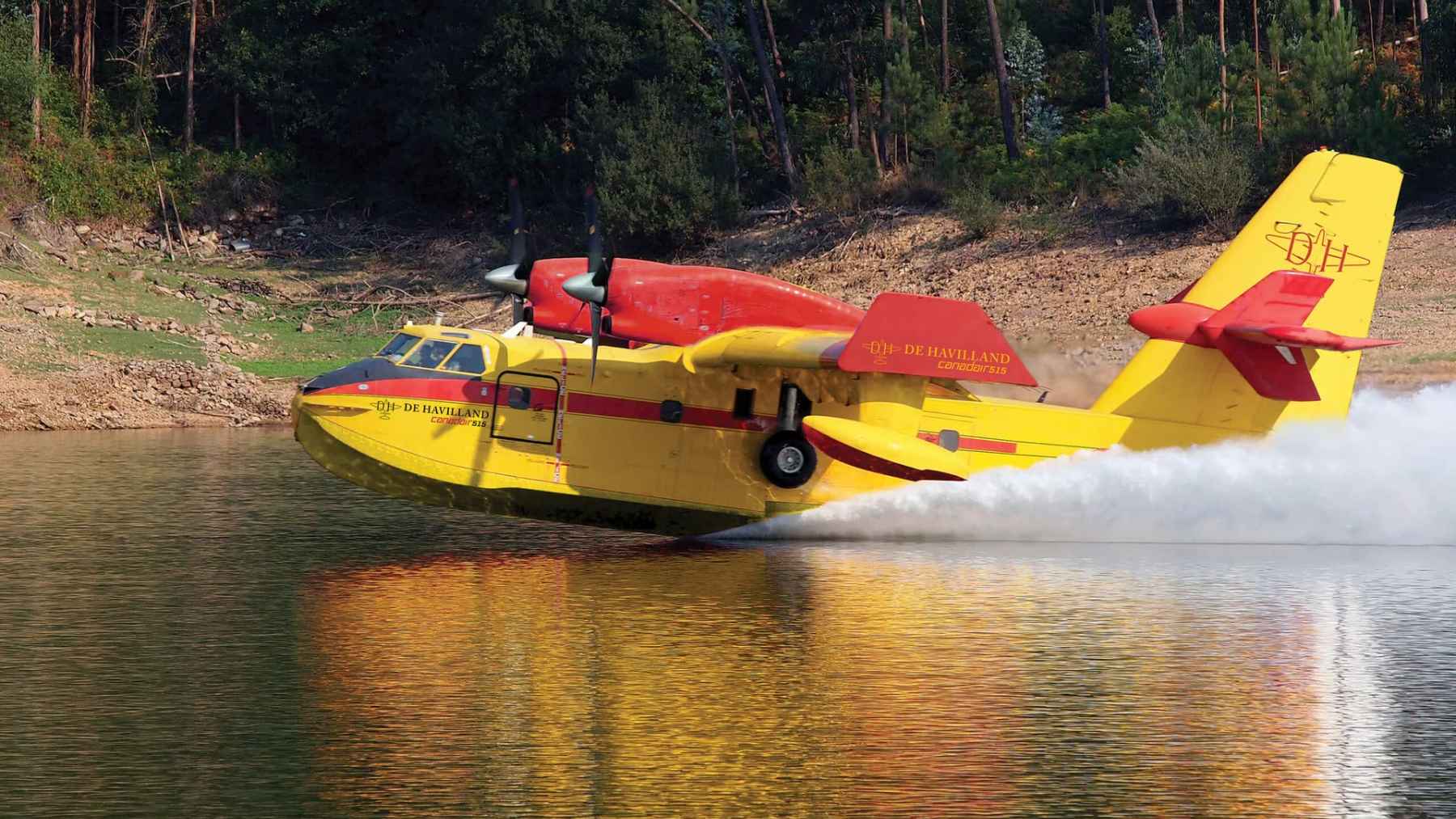
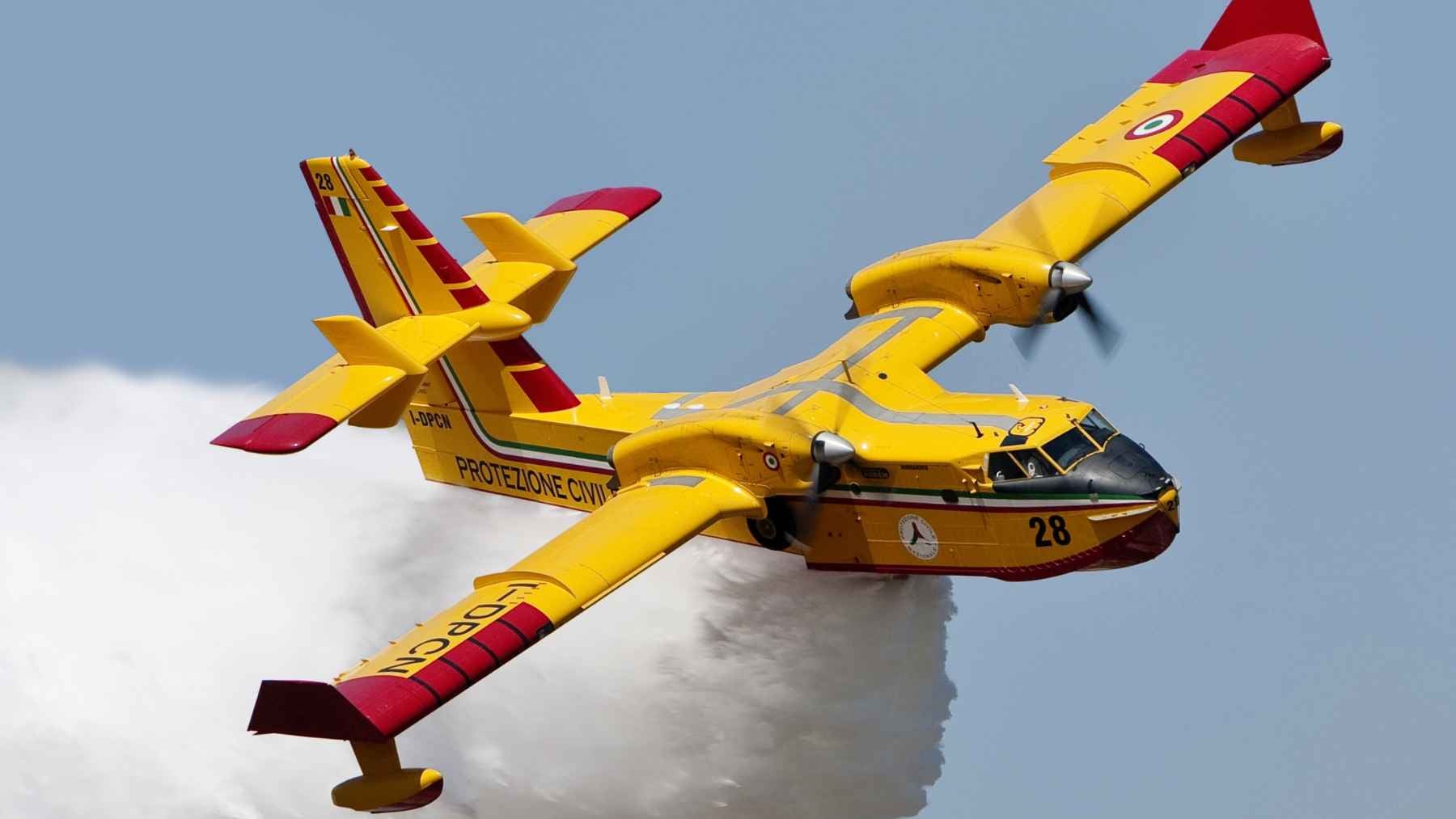
The design builds on the familiar CL-415 rather than starting from a blank sheet. That lowers some development risk, but it also brings major changes through modern avionics, new materials, better corrosion protection, and a flight deck designed for current and future navigation standards.
Spain’s transition will take years
Spain authorized an eight-year acquisition package estimated at about $405.6 million, using the exchange rate shown in the government’s published spending table. The package covers seven aircraft as well as equipment, systems, infrastructure, integrated logistics, and work to update the current firefighting fleet, so it should not be read as a simple per-aircraft price.
Two of Spain’s aircraft are being financed through the EU Civil Protection Mechanism, while the other five form the national portion of the order. The new fleet will be operated by the 43 Group from Torrejón Air Base, and Spanish defense material says the first crews and maintainers will train in Canada before building an instructor team at home.
The first Spanish aircraft is expected in 2028, provided the schedule holds. That timing matters because a production milestone today does not put extra water over a wildfire tomorrow.
Europe is buying as one market
The original six-country European program covered 22 aircraft. France then ordered two additional DHC-515s in June 2026, lifting Europe’s announced total to at least 24, while 12 of the planes will form the permanent rescEU fleet with two based in each participating country.
Buying a common aircraft family should make joint deployments easier, particularly for training, maintenance, parts, and operating procedures. That does not remove national responsibility, but it gives Europe a shared pool when several countries face severe fires at the same time.
The environmental pressure behind the deal is difficult to ignore. The European Commission says more than 2.47 million acres burned across the EU in 2025, while the June through August period was about 1.3 degrees Fahrenheit above the 1991 to 2020 global average.
A cockpit built for difficult work
Aerial firefighting puts crews close to terrain, smoke, changing winds, helicopters, drones, and other aircraft. De Havilland says the DHC-515’s advanced avionics are intended to improve situational awareness and safety while making the aircraft easier to maintain over a long service life.
Spanish program material describes large multifunction displays, a head-up display, dedicated 3D navigation for water-drop runs, and compatibility with night-vision systems. Those tools are meant to keep critical information in front of the pilots during demanding low-level operations.
Still, new equipment does not automatically make every mission possible after dark. Certification, approved procedures, weather, terrain, water conditions, and crew training will continue to decide when and how the aircraft can operate.
One water figure needs a caveat
Spain’s defense publication describes the DHC-515 as carrying up to 1,849 gallons of water, compared with about 1,585 gallons for the CL-415. De Havilland Canada’s current public specification page, however, lists a water-tank capacity of 1,621 U.S. gallons.
The public documents do not explain that difference. It could reflect different payload definitions, an earlier program target, or a configuration change, but presenting the larger figure as settled would go beyond what the manufacturer currently publishes.
What is clear is the operating concept. The aircraft can scoop a full tank in about 12 seconds and return directly to the fire, which is why access to suitable lakes, reservoirs, rivers, or coastal water can be just as important as tank capacity.
The hard part is the wait
The EU expects the first aircraft for its permanent rescEU fleet in early 2028. Until then, its 2026 standby structure includes 22 firefighting airplanes and five helicopters positioned across 12 countries, alongside ground teams, satellite mapping, fire-danger forecasting, and emergency coordination.
That mix matters because aircraft alone do not stop a wildfire crisis. Prevention, land management, early detection, ground crews, and fast cross-border coordination remain the foundation, while the DHC-515 adds a stronger permanent aerial layer.
For Spain, the assembly update is encouraging because it turns a long-planned replacement into visible hardware. The real measure will come later, when trained crews, support systems, spare parts, and aircraft are ready together for the first summer campaign.
The production update appears on De Havilland Canada.