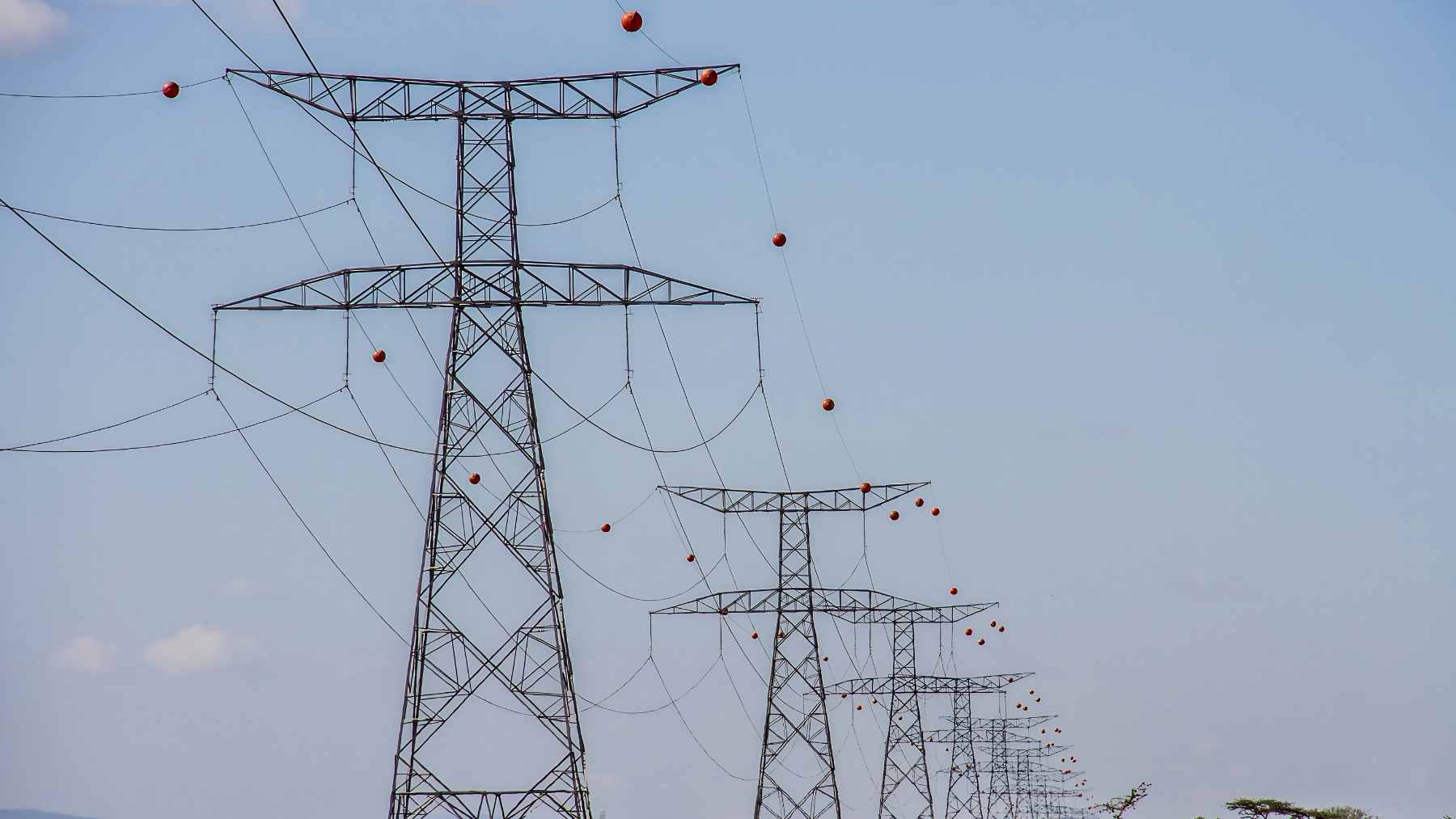
You have probably seen them from a highway or a country road, those bright red-orange balls hanging from high-voltage power lines. They look simple, almost decorative, but they are doing a serious job every hour of the day.
Known as aerial marker balls or obstruction markers, they make hard-to-see wires visible to low-flying aircraft and, in many places, to birds that might otherwise collide with them. The source material describes their double purpose clearly (aviation safety and wildlife protection), especially near airports, rivers, valleys, open fields, and other risky flight areas.
Not part of the power system
These balls are not carrying electricity, storing data, or measuring voltage–their job is visual. They turn thin, nearly invisible cables into something a pilot can spot before it becomes a danger.
That matters for helicopters, air ambulances, firefighting aircraft, crop-dusters, inspection crews, police aircraft, and military helicopters flying low over terrain. In fog, glare, dawn light, or sunset, a power line can almost disappear against the sky. The marker gives the eye something solid to catch.
The Federal Aviation Administration says unlighted markers are used to make structures more conspicuous and should be recognizable in clear daylight from at least 4,000 ft. away. The FAA also identifies spherical markers as a primary way to mark overhead wires and catenary transmission lines.
Why the colors matter
Many people call them red balls, but aviation rules often refer to aviation orange, white, or yellow. From the ground, especially in strong sun, aviation orange can easily look red, which is why drivers often describe them that way.
The FAA says marker balls used on extensive wire crossings, such as over canyons, lakes, and rivers, should generally be at least 36 inches wide. Smaller 20-inch markers are allowed in some less extensive locations or on lower power lines near runway ends.
Spacing matters, too. Unlighted markers are normally placed about every 200 feet, but the gap can shrink to 30 to 50 feet in critical areas near runway ends. It is not random decoration, it is a visibility pattern.
A warning for pilots
From a cockpit, a cable is not always easy to judge. A tower may be obvious, but the wire stretching from it can blend into trees, water, haze, or a pale sky. That is where a bright sphere earns its keep.
The FAA recommends markers on wires near airports, heliports, rivers, canyons, lakes, and other known aviation-risk areas. For higher-voltage catenary lines, lighted markers can also improve nighttime visibility, although the exact setup depends on location and the line itself.
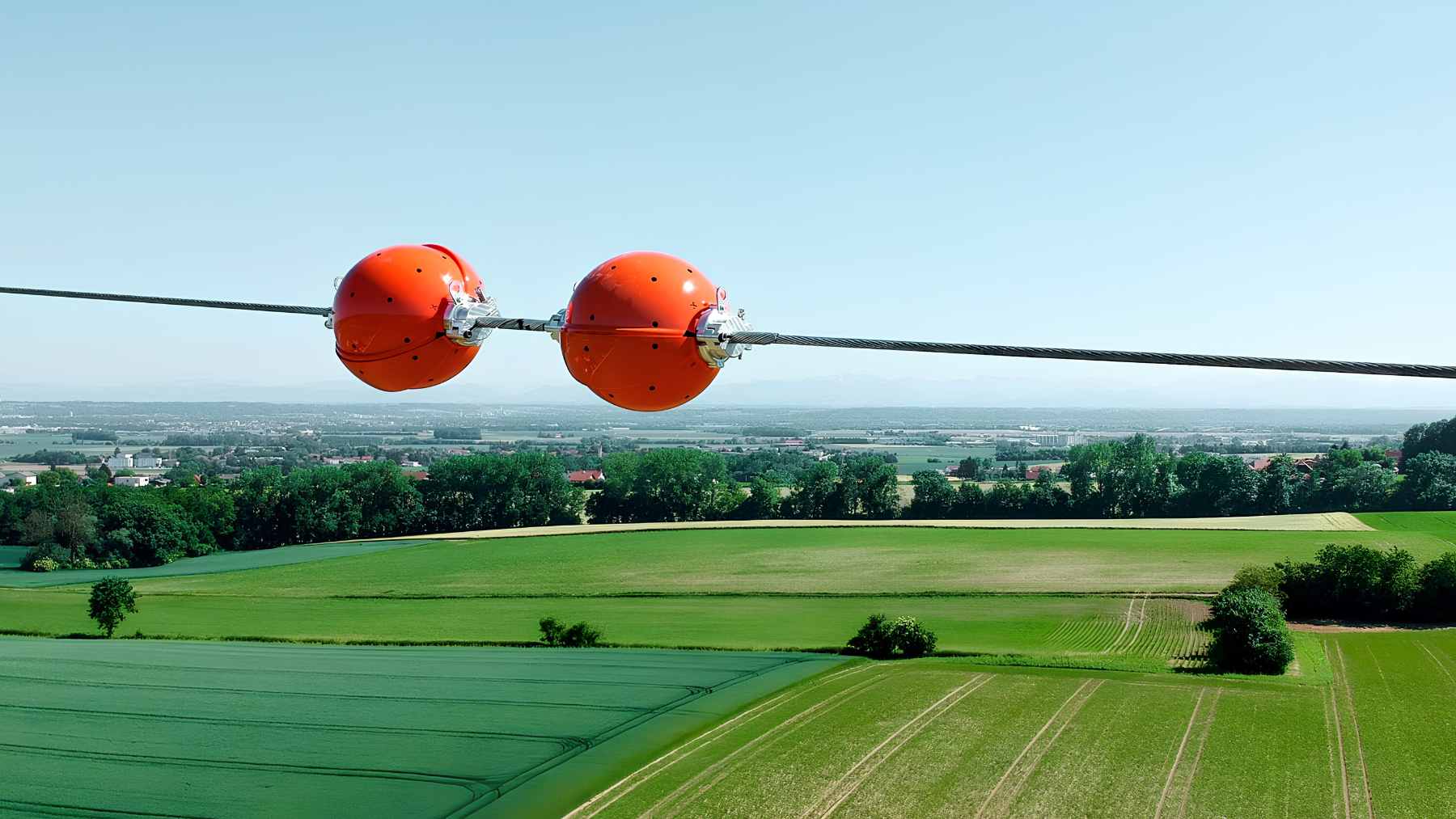
The idea is simple: give pilots more time to see the hazard and change course. A few seconds can make all the difference.
Birds face the same problem
Power lines are also a major wildlife hazard. The U.S. Fish and Wildlife Service says the country has about 7.1 million miles of above-ground distribution and transmission lines, and that electric utility infrastructure kills millions of birds every year through collisions and electrocutions.
Large birds can be especially vulnerable because many fly fast, travel long distances, or move through open habitats where lines cross migration routes. Cranes, storks, raptors, and vultures are often mentioned in conservation discussions because they may not detect the wire early enough to avoid it.
A 2014 PLOS ONE study estimated that between 12 million and 64 million birds are killed each year at U.S. power lines, including between 8 million and 57 million from collisions. Those numbers come with considerable uncertainty, but even lower estimates show the scale of the problem.
Not every marker is the same
The big aviation balls are mainly meant to protect aircraft, but they can also help birds by making wires easier to see. Utilities and conservation teams also use dedicated bird flight diverters, including spirals, flappers, ribbons, and other devices designed specifically for wildlife.
Do they work? For the most part, yes, but results vary. A 2019 meta-analysis found that wire-marking reduced bird collisions with power lines by about 50.4% on average, while also warning that site conditions, device type, and study quality can affect the outcome.
That nuance matters, as no single ball or diverter can make every line safe. But better visibility, smart routing, and avian-safe design can reduce avoidable deaths.
The business side of safer lines
For utilities, this is not only an environmental issue. Bird collisions and electrocutions can damage equipment, trigger outages, raise maintenance costs, and create legal or permitting problems. The U.S. Fish and Wildlife Service notes that solutions can protect birds while also improving power supply reliability.
That business case is becoming more important as the electric grid expands for renewables, data centers, new housing, and rising electricity demand. More power lines may be needed, but where they go and how they are marked matters.
In practical terms, the energy transition cannot just be about building faster. It also has to be about building smarter.
What to remember
The next time you see those red-orange balls hanging above a road, river, or field, they are not there for show. They are a small piece of safety engineering, quietly helping pilots spot a hidden obstacle and giving birds a better chance to steer away.
They also tell a bigger story. As power infrastructure spreads across open land and sensitive habitats, small design choices can carry real consequences for aviation, business, and wildlife.
The official guidance was published on the Federal Aviation Administration website.