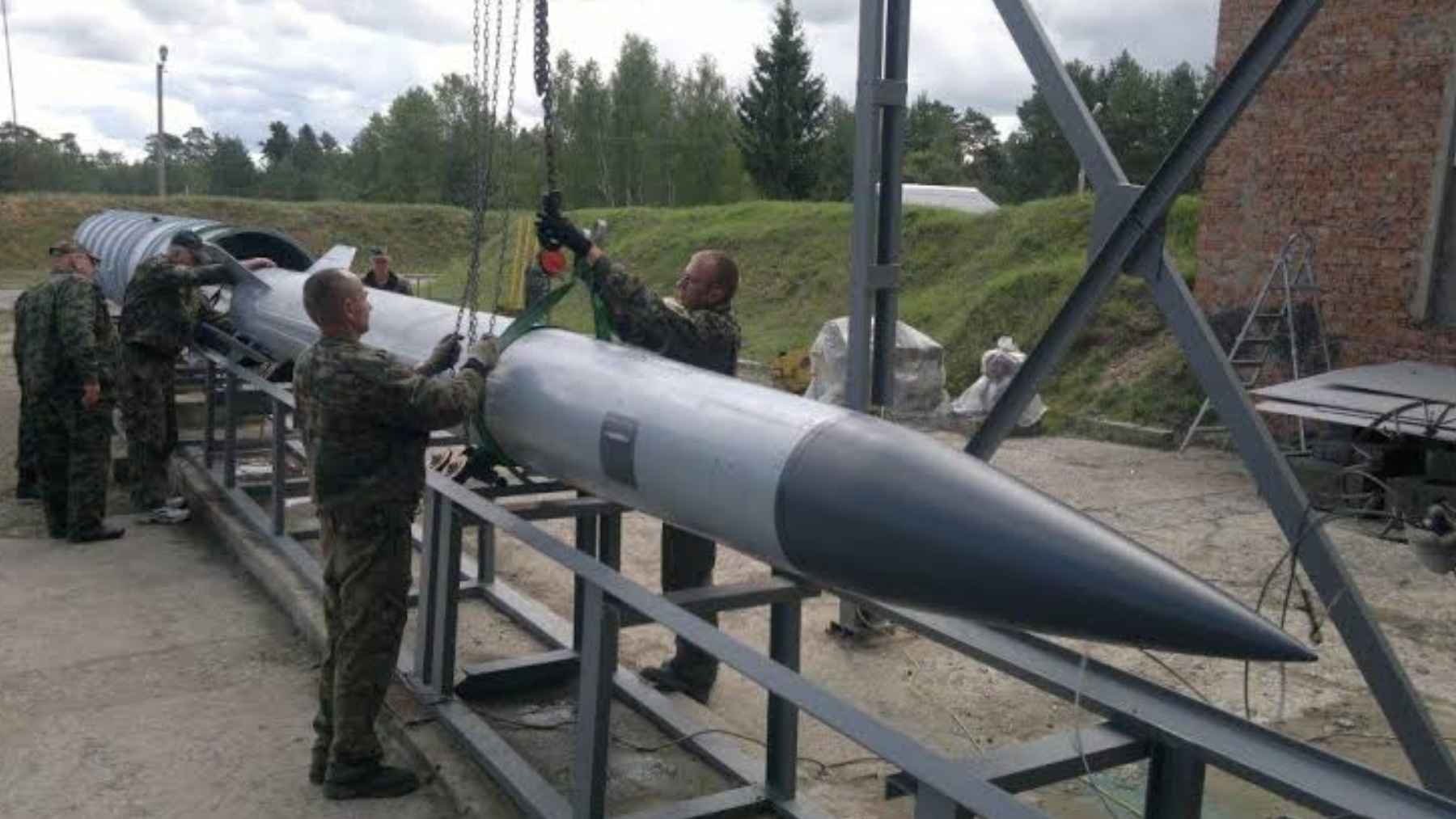
Europe and Ukraine have launched an unusually ambitious effort to create a shared anti-ballistic missile shield, with the Ukrainian FP-7.X interceptor expected to provide the project’s central weapon. The program, named Freyja, brings together Ukraine and nine European countries, while officials aim to have a working prototype in the first half of 2027.
The eye-catching part is the missile’s Soviet heritage. Freyja is not simply Europe dusting off an old S-300 round, however, but an attempt to combine a familiar high-speed airframe concept with Ukrainian propulsion, guidance and control work, plus European radars, sensors and command systems. That distinction matters because Freyja is a modernization path, not a finished continent-wide shield.
A coalition built around one missing piece
The Integrated Anti-Ballistic Missile Coalition was formally announced in Paris by Denmark, France, Germany, Italy, the Netherlands, Norway, Spain, Sweden, Ukraine and the United Kingdom. Its declaration calls for common requirements, joint technical groups and a roadmap toward initial operational capability, while leaving the group open to more participating nations.
Ukraine says it can contribute the interceptor and launcher, while its partners provide the pieces it cannot yet supply at the required level. Fire Point is expected to lead the industrial effort, and Germany’s HENSOLDT has agreed to support Freyja with radar production, testing and integration.
As President Volodymyr Zelenskyy put it, “Ukraine has missiles, but they are only parts of the system.”
The S-300 connection needs context
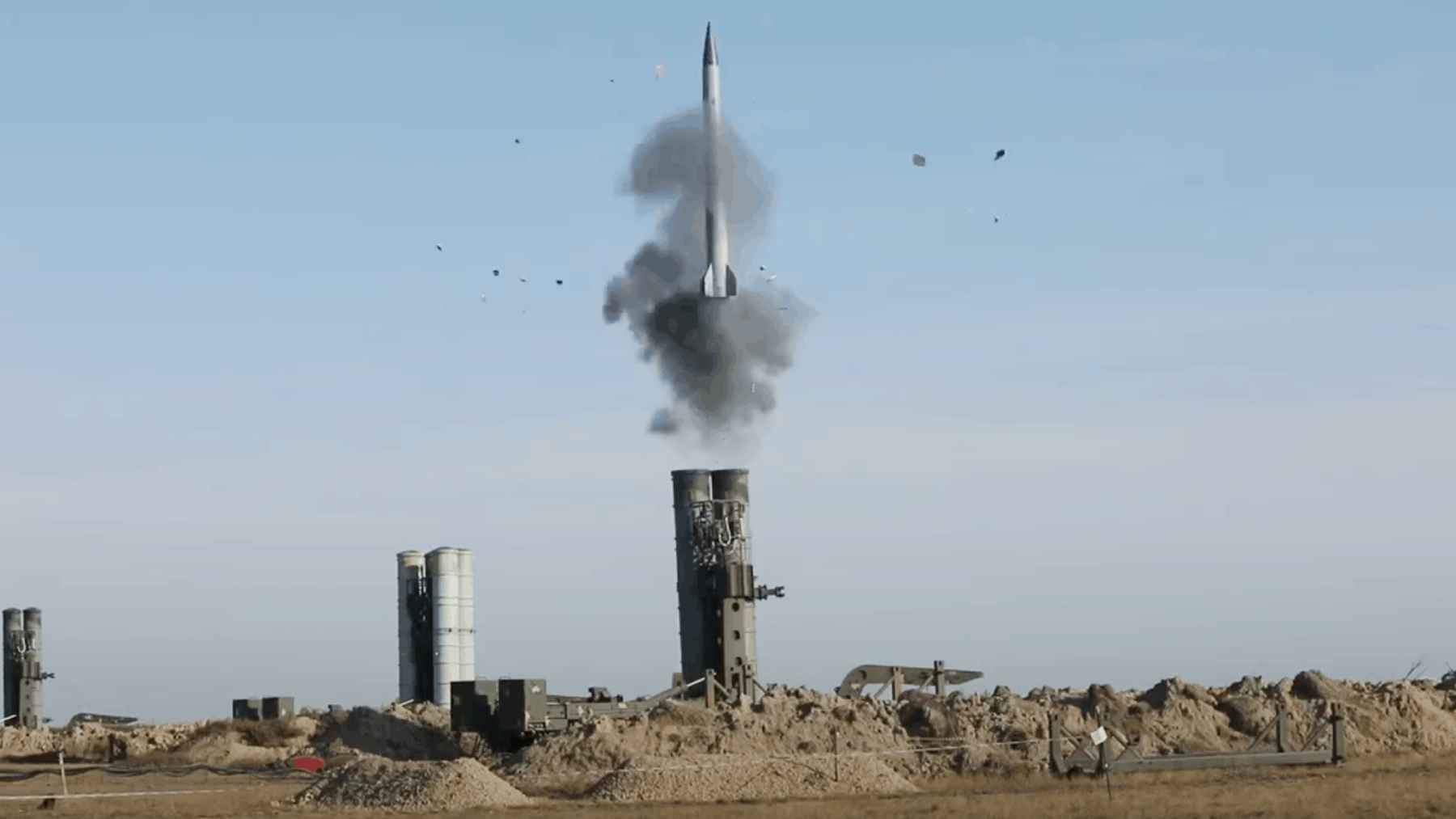
The Soviet S-300P family entered service in 1978 after development that began in the late 1960s. Its early 5V55K and 5V55R missiles were about 23.8 feet long and 1.7 feet wide, with maximum effective ranges of roughly 29 miles and 47 miles. A later 48N6 missile extended the system’s reach to about 93 miles.
Specialist reporting does not fully agree on which member of that family is the FP-7’s closest ancestor. Some accounts identify the 5V55 as the external basis, while others say the Ukrainian missile more closely follows the larger 48N6 used by later S-300 and S-400 variants.
Official Freyja announcements do not settle that question, so the safest description is that the FP-7.X draws heavily on S-300 family geometry rather than being a simple copy of one confirmed missile.
So why reach back to a missile family born during the Cold War? Reusing a proven aerodynamic form can save time because engineers already understand how that shape behaves at high speed, yet the seeker, electronics, flight controls, propellant and manufacturing method can still be substantially different. The shell may look familiar, but the difficult work sits inside it.
Modern hardware inside an old shape
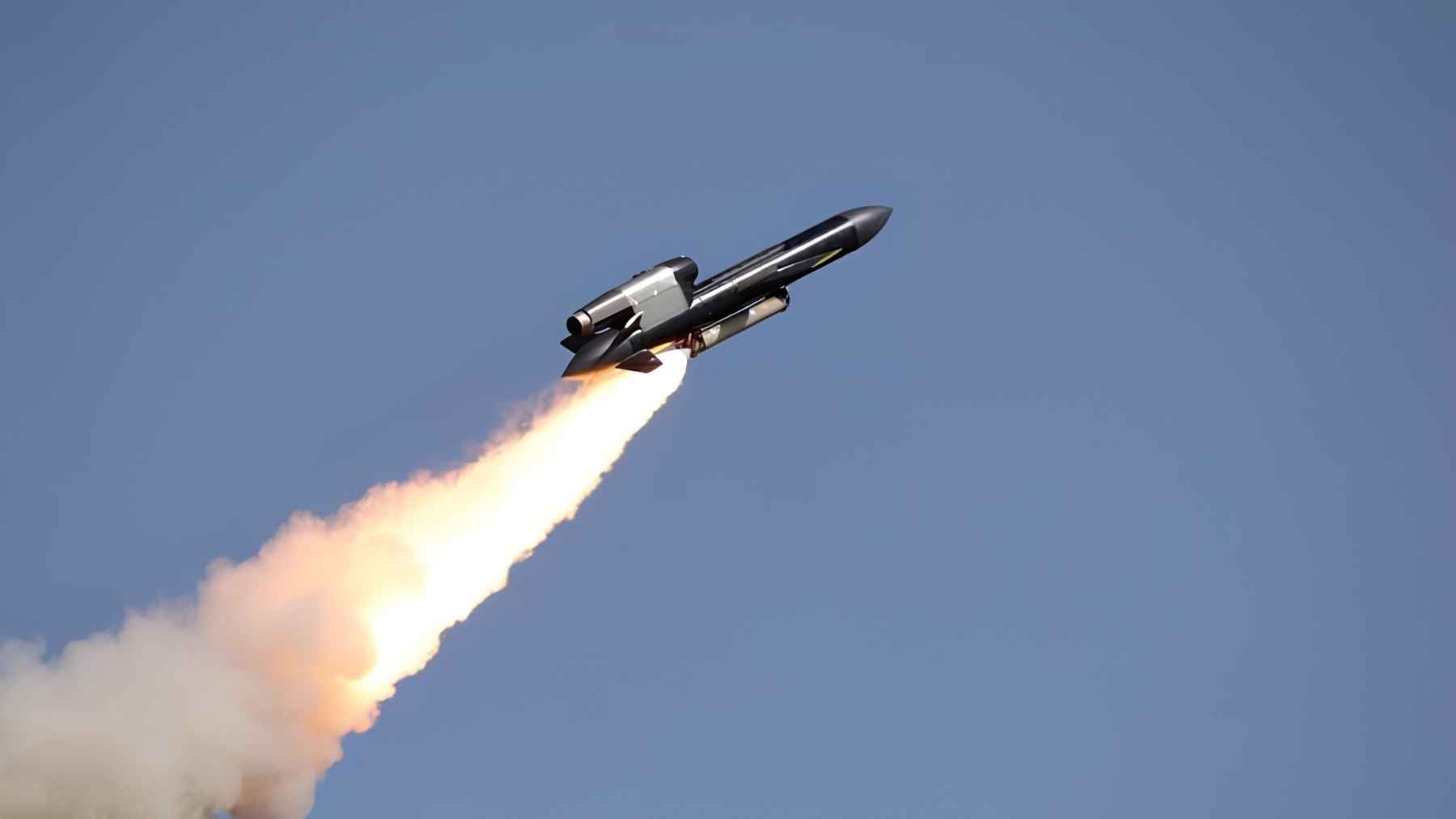
Fire Point’s published specifications for the ground-strike FP-7 list a range of about 124 miles, a maximum payload near 331 pounds and a top speed around 3,355 mph. The company also says the platform was designed to allow later development into air and missile defense roles, which is where the FP-7.X interceptor enters the picture.
The interceptor has already completed a fully guided, maneuvering flight, according to Fire Point’s chief technical officer.
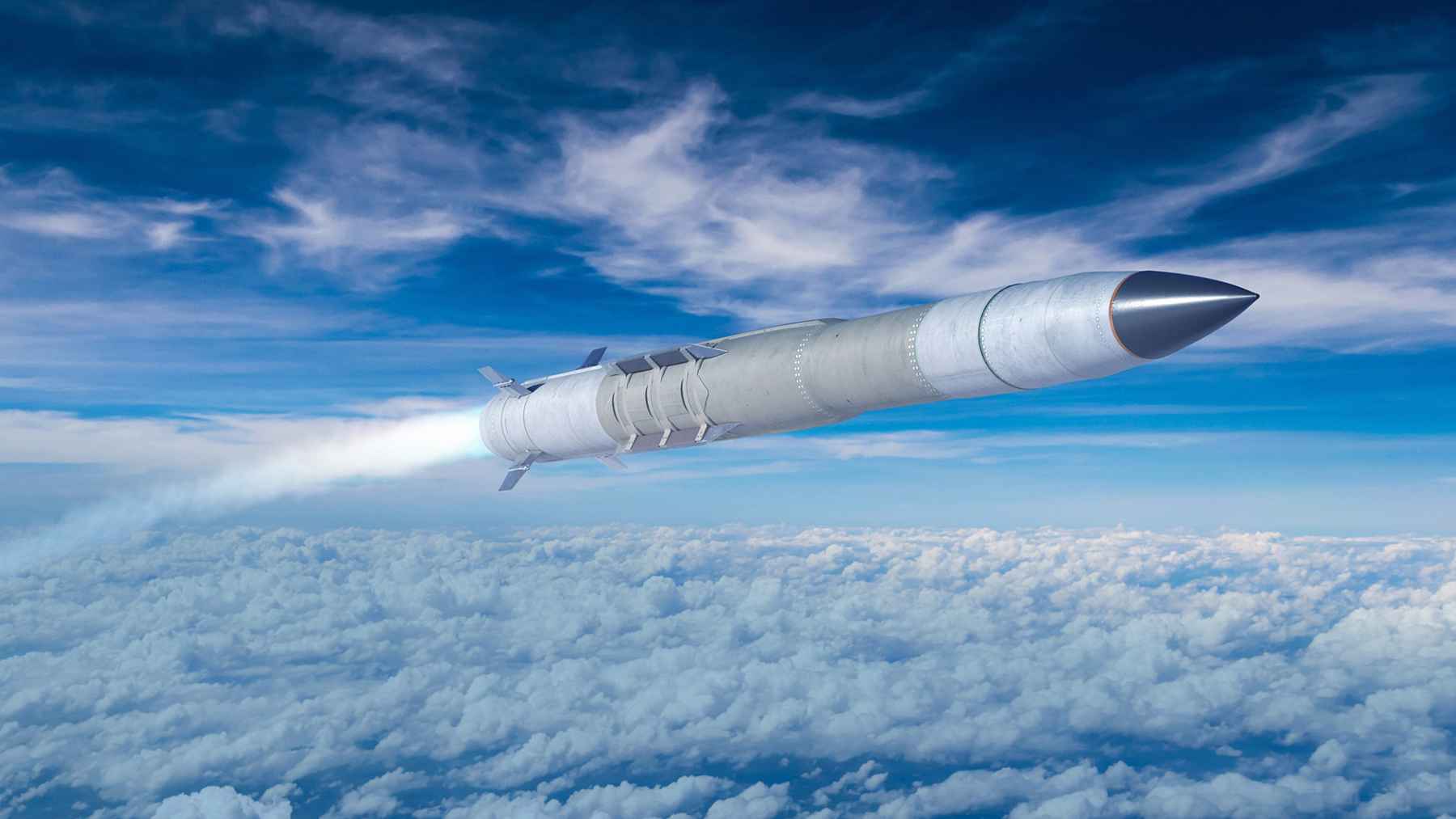
Reported dimensions place it near 23.8 feet in length and 1.7 feet in body diameter, while updated estimates suggest a top speed close to 4,921 mph and a planned engagement altitude of roughly 12 to 16 miles. Those are developer figures, not independently proven combat performance.
Why Europe wants a cheaper interceptor
Europe’s immediate problem is not a complete absence of air defenses. It has Patriot, the Franco-Italian SAMP/T family and Germany’s IRIS-T systems, but Ukraine’s experience has exposed shortages in the specialized interceptors needed against ballistic missiles.
Fire Point has targeted a per-shot price near $700,000, compared with about $3.8 million for a Patriot PAC-3, though these are company-level estimates rather than audited like-for-like procurement costs.
Freyja’s answer is an “open architecture” that can accept different radars, sensors and command components from participating countries.
A Danish configuration could use one radar while a Swedish customer chooses another, rather than every buyer being locked into the same national package. It is a more flexible industrial model, but also a difficult integration challenge because every component must exchange reliable data in seconds.
The environmental case is limited
There is a small sustainability angle in reusing a mature design family and combining equipment that already exists. It may reduce duplicated development, preserve industrial know-how and limit the need to invent every launcher, radar and airframe from scratch. HENSOLDT’s agreement specifically emphasizes the integration of available, field-tested components.
Still, Freyja should not be presented as a green weapon. Missile production consumes propellant, composites, metals and electronics, while interceptions create debris and war itself carries a vast environmental cost. The more honest conclusion is that the project may be resource-efficient by defense-industry standards, not environmentally harmless.
The first real test has not happened
A guided flight proves that a missile can follow commands and maneuver. It does not prove that the weapon can detect, track and destroy a ballistic target descending at extreme speed while radars and command software operate under pressure.
Fire Point has reportedly moved the first direct interception attempt toward July 2027, while Ukrainian officials want a minimum viable prototype during the first half of that year.
That is why comparisons with Russia’s newest S-400 or S-500 interceptors should remain cautious, since a missile shield succeeds only when sensors, software, communications, launchers and interceptors work as one chain.
Europe has not selected an untouched 1970s missile, but backed a Ukrainian-led project that uses S-300 heritage as a starting point, and the decisive evidence will come from interception trials, production rates and real integration.
The official overview of the Anti-Ballistic Missile Coalition was published on the National Security and Defense Council of Ukraine.