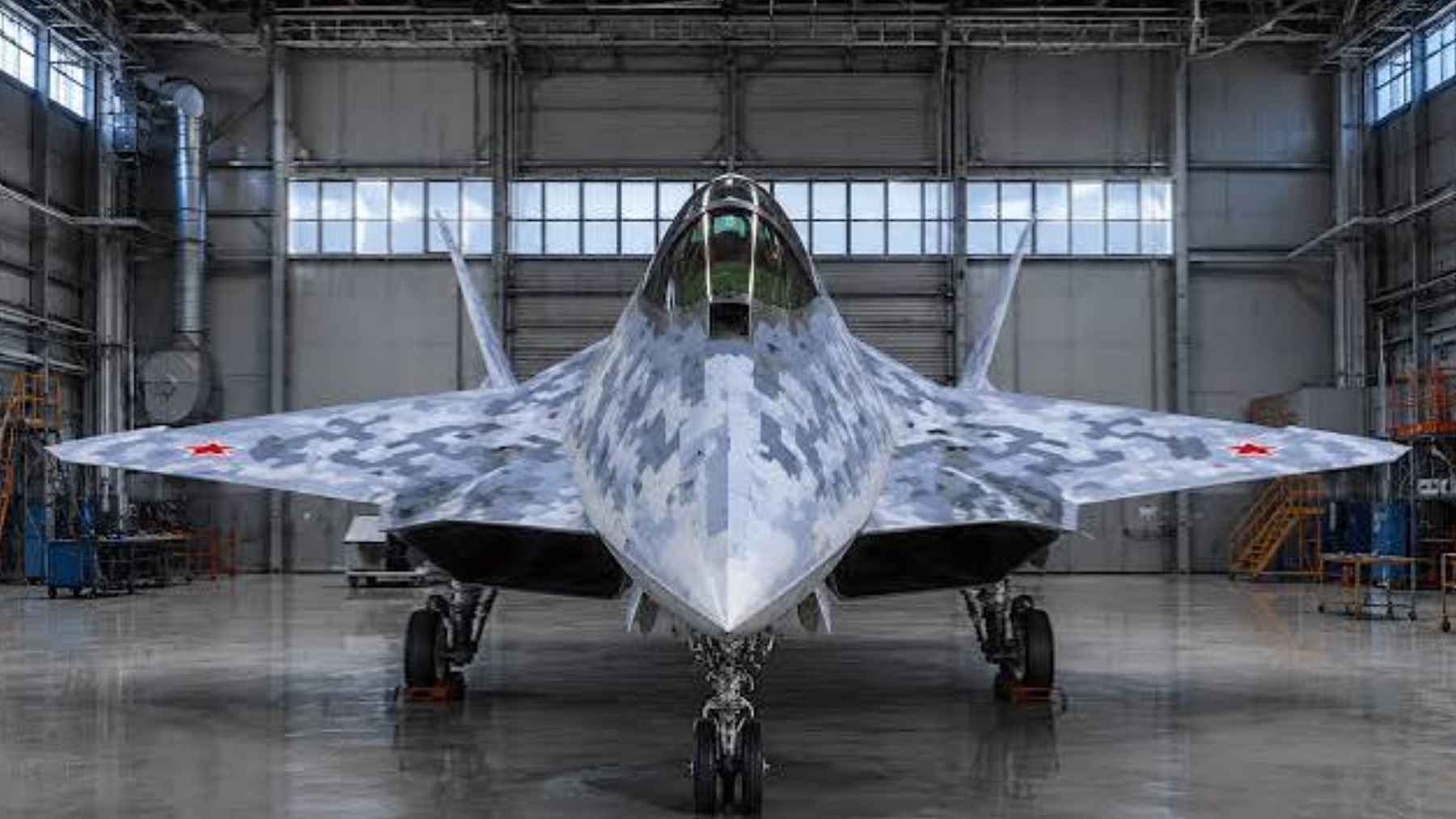
Russia says construction has begun on an experimental Su-75 Checkmate prototype, the clearest sign yet that the long-delayed fighter has moved beyond the full-size display aircraft shown five years ago. United Aircraft Corporation chief Vadim Badekha confirmed the step in June 2026, but he did not announce a rollout date or a maiden flight.
That distinction matters. The Checkmate is being developed as a lower-cost, single-engine stealth aircraft for Russia and foreign customers, yet an unfinished prototype is still a long way from a combat-ready jet. Ground trials, software integration, weapons testing, and repeated engineering changes all come next.
Five years from showroom to workshop
The Su-75 first appeared at the MAKS air show near Moscow in July 2021, surrounded by lights, cameras, and ambitious promises. Its first flight was initially expected in 2023, while Rostec later said serial production would begin in 2027.
The flight milestone did not arrive on schedule. In November 2025, Rostec chief Sergey Chemezov said the aircraft was “already practically at the flight stage” and would soon enter bench testing. Seven months later, UAC was still describing the program as being at the construction stage for an experimental aircraft.
Still, this is more than another rendering or trade-show model. Metal being assembled into a flight prototype is a real industrial milestone, but it is only the opening move in a much longer game.
The paper comparison looks tempting
UAC advertises a top speed of Mach 1.8, a range of roughly 1,800 miles without external fuel tanks, and a maximum combat load of about 16,300 pounds. It has also promoted internal carriage for as many as five air-to-air missiles, which would help preserve the aircraft’s planned low-observable shape.
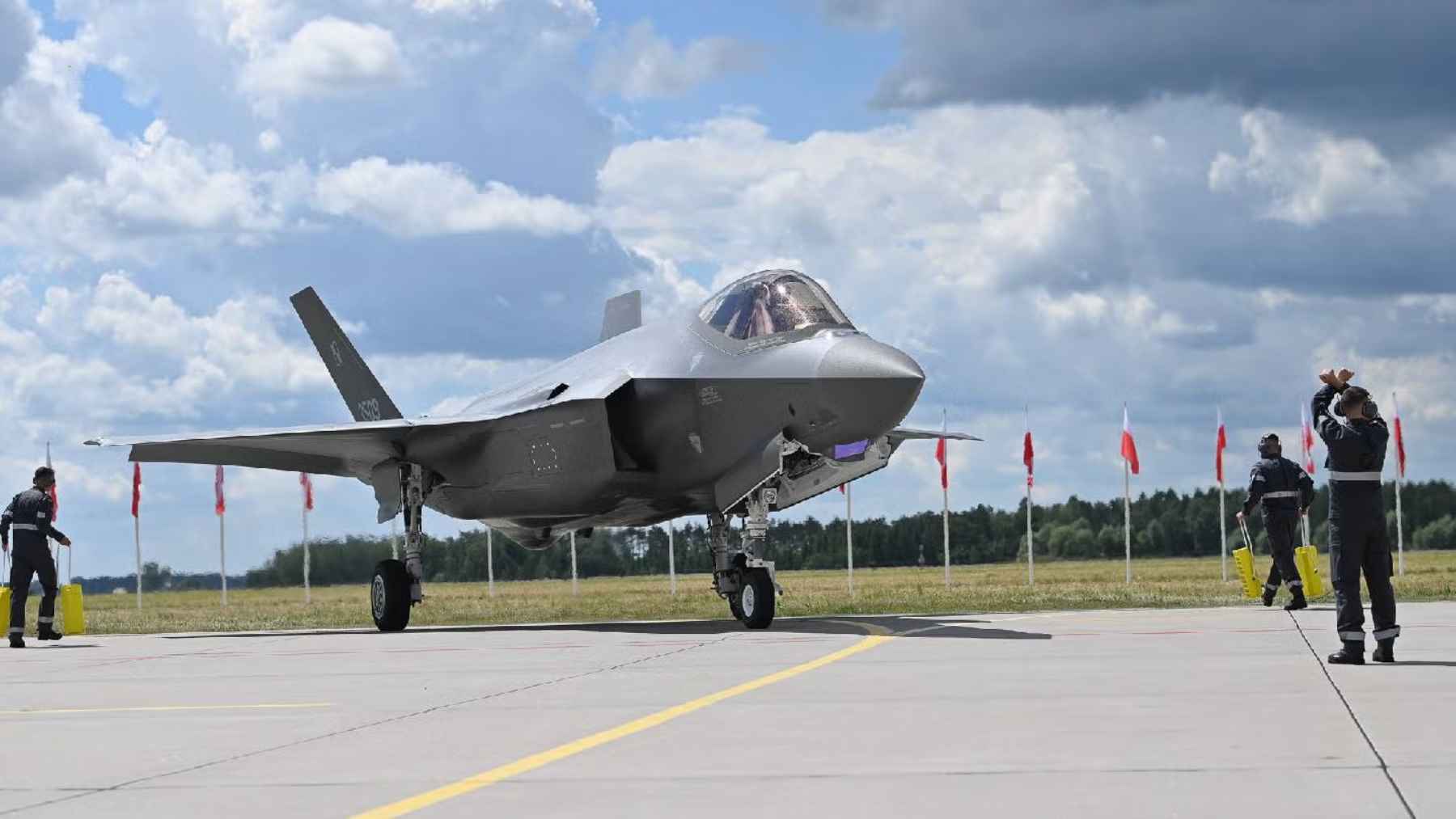
The F-35A is officially rated at Mach 1.6, with more than 1,200 nautical miles of range, a combat radius above 590 nautical miles, and capacity for up to 18,000 pounds of weapons. Those figures do not make a perfect side-by-side test because range, mission profile, fuel reserves, and weapons configuration can change the result dramatically.
There is another problem. Every Su-75 number remains a manufacturer target, while the F-35 figures come from an aircraft that has already accumulated operational data across a large international fleet.
Cheap does not mean proven
Rostec originally placed the Checkmate at about $25 million to $30 million per aircraft. Sukhoi officials also claimed its flight-hour cost could be seven times lower than the F-35’s, an eye-catching promise for governments that watch maintenance bills as closely as radar range.
But what is included in that price? The public estimate does not yet show the cost of engines, spare parts, pilot training, weapons, software support, base infrastructure, or long-term upgrades. Until customers sign contracts and aircraft begin flying regularly, the headline figure is closer to a sales target than a verified ownership cost.
By the end of 2025, Lockheed Martin said it had delivered 1,293 production F-35s. The global fleet had already passed one million flight hours earlier that year, giving operators a body of experience that the Checkmate cannot match with specifications alone.
The environmental equation is missing
A single engine may reduce some maintenance and fuel demands compared with a heavier twin-engine fighter, but that does not automatically make the Su-75 a greener aircraft. Fuel burn depends on weight, engine efficiency, speed, altitude, mission length, weapons load, and how often afterburner is used.
This matters beyond public relations. The United Kingdom’s Ministry of Defence estimated that aviation fuel combustion produced around 35% of its total emissions in 2019 and 2020, showing how heavily military aviation can weigh on a defense organization’s climate footprint.
UAC’s public Su-75 specifications list speed, range, payload, and weapons carriage, but not verified fuel-consumption or lifecycle-emissions figures. So, for now, claims about cheaper operation cannot be translated into credible claims about lower carbon emissions. The missing numbers are important.
Sanctions remain a manufacturing test
The program is also being developed under conditions that did not exist when the display aircraft appeared in 2021. The United States sanctioned UAC in 2022, while U.S. and allied export controls continue to restrict Russia’s access to high-priority electronics and other technologies used in advanced weapons.
That does not prove Russia cannot complete the aircraft. It does mean engineers must build, source, or redesign components under greater industrial pressure, while UAC’s factories are also expected to procure, maintain, and replace aircraft supporting Russia’s military operations.
Producing one prototype and sustaining a reliable production line are very different challenges. Buyers will want evidence that engines, radar modules, processors, coatings, and replacement parts can be supplied for decades, not just for a demonstration flight.
NATO already has a large head start
For NATO, the new prototype does not immediately change the military balance. The Czech Republic signed for 24 F-35A fighters in January 2024, with the fleet expected to move to its Čáslav base from 2031, while Lockheed Martin says more than 700 F-35s will be stationed across Europe in the 2030s.
That network is the F-35’s real advantage. Shared training, software, weapons, maintenance systems, and data links create an ecosystem that cannot be measured by top speed alone.
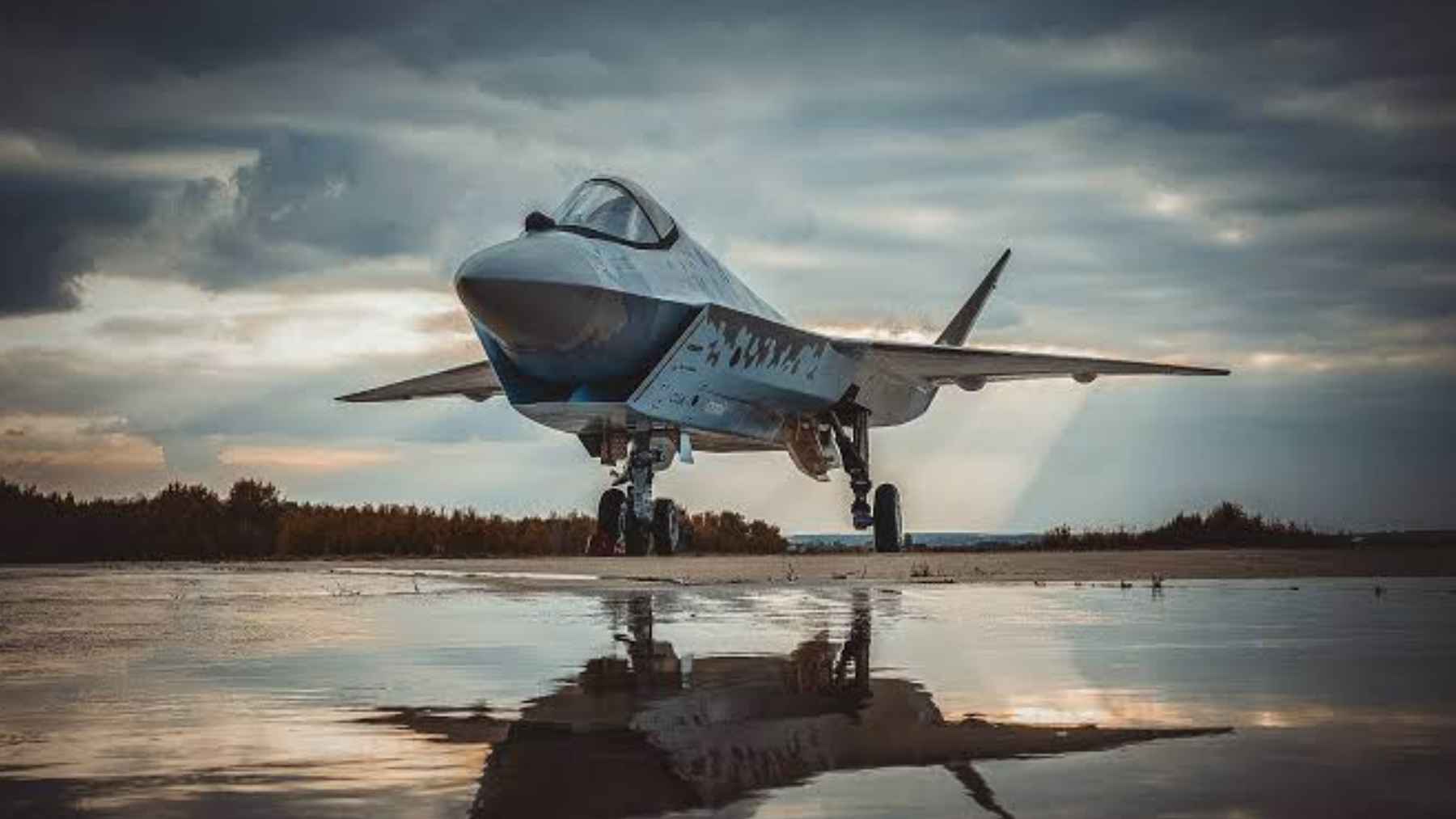
The Su-75 could still find a market among countries unable or unwilling to buy Western aircraft, but before it becomes an affordable counterweight to the F-35, it must roll out, taxi, fly, complete testing, attract firm orders, and enter repeatable production. One step has been taken, but the runway ahead remains very long.
The official statement was published on TASS.