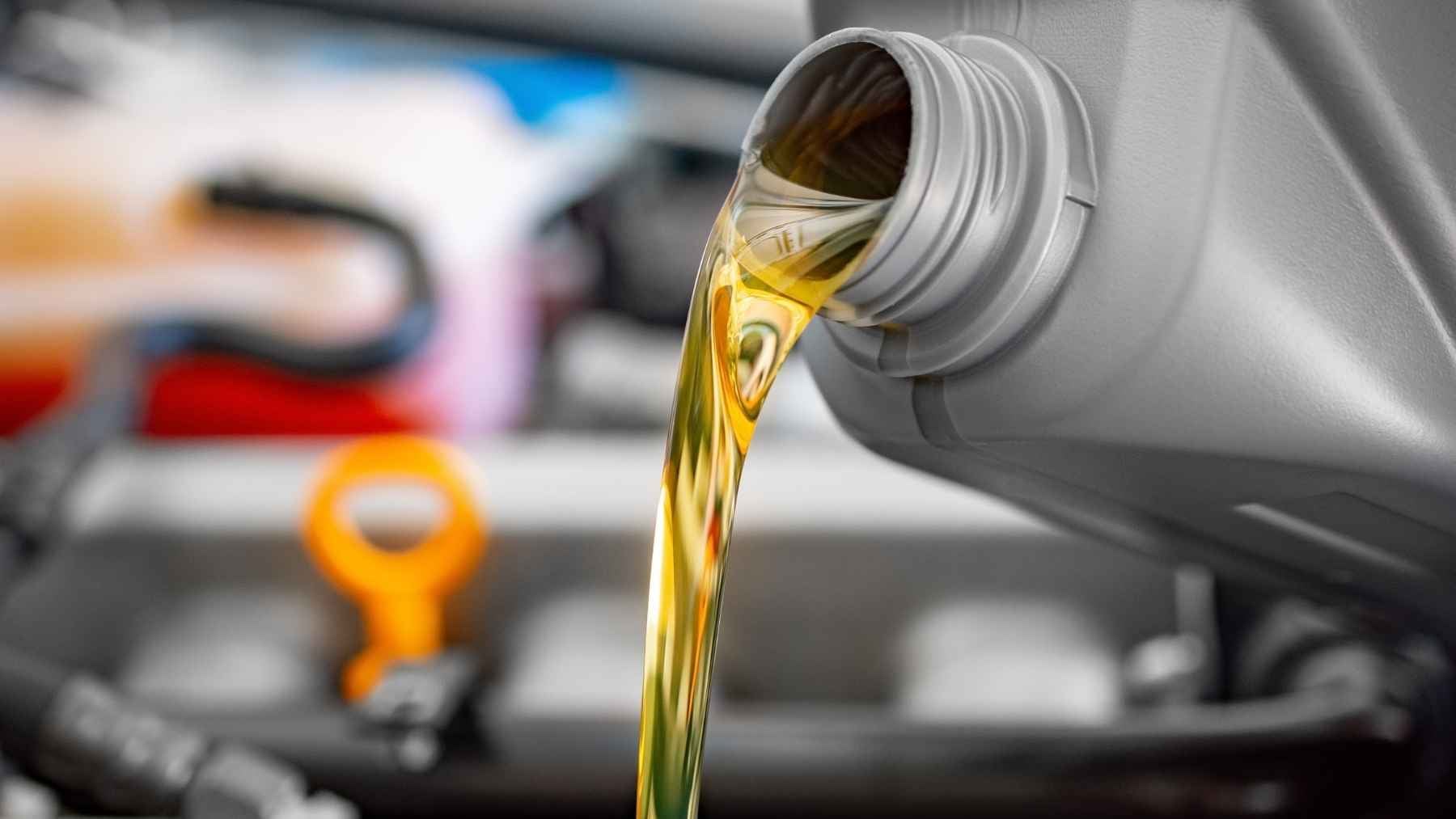
A new warning about 0W-20 and 0W-16 motor oils is spreading among drivers. It claims these low-viscosity lubricants, adopted partly to cut fuel consumption and emissions, can wear out an engine after roughly 93,200 miles and turn a small efficiency gain into a very expensive repair.
There is a real engineering tradeoff here, but the headline claim goes much further than the available evidence. Current oil standards and automaker guidance show that thin oils are designed and tested for protection as well as efficiency, while the dramatic engine-life figures being circulated have not been backed by an identifiable test report.
Where the warning began
The report traces back to a Broken Clutch Garage video featuring a creator presented as a former auto-industry engineer. He said one unnamed American V6 lasted only about 80,800 to 99,400 miles after a lower-viscosity oil was introduced, and he linked thin oil to accelerated metal-to-metal contact.
He also argued that variable-flow oil pumps, start-stop systems, and cylinder deactivation add thermal and lubrication stress. That sounds alarming, but the reports do not name the automaker, engine, oil formulation, test cycle, comparison oil, teardown measurements, or full dataset needed to judge what actually caused the failures.
What thinner oil changes
Oil has to do two jobs that pull in opposite directions. It must flow quickly and waste as little energy as possible, yet it also has to keep moving metal surfaces separated under heat and load.
SAE research confirms that lower viscosity can push some contacts closer to “boundary lubrication,” where additives and surface chemistry become especially important. The same research says simply thinning an oil is not enough, which is why a successful formula must balance viscosity, friction modifiers, anti-wear protection, and the engine hardware around it.
Synthetic does not mean too thin
The original warning also blurred “synthetic oil” with low-viscosity oil, but they are not the same thing. “Synthetic” describes how the base oil is produced and formulated, while 0W-20 or 5W-30 describes how the finished lubricant flows at low and operating temperatures.

Honda, for example, specifies API-certified 0W-20 for the 2024 Civic and permits synthetic oil when it carries the required certification and viscosity grade. That does not prove every 0W-20 will protect every engine forever, but it shows that synthetic construction is not evidence of reduced engine life by itself.
Why automakers use thin oil
Lower-viscosity oil reduces pumping and internal friction losses, which can improve fuel economy and lower carbon dioxide emissions. The improvement is usually modest, although one SAE vehicle study reported up to 3% with a carefully formulated 0W-16 oil in a specific test cycle.
A percentage point may not feel dramatic during a weekly stop at the gas station. Across millions of cars, though, small savings add up, and that is why regulators and manufacturers care about them.
The environmental case still depends on durability. If an engine really needed major repair or replacement years early, some fuel and emissions benefits could be lost, so better efficiency only makes sense when wear protection remains part of the package.
New standards target wear too
The latest American Petroleum Institute guide lists API SQ and ILSAC GF-7A and GF-7B as current standards introduced in March 2025. GF-7B applies specifically to 0W-16 oils, and the standards include requirements aimed at timing-chain wear, high-temperature deposits, sludge, varnish, low-speed pre-ignition, fuel economy, and emission-system protection.
API also operates a licensing and marketplace audit program that tests certified oils against registered formulations and performance requirements. Those checks cannot predict the exact life of every engine, but they show that low-viscosity oil is not approved on fuel savings alone.
Summer oil advice needs caution
The advice to use 0W-20 only in winter and move to 5W-20 in summer sounds intuitive, but the label does not work that way. The first number describes cold-temperature behavior, while the second identifies the operating-temperature grade, so 0W-20 and 5W-20 share the same SAE 20 hot grade.
Moving to 5W-30 does create a higher operating-temperature grade, but that does not make it a universal upgrade. Oil passages, pumps, bearing clearances, and valve-timing systems may be designed around the specified lubricant, so a change should only be made when the automaker permits it.
Differences between U.S. and European recommendations also need context. Engines that appear similar may have different calibrations, approval standards, hardware, service intervals, or duty cycles, so a thicker European recommendation is not automatic proof that an American specification sacrifices longevity.
What drivers should do
Start with the owner’s manual, then match both the viscosity and the performance approval printed there. An API certification mark, an ILSAC category, or a manufacturer-specific approval matters just as much as the large 0W-20 or 5W-30 text on the bottle.
Also check the oil level and follow the correct change interval, including any severe-service schedule. Insufficient or deteriorated oil is a clear risk, while the available evidence does not show that every engine using its properly specified 0W-20 oil is headed for an early failure.
Drivers who tow, race, operate in extreme heat, or have an engine that is already consuming oil may need model-specific advice. The safe question is not “Which oil feels thicker?” but “Which grades and approvals did the engine maker permit for these conditions?”
The evidence-based answer
Low-viscosity oils do ask more from additive chemistry and engine design, and experts are right to study the balance between fuel savings and film strength. What the available evidence does not establish is a universal engine-life ceiling of about 80,800 to 99,400 miles for 0W-20 or 0W-16.
For most drivers, changing viscosity on the strength of one unnamed V6 account creates a new risk instead of solving a proven problem. At the end of the day, the correct oil is the certified product the engine was designed to use, changed on time and kept at the proper level.
The official motor oil guide was published on American Petroleum Institute.