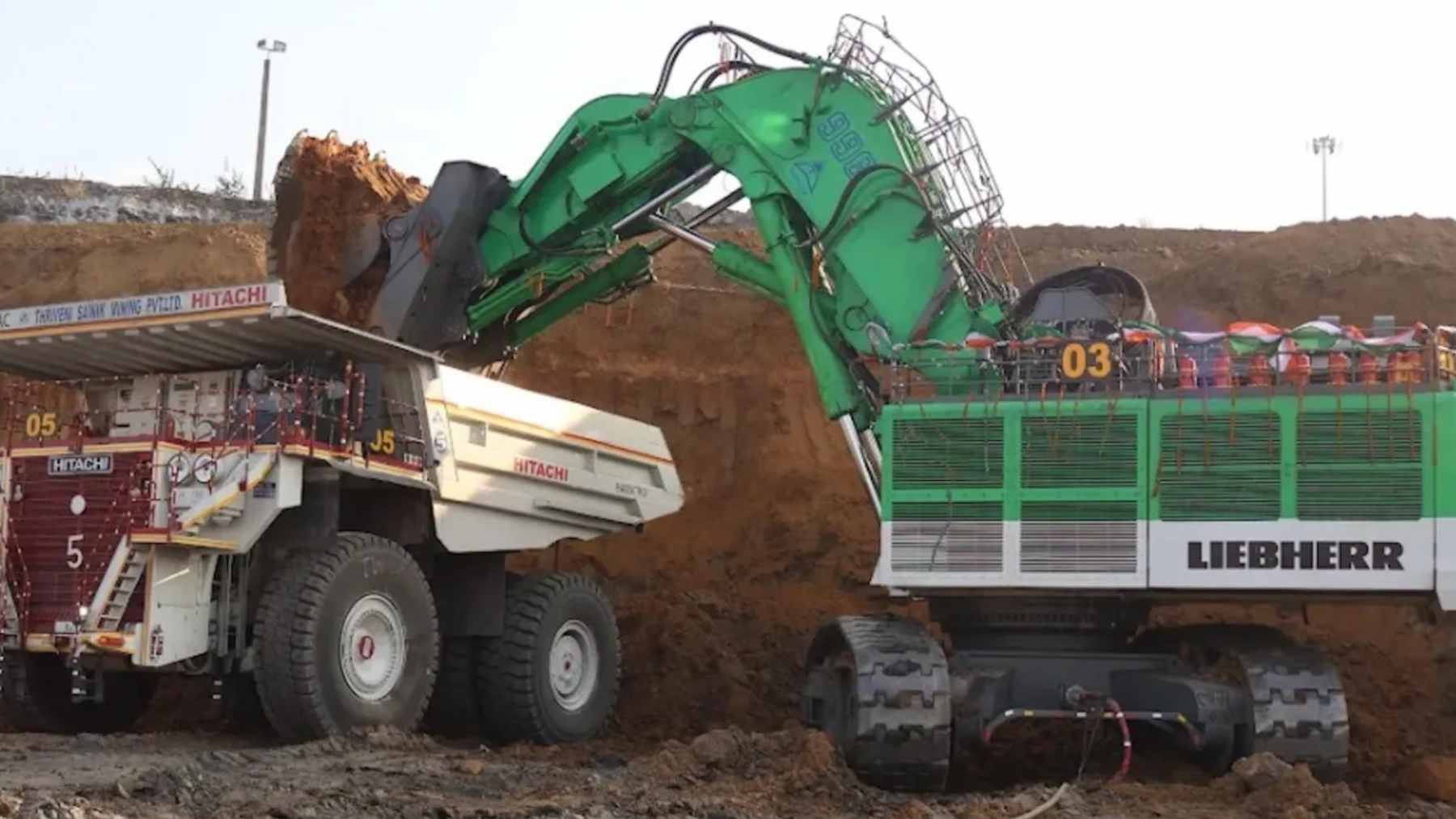
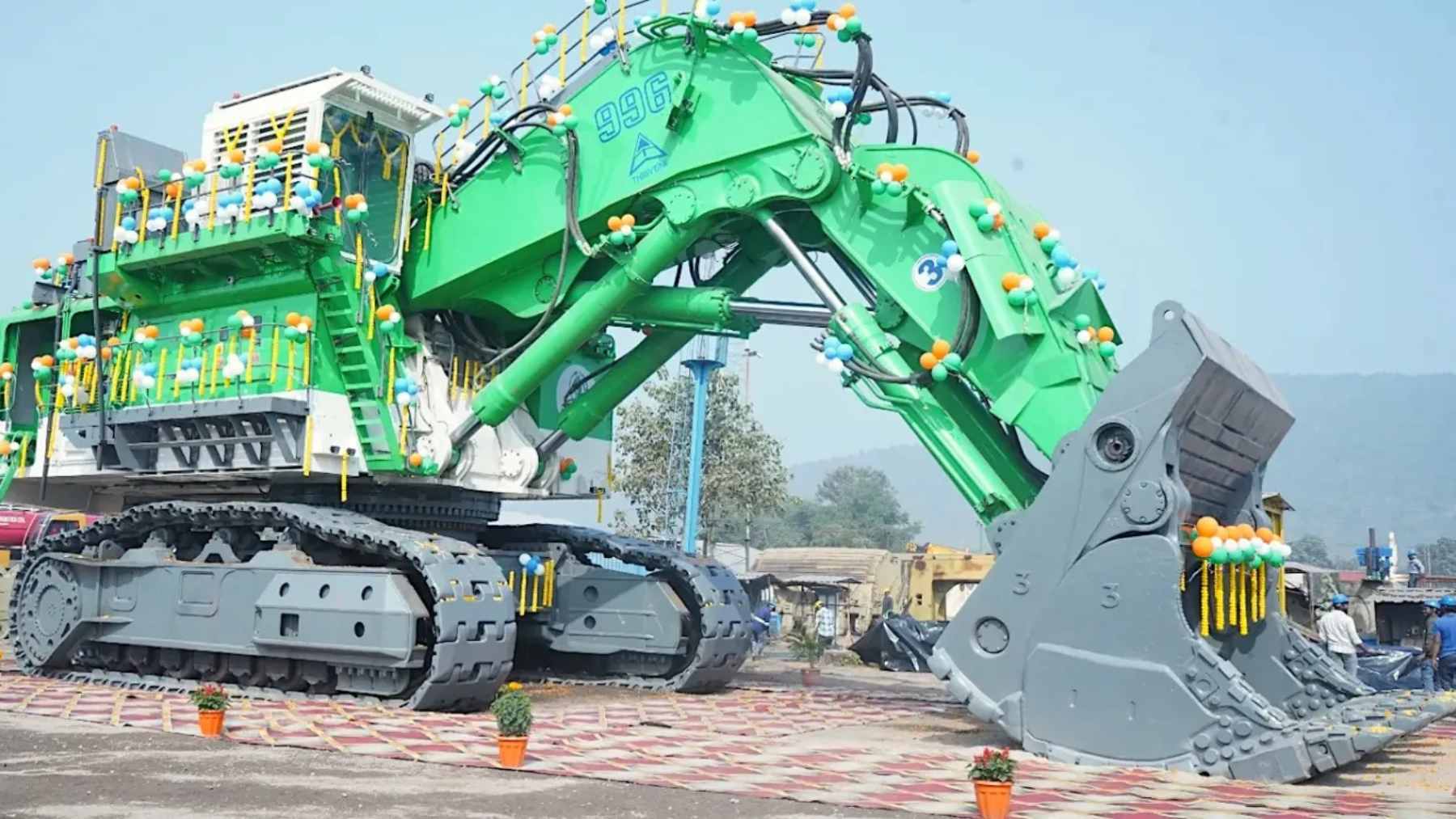
A mining excavator big enough to make a city bus look small has just become a symbol of how heavy industry may start cutting diesel from its toughest jobs. India’s Lloyds Metals and Energy has converted a Liebherr R 996 mining excavator from diesel power to fully electric operation, a move that points beyond cleaner cars and into the dusty heart of open-pit mining.
The key detail is not only the size of the machine, it is who did the work. Lloyds says the conversion was carried out by its own engineering and technology teams, with a redesign of the excavator’s power architecture, controls, safety systems, and digital monitoring. B. Prabhakaran, Managing Director of Lloyds Metals and Energy, described the project as “reimagining the future of mining.”
The machine that changed sides
The converted excavator is a Liebherr R 996, a huge machine built for high-volume mining. In diesel form, this class of excavator weighs 717 tons, stands 39 ft. tall, and can use a bucket of 47 cubic yards. That is enough to scoop a garage-sized bite of rock and soil in a single pass.
The diesel version is no small performer. Its standard bucket can move 66 to 77 tons of material per pass, backed by nearly 3,000 horsepower. In practical terms, this is the kind of machine mines use when the job is not measured in pickup loads, but in millions of tons over years of work.
Not just an engine swap
This was not a case of pulling out one engine and dropping in another. Lloyds says the project involved custom power architecture, proprietary control systems, advanced safety features, and digital monitoring. That matters because a mining shovel has to survive heat, dust, vibration, long shifts, and the pressure of stopping as little as possible.
There is still a lot we do not know. Lloyds has not released a complete technical sheet for the electric R 996, so details such as the power supply setup, duty-cycle performance, and exact operating data are not yet public. That is the real test–headline-making retrofit must still prove itself on the mine floor.
A wider electric race
Lloyds is not operating in a vacuum. In 2024, Liebherr and Fortescue announced that they had repowered an R 9400 excavator from diesel to electric at the Christmas Creek mine in Western Australia. The Indian conversion stands out because Lloyds says it executed the work internally.
Why does one excavator matter? Because mining has a diesel problem. A World Bank background note estimates that mining’s Scope 1 and Scope 2 emissions account for 4% to 7% of global greenhouse gas emissions, and it points to mine-site mobility and hauling as major pressure points.
The awkward climate puzzle
The energy transition needs more minerals. The International Energy Agency (IEA) says mineral requirements for clean energy technologies are on track to double by 2040 under current stated policies. That puts mining in a difficult position.
The world needs more copper, iron ore, nickel, lithium, and other materials, but it also wants them produced with less pollution.
That is where machines like this electric R 996 come in. They do not solve every environmental issue linked to mining, from land disturbance to water use. But replacing diesel equipment can cut local exhaust, reduce fuel dependence, and make mines easier to connect with cleaner electricity over time.
The business case in the pit
Fuel is not a side issue in mining. The World Bank note says energy can represent up to 30% of a mining company’s total operating costs. That makes electrification more than a climate talking point. It can become a business decision if power costs, reliability, and maintenance work in its favor.
Lloyds is already framing the conversion that way. The company has linked the project to lower emissions, reduced diesel use, improved operational efficiency, real-time diagnostics, and predictive maintenance. The promise is simple: less fuel burned, fewer surprises, and more control over a very expensive machine.
The India angle
The project also lands squarely inside India’s push to build more industrial technology at home. Lloyds says major subsystems were engineered and sourced domestically, supporting the broader “Make in India” vision. That is a big point for a country trying to expand mining, steel, and clean-tech supply chains at the same time.
There are signs this is part of a wider fleet shift, not a one-off publicity moment. In a May 2026 company presentation, Lloyds said it had established an EV and LNG ecosystem at its Surjagarh mines, mobilized 34 electric equipment units during nine months, and had 88 electric equipment units operating at mines, plus 20 at railway sidings.
What still needs proving
For all the excitement, electric mining equipment has to clear a high bar. Mines run on schedules where downtime is costly, and the machines work in places where dust, heat, mud, and remote power access can turn small problems into expensive ones. An electric excavator is only as useful as the energy system behind it.
There is also the power-source question. If an electric machine runs on coal-heavy electricity, the emissions math changes. But if mines combine electrified equipment with cleaner power, smarter monitoring, and better maintenance planning, the gains can become much more meaningful.
A sign of the mine ahead
This conversion does not mean diesel will disappear from mining overnight. It does show that one of the industry’s hardest machines can be pulled into a cleaner future without waiting for every new model to arrive from the factory.
That may be the most important lesson. Sometimes the future of heavy industry does not start with a brand-new machine. Sometimes it starts by rebuilding the giant already sitting in the pit.
The company statement on the conversion was published on EPC World.