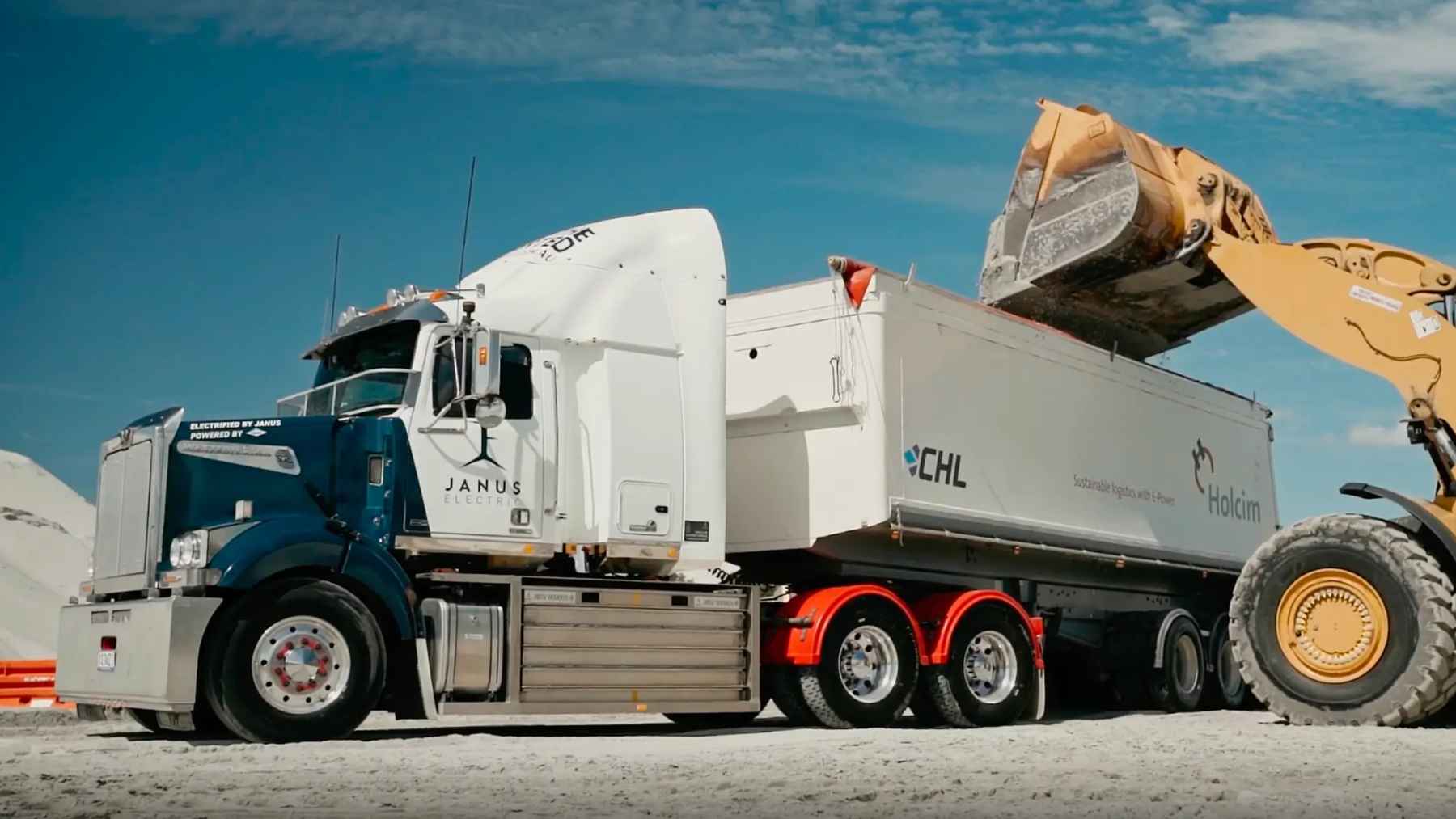
Four U.S. freight operators have placed conditional orders with Australian company Janus Electric for 67 conversions that would replace diesel powertrains in existing Class 8 trucks with electric drive systems.
The package also includes 77 swappable battery packs and four additional Janus Charge & Change stations, lifting the company’s order book to 87 conversions in the United States and 112 across North America.
Janus is trying to keep working vehicles in service, separate battery charging from truck downtime, and make electrification fit the relentless schedule of ports and freight yards. Still, most of these orders depend on incentives and financing, so this is an important commercial step rather than a finished rollout.
An electric transplant for diesel trucks
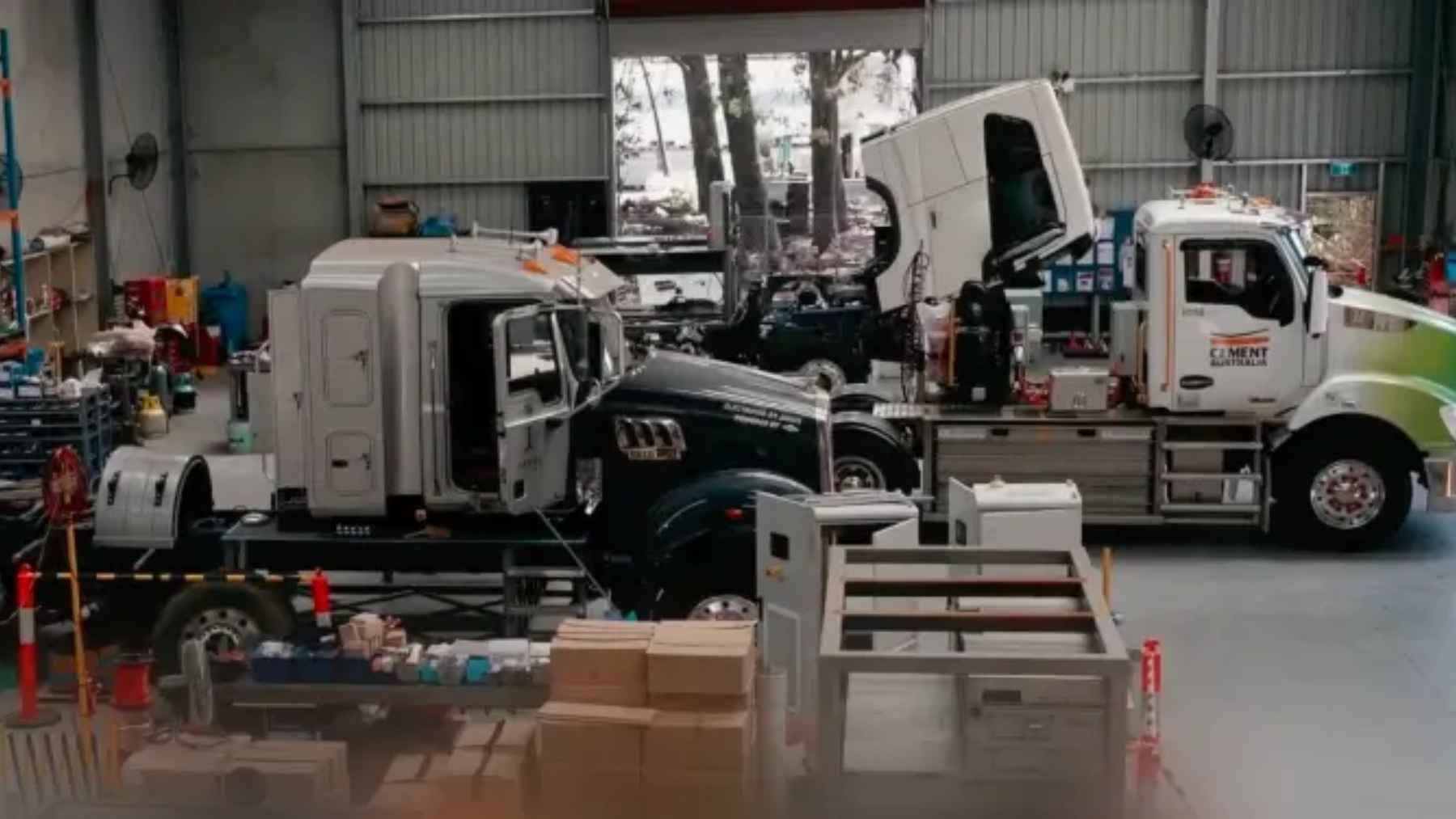
Janus removes the diesel engine and related drivetrain components, then installs an electric powertrain and battery system on the existing truck. The fleet keeps most of a truck it already owns instead of replacing the whole tractor with a newly manufactured vehicle.
That approach could be especially attractive to operators with familiar trucks, maintenance routines, and tight capital budgets. It also avoids tailpipe exhaust while the vehicle is operating, although the full climate benefit still depends on how the electricity is generated and on emissions from battery and vehicle production.
The announcement does not provide an independent life-cycle comparison, so exact carbon savings remain unproven.
Four minutes means a battery swap
The headline-grabbing four-minute figure refers to exchanging batteries, not charging an empty pack in four minutes. A truck arrives at a station, its depleted battery modules are removed, and charged modules are fitted so it can return to work with little delay. A truck sitting beside a charger is not hauling a container, and that is the problem Janus is trying to solve.
Meanwhile, the removed batteries can recharge away from the vehicle. The current California-approved JCM 540 specification says a depleted pack takes about three hours to move from 10% to 95% charge, while the physical exchange takes four minutes. The swap therefore shifts charging time from the truck to the battery inventory.
The U.S. model has newer specifications
Earlier descriptions of the system cited roughly 473 U.S. horsepower, two 310-kWh packs, and an estimated range near 370 miles. Janus documents have indeed described paired 310-kWh modules totaling 620 kWh, but buyers should not assume every truck ordered today carries that exact setup.
The JCM 540 currently listed under California’s Hybrid and Zero-Emission Truck and Bus Voucher Incentive Project has different figures. Its official specification lists 720 peak horsepower, a 650-kWh battery with 560 kWh usable, and a typical range of up to 250 miles.
Janus also notes that terrain, weather, driving behavior, and load can change real-world range, as they do with any heavy truck.
Public funding helps the numbers work
The orders come from Golden State Express, WEHACO, Tradelink Transport, and King Fio Trucking. Janus says combined support from California’s HVIP program and an additional Port of Los Angeles incentive can reach about $166,000 for each qualifying conversion, lowering the upfront cost for fleets.
California’s current HVIP listing shows a $90,000 base voucher for the JCM 540, with eligible Class 8 drayage projects potentially receiving up to $150,000.
Separately, the Port of Los Angeles announced a $75 million purchasing program offering as much as $300,000 for an eligible new battery-electric truck, although eligibility and program rules differ. Grants are not a side detail here. They are part of what makes the business case possible.
Road data moves beyond a pilot
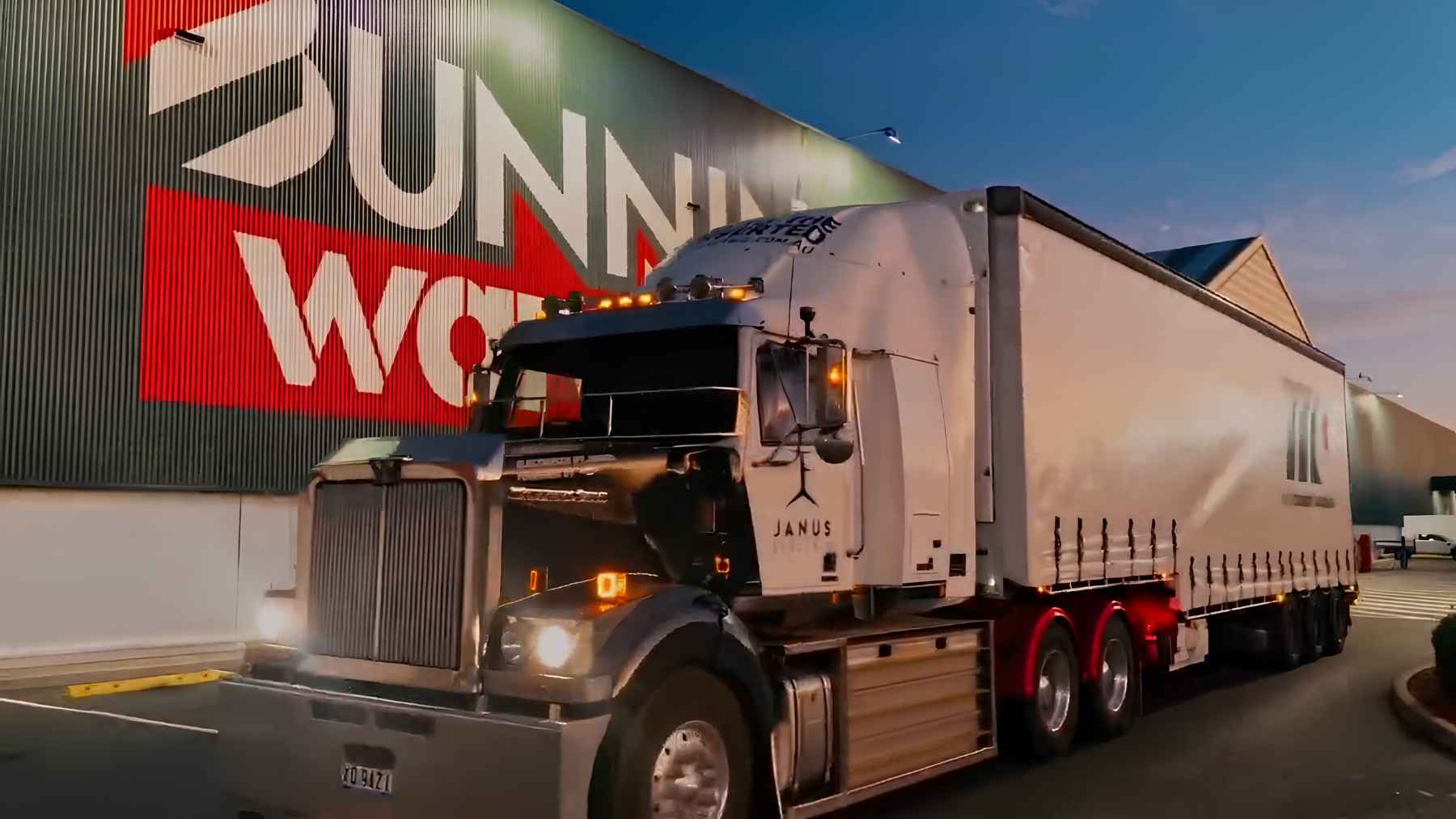
Janus says 25 converted trucks operating in Australia have traveled more than 373,000 miles, completed over 3,500 battery swaps, and used about 1.13 million kWh of electricity. Those figures suggest the hardware has moved beyond a workshop demonstration and into repeated freight operations.
But the data is company-reported, not an independent comparison with equivalent diesel fleets. The next test is scale, including production capacity, station reliability, battery availability, and performance in busy California port operations. Janus expects the first vehicles from the latest orders in the fourth quarter of 2026, with the build continuing through 2027.
Ports could be the natural proving ground
Port and drayage routes offer a practical place to begin because trucks often repeat predictable journeys and return to known depots. Shared exchange stations can serve several vehicles, while operators avoid waiting for each truck to complete a conventional charging session. That is where battery swapping has its clearest shot.
There are hurdles, of course. Fleets need enough spare packs, dependable grid connections, well-used stations, approved incentives, and conversions that remain reliable under heavy loads. Ben Hutt, Janus Electric’s chief executive, called the orders “important customer validation,” but the company’s own filing also warns that conditional orders may not all proceed.
For freight operators, the appeal is easy to understand. Keep the truck, remove the diesel system, exchange the battery in minutes, and get back on the road. Whether that model becomes a broad alternative to new electric trucks will now depend less on the idea itself and more on execution.
The statement was published on ASX.