South America’s long-discussed dream of a railway between two oceans has taken a real step forward. Brazil and China have signed a memorandum to study a bi-oceanic rail corridor that could move cargo from Brazil’s productive interior toward Peru’s Port of Chancay, giving exporters a faster gateway to Asia.
The official plan is still only a study, not a construction order, but it is already drawing global attention because of what it could change.
The basic promise is simple. Grain, meat, minerals, and energy-linked cargo could travel by rail, road, river, and sea in a tighter logistics chain, cutting time for shipments that now rely heavily on Atlantic routes. But here is the harder question: can a project this big be built without adding new pressure on the Amazon, the Andes, and communities that live along the way?
A shortcut to Asia
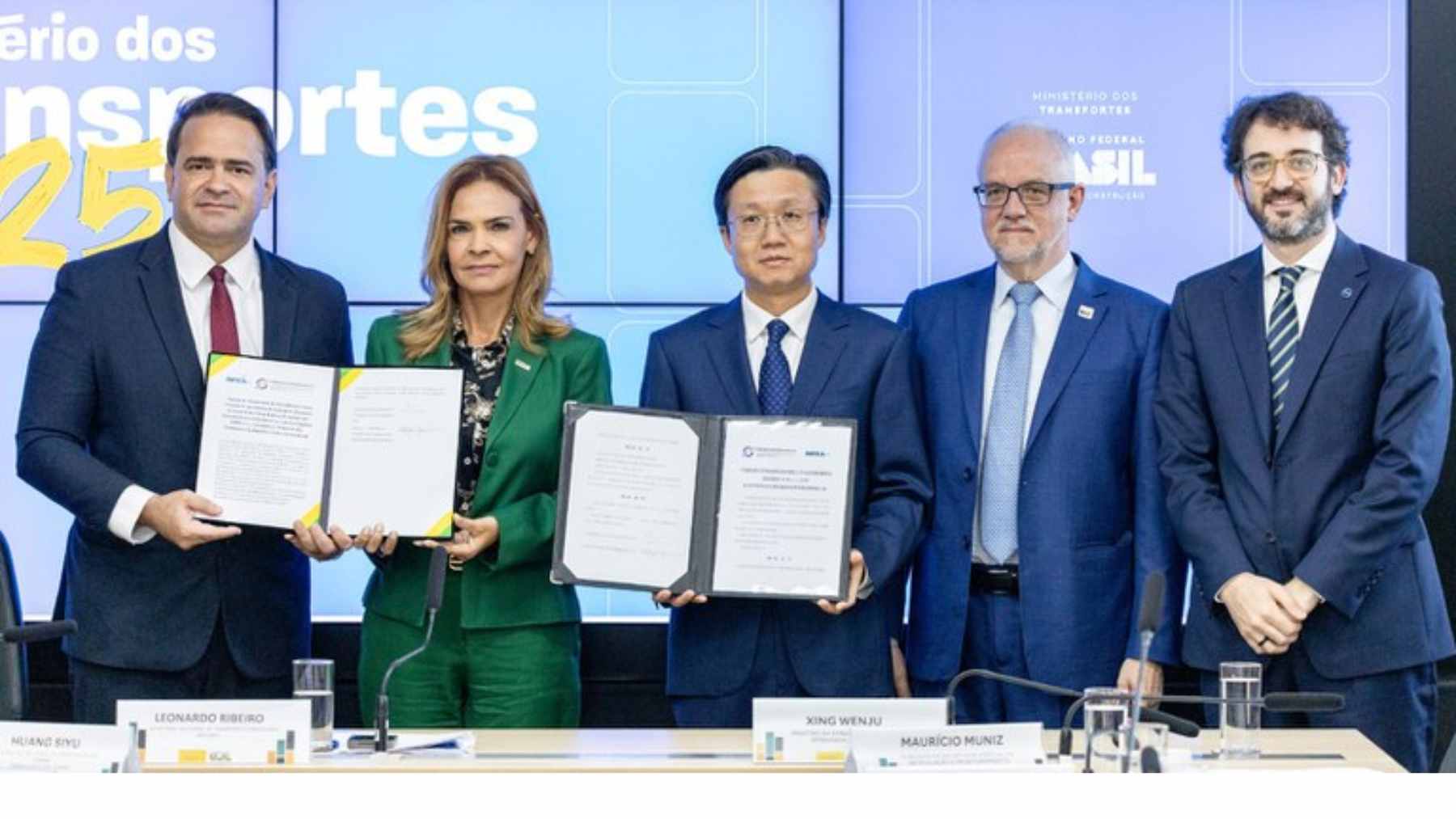
The agreement was signed by Brazil’s Ministry of Transport through Infra S.A. and China State Railway Group’s planning and research arm. Brazilian officials say the studies will evaluate a new corridor from Brazil to the Pacific through Chancay, with possible logistics, economic, and environmental gains for exports headed to Asia.
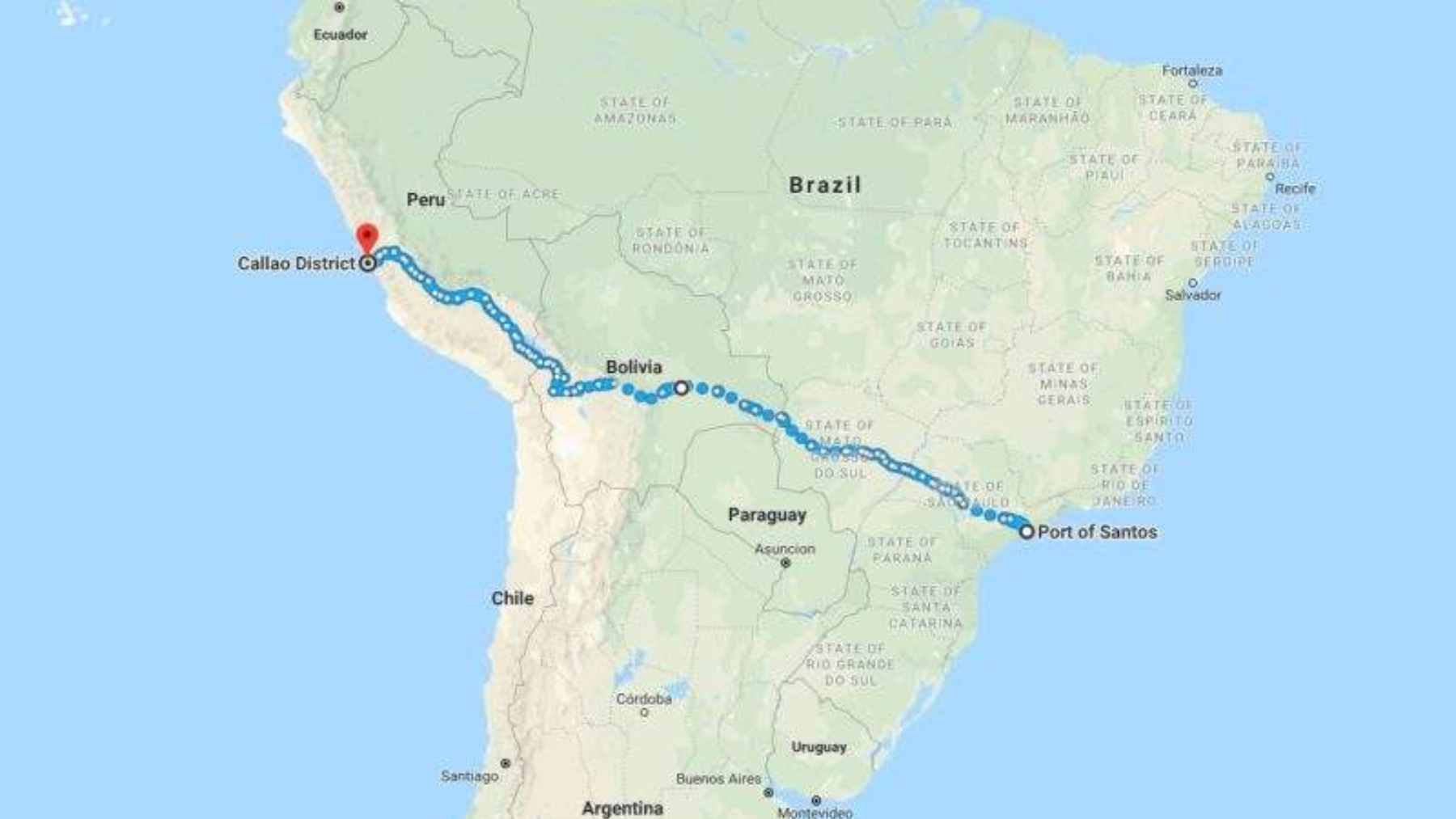
In practical terms, the plan would connect existing and planned Brazilian rail lines, including FIOL, FICO, and the North-South Railway. Agência Brasil reported that the route would begin around Lucas do Rio Verde in Mato Grosso, cross Rondônia and southern Acre, and then continue toward Chancay, about 43 miles from Lima.
That would matter for everyday products, not just government maps. A shorter Pacific route could make soy, meat, fruit, minerals, and machinery move faster between South America and Asia. Brazilian officials and analysts have framed Chancay as a way to cut the maritime leg by about 6,200 miles in some routes, while supporters argue the shortcut could save up to 10 days compared with Atlantic-based shipping.
Chancay changes the map
Chancay is the piece that makes the whole idea feel less abstract. The port was inaugurated in November 2024 and received its official commercial operating license in June 2025, according to COSCO SHIPPING. The company says the port has already reduced transit time from Peru to Asia from 35 days to 23 days.
The numbers are large enough to explain the excitement. COSCO says the terminal is designed for 1 million TEUs (standard shipping containers), 6.6 million short tons of bulk cargo, and 160,000 vehicles per year. It also has a 1.1-mile tunnel to connect the port with the Pan-American Highway, which matters when thousands of containers start moving inland.
There is also a technology angle here. COSCO says Chancay uses intelligent loading equipment and pure electric container trucks that reduce energy consumption by more than 25%. That sounds promising, but a greener port does not automatically make an entire continental corridor green.
Not a green light yet
Still, this is not a shovel-ready railroad. Peru’s foreign ministry said the Brazil-China memorandum is non-binding and affects only Brazilian territory. Foreign Minister Elmer Schialer also made the core point clear when he said that “access to the Pacific” is impossible without Peru’s participation.
That is not a minor detail. Any real Atlantic-to-Pacific line would need Peruvian approval, environmental review, financing, and engineering through some of the most complicated terrain in the hemisphere. Schialer also warned that Peru still faces “formidable” environmental, engineering, financial, institutional, and legal challenges.
For readers, think of it as a very long homework assignment, not a train that is already leaving the station. The studies may define what is technically possible, but politics, financing, and environmental rules will decide whether the idea becomes steel on the ground.
The environmental test
Rail can be cleaner than long-haul trucking when it is planned well, but the map matters more than the slogan. Environmental groups and analysts warn that a corridor through parts of Mato Grosso, Rondônia, Acre, the Amazon, and the Andes could increase pressure on forests, rivers, and Indigenous territories.
Dialogue Earth reported that a study by GRAIN, CooperAcción, and the Federal Institute of Bahia found that protected areas and indigenous communities within about 25 miles of the projected route could be affected in Peru, along with more than 100 conservation areas and Indigenous territories in Brazil.
That does not mean every impact is guaranteed, but it does mean the route cannot be treated like a line drawn on an empty map.
Brazil has already shown some caution. Planning Minister Simone Tebet previously said a route through the Amazon region was rejected because of rainforest and indigenous community concerns, with a southern route under discussion instead. The trouble is, every alternative still needs serious scrutiny.
China’s growing role
China’s involvement is not surprising. Tebet said China has recognized expertise in feasibility studies and construction, while a Brazilian rail official described China State Railway’s planning institute as the world’s largest public railway company.
For China, the corridor could strengthen access to South American food, minerals, and other raw materials. For Brazil, it could reduce the old problem of moving inland production to distant ports. For Peru, Chancay could become a regional gateway, but only if the benefits reach beyond port operators and shipping companies.
That is where the story gets bigger than trains. A rail line can lower costs and emissions in one place while encouraging land speculation, mining, agribusiness expansion, or water stress somewhere else. In practical terms, the question is not only how fast cargo can move, but what gets moved out of the way.
What to watch next
The next big question is not whether the idea looks impressive on a map. The real test is whether the feasibility studies produce a route that avoids the worst environmental damage, includes affected communities early, and explains who pays for the project and who carries the risks.
At the end of the day, this is more than a railroad story. It is a trade story, a climate story, and a test of how South America handles a new wave of China-backed infrastructure.
The official statement was published on Brazil’s Ministry of Transport.