Putting photovoltaic panels directly beneath an active train sounds like the kind of clean-energy idea that might fail the first time winter, vibration, or a maintenance crew arrives.
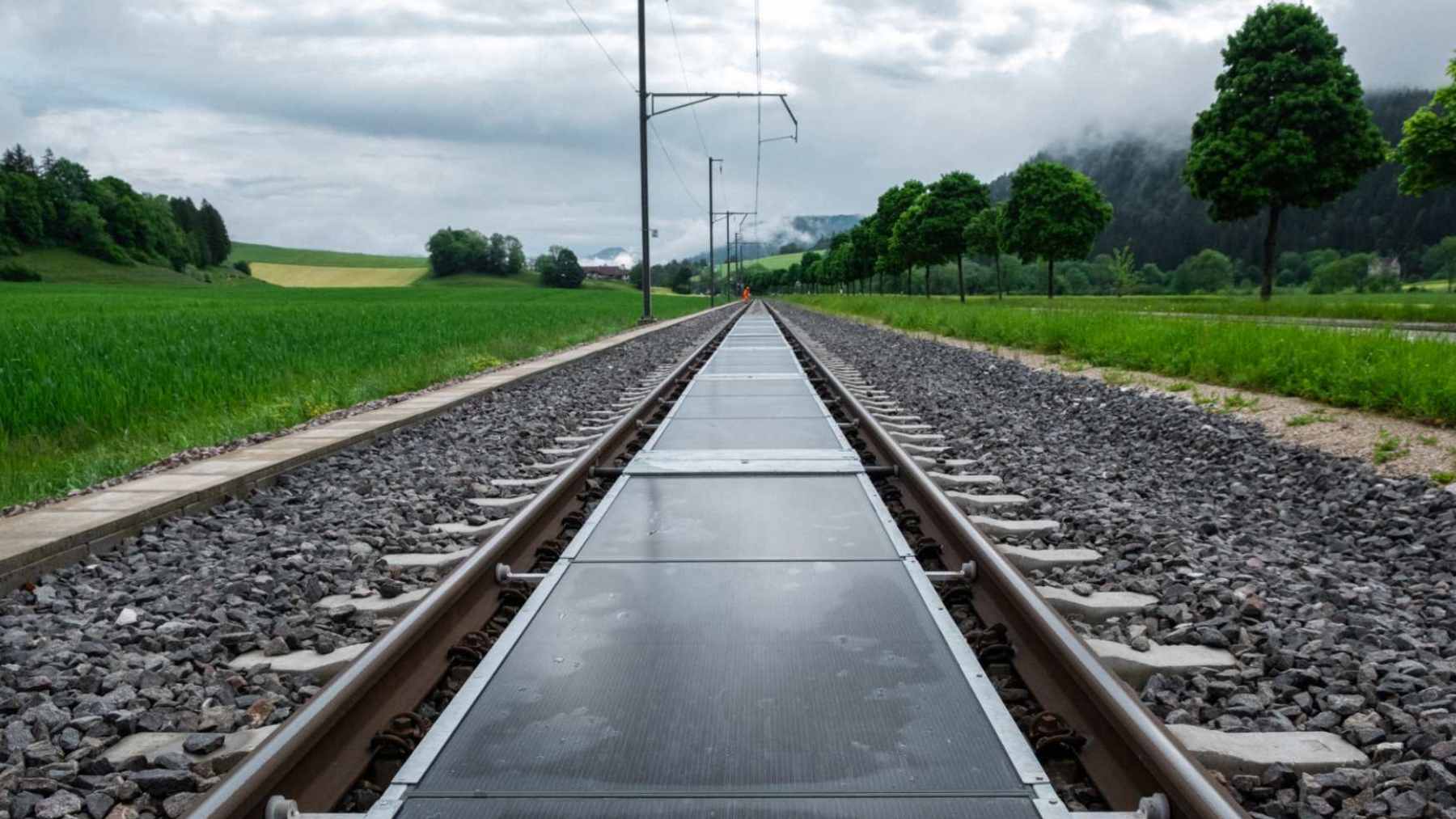
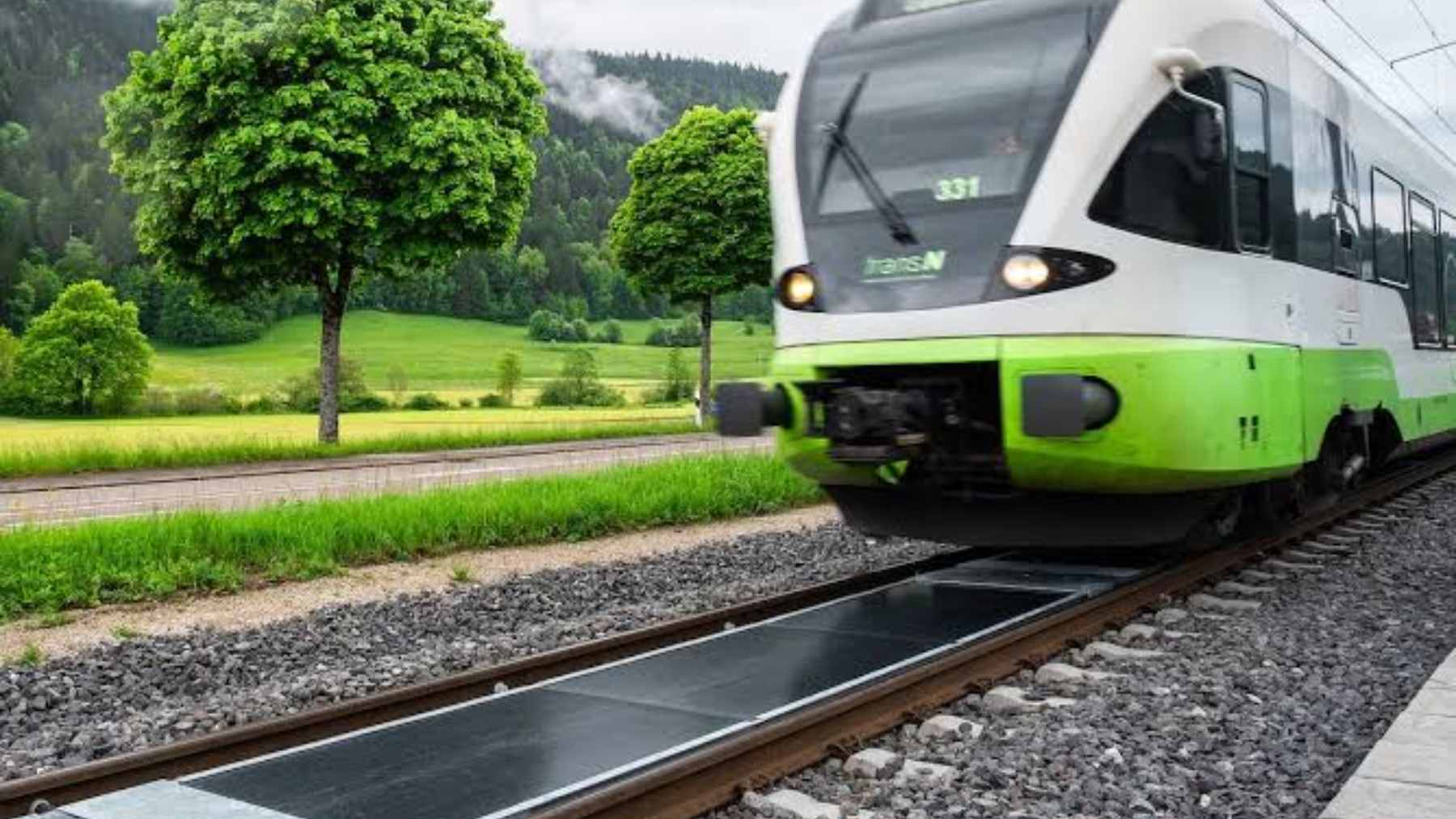
In Buttes, Switzerland, the world’s first removable solar power plant on a working rail line has now been crossed by more than 11,000 trains without a reported safety incident or disruption to daily service.
The early result is simple but important, since a railway may be able to carry passengers above and generate electricity below.
The plant is tiny by utility standards, covering just 328 ft. of track and producing more than 16,000 kilowatt-hours since May 2025. Still, its real value is not the power from one village line, it is the possibility of using existing rail corridors for solar generation without occupying additional land.
A solar plant under the wheels
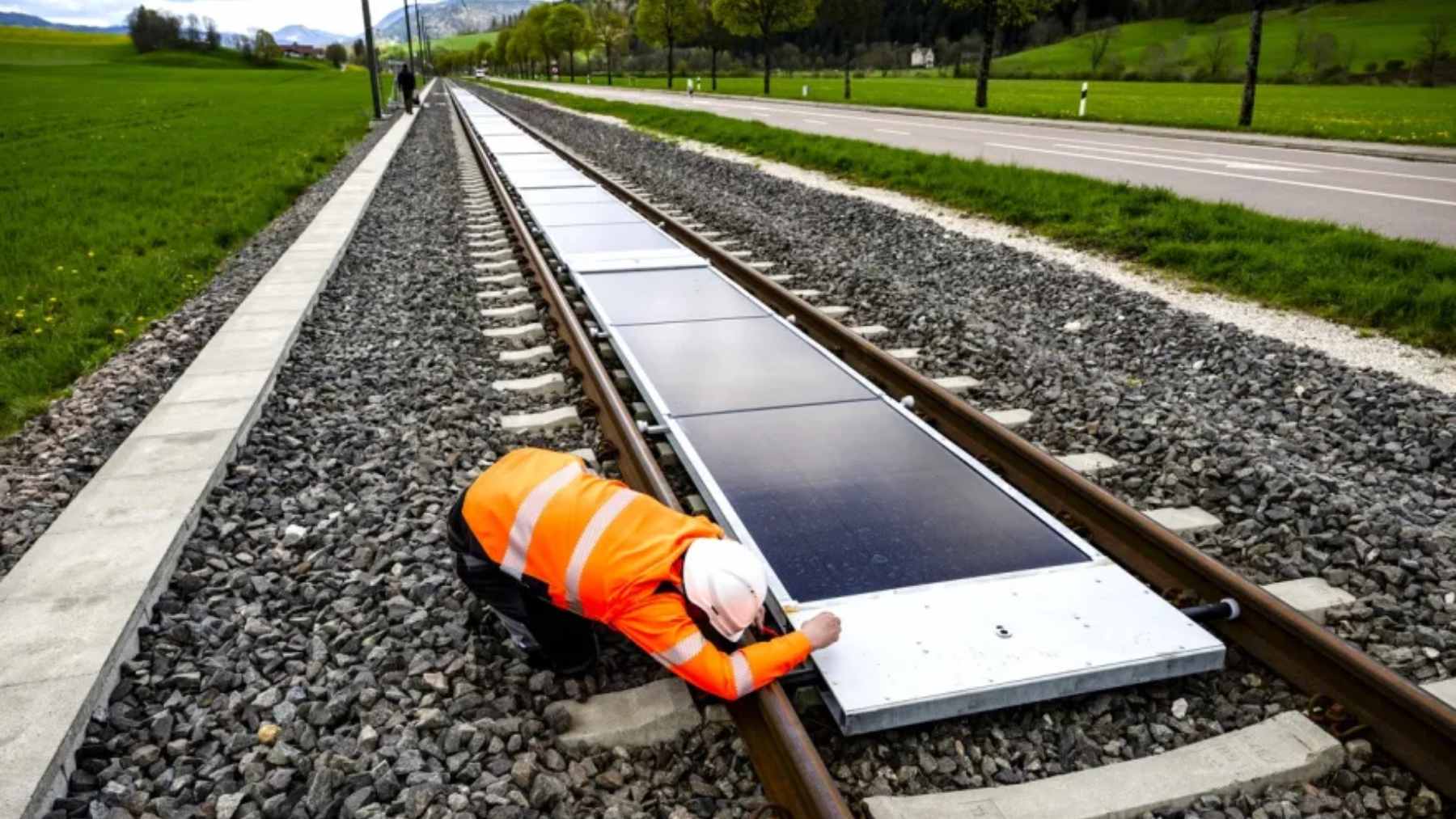
Sun-Ways installed the Buttes system on April 24, 2025, placing 48 panels rated at 380 watts between the rails and on top of the railroad ties. Together, they provide 18 kilowatts of peak capacity and send their electricity into the local grid. The three-year pilot is scheduled to continue through April 2028.
The important part is not the panel itself. It is the removable mounting system, which lets rail crews reach the track when they need to replace a tie, inspect equipment, or carry out welding. Sun-Ways founder Joseph Scuderi told Swissinfo, “We have achieved our objectives, both in terms of railway safety and electricity production.”
The safety test came first
Trains on the line can travel at up to about 56 mph, and the installation has remained in place through more than 11,000 passages. TransN, the public operator responsible for the route, reported no operational conflict and said, “There have been no conflicts with infrastructure, maintenance, or train traffic.”
It also received no reports that reflected light had dazzled train drivers.
That absence of drama matters in rail engineering. Solar output can be measured quickly, but safe coexistence with inspections, snow, vibration, and tightly timed maintenance takes longer to establish. That is why SNCF is using the Swiss pilot to study panel installation and removal, glare, track inspection, dirt buildup, output, and maintenance impacts through 2028.
The power figure needs context
Since May 20, 2025, the pilot has generated more than 16,000 kilowatt-hours, despite being shut down for roughly a month because of snow and planned technical work. That is about the yearly electricity use of three or four Swiss households. Small? Yes, but the first job of this project was to show that solar equipment could share a working railway safely.
Sun-Ways estimates that suitable sections across Switzerland’s 3,306-mile rail network could produce as much as 1 billion kilowatt-hours per year. By the company’s calculation, that would cover the annual use of about 300,000 homes, or close to 2% of the country’s electricity consumption.
Those are projections, not measured national results, and they depend on sunlight, tunnels, maintenance schedules, grid access, and cost.
Railways offer something solar farms cannot
The quiet advantage is land. The strip between active rails cannot also serve as a farm or building site, so using it for solar could add generation without claiming a second parcel. In practical terms, that may avoid some of the siting disputes that can slow renewable projects.
Installation is also designed to be mechanized. A special machine developed with Swiss rail contractor Scheuchzer can reportedly lay up to 984 ft. of panels per hour, while a three-panel module measuring about 20 ft. can be disconnected and removed in roughly 10 minutes.
Scuderi also said airflow from passing trains has prevented troublesome dust buildup, reducing the need for the brush system first considered.
The grid remains the hard part
Generating electricity in a straight line for miles creates a different problem from placing panels on one roof or in one compact solar farm.
Julien Pouget of the University of Applied Sciences of Valais has warned that present equipment is not well suited to stretches longer than about 1,640 ft. because the power must be collected, raised to a useful voltage, and moved efficiently over distance. That is where a clever rail idea turns into a serious grid-engineering challenge.
A study published in July 2026 offers one possible route forward. Researchers modeled a 3.1-mile railway-based solar plant connected through a medium-voltage direct-current network, with 3.4 megawatts of peak power and 40 converter stations rated at 100 kilowatts each.
Their model kept medium-voltage variation within 3%, although modeling a network is not the same as proving its cost, durability, and safety in daily rail service.
Other countries are moving closer
France has taken the most formal step so far. SNCF, which describes itself as France’s largest electricity consumer, signed a collaboration agreement with Sun-Ways in November 2025 and announced it in February 2026. The deal gives its teams access to operating data and technical feedback while they examine whether the system could fit France’s roughly 17,400 miles of rail.
Italy is at an earlier stage, but the conversation has moved forward. Sun-Ways has signed a collaboration contract with an unnamed Italian business partner that is in contact with Rete Ferroviaria Italiana, although a site and launch date have not been announced.
South Korea has approved a two-year test near Osong station, while an Indonesian engineering company says more field testing is needed.
Promising, but not finished
Sun-Ways wants Switzerland’s Federal Office of Transport to grant final approval before the scheduled end of the pilot. The regulator set a three-year test, which means a final decision may still depend on more seasonal data. That caution is understandable when power equipment is sitting inches below moving trains.
At the end of the day, the breakthrough is not that 48 panels supplied the equivalent annual power use of a handful of homes, but that an overlooked strip of infrastructure appears capable of producing electricity without giving up more land or interrupting the service already using it. The next test is whether the economics and electrical architecture can scale as neatly as the idea.
The study was published in Energies.