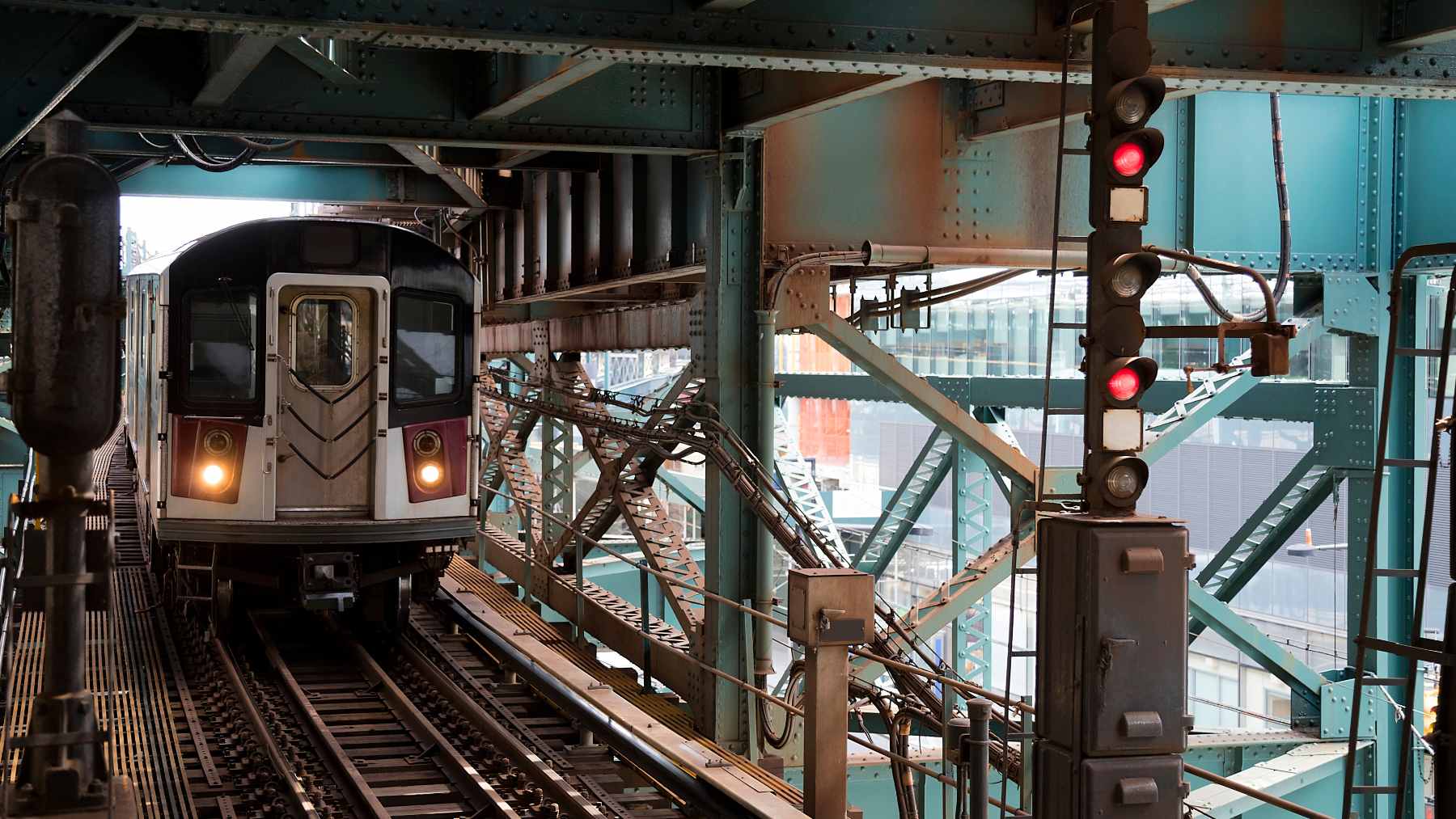
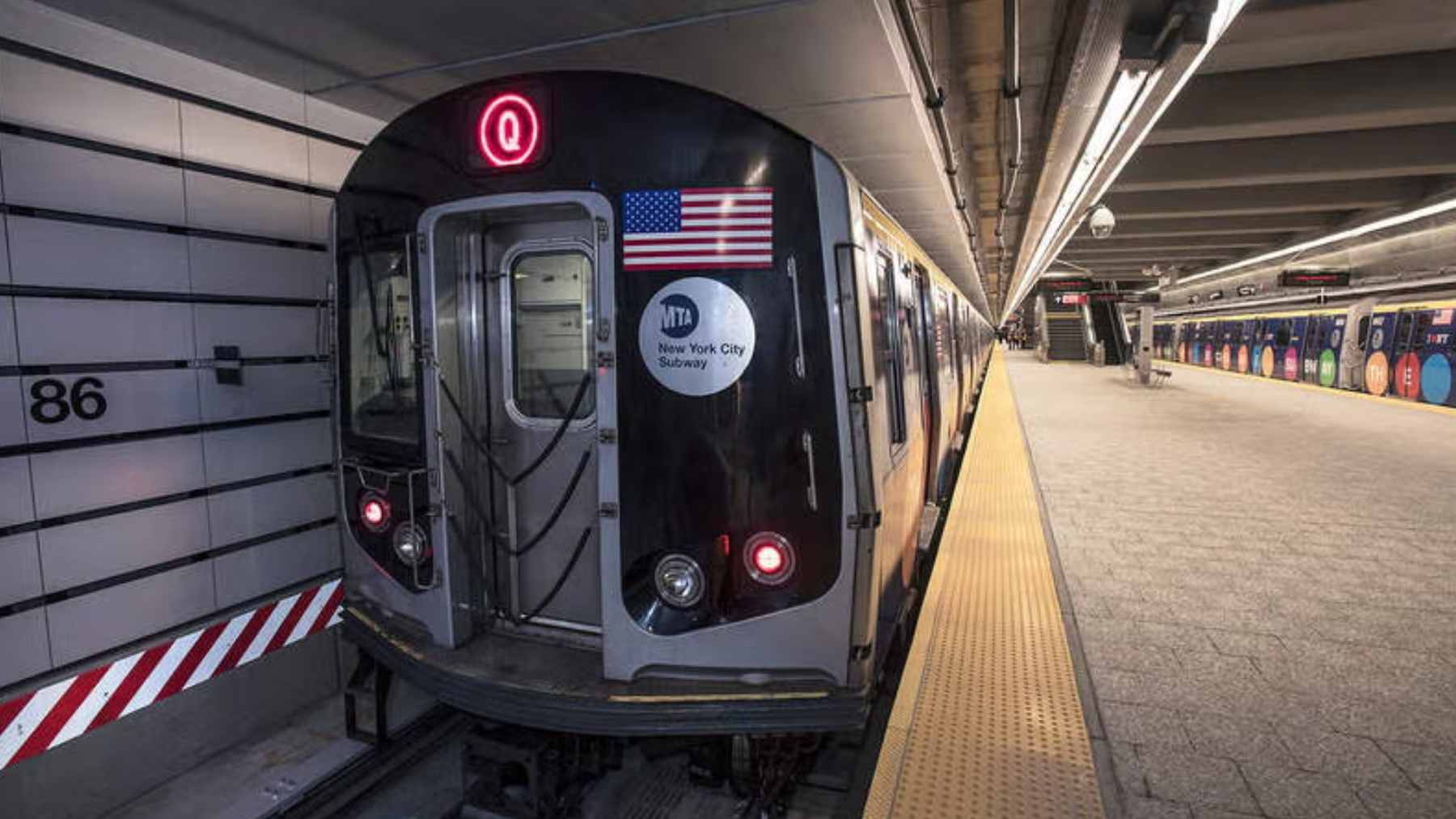
New York’s subway could be getting a sharper set of digital eyes. The Metropolitan Transportation Authority is moving ahead with a two-station test of an artificial intelligence-supported Track Intrusion Detection System, a prototype meant to spot people, animals, or objects before they end up in the subway right-of-way.
The latest MTA contracting page lists the project under review after a June 29 due date, with the official scope aimed at one underground station and one elevated station.
At first glance, this sounds like a straightforward safety upgrade. It is. But in New York, keeping trains moving is also an environmental issue, because every reliable subway ride helps keep one of America’s lowest-emission travel choices attractive.
By the MTA’s own estimate, its network prevents a net 24.3 million U.S. tons of carbon dioxide equivalent from entering the atmosphere each year.
What the system would watch
The proposed system is not just another camera on a platform. MTA documents describe an AI-supported approach that would generate alerts for train operators, station staff, and control center personnel when it detects an intrusion or a high-risk moment near the platform edge.
In practical terms, that means the software would need to recognize accidental falls, intentional track entries, dropped objects, and unusual crowd movement.
It would also be expected to spot pre-intrusion behavior, such as someone leaning into the right-of-way or moving erratically near the edge. That is a lot to ask in a station packed with tired commuters, rolling suitcases, rats, and the usual New York rush.
The fare does not matter
Paying the fare gets a rider onto the train system, not into restricted areas. MTA rules say unauthorized people may not enter tracks, tunnels, roadbeds, closed-off areas, emergency stairways, or other spaces marked as dangerous unless specifically authorized.
Violations can bring civil penalties of up to $100 per violation, while criminal prosecution can carry a fine of up to $25, up to 10 days in jail, or both. The AI system would not replace police officers or transit workers, but its alerts and video records could make it easier to respond quickly and document what happened.
Why delays matter
The pressure behind the pilot is easy to understand. According to reporting originally published by The City Reporter and republished by Route Fifty, around 6% of subway delays last year were tied to the presence of a person or debris on the tracks. The same report said there were 1,297 unauthorized track entries last year, up 22% from 1,062 in 2019.
That is not just a line on a dashboard. Anyone who has stood on a hot platform while announcements get vaguer by the minute knows how quickly one incident can ripple through the day. A stopped train can mean missed appointments, crowded platforms, rerouted service, and more pressure on transit workers.
A greener commute depends on trust
Here is where the environmental angle comes in. The MTA’s 2026 sustainability update says a typical New York City subway trip produces about 0.28 pounds of carbon dioxide equivalent per passenger mile, compared with 1.10 pounds for the same trip in a gas-powered single-occupancy vehicle. That makes the subway nearly four times greener by the agency’s calculation.
Not every delay sends someone straight into a car. Still, reliability is part of why people keep choosing transit in the first place. At the end of the day, a subway system that feels safer and runs with fewer disruptions is also a climate tool hiding in plain sight.
The business of subway AI
This is also a sizable technology contract. The MTA lists the project’s estimated value between $10 million and $50 million, funded through capital dollars, with a 730-day contract term. The listing also includes participation goals for minority-owned, women-owned, and service-disabled veteran-owned businesses.
For vendors, this is not a polished lab demo. The system must be able to work amid heat, humidity, dust, wind, vibration, water, electromagnetic interference, and changing light. It also has to connect with MTA real-time train positioning information, which means the winning design needs to fit into a subway network that is both old and constantly moving.
Privacy and false alarms
The hardest part may not be seeing movement. The hard part is deciding what matters. Route Fifty reported that transit labor officials have raised concerns about real-world conditions such as “water intrusions, smoke, poor lighting,” curved platforms, limited sightlines, and heavy crowds.
There is also a privacy question. Official documents describe a system focused on detecting events, not identifying riders, but it would still generate still images and video of detected incidents.
The Surveillance Technology Oversight Project warned that “transparency and reporting is key to accountability,” a point worth taking seriously as public agencies add more AI to daily life.
What riders should know
For now, this is not a systemwide rollout. It is a prototype, and the current MTA contracting page says statements of qualifications are under review. The broader question is whether the technology can work well enough in two very different stations before anyone talks seriously about scaling it across a 472-station subway network.
The everyday safety rule has not changed. If someone falls onto the tracks, the MTA says to call 911, and if a train is approaching, use a phone flashlight and wave both hands from side to side. If you drop a phone, a bag, or keys, do not climb down after it. Get help.
The official procurement notice was published on MTA.info.