Europe’s drone war is no longer just a front-line story. It is becoming an industrial race, with factories, supply chains, and investors trying to keep up with cheap, unmanned aircraft that can damage bases, power stations, and cities in minutes.
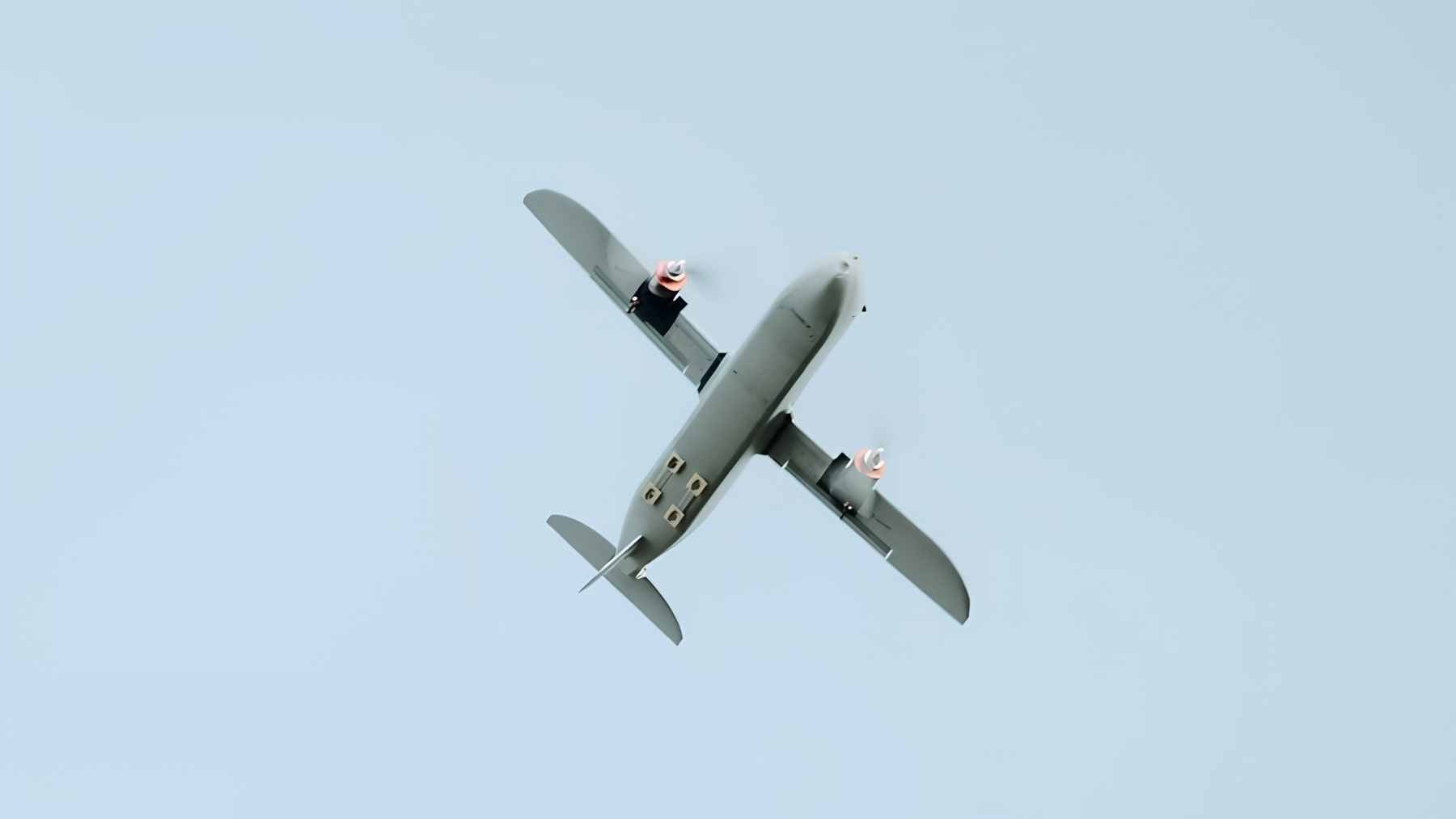
Munich-based Tytan Technologies is now preparing to launch a larger German factory that Defense News says will be capable of producing 3,000 autonomous interceptor drones a month starting in August 2026.
The company’s systems have been used in Ukraine, and that battlefield exposure appears to be reshaping how Europe thinks about defense, infrastructure protection, and the environmental cost of war.
A factory built for drone volume
This is the part that matters most. Tytan is not talking about a handful of prototypes or a showcase system for a defense expo. The reported target is industrial output, with monthly production measured in the thousands.
Balázs Nagy, Tytan’s CEO and co-founder, told Defense News that Ukraine has used the company’s interceptors as a cost-efficient, effective and easy-to-use answer to airborne threats. He added, “With the launch of our new, bigger German factory, we have a blueprint that we can use to scale up production in different regions.”
In practical terms, Europe is trying to answer mass with mass. A very expensive missile is the wrong tool for every small drone, especially when attacks arrive in waves.
Ukraine became the test bed
Ukraine has turned into a brutal proving ground for drone defense. That does not make the technology harmless or clean, but it does explain why companies are moving quickly from experiments to serial production.
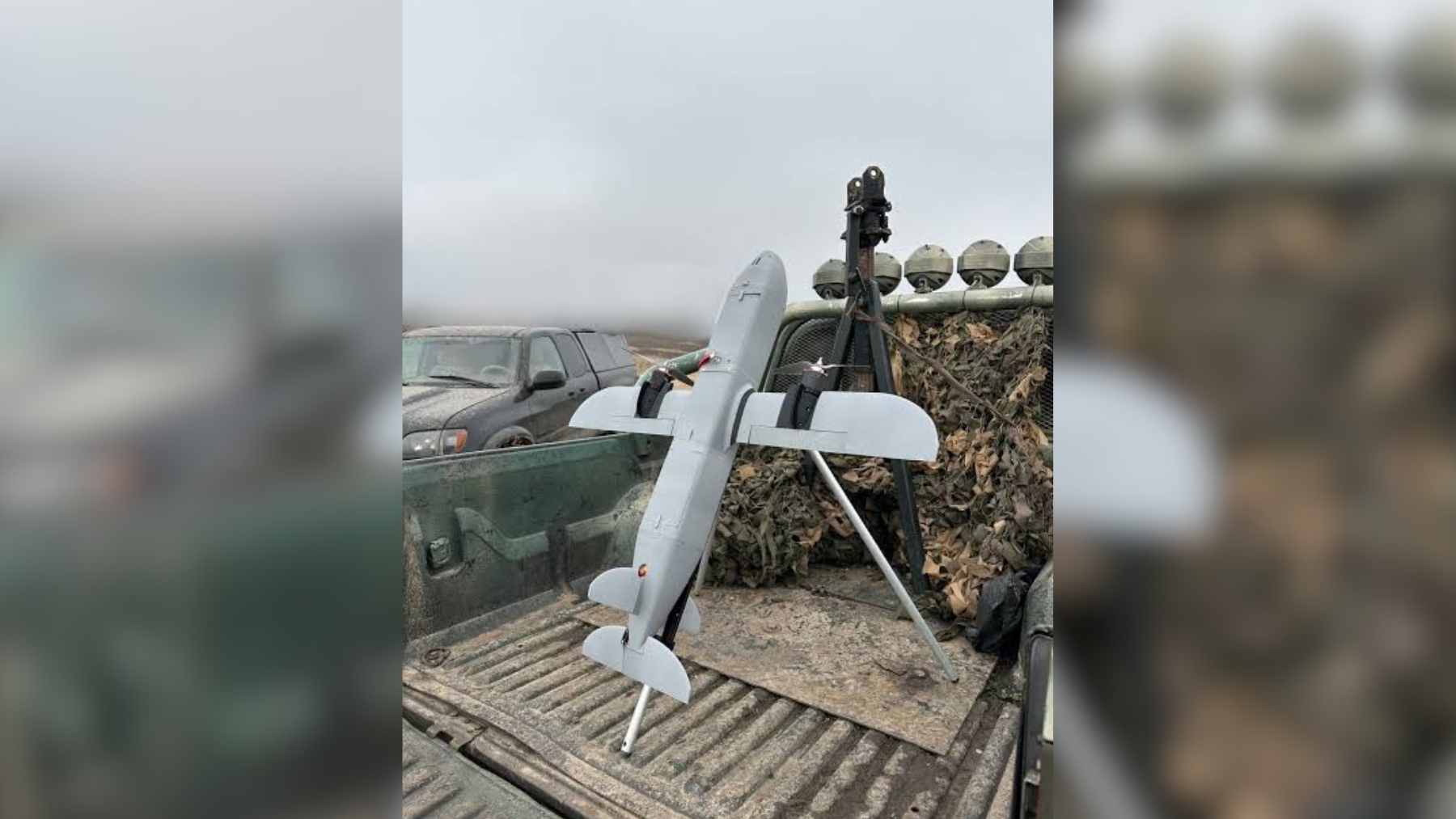
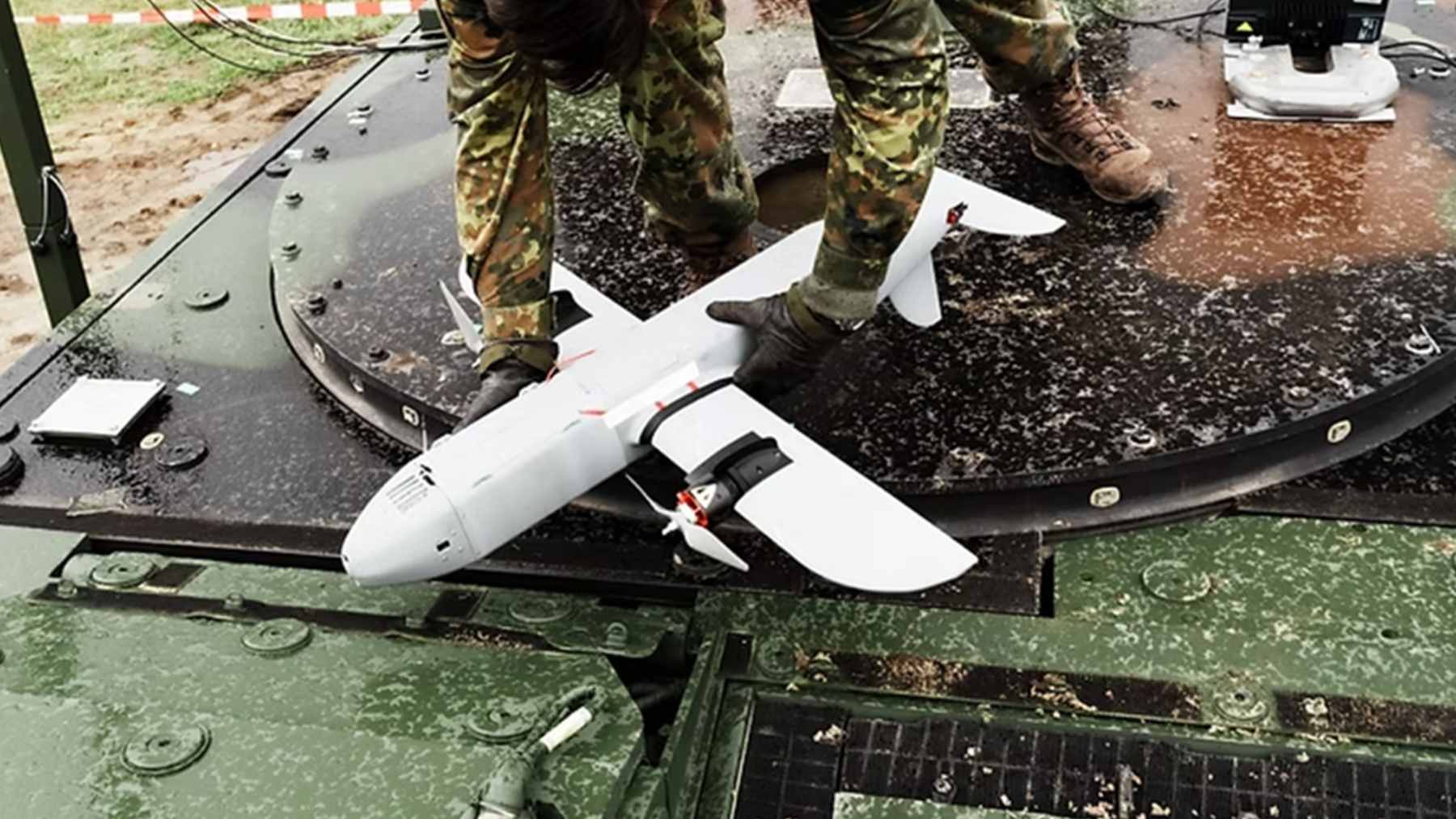
Tytan says its AI-powered interceptors are designed to detect, track, and neutralize targets in real time, while keeping a human operator in control of the kill chain. Its website lists the METIS long-range interceptor at up to about 230 mph with a range of roughly 37 miles, while the EOS short-range system is listed at up to about 125 mph with a range of 12 miles.
Those numbers are not magic. They simply show why the company is trying to fit into a layered air-defense model, where smaller autonomous systems take on drones before more expensive weapons are needed.
The environmental angle is real
War is never green. Still, the kind of air defense being built here matters for ecology because many drone and missile strikes are aimed at infrastructure that can burn, leak, or fail.
The United Nations Environment Programme has warned that the war in Ukraine has damaged energy sites, oil storage, refineries, gas facilities, industrial sites, and water-related infrastructure, creating air pollution incidents and possible contamination of surface and groundwater.
That is not an abstract concern. It can mean smoke over neighborhoods, polluted soil, or water treatment systems knocked offline.
The World Bank’s 2026 update estimated direct damage in Ukraine at more than $195 billion by the end of 2025, with housing, transport, and energy among the most affected sectors. A cheaper interceptor will not erase that damage, but if it helps prevent hits on substations, fuel storage, or factories, it can reduce harm that reaches far beyond the battlefield.
European supply chains matter
Tytan’s expansion is also a business story. The company announced a roughly $34.3 million Series A round in February, and said total funding reached about $52.6 million. That money is meant to scale manufacturing in Germany, Ukraine, and allied markets.
There is a sovereignty point here, too. Defense Express, citing Polish reporting, said up to 95% of components in Tytan’s anti-aircraft drones are of European origin and labeled “ITAR Free,” meaning they are not subject to U.S. International Traffic in Arms Regulations. For Europe, that kind of sourcing can make deliveries simpler when politics gets messy.
Poland and Hungary are being discussed as possible future markets or production locations, according to Defense News. Tytan has also presented expansion plans in Warsaw, and Polish companies may be brought into the supply chain.
From startup to defense player
The company is not moving alone. Tytan has signed partnerships with firms such as Hensoldt and KNDS, and Germany’s procurement office has worked with the company on a demonstrator to protect Bundeswehr sites from unmanned aircraft. That project combines sensors, effectors, and command-and-control systems, which is the technical plumbing behind a real air shield.
This is where defense tech starts to look less like a single gadget and more like a network. Radars spot the threat, software sorts the target, operators supervise, and interceptors do the dirty work in the air.
For ordinary people, the result is easier to understand than the jargon. It is the difference between a drone reaching a power station and being stopped before the lights go out.
What to watch next
There are still big questions. Tytan has not published independent battlefield kill rates, and official details about costs per interceptor remain limited. Readers should be cautious about treating any single company’s claims as proof of a complete solution.
The direction is hard to miss, though. Europe is building more autonomous defenses, trying to lower the cost of each interception, and using Ukraine’s experience to speed up factory decisions that once took years.
At the end of the day, this is not just about drones chasing drones. It is about whether Europe can protect its people, its military bases, and its vulnerable infrastructure without burning through its most expensive air-defense tools every night.
The official company announcement on Tytan’s funding and production scale-up was published on Tytan Technologies.