Clean fusion power has always sounded almost too good to be true. A machine that copies the energy process of the stars, produces steady electricity, and avoids planet-warming emissions? For decades, that promise has lived just over the horizon.
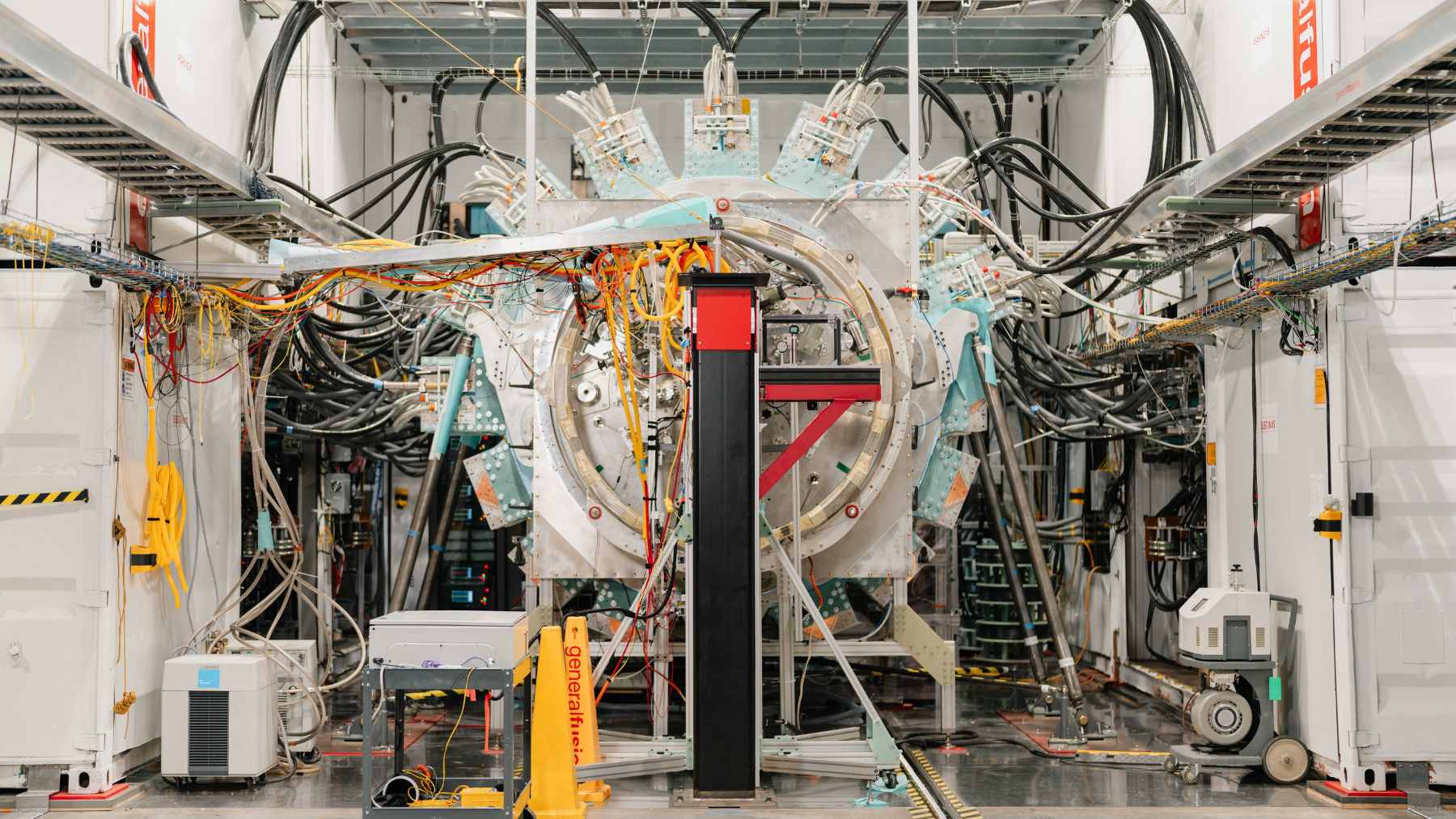
Now, a Canadian company says it has taken a meaningful step toward making that horizon a little less distant. General Fusion reported that its LM26 machine heated plasma to about 15.1 million°F, more than tripling the electron temperature through mechanical compression rather than giant lasers or massive superconducting magnets.
A machine that squeezes plasma
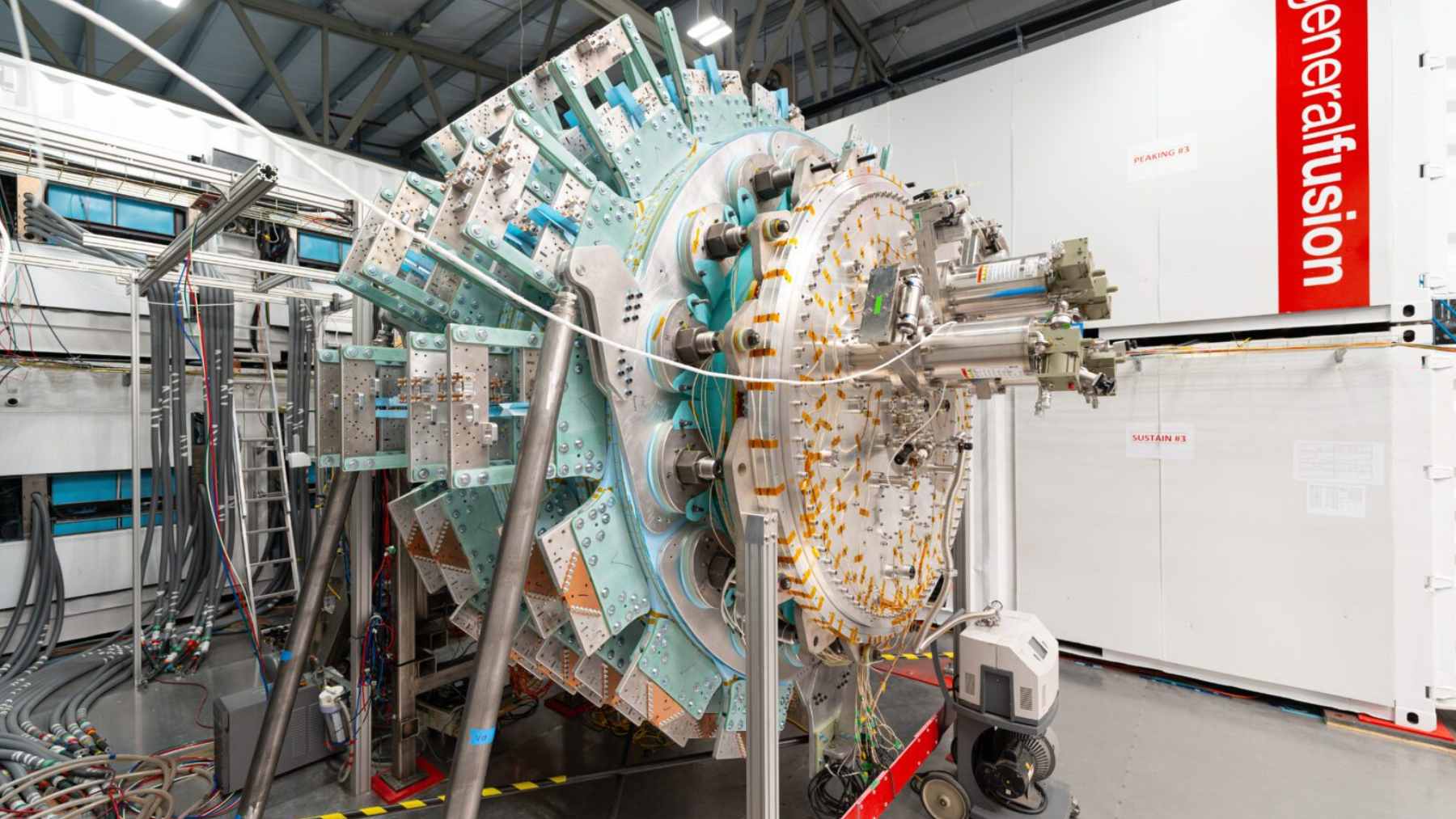
General Fusion’s approach is called Magnetized Target Fusion, or MTF. Essentially, LM26 forms a magnetized deuterium plasma, using a heavy form of hydrogen, and then squeezes it with an imploding solid lithium liner.
That may sound like science fiction, but the basic idea is surprisingly physical. Instead of relying on laser blasts or the enormous magnetic cages used in tokamak projects, this system tries to heat and densify plasma by compressing it.
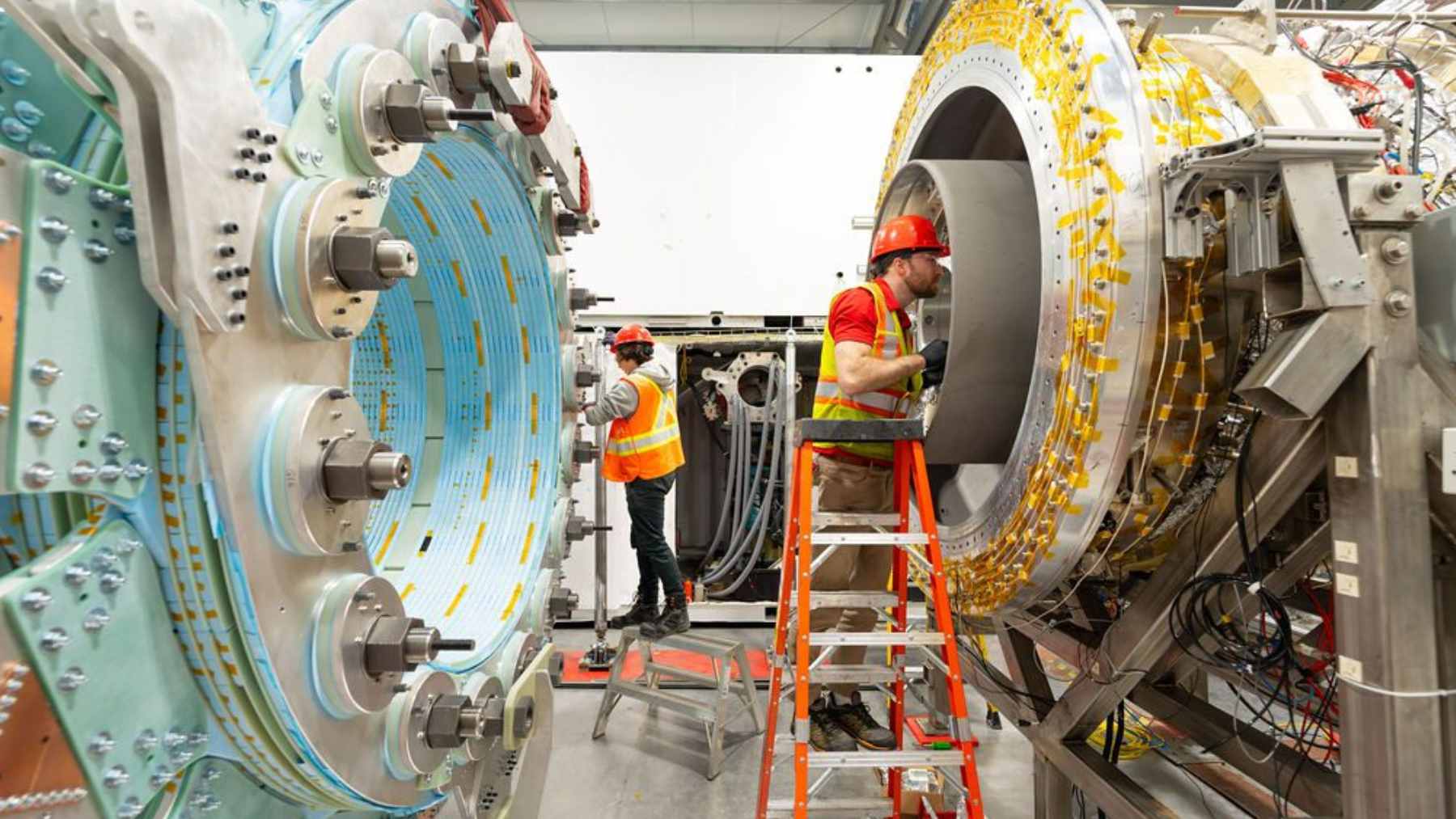
LM26 has been operating since 2025, according to the company. General Fusion describes it as the first MTF demonstration machine built at a commercially relevant scale, with a diameter about half that of a future commercial plant based on its current design assumptions.
Why this heat matters
The key number is 0.72 kiloelectronvolts, which equals about 15.1 million°F. That is still below General Fusion’s next target of 1 kiloelectronvolt, or about 18 million°F, but it is a clear jump from where the plasma started.
The company says the result was confirmed by several diagnostic systems, including Thomson scattering and Absolute Extreme Ultraviolet measurements. It also reported roughly tenfold increases in plasma density and poloidal magnetic field strength during compression.
Even more interesting, researchers observed an increase in neutron yield during compression. That suggests fusion reactions were occurring inside the plasma, although the company is careful to say the experiment did not produce net energy.
Not a power plant yet
This is the part worth keeping in mind. LM26 did not generate electricity for the grid, and it did not prove that General Fusion can already build a commercial reactor.
The results are preliminary and have been submitted for peer review. That matters because fusion is full of impressive milestones that still need to survive repeat testing, independent scrutiny, and the brutal economics of real-world energy.
Greg Twinney, General Fusion’s chief executive, called the results evidence of progress. “We are forging a new path in fusion with our uniquely practical MTF approach,” he said.
The lithium challenge
The lithium liner is one of the most important parts of this experiment. It is the component that physically compresses the plasma, helping raise temperature and density toward fusion conditions.
There is a catch, however. In systems like this, material from the liner can potentially contaminate the plasma, and dirty plasma is bad news when scientists are trying to keep conditions stable enough for fusion.
General Fusion says LM26 remained stable until deep into compression and did not show significant plasma contamination from the lithium liner during the stable phase. That is a technical detail, but it is also one of the reasons the announcement matters.
The clean-energy prize
Fusion is attractive because it could, in theory, provide large amounts of steady, zero-carbon electricity. It would not depend on weather in the way solar and wind do, and it would not use the same chain reaction process as today’s nuclear fission plants.
That does not make it easy. The hard part is creating and holding extreme plasma conditions long enough, densely enough, and efficiently enough to get more useful energy out than the system consumes.
That is where the Lawson criterion comes in. General Fusion says LM26’s roadmap is to reach 1 kiloelectronvolt, then 10 kiloelectronvolts, which is about 180 million°F, and eventually meet the Lawson benchmark for net fusion energy in plasma.
A business story, too
This is not just a lab story anymore. General Fusion is also moving through a public-market process, with Spring Valley Acquisition Corp. III shareholders approving a business combination with the company on July 6, 2026.
The transaction was expected to close around July 10, 2026, subject to regulatory approvals and closing conditions. After that, the combined company is expected to trade on Nasdaq under the ticker “GFUZ,” if its listing application is approved.
That timing gives the LM26 announcement extra weight. Investors are not just looking at a scientific milestone. They are looking at whether a fusion company can turn a promising machine into a repeatable platform, then into a business.
What comes next
General Fusion says the experiments largely matched its computer models, which gives the company confidence that planned upgrades could push LM26 into more demanding plasma conditions. Still, models are not power plants. The next results will matter more.
What should readers watch for? First, whether LM26 reaches 1 kiloelectronvolt. Then, whether it can climb toward 10 kiloelectronvolts while maintaining stability, density, magnetic confinement, and clean plasma conditions.
For now, this is not the moment fusion arrives in your wall outlet. It is a sign that one practical path toward clean fusion power may be getting warmer, one carefully squeezed plasma at a time.
The official statement was published on General Fusion.