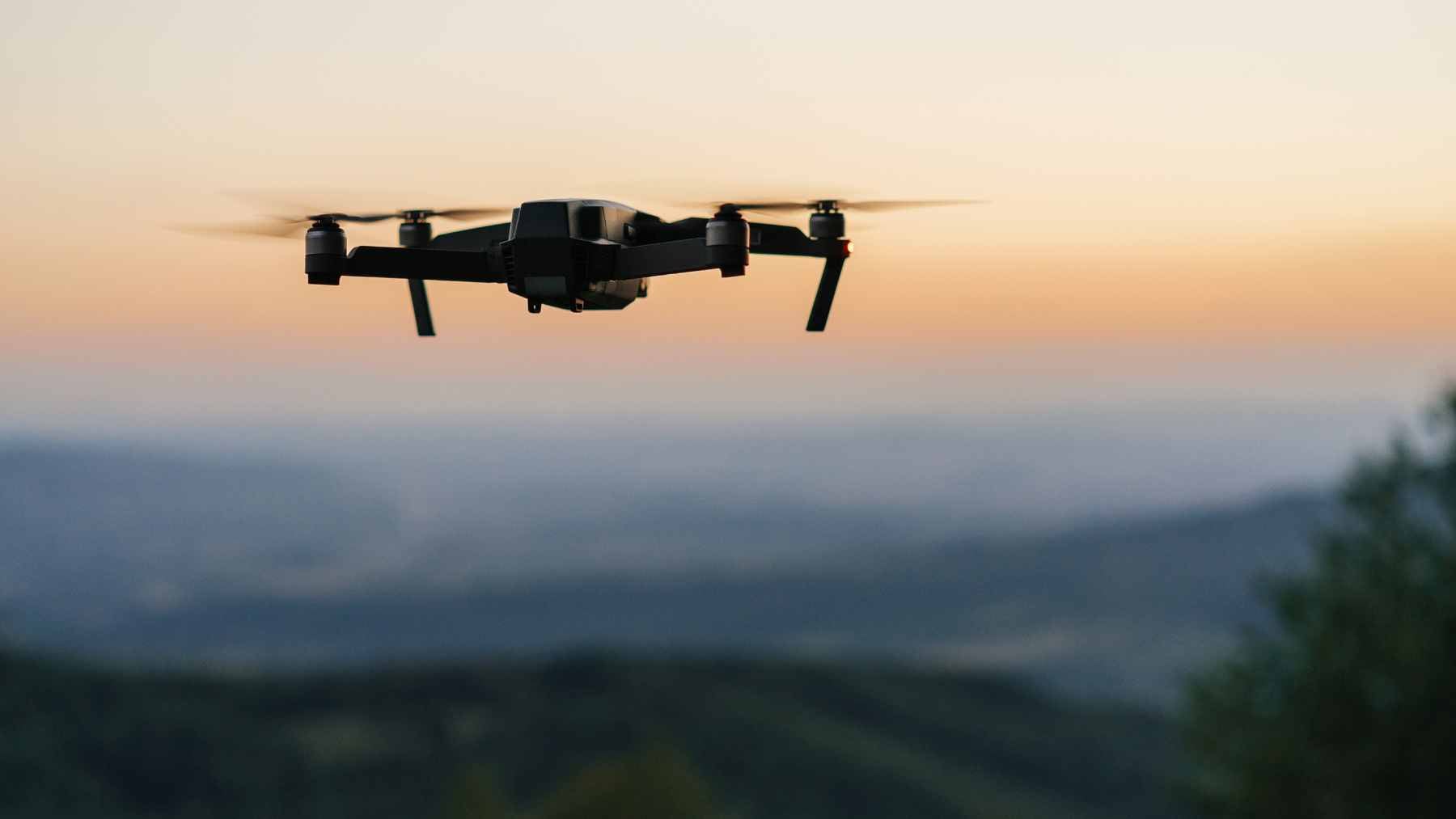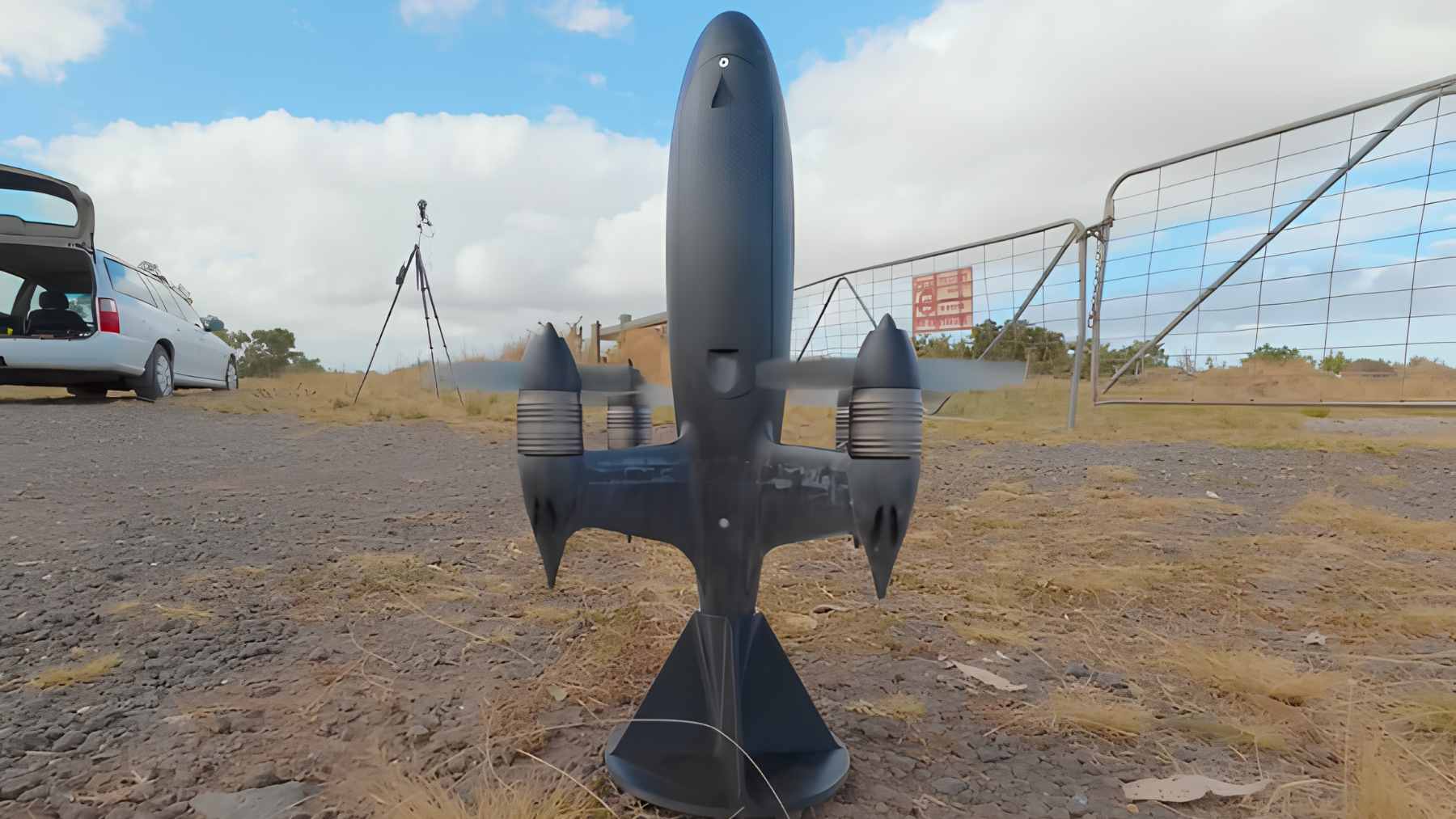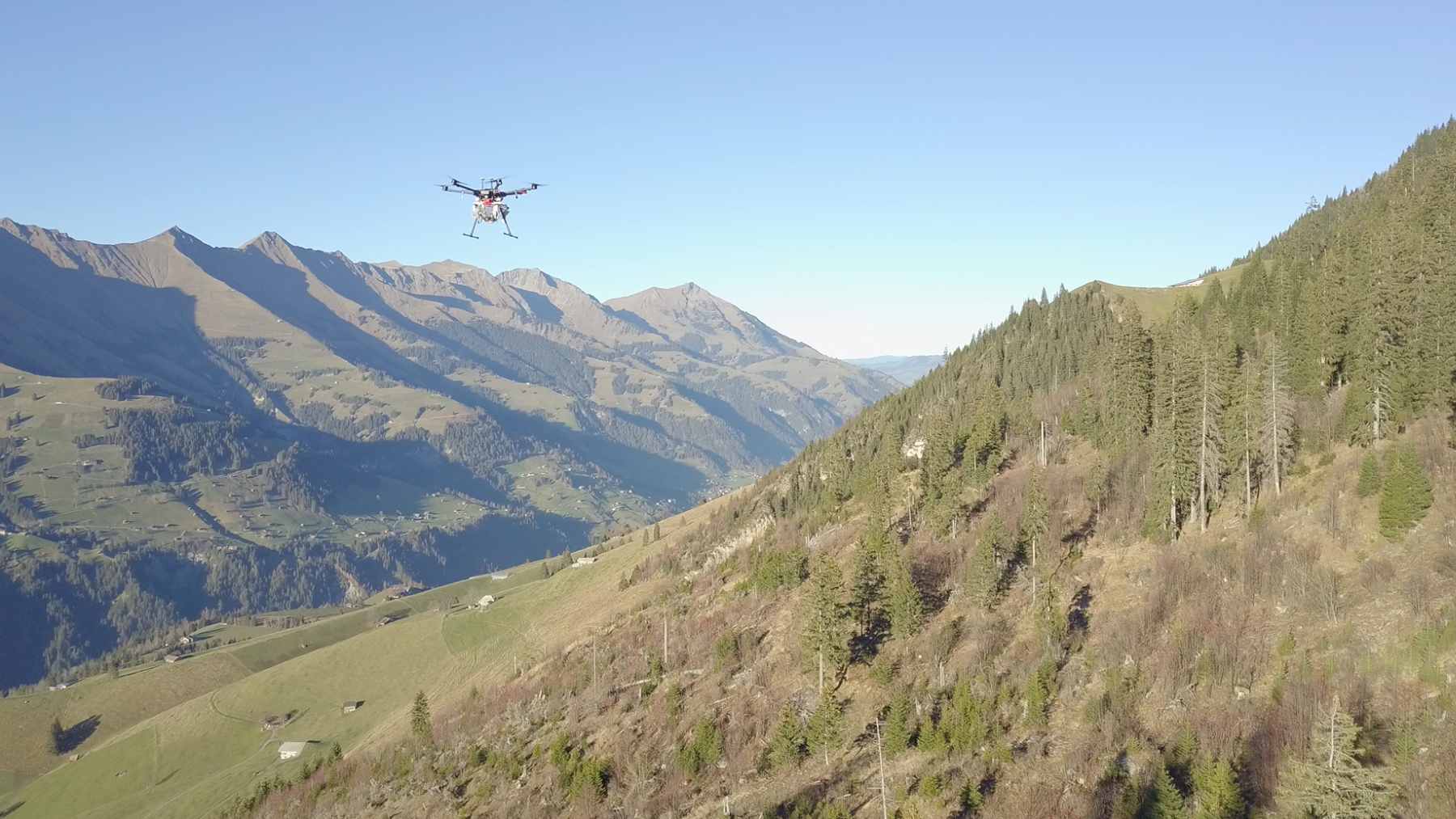
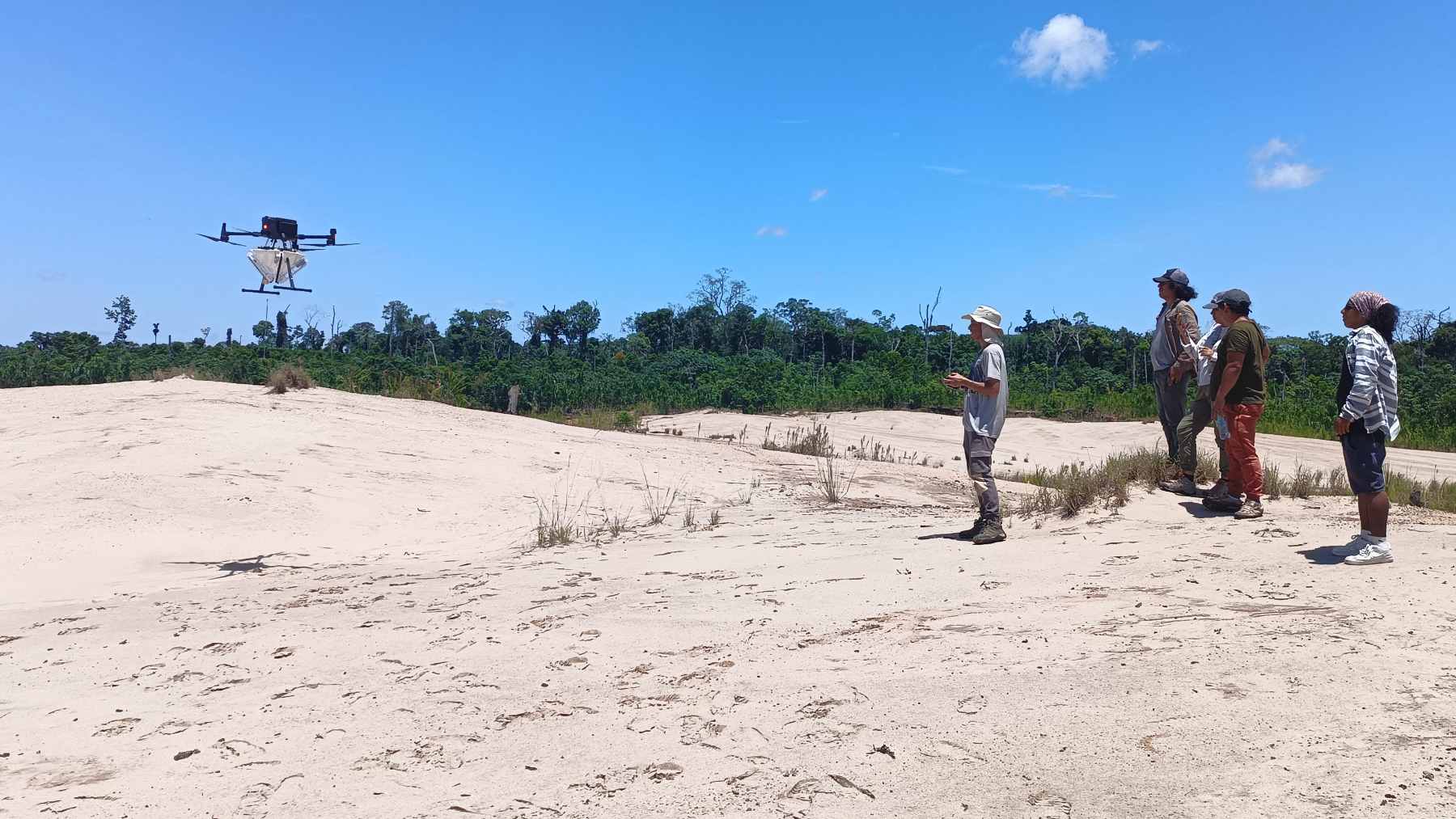
A drone rising over stripped Amazon soil does not look like a traditional forest crew. Yet Flying Forests, a Reno, Nevada company cofounded by former NASA engineer Lauren Fletcher, is testing a faster way to bring life back to damaged land at a time when the world is still losing about 26.9 million acres of forest a year to deforestation, according to the Food and Agriculture Organization’s (FAO) 2025 assessment.
The big number is hard to ignore. NASA Spinoff reports that four of the company’s drones could plant 40 million trees per year if operated at enough scale, but that figure is best understood as potential capacity, not proof that 40 million trees have already survived in the ground.
From NASA to forests
Fletcher’s path to reforestation runs through space science. NASA says he spent part of a 20-year career at Ames Research Center in California, where he worked on life sciences hardware for missions studying plants and animals in space.
That background matters because this is not just a drone story, it is a biology story with propellers attached. In practical terms, the challenge is not only dropping seeds from the sky, but making sure those seeds have a fair shot once they hit dry, burned, mined, or exhausted soil.
Fletcher previously helped launch BioCarbon Engineering with Irina Fedorenko-Aula, and the pair later created Flying Forests in Reno in 2020. NASA describes the newer company as focused partly on smaller landholders and local groups that may not be able to afford large centralized restoration systems.
How the seed balls work
The drones do not simply scatter loose seeds like someone shaking a bag over a garden bed. They launch “seed balls,” small capsules made with a clay-like base, plant food, and anti-predation materials such as garlic or cayenne pepper, with seeds mixed inside.
Before the drones fly, the team studies the land. NASA says the process can include hyperspectral satellite imagery, drone images, ground surveys, elevation data, and water distribution, with artificial intelligence helping turn that information into planting maps.
That is the quieter part of the technology, but it may be the most important. A seed ball is only useful if it carries the right species into the right place at the right time. Otherwise, it is just a tiny package with a rough landing.
The Amazon test
In early December 2024, Flying Forests worked near Puerto Maldonado in the Peruvian Amazon, close to the Bolivian border. NASA says 20 Peruvian Army volunteers helped prepare 20,000 seed balls, which were later deployed by one drone across 25 acres of barren sandy soil in about an hour-and-a-half.
The land had been damaged by gold mining, so the first goal was not to create a full forest overnight. The seed balls carried smooth Crotalaria, a hardy legume meant to establish ground cover and help prepare the soil for native species later on.
Who says reforestation has to start with tall trees? Sometimes it starts with a tougher plant that protects the ground, improves the soil, and gives the next wave of vegetation a better chance.
California joins the trial
The same idea is also being tested in the United States. The Sugar Pine Foundation says it partnered with the Humboldt-Toiyabe National Forest and Flying Forests on a 25-acre parcel in the Loyalton Fire burn scar northwest of Reno, after the 2020 fire burned 47,029 acres across federal forest land.
The foundation had collected 30 lbs. of native Jeffrey pine seed, enough to plant about 90,000 trees. It also reported that Flying Forests drones weigh about 33 lbs. when fully loaded with 500 to 700 seed balls.
Annabelle Monti, a forester with the Humboldt-Toiyabe National Forest, described the pilot as a possible “new way to get trees back on a landscape.” That is the promise, especially after wildfires leave steep, dangerous, or hard-to-reach areas behind.
Fast does not mean automatic
Speed is clearly the selling point. NASA says Fletcher’s launch system can fire 300 seed balls per minute with accuracy within about half a yard, while he frames the design around “larger distribution” and lower cost.
Still, a forest is not a vending machine. Rainfall, soil chemistry, seed quality, animal pressure, local ecology, and follow-up monitoring all shape whether a seed becomes a living tree. That’s why drones should be seen as an acceleration tool, not a replacement for human restoration work.
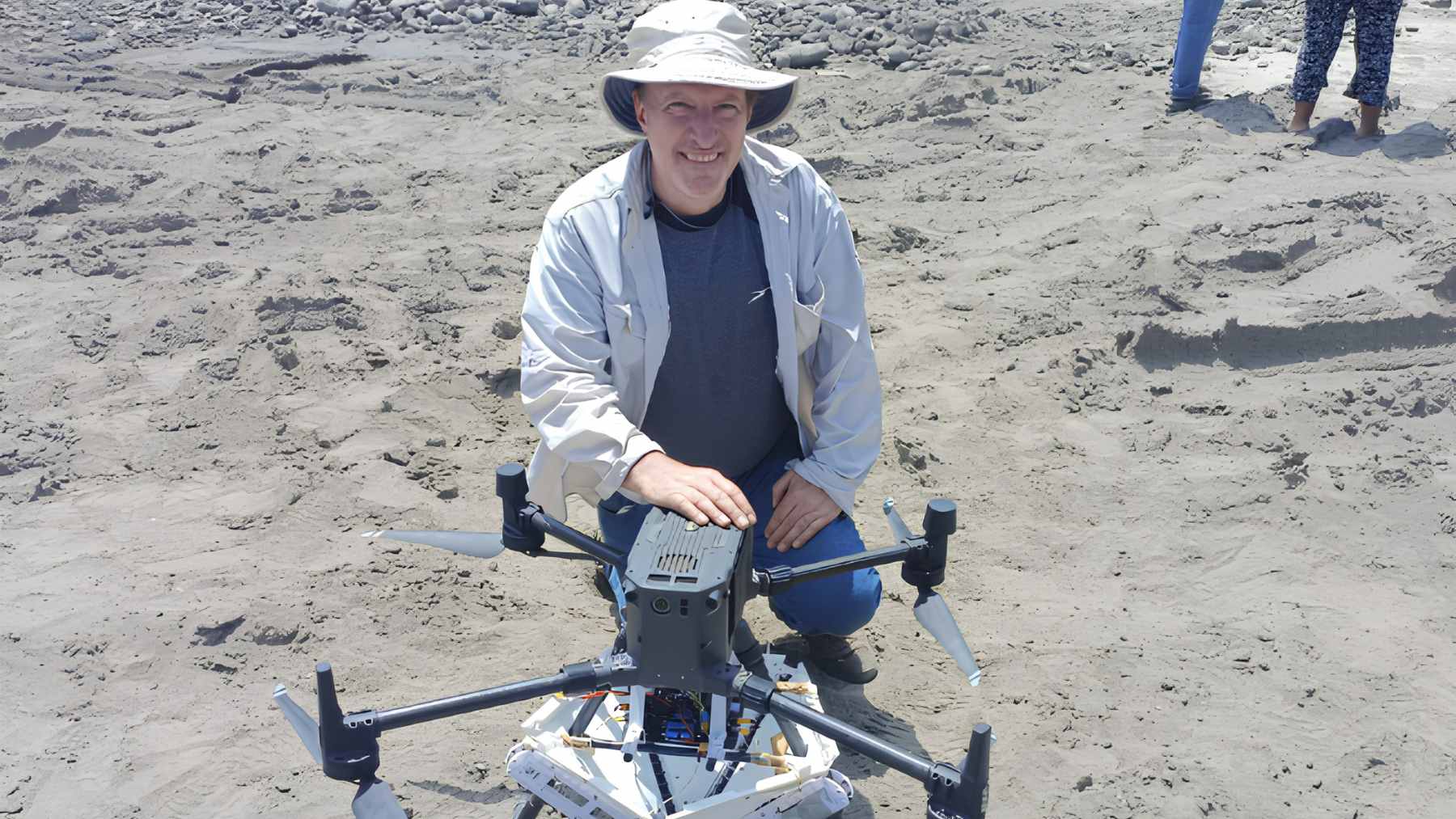
The company’s own record shows the difference between potential and reality. NASA says Flying Forests carried out demonstrations in Panama, Peru, and Kenya during its first five years, planting about 200,000 trees, while larger projects are being planned or discussed in Peru, Brazil, Indonesia, and the Bahamas.
The business model matters, too
Flying Forests is also trying a franchise-style approach. NASA says the company aims to equip and employ local organizations already involved in tree planting, while training drone operators, technicians, remote sensing analysts, seed ball makers, and managers.
That may sound less exciting than a drone firing seed balls from the air, but it could matter just as much. If local teams understand the land, the species, the weather, and the politics, the technology has a better chance of becoming part of long-term restoration rather than a one-day spectacle.
At the end of the day, the machine is only one piece of the puzzle. The forest still has to grow.
What readers should keep in mind
This is not a magic forest cannon, and it should not be sold that way. The real value is that drones can reach places where crews may struggle, speed up early planting, and reduce some of the cost and danger of restoration work in burned, mined, or remote areas.
The bigger story is that reforestation is becoming a mix of ecology, robotics, data science, business, and even military-style logistics, as seen with the Peruvian Army volunteers. That mix will not solve deforestation by itself, but it could give restoration teams another useful tool when the clock is moving faster than bureaucracy.
The official statement was published on NASA Spinoff.