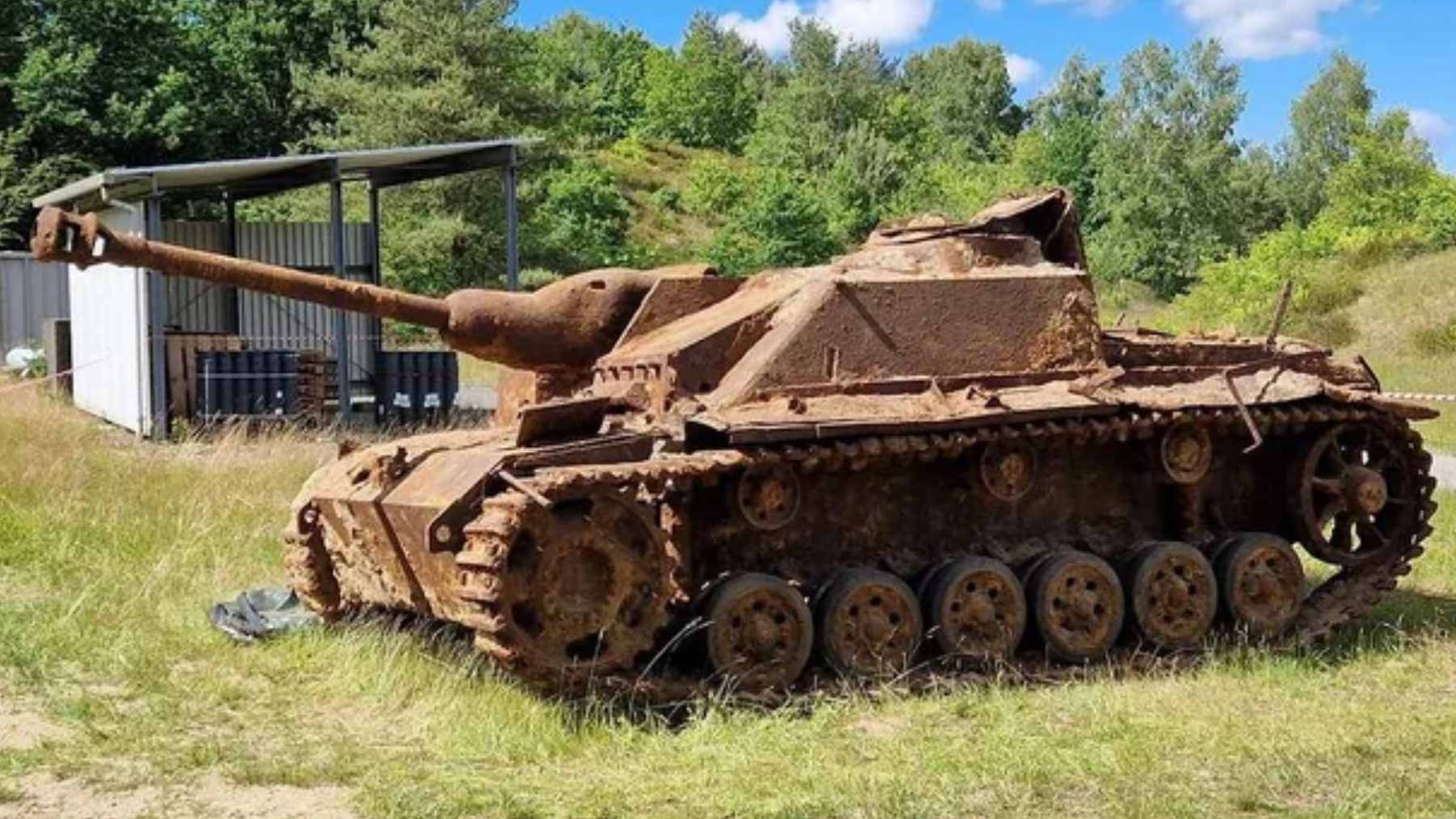
A construction project at Germany’s Nordholz naval air base has uncovered something far heavier than old concrete or forgotten pipes. Workers found a nearly intact World War II StuG III assault gun, a tracked armored vehicle that had been buried in sand for more than 80 years.
At first glance, it sounds like a military history story, but there is also a modern environmental lesson here, because old military land is never just empty land. Under the surface, there may be machinery, ammunition fragments, hazardous materials, and physical evidence of how war was cleaned up after the fighting stopped.
A rare find under a working base
The discovery happened at the Nordholz naval air base on Germany’s North Sea coast, where construction work brought the buried vehicle back into view. According to Germany’s Federal Agency for Real Estate, BImA, finds like this usually involve scattered parts, not an almost complete vehicle.
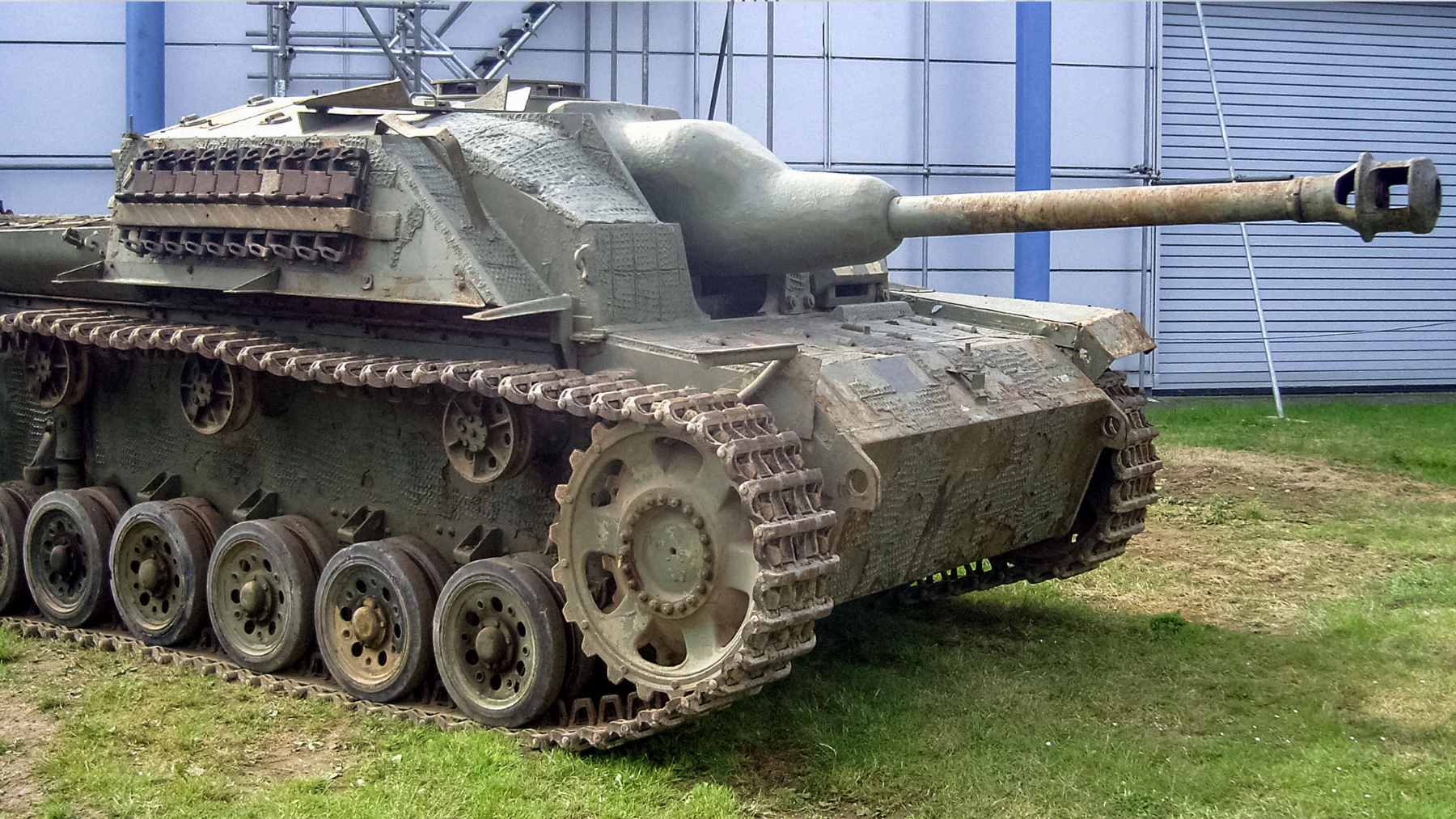
The vehicle was identified as a StuG III, short for Sturmgeschütz III. It was not a classic tank, even if many people would call it one at first sight. The major difference is simple enough to picture in your driveway, because the gun did not rotate in a turret and the whole vehicle had to move to aim.
Why the sand matters
The assault gun had been lying in dry sand, and that seems to be one reason it survived in such remarkable condition. Officials and archaeologists reported that parts of the running gear remain well preserved, with traces of camouflage paint still visible in some areas.
That detail matters beyond museum curiosity. Dry soil can preserve the shape of the past, but it can also hide risks that modern builders must handle carefully. The Bundeswehr said the vehicle still has to be checked for hazardous substances, and officials must also rule out any theoretical possibility that the main weapon could function.
More than a battlefield relic
The StuG III was one of the most widely used tracked armored vehicles of the German Wehrmacht. The Bundeswehr says roughly 10,000 assault guns were built from 1940 to 1945, and they were used as mobile field artillery and for anti-tank defense.
In practical terms, this was a machine designed around a fixed gun of about 3” in caliber. It was lower and more compact than many turreted tanks, which helped it in combat but made life inside brutally tight. Four men worked in that cramped space, including the driver, gunner, commander, and loader.
The inside tells another story
Dr. Andreas Hüser, who leads archaeological heritage work for the district of Cuxhaven, told Euronews that the view inside the opened vehicle is “very impressive.” He also described the interior as “oppressively cramped,” a small phrase that says a lot about the human reality behind armored steel.
The preserved driver’s seat and gun mechanisms help archaeologists look beyond the vehicle as an object. They can ask who used it, how long it served, and what happened to it when the war ended. Sometimes the smallest details do the talking.
Marks on the barrel
Researchers noted white markings on the gun barrel, which may have been painted to record enemy tanks destroyed. Euronews reported at least 17 such markings, though experts have not confirmed every part of the vehicle’s combat history.
The vehicle is believed to have belonged to a brigade stationed in Nordholz that operated mainly in France. Still, experts have been careful not to say this specific assault gun definitely fought there. That restraint is important, because archaeology works best when it leaves room for what the evidence cannot yet prove.
A cleanup frozen in time
Experts believe the assault gun was buried by the Allies shortly after the war, along with other military equipment. The excavation also uncovered remnants of ammunition and small shell fragments, a reminder that wartime disposal was often practical, rushed, and local.
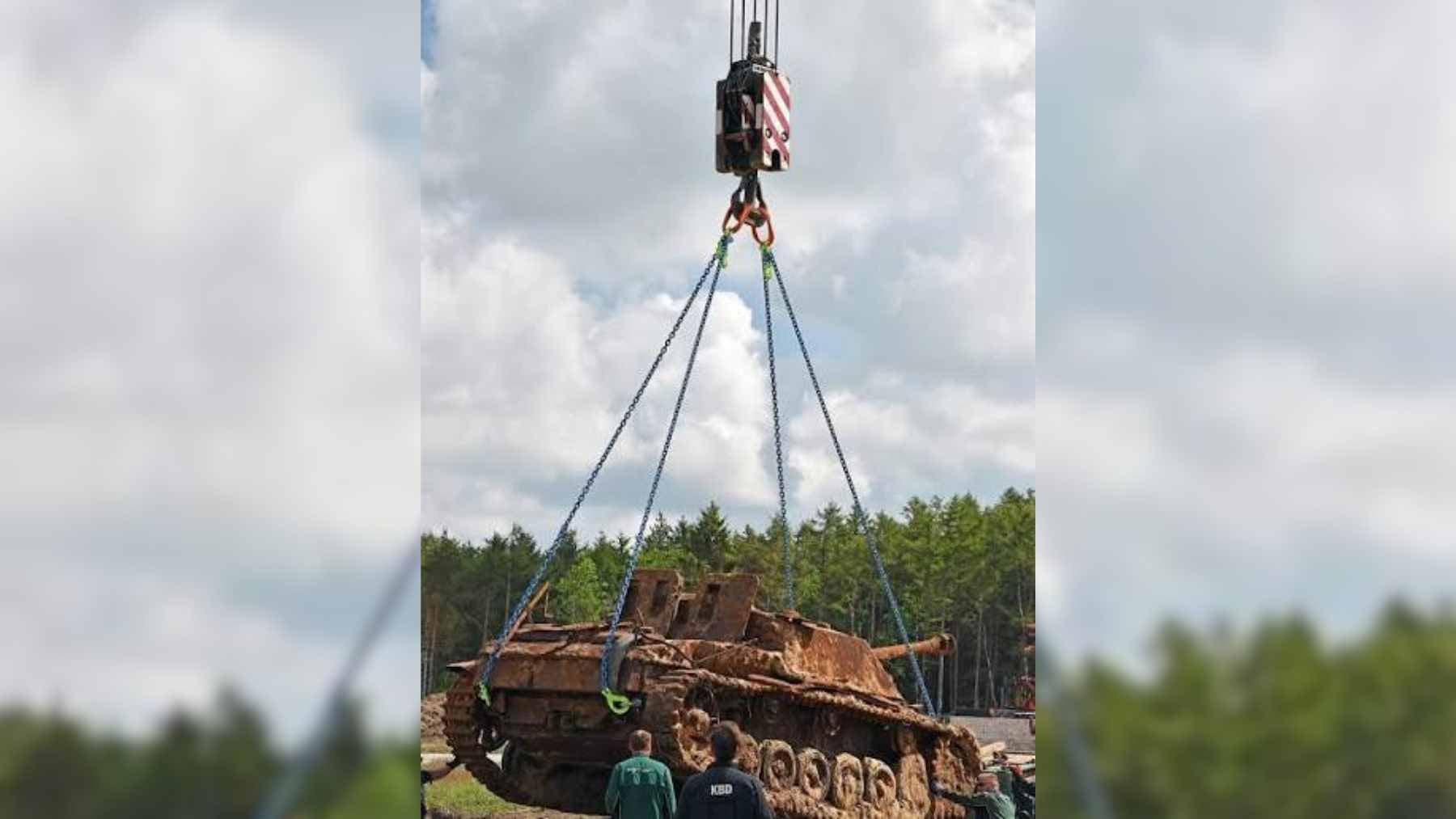
That is where this story connects with environmental management today. A buried vehicle may become a museum exhibit, but before that it is a safety problem, a land-use problem, and a conservation problem. Not every old war object can simply be dragged out of the ground and polished.
Preserving the sand
BImA has decided that the StuG III will be transferred to the Bundeswehr Military History Museum in Dresden, with an initial stop at the German Tank Museum in Munster. There, specialists are expected to conserve it while preserving the sand layer still attached from its decades underground.
That choice is telling. Officials are not planning a glossy rebuild or a replacement of missing parts for now, according to the Bundeswehr. The goal is to show it as a ground find, with rust, sand, and damage still part of the evidence.
What happens next
The vehicle is expected to be moved to Munster in August, where it will undergo conservation work and later be made accessible to the public. It may eventually be shown in Dresden, although the Bundeswehr says there is not yet a concrete schedule for that step.
For visitors, the exhibit will be more than a look at old military engineering. It will be a reminder that war leaves behind physical traces in the ground, sometimes for generations.
The official statement was published on Bundeswehr.de.