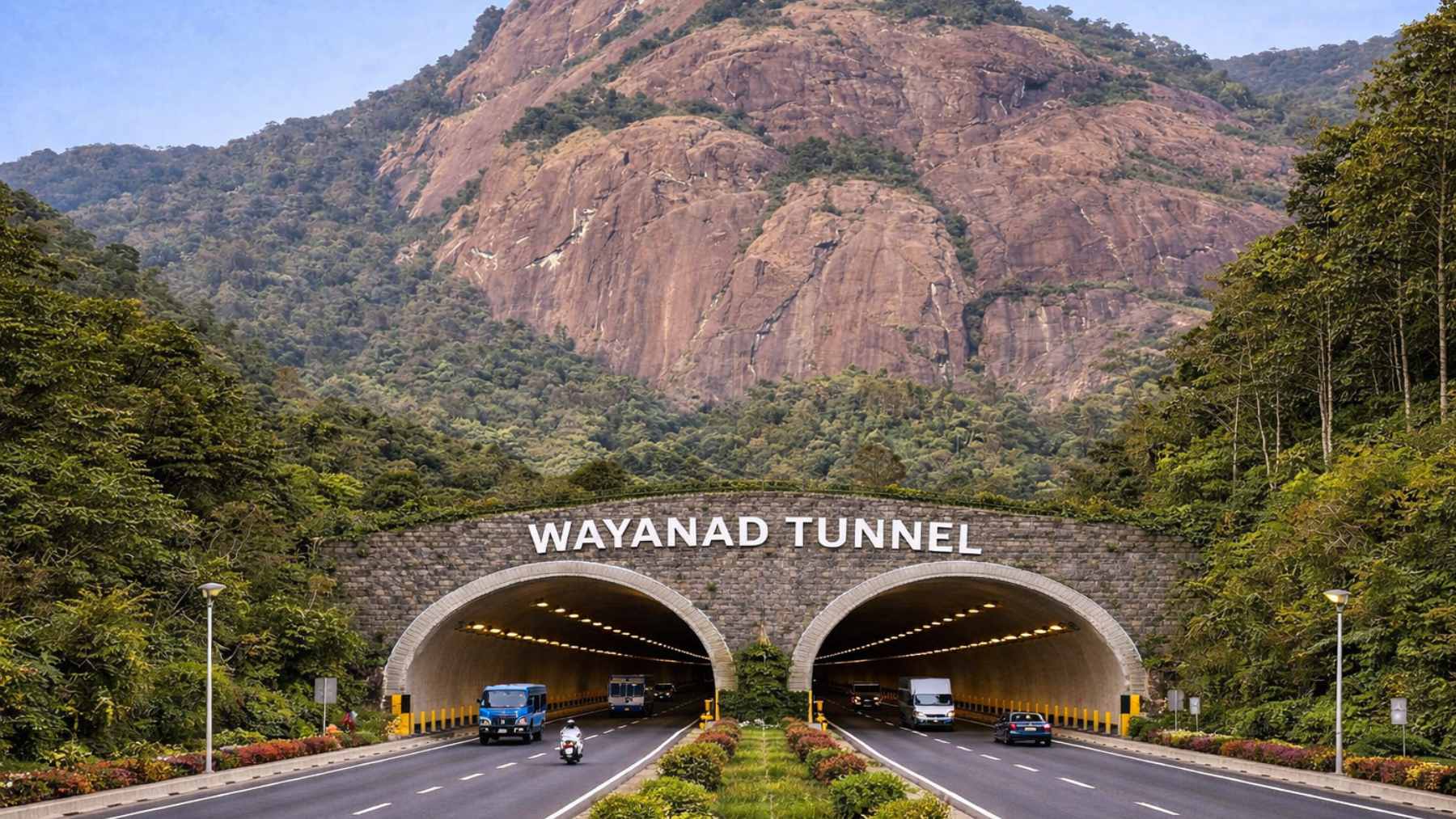
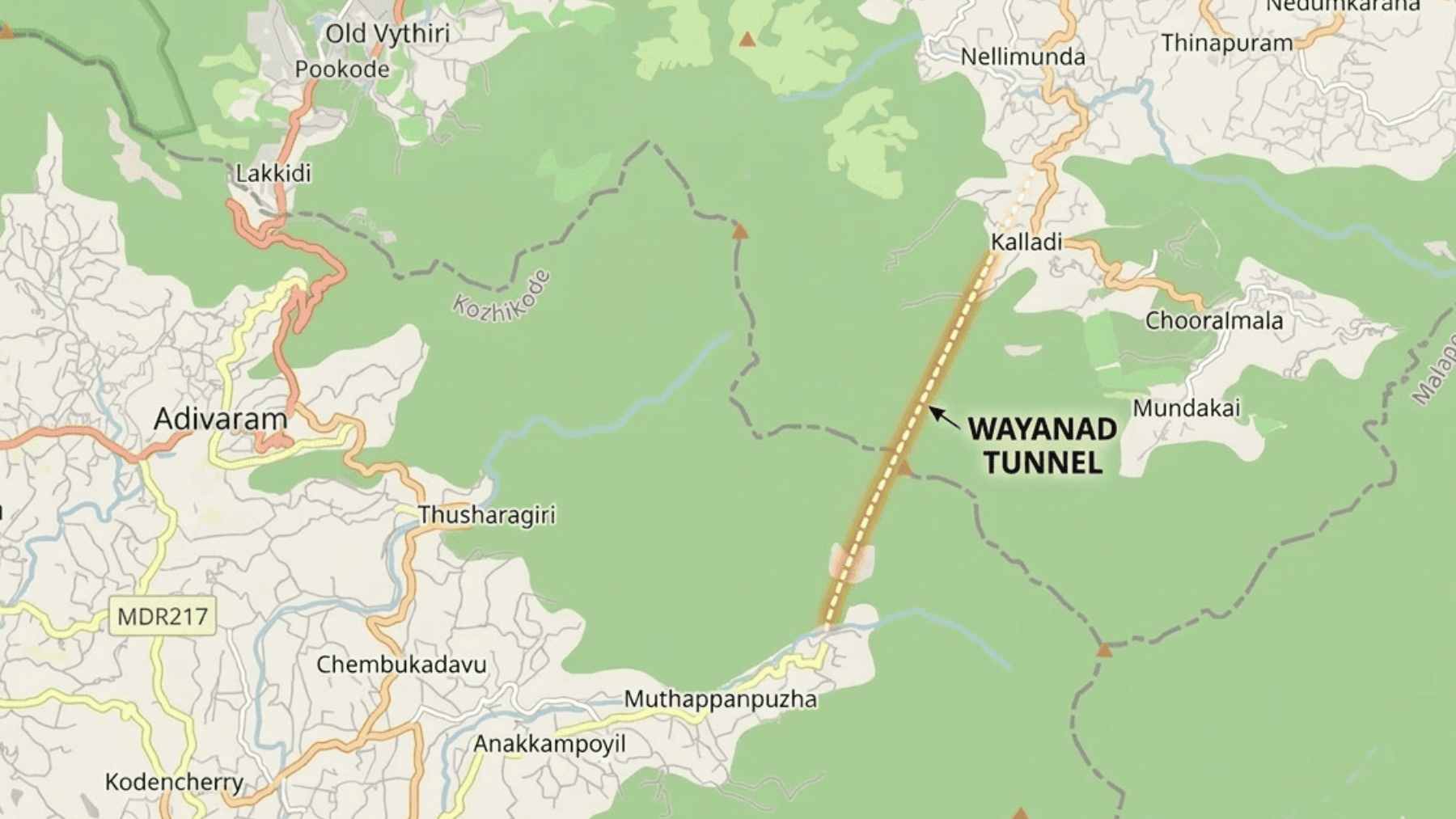
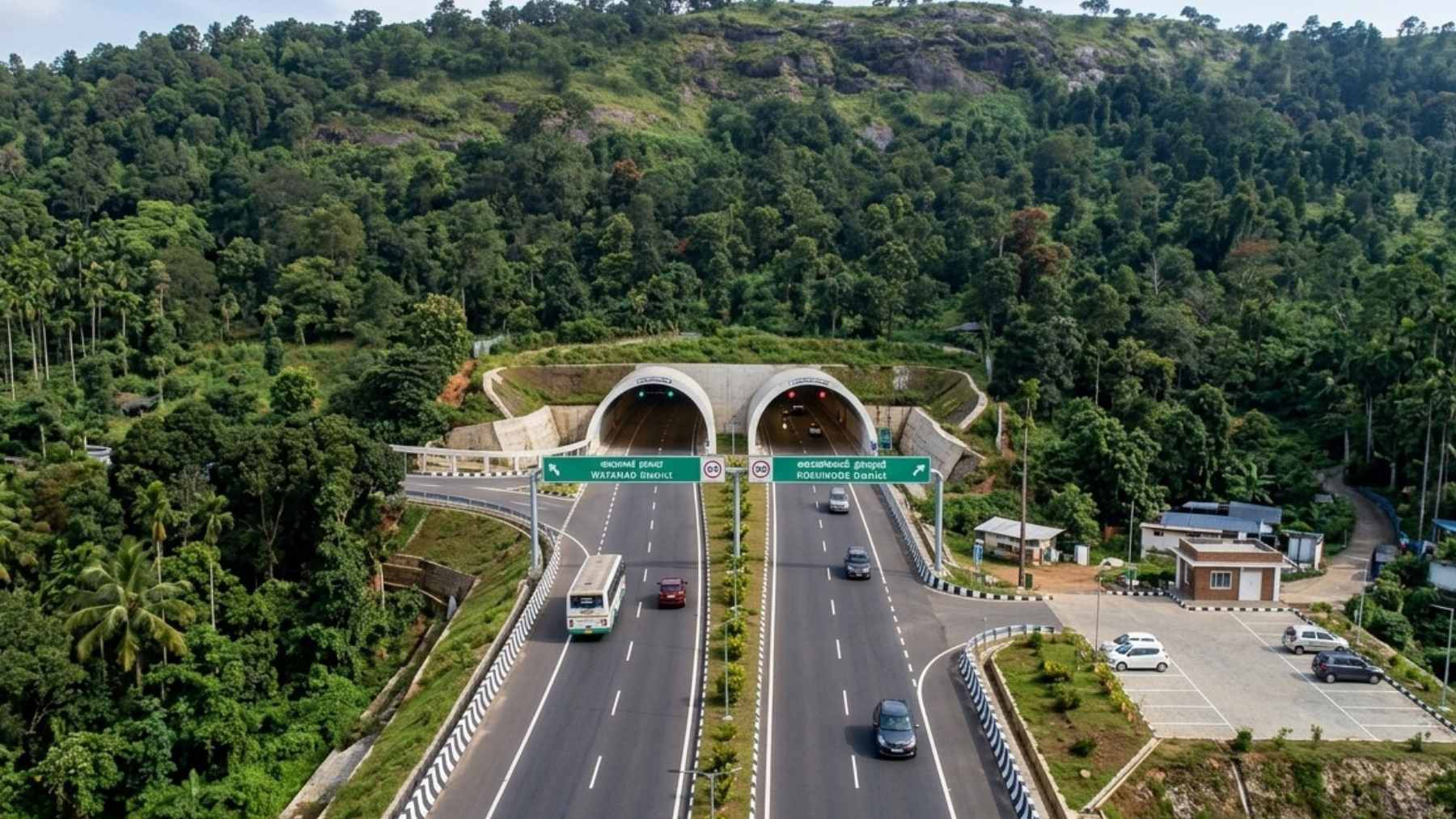
Kerala is weighing a new mountain road that would connect Chooralmala in Wayanad district with Pothukallu in Malappuram district, with a planned 1.2-mile tunnel through forest terrain.
The project is estimated at roughly $264 million at recent exchange rates, and local reporting says it has now received a token place in the state budget, a first step that could speed up approvals and detailed estimates.
The promise is easy to understand. A trip from Meppadi to Nilambur now takes about 63 miles by road, but the tunnel route could bring that down to about 30 miles.
It could also cut about 43 miles from the Bengaluru to Kochi route, helping tourism, farm transport, and cargo movement toward ports such as Vizhinjam and Vallarpadam. But this is Wayanad, and every road there now carries the memory of landslides.
A shortcut through difficult ground
The proposed link would need about 7.5 miles of new road to connect the two districts. About 2.5 miles would pass through the Munderi farm area under the agriculture department, while the remaining stretch would involve forest land where the tunnel is being considered. An elevated highway is also under discussion, according to local reports.
Some parts of the access network already exist or are being improved. The Chooralmala to Attamala stretch, about 1.6 miles long, has been upgraded at a cost of about $950,000, and a new bridge at Chooralmala is planned at about $3.6 million.
That matters because the tunnel is not a single hole through a hill. It is a whole chain of roads, bridges, slopes, drains, and maintenance work.
Kalpetta MLA and minister T. Siddique has argued that the project could lift tourism and agriculture if it becomes reality. “Once the road becomes a reality, tourism and agriculture could see a major leap,” he said in local reporting, adding that the government would explore ways to complete the tunnel project as quickly as possible.
Why the environment comes first
This is not just a transport story. Wayanad sits in the Western Ghats, a mountain chain recognized by UNESCO as one of the world’s eight “hottest hotspots” of biodiversity, with at least 325 globally threatened species recorded across the region. That makes every forest road, tunnel portal, spoil dump, and drainage channel part of a larger ecological question.
In practical terms, a tunnel could reduce surface cutting compared with a fully open hill road. But only if it is designed carefully. Where will excavated rock go? How will water be diverted during monsoon bursts? What happens to animal movement near the portals? Those are not trivial questions. In the hills, small details can become disasters.
The landslide warning
The Chooralmala-Mundakai disaster of July 30, 2024, is the shadow over this project. A case study submitted through the Centre for Disaster Management at LBSNAA to the National Disaster Management Authority recorded 298 deaths, 631 hospitalizations, 32 missing people, and more than 3,000 displaced residents.
It also reported severe damage to about 200 acres of forest and 272 acres of agricultural land, with total economic losses estimated at roughly $127 million.
The rainfall numbers are startling even on paper. The Kalladi rainfall station recorded about 7.9” on July 29 and 14.7” on July 30, the day of the landslide. World Weather Attribution later suggested that human-caused climate change made the one-day rainfall event about 10% more intense.
So, what used to be considered rare may no longer be rare enough for old planning assumptions.
The business case is real
For local communities, the attraction is obvious. Shorter access to Nilambur could help farmers move produce faster, bring more visitors into Wayanad, and improve trade links across Malabar. Anyone who has sat through a long mountain detour knows what that means in everyday life. Less time on the road often means lower fuel costs, fresher goods, and more reliable schedules.
The price tag also deserves a hard look, though. About $264 million is a major investment for a road that would pass through a fragile landscape. If slope failures, blocked drains, wildlife conflict, or repeated repair work follow, the true cost could rise far beyond the construction budget. At the end of the day, the road has to be safer than the problem it is trying to solve.
Technology must lead
There is a useful lesson from the 2024 rescue operation. The official case study says drones, satellite imagery, deep-search radars, Indian Air Force helicopters, and an Army-built Bailey bridge were all used during response operations. The Army bridge, about 190 ft. long, was built in 16 hours and helped restore vehicle access to the disaster zone.
That kind of technology-first thinking should not appear only after tragedy. Before a tunnel is approved, the route needs detailed geotechnical surveys, rainfall modeling, slope-movement monitoring, and clear public reporting on risk–not just fancy words, but basic safeguards.
What happens next
A budget token does not mean the project is ready to break ground tomorrow. It usually means the government can move toward administrative approvals, detailed estimates, and further technical review. Local campaign groups in Nilambur and Meppadi are pushing for early steps, while earlier attempts reportedly stalled over forest-land and landslide-risk concerns.
If done well, the Chooralmala-Pothukallu tunnel could reconnect disaster-scarred villages and give Wayanad a faster economic route without treating the mountain as empty space. If rushed, it could become another reminder that shortcuts in fragile terrain are never really short.
The official budget documents were published on Kerala Budget.