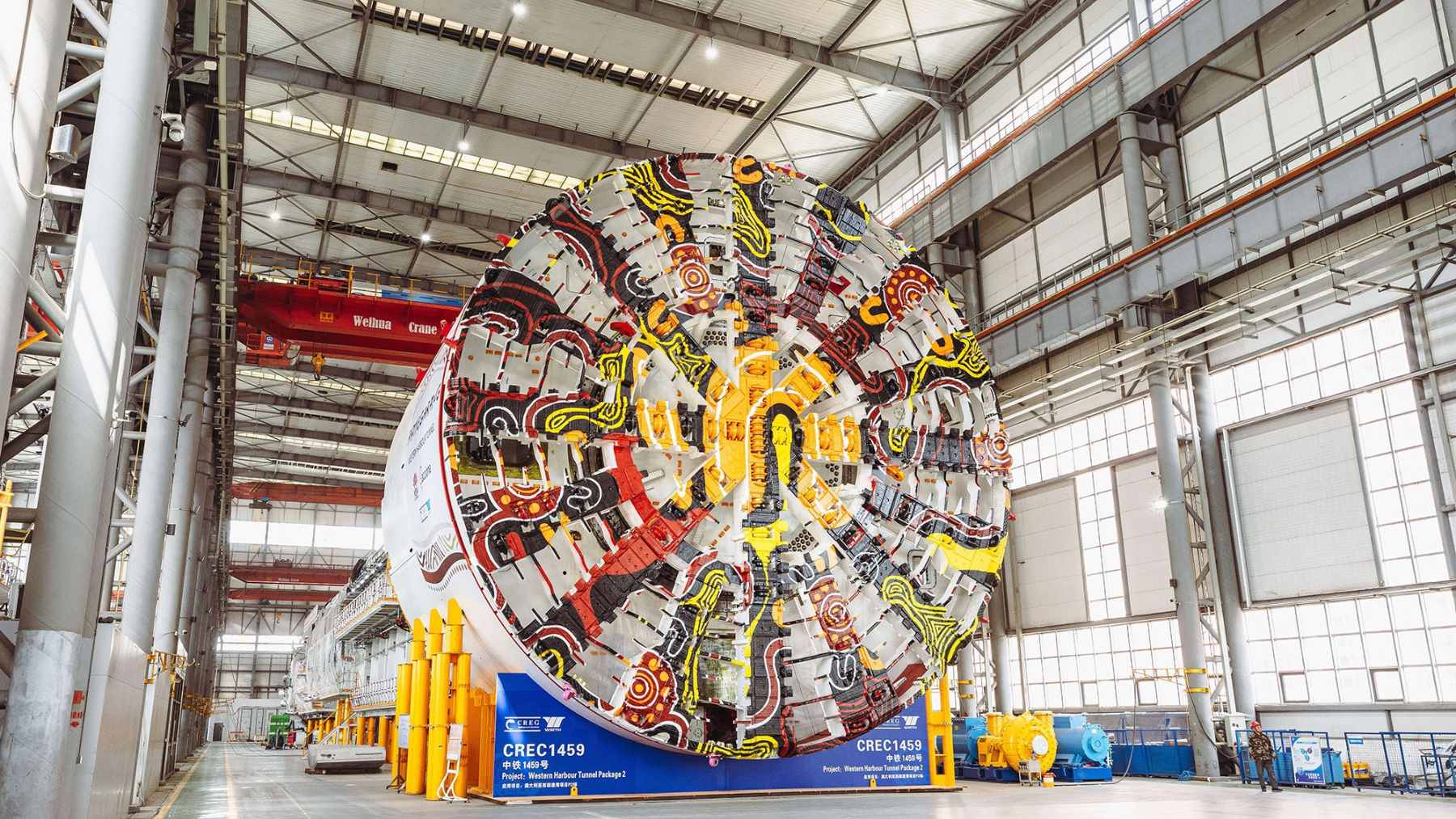
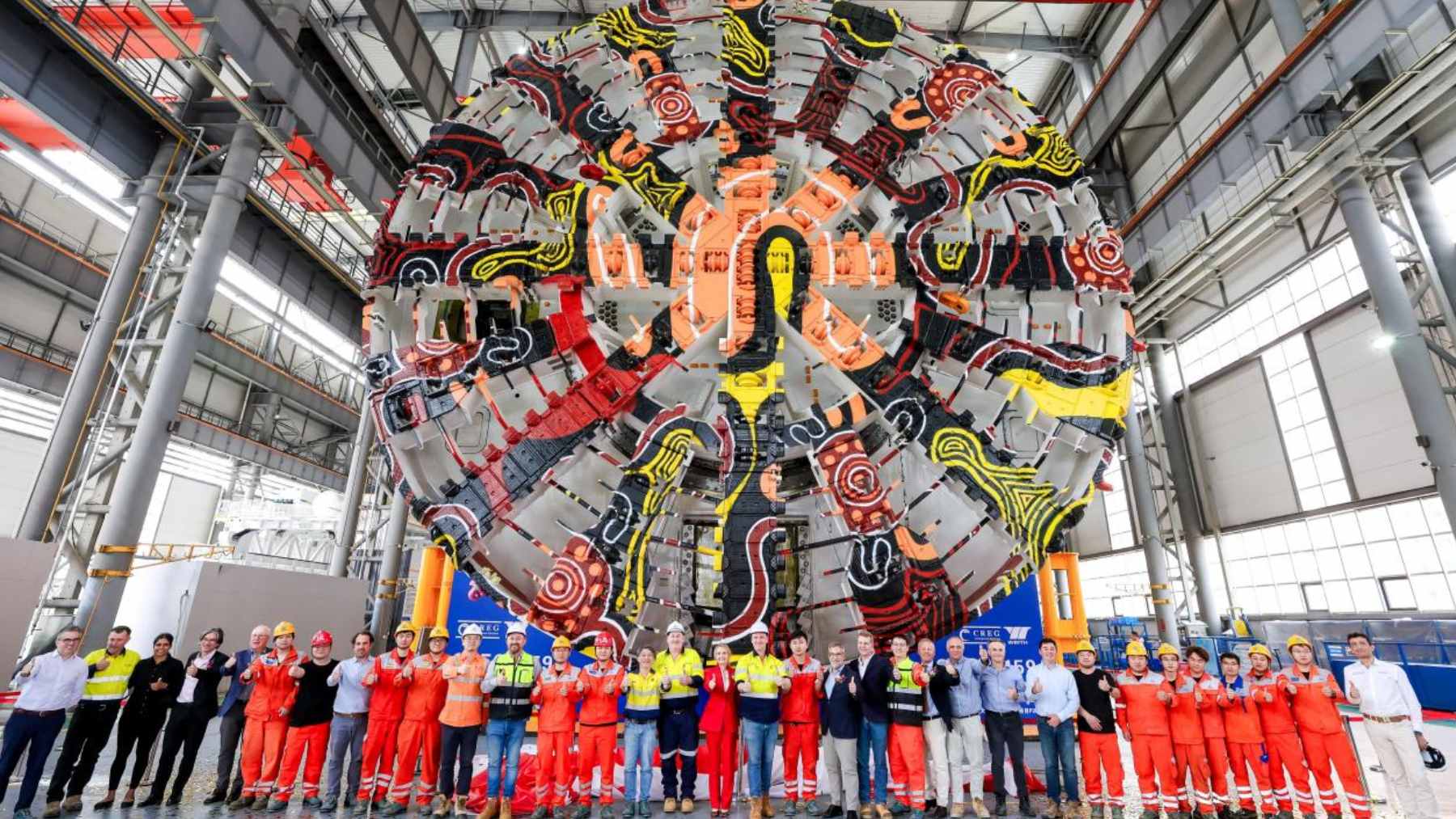
Sydney is getting ready for one of the hardest kinds of construction on Earth, digging a new road crossing deep beneath an active harbor. At the center of the work is Patyegarang, a China-built tunnel boring machine with a 51.5-ft. excavation diameter, a scale large enough to make it one of the biggest machines ever sent underground for an Australian road project.
The real surprise is not only its size. Patyegarang was designed to bend through underground S-shaped curves, helping build the roughly 4-mile Western Harbour Tunnel, a six-lane road link expected to open to traffic in 2028.
For the most part, this is a story about traffic and trade, but it is also about something more delicate. How do you build under a living harbor without tearing up the seafloor?
A machine built to bend
Tunnel boring machines are usually massive and stiff. That is useful when the route is straight, but Sydney’s harbor crossing is not a straight shot under the water.
The Australian subsidiary of China Railway Engineering Equipment Co., CREG, says the route includes a minimum turning radius of about 3,150 ft. and a winding S-shaped path, which creates a serious steering problem for any machine this wide.
That is where Patyegarang stands out. According to reporting on China’s state broadcaster CCTV and CREG details, the machine uses a segmented body and precision joint system so the structure can flex as it advances underground.
Think of it like a giant metal earthworm, except this one is the width of a small apartment building and is expected to cut through rock, sand, clay, and marine sediment with surgical control.
Sydney’s new harbor crossing
The Western Harbour Tunnel is intended to become Sydney’s first new road crossing of the harbor in more than 30 years. The project will connect the Rozelle area with North Sydney and the Warringah Freeway, giving drivers another way across one of the city’s most congested corridors.
New South Wales officials say Patyegarang and its sister machine, Barangaroo, will excavate about 0.9 miles of twin motorway tunnels between Birchgrove and Waverton, working as deep as roughly 164 ft. below sea level.
Once digging begins, the machines are expected to run around the clock, with up to 40 workers on each machine at any one time.
Why the environmental detail matters
At first glance, a six-lane road tunnel may not sound like an environmental story–fair enough. Roads bring complicated trade-offs, from traffic relief to long-term questions about car dependency and emissions.
But the construction method matters a great deal. The approved change from an immersed tube tunnel to tunnel boring machines is designed to reduce impacts by avoiding dredging in Sydney Harbour, cutting the number of construction support sites, removing the need for cofferdams in the harbor, and reducing disruption to ferries and boats.
That will mean less disturbance at the water’s surface and along sensitive harbor-side areas. ACCIONA, the Stage 2 contractor, said its tunnel-boring approach was developed with Transport for NSW and the state government to reduce environmental impact and minimize effects on marine biodiversity and harbor users.
Smarter tunneling underground
The project is also using two underground slurry treatment plants, an unusual move that keeps part of the messy support work below the surface. Slurry helps maintain pressure at the cutterhead, especially in soft or inconsistent marine sediments, and the plants filter and recondition it so it can be reused by the machine.
ACCIONA says placing the plants underground cuts the need for miles of steel piping, reduces slurry pumps, lowers heavy vehicle movements on local roads, and uses the ground itself as a barrier against noise and light from 24-hour operations.
That may not sound glamorous, but for nearby residents, fewer trucks and less surface disruption are the kinds of changes people actually notice.
There is another data point worth watching. ACCIONA says the Western Harbour Tunnel received a 101.1 out of 110 score under Australia’s Infrastructure Sustainability rating program, with the design recognizing a 42% reduction in potable water use and a 35% reduction in life cycle material impacts.
Those figures do not make the road tunnel automatically “green,” but they show how large infrastructure is now being judged by more than speed and concrete poured.
China’s infrastructure export moment
Patyegarang is also a business signal. CREG said the machine set a record as the largest excavation-diameter Chinese tunnel boring machine exported overseas, which gives China’s equipment makers a high-profile test in a technically demanding market.
For China, the machine is a calling card. For Australia, it is a tool for a project that must balance delivery risk, community pressure, traffic demand, and environmental scrutiny. That mix is becoming the new reality of megaprojects, especially in dense cities where the easiest routes were used decades ago.
What happens next
As of the NSW Government’s February 2026 update, Patyegarang was still being assembled deep beneath Birchgrove Oval and was expected to start tunneling under the harbor around mid-year. Barangaroo was set to follow later in 2026.
Once the machines vanish into the ground, most people in Sydney will only see the surface signs of the work, such as construction sites, traffic changes, and eventually a new route under the harbor. Beneath that everyday view, though, a highly specialized machine will be bending through the rock and sediment one careful push at a time.
The official statement was published on CREC.