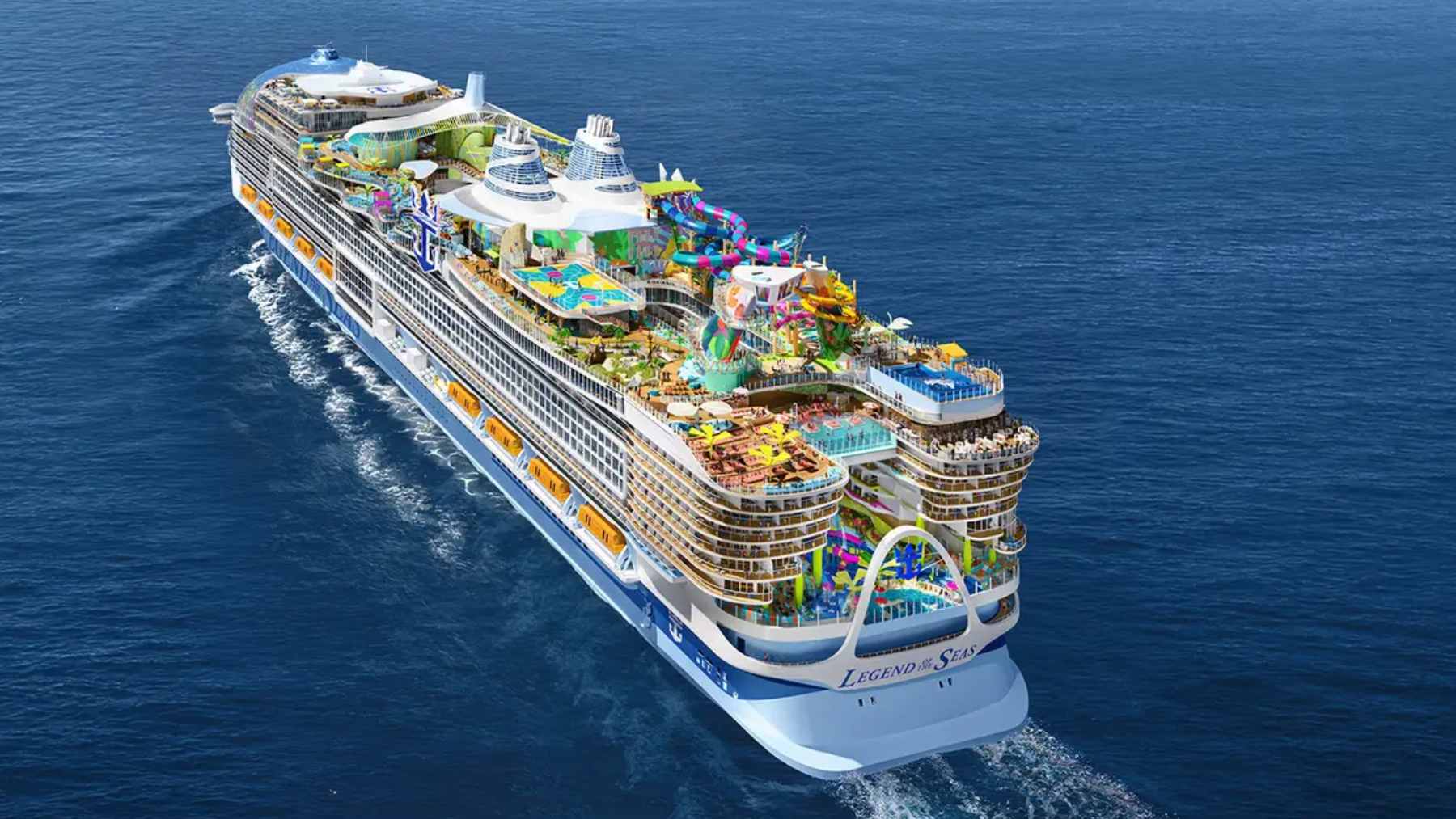
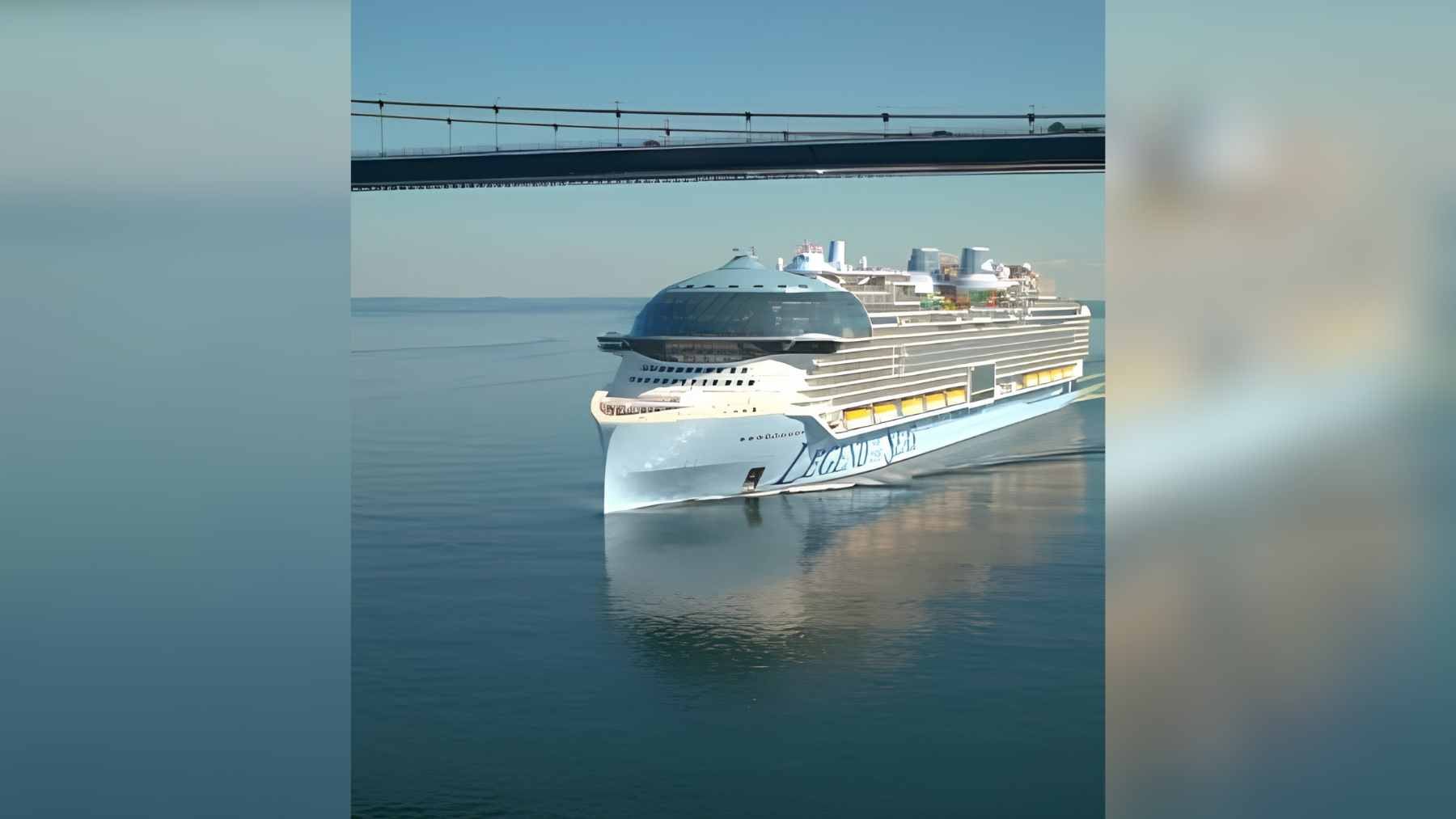
Royal Caribbean’s new Legend of the Seas has already delivered a jaw-dropping moment before most travelers ever step on board. During its delivery voyage from Finland, the giant cruise ship passed beneath Denmark’s Great Belt Bridge with roughly 12 inches of clearance, a margin so small it sounds more like parking a car than moving a floating resort.
The maneuver was not just a viral maritime spectacle. It showed the strange new reality of cruise engineering, where ships are getting bigger, routes are getting tighter, and environmental promises are being tested in public. The real question is simple. Can the cruise industry keep scaling up without leaving ports, coastlines, and the climate to carry the cost?
A one-foot squeeze
Legend of the Seas made the Great Belt passage using retractable funnels, added ballast water, and a carefully controlled speed to lower its effective height as it passed under the bridge. In plain terms, the crew made the ship sit deeper in the water and trimmed everything they could from the top.
That may sound easy on paper, but it is a high-stakes calculation involving weather, ship stability, bridge clearance, and timing. A foot of space is about the width of a school ruler. Now imagine using that ruler as the safety margin for a vessel nearly 1,198 feet long.
Why this ship matters
Legend of the Seas is the third ship in Royal Caribbean’s Icon Class, built by Meyer Turku in Finland. Meyer Turku lists the Icon Class at about 250,800 GT, with room for around 7,600 passengers, and notes that the ships use liquefied natural gas as fuel.
That 250,800 GT figure is worth pausing on. It is gross tonnage, which measures internal volume rather than weight, so it should not be treated like pounds or regular tons. In practical terms, it means this is less a boat in the old sense and more a moving hotel district with pools, restaurants, entertainment spaces, and thousands of people on board.
The green promise
Royal Caribbean says Legend of the Seas is its fourth LNG-powered ship and includes environmental systems such as waste heat recovery and shore power connection. The company also says the ship is part of its broader path toward introducing a net-zero cruise ship by 2035.
Those details matter because ports feel cruise pollution up close. When a ship is docked, shore power can let it plug into the local grid instead of running its engines, which can sharply reduce emissions at berth when the electricity supply is clean enough. For residents living near cruise terminals, that difference is not abstract. It can mean cleaner air on an ordinary morning walk.
The achilles heel with LNG
Still, LNG is complicated. Cruise industry group CLIA says LNG has virtually zero sulfur emissions and particulate emissions, reduces nitrogen oxide emissions by about 85 percent, and can cut greenhouse gas emissions by up to 20 percent. The same group also acknowledges methane slip as an issue with LNG engines.
However, when considering methane, environmental groups warn that it totally changes the math. Transport and Environment says LNG is mostly methane, a greenhouse gas far more potent than carbon dioxide in the short term, and argues that leaks can happen across the fuel supply chain as well as from ship funnels.
Reuters has also reported that cruise ship engines had an estimated methane slip of 6.4 percent on average in 2024 research funded by the ICCT and partners.
Ports are under pressure
The Great Belt crossing was a technical success, but it also hinted at a bigger infrastructure question. If ships keep growing, bridges, channels, terminals, power connections, water systems, and waste systems all have to keep up. Not every port can or wants to become a landing pad for floating cities.
CLIA’s 2025 environmental technologies report says 166 cruise ships can currently use onshore power, representing 58 percent of the fleet and 65 percent of capacity. But only 41 cruise ports worldwide, fewer than 3 percent of the ports where cruise ships call, have a berth with onshore power. That gap is where many climate promises meet real-world bottlenecks.
A business story too
For Royal Caribbean, Legend of the Seas is a business statement as much as a ship. The company is betting that families still want bigger attractions, more dining, more entertainment, and a vacation that feels easy once they step aboard. A giant vessel spreads those costs across thousands of guests.
But the same scale that makes the ship commercially attractive also raises the stakes for regulators and destinations. More passengers can mean more spending in port cities, but also more crowding, more local traffic, and more scrutiny over air quality and climate impact.
At the end of the day, size is both the selling point and the pressure point.
What happens next
After its delivery milestone in Turku, Royal Caribbean said Legend of the Seas would head toward Cádiz, Spain, for final touches before launching seven-night Western Mediterranean vacations from Barcelona and Rome in summer 2026. The ship is then scheduled to move to Fort Lauderdale, Florida, in November for Caribbean itineraries.
So, yes, the bridge crossing was impressive. But it was also a preview of the cruise industry’s next test. The engineering can be spectacular, but the environmental scoreboard will depend on fuel choices, methane control, shore power access, and whether ports can keep pace without tarnishing the coastlines people came to see.
The official statement was published on Royal Caribbean Press Center.