Home backup power has usually been something for homeowners with money, space, and patience. A traditional home battery can help keep the lights on during an outage, store solar power for later, and reduce dependence on the grid, but for many Americans, that promise has come wrapped in permits, electricians, wall space, and a very large bill.
That is why plug-in home batteries are starting to get attention. The idea is simple enough to understand at a kitchen counter. Instead of installing a permanent system in a garage or utility room, a smaller battery plugs into a standard 120-volt outlet and protects the devices that matter most.
It will not replace every whole-home battery setup, but it could open the door for renters, apartment dwellers, condo owners, and people who just want their fridge, Wi-Fi, or home office to survive the next blackout.
The old model is expensive
For years, the home battery market has been built around large, installed systems. They can be powerful and useful, especially when paired with rooftop solar, but they are not exactly casual purchases. EnergySage estimates that a typical homeowner pays about $15,000 before incentives for a 13.5-kWh solar battery system, the kind of storage capacity often used to keep essential devices running during outages.
That price is only part of the problem. Traditional systems often require professional installation, electrical work, permitting, inspections, and a permanent place to mount the hardware. For a homeowner, that may be manageable, but for someone renting an apartment, it is usually a nonstarter.
Pila’s appliance bet
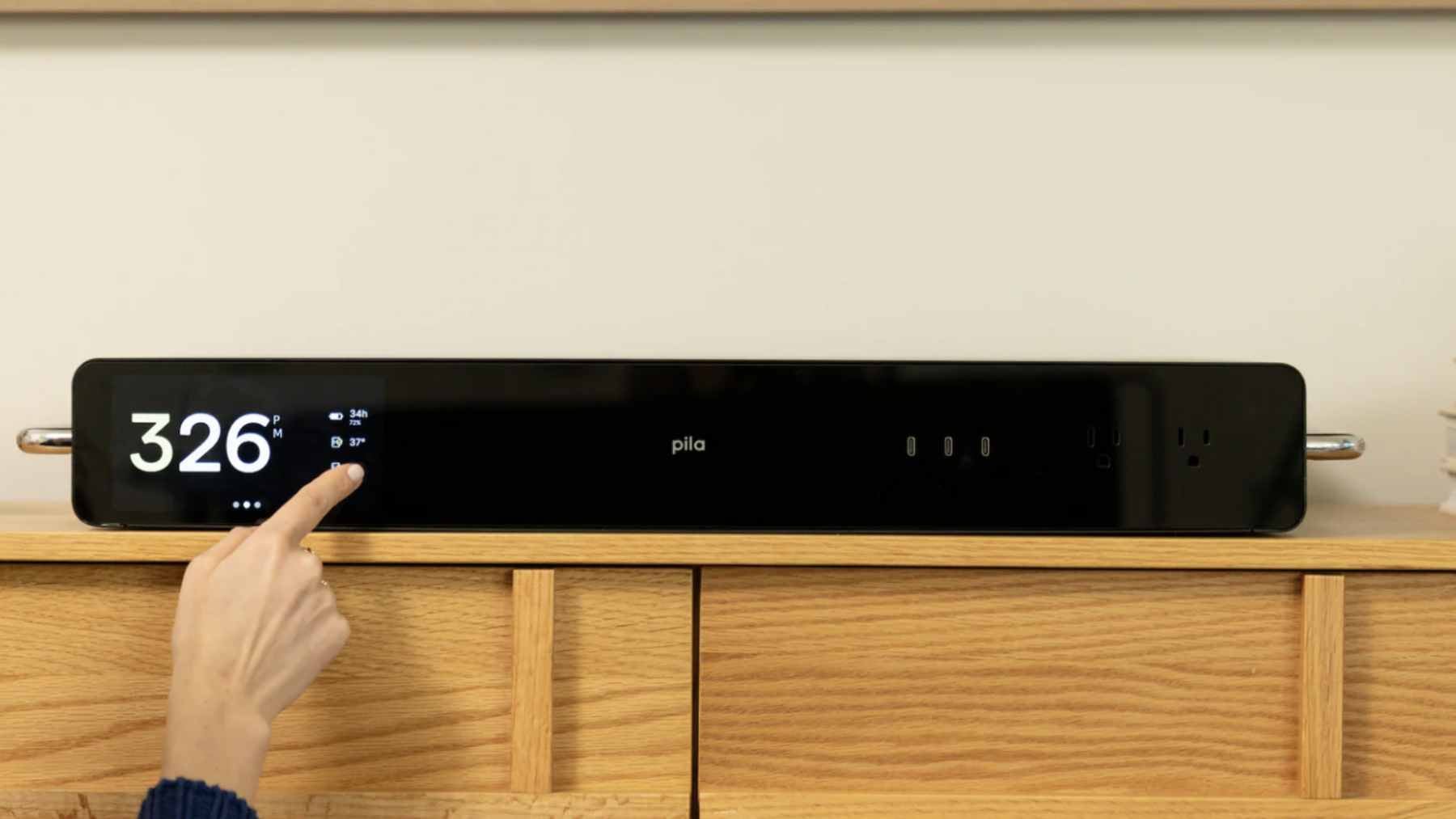
Pila is one of the clearest examples of this new approach. Pila’s Mesh Home Battery sells for $1,499, plugs into a standard 120-volt outlet, and offers 1.6 kWh of storage in a 49-lb. unit. The company lists 2,400 watts of continuous output, four controllable 120-volt AC outlets, USB-C charging, a touchscreen, and the ability to synchronize up to 64 batteries.
That makes the pitch feel less like a construction project and more like an appliance purchase. Plug it in, plug essentials into it, and the battery sits in the background until it is needed. Simple? Mostly, and that simplicity is the whole point.
Pila said on June 17, 2026, that it had begun shipping batteries to customers, with founder Cole Ashman writing that “Home batteries will be a default appliance in every home before this decade is out.” That is a bold prediction, but the direction of travel is easy to see.
What it can actually power
A single plug-in battery is not magic. Pila’s own product page estimates that one unit can keep a fridge running for about 32 hours, Wi-Fi for 132 hours, a TV for 32 hours, a window air conditioner for 6 hours, or a sump pump for 12 hours, depending on real-world use. That is not whole-home independence, but it is not nothing, either.
Think about a normal outage. The first worries are usually food, internet, medical devices, phones, heat in one room, or a pump in the basement. A room-by-room battery does not solve every problem, but it can turn a stressful night into something more manageable.
That is where this technology feels different. It is not trying to impress people with a giant wall of hardware, it is trying to meet people where they already live.
The environmental angle
Plug-in batteries could also matter for clean energy, but only if expectations stay realistic. Pila says its system can store power from rooftop solar or the grid, then use it during an outage or when utility rates are higher. It also says the system can prioritize charging from rooftop solar, while plug-in solar input through an expansion pack is listed as coming soon.
In practical terms, a small battery can help shift energy use away from peak hours and make home solar more useful after sunset. For the most part, the environmental benefit depends on where the electricity comes from. Charging from clean solar power is very different from charging from a fossil-heavy grid.
Still, decentralization matters. If more homes can store even a little power, the grid gets more flexibility. That can help as more solar panels, electric appliances, and heat waves put pressure on aging infrastructure.
The rules are catching up
The big catch is safety and regulation. A plug-in device sounds harmless, but electricity flowing the wrong way through a home circuit can create serious risks. That is why standards are there.
In January 2026, UL Solutions launched a testing and certification program for plug-in solar systems based on UL 3700. The framework addresses construction, performance, labeling, overload protection, accidental contact with hazardous parts, and safeguards against current flowing in the wrong direction.
This matters because plug-in solar and plug-in storage sit in a tricky space. They promise easier access, especially for renters and people in multi-unit buildings, but they also need clear rules so consumers, manufacturers, utilities, and insurers are not guessing.
UL Solutions also noted that Utah became the first state to allow up to 1.2 kW plug-in solar panel systems without utility approval, while other states were considering similar legislation.
Not a Powerwall replacement
It is tempting to compare every home battery with Tesla’s Powerwall, but that can be misleading. Tesla says Powerwall 3 has 13.5 kWh of energy capacity and can power an entire home, including a heater, air conditioner, and other large appliances. It is a different class of product, built for a different kind of backup plan.
Pila’s system is smaller, more portable, and less invasive. That is the trade-off–you lose whole-home coverage, but you gain access, flexibility, and the ability to take the hardware with you if you move.
For many households, that may be enough. Not everyone needs every outlet in the house alive during a storm. Sometimes, the goal is just to keep the basics running.
Who benefits first
The first winners are likely to be renters, apartment residents, older-home owners, and people blocked by space, cost, or building rules. Pila itself frames the product as a modular and accessible option for apartments, condos, older homes, renters, businesses, and households without five-figure installation budgets.
Small businesses could also see the appeal. A cafe, clinic, home office, or shop may not need a full backup system to stay functional for a short outage. Keeping routers, point-of-sale devices, refrigeration, or a few critical electronics alive can make a real difference.
At the end of the day, this is the bigger story. Plug-in batteries are not just about batteries, they are about who gets to participate in home energy resilience.
A smaller battery with bigger implications
Pila’s Mesh Home Battery was named a 2026 CES Innovation Awards honoree in Smart Home, Sustainability and Energy Transition. CES described it as a modular plug-in home and building battery system that combines energy storage, power control, and local intelligence, with each 1.6 kWh unit installed through a standard outlet.
That does not mean plug-in batteries will take over overnight. Prices and rules still matter, and consumers will have to understand the difference between backing up one room and backing up a whole house.
The direction is worth watching, though. The home battery is moving out of the garage and into everyday life.
The official statement was published on Pila Energy.