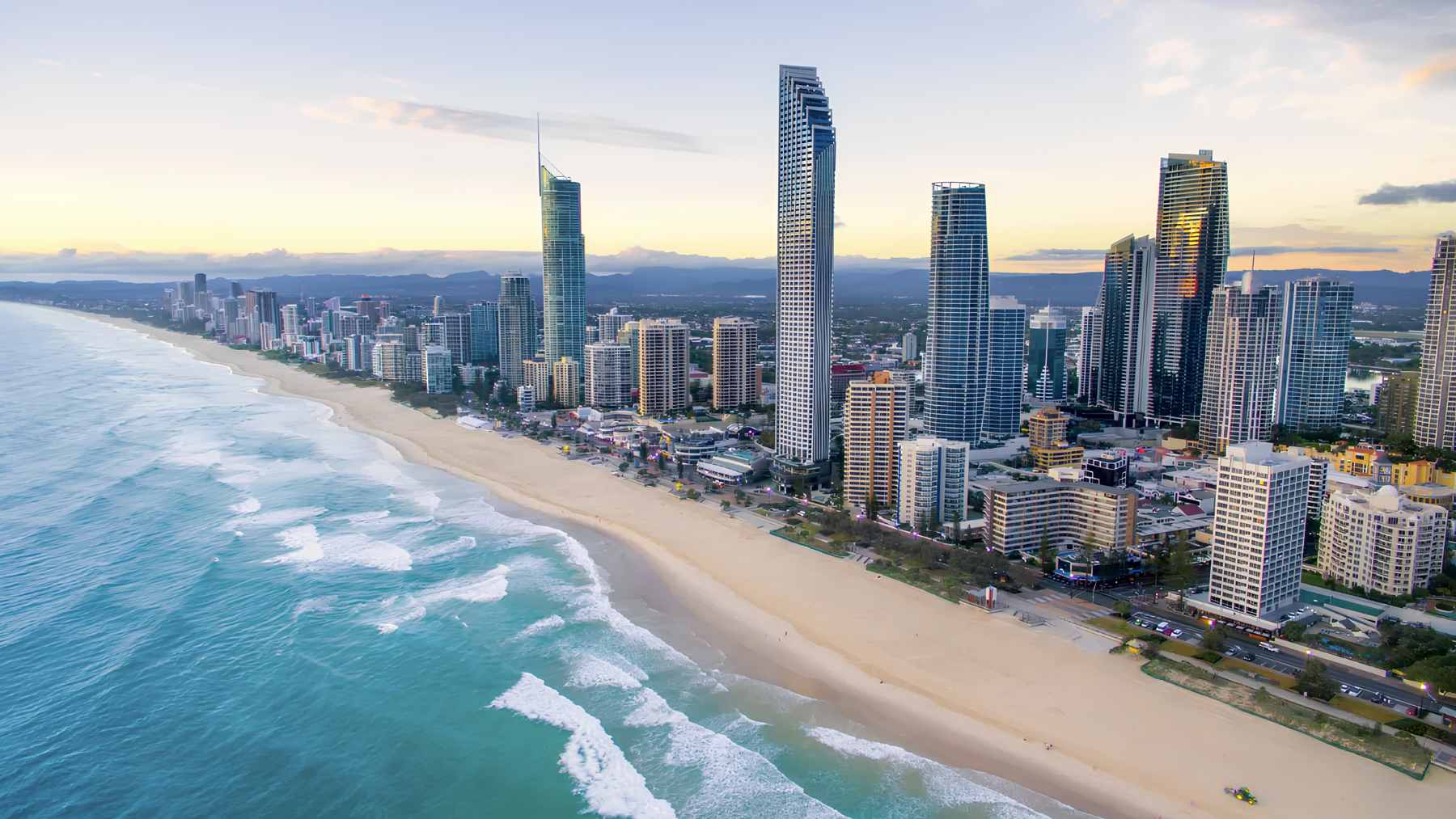
Australia’s Gold Coast has a beach problem that sounds almost impossible at first. The sand never really sits still, and every year, waves and coastal currents push a huge amount of it north along the shoreline.
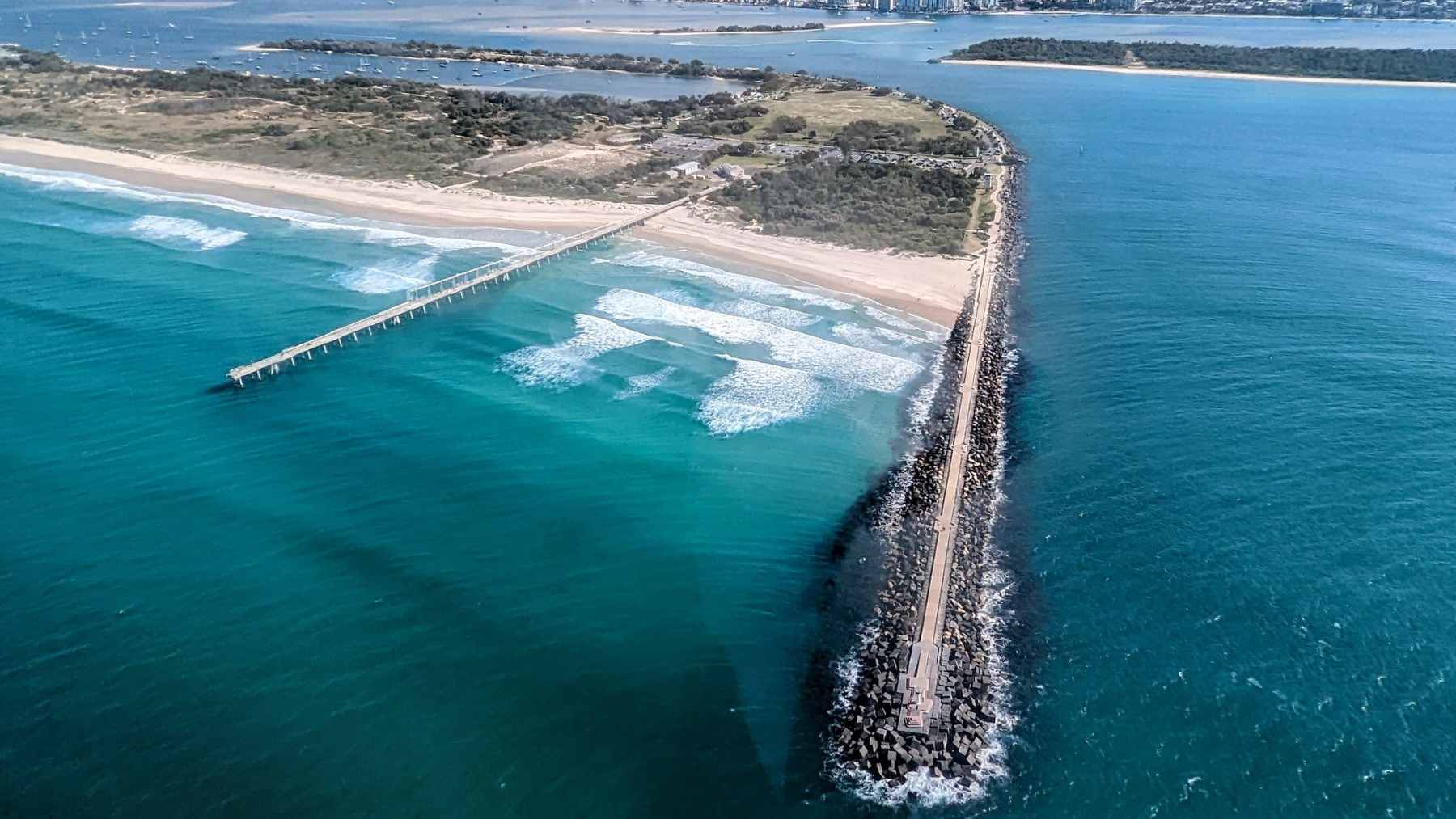
So engineers built something unusual at The Spit. A 1,621-foot working jetty reaches into the Pacific, where buried pumps collect sand before it chokes the Gold Coast Seaway and send it underground to the beaches that would otherwise be starved of sediment.
A jetty that moves sand
The Gold Coast Sand Bypass System was completed in 1986 and, according to the Gold Coast Waterways Authority, was the first permanent system of its kind in the world. It was built to help keep the Seaway safe for boats while stabilizing the mouth of the Nerang River.
The system does not just protect one small patch of beach. It moves about 654,000 cubic yards of sand every year from The Spit toward South Stradbroke Island, helping to nourish northern beaches while keeping the navigation channel open.
Why the sand had to move
On this part of the Queensland coast, sand naturally drifts north. Before the Seaway was opened, official history says the Nerang River mouth could shift north by up to about 200 ft. a year, changing sandbanks and making the old Southport Bar notoriously unstable.
The obvious fix was to hold the river entrance in place with breakwaters, but there was a catch. Those walls would block the natural flow of sand, letting it pile up on one side while beaches such as Main Beach, Surfers Paradise, and The Spit lost their steady supply.
That is where the bypass system comes in. Instead of pretending the beach could be frozen in place, the design accepted that the coast moves and built a machine to keep that movement going.
The buried pumps
The working parts are surprisingly direct. Ten jet pumps sit along the jetty at regular intervals and are submerged about 36 ft. below mean sea level, where they intercept sand moving along the seabed.
High-pressure water pulls sand into the system and turns it into a slurry, a pumpable mix of sand and water. That slurry is then handled by a variable-speed centrifugal pump and sent beneath the Seaway toward South Stradbroke Island.
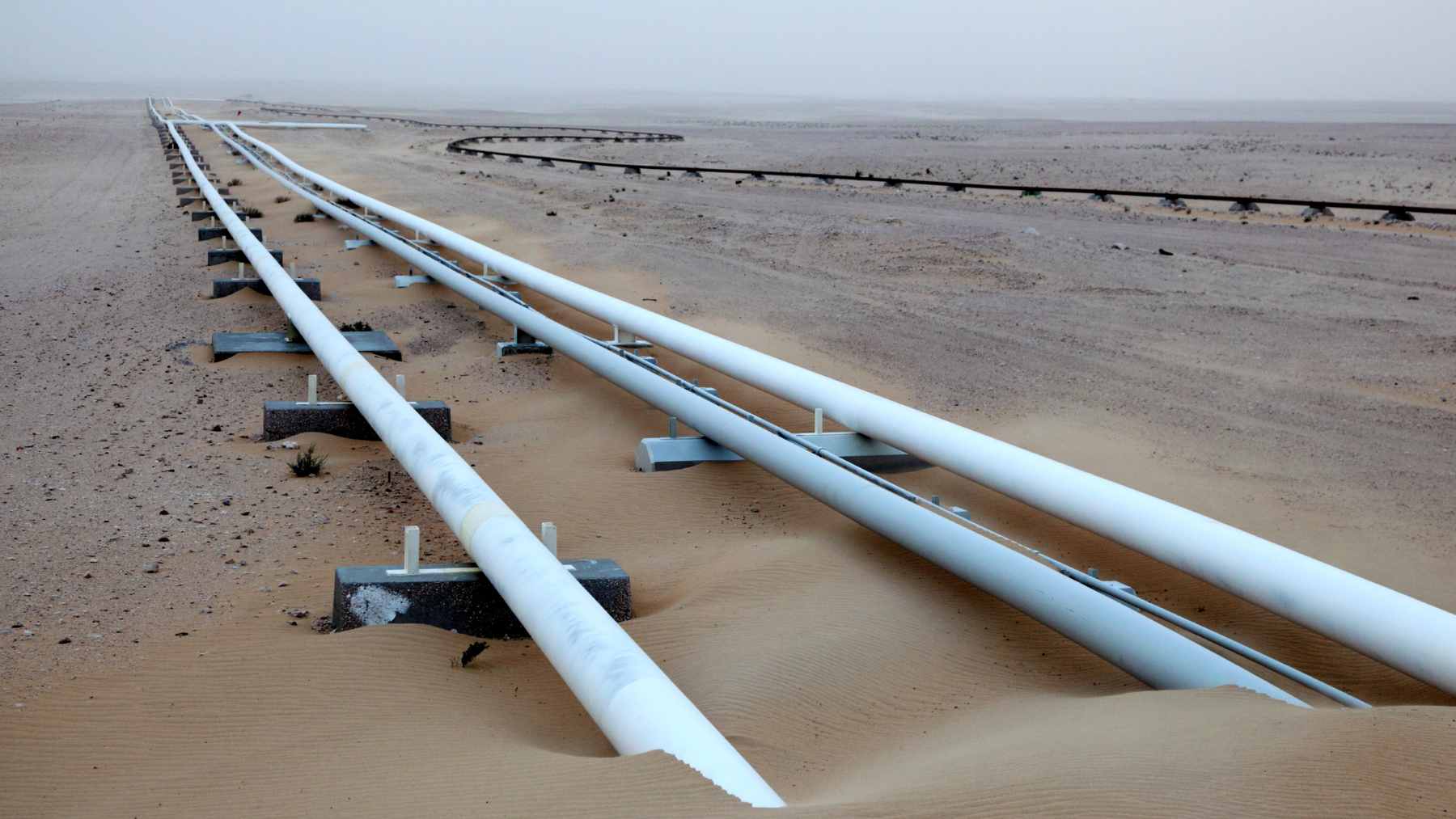
The slurry then travels through a roughly 4-mile pipeline beneath the channel before it is released on the ocean side of South Stradbroke Island. The system can operate with selected pumps under computer control, allowing operators to match pumping to conditions instead of waiting until the channel becomes dangerous.
Alfred gave it a real test
Tropical Cyclone Alfred showed why this kind of infrastructure matters. The City of Gold Coast says the storm hit the area in March 2025, stripped away about 5.2 million cubic yards of sand, and damaged more than 30 coastal assets.
Since Alfred, the Gold Coast Waterways Authority says more than 209,000 cubic yards of sand have been pumped through the bypass system. Crews also removed about 22 tons of debris, including branches, rocks, fencing wire, crab pots, golf balls, and even a motorbike tire.
“The system operates seven days a week,” said Chief Executive Officer Chris Derksema. That short sentence tells the story: coastal protection here is not a one-time cleanup, it is daily maintenance.
A different kind of coastal defense
Many coastal cities fight erosion with emergency dredging or beach nourishment after the damage is already visible. Gold Coast took a different path, building sediment movement into the original Seaway design instead of treating erosion as tomorrow’s problem.
The original project cost about $36 million (USD) at late May 2026 exchange rates (not adjusted for inflation). It also used roughly 1.1 million tons of imported rock and 4,500 concrete blocks weighing about 22 to 28 tons each.
That investment changed the long-term maintenance equation. A Queensland Government statement said the bypass system reduced the need to dredge the Seaway entrance from every year to once every five to eight years.
The lesson for shrinking beaches
At first glance, the Gold Coast system looks like a local engineering oddity. Look closer, and it becomes a larger environmental lesson for coastal cities facing erosion, heavier storms, and more pressure from development.
It does not create new sand. It simply restores, in mechanical form, the route that sand was already taking before humans fixed the river mouth in place. In other words, the system works with the coast instead of just building walls against it.
For residents and tourists, the result is simple. Beaches stay wider, boats get a safer entrance, and the city avoids letting one piece of infrastructure quietly damage another part of the shoreline. Not a flashy solution, maybe, but an unusually clever one.
The official statement was published on Gold Coast Waterways Authority.