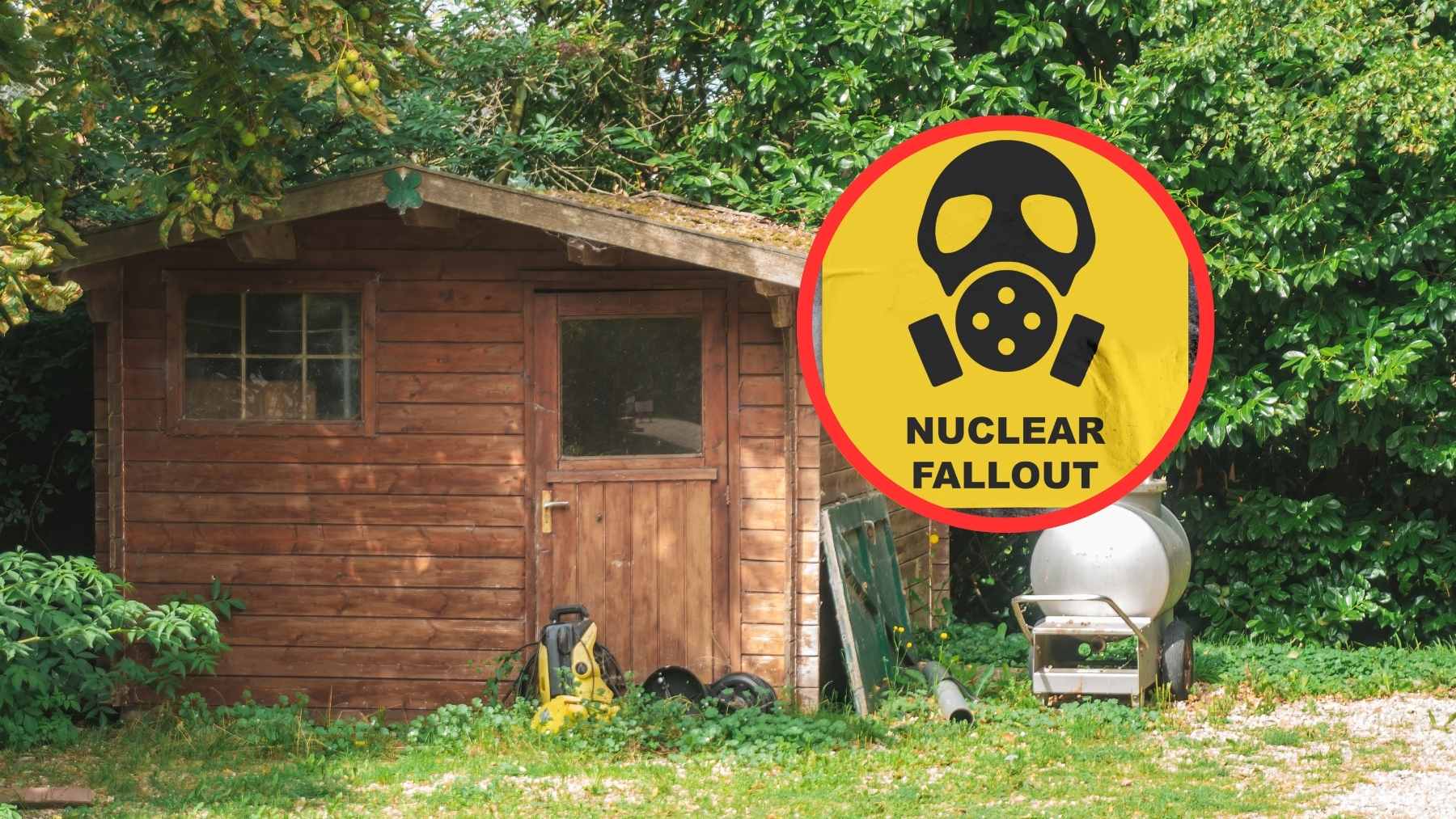
What happens when curiosity, consumer gadgets, and radioactive material meet in a quiet suburban backyard? In Michigan, that question stopped being theoretical when David Hahn’s home experiments led federal officials to a residential property later recorded by the Environmental Protection Agency as the Union Lake Radiation Site.
The case is often retold as the story of a boy who “built a reactor.” The official record is more careful. Hahn did not create a working nuclear reactor, but he did contaminate a shed and a bedroom while experimenting with radioactive materials taken largely from consumer products, according to a remediation paper listed by the International Atomic Energy Agency.
A backyard problem became a federal case
In August 1994, police in Clinton Township, Michigan, detained Hahn after finding containers he described as radioactive. That discovery led investigators toward his Union Lake home, where the teenager had spent years trying to concentrate and alter radioactive materials from everyday sources.
By 1995, the EPA, its emergency response contractor, and the Michigan Department of Public Health carried out an emergency assessment and removal at the property. The IAEA summary says the response generated about 10 cubic yards of radioactive waste. That is not just a school science fair gone slightly wrong.
The EPA’s own Superfund database lists the location as the Union Lake Radiation Site at 2776 Pinto Drive in Union Lake, Michigan. It was not placed on the National Priorities List, but the file shows it was referred for removal action, which is the language of an urgent cleanup rather than a routine inspection.
The strange risk inside ordinary products
One uncomfortable lesson from the Hahn case is that radioactive material is not found only in power plants, laboratories, or military facilities. Small amounts can appear in consumer products when they serve a useful purpose and are regulated properly.
Think of the smoke detector on the ceiling, quietly doing its job while dinner burns on the stove.
The IAEA notes that some consumer products contain small amounts of radioactive material, including ionization smoke detectors with americium-241 and some lighting products with thorium-232, krypton-85, or tritium. In normal use, regulators consider these products low risk, but the trouble starts when someone breaks, collects, burns, or chemically alters them.
That is why the Hahn case still feels modern–the technology was not secret. The danger came from taking safe or low-risk materials out of their intended design and turning a suburban shed into a messy, unsupervised experiment.
Why smoke detectors are not the villain
Smoke detectors deserve some defense here. The Nuclear Regulatory Commission says ionization smoke detectors have saved thousands of lives and use very small amounts of radioactive material. Homeowners can use them without an NRC license because the safety benefit far outweighs the radiation risk under normal conditions.
Most units sold today use americium-241, and the source is sealed in a foil inside the chamber. The NRC specifically discourages intentional destruction, because the safety assumptions change when a device is smashed open or misused. In practical terms, the alarm on your ceiling is not the problem. The problem is treating it like a parts bin.
The environmental lesson
Radiation is not magic, but it is also not something to play with. The IAEA explains that ionizing radiation has enough energy to detach electrons from atoms or molecules, and at high doses it can damage cells and organs.
In the right setting, it can help treat cancer, generate energy, and support research. In the wrong hands, it becomes a public safety problem.
That is where the environment comes in. Contamination does not politely stay on a workbench. Dust can spread, tools can carry residue, and waste can end up in places never designed to handle it. A backyard, a bedroom, and a neighborhood trash stream can become part of the same risk picture.
The World Health Organization also warns that health hazards increase when ionizing radiation is not properly used or contained. Low doses may increase long-term cancer risk, while high doses can cause acute effects such as burns or radiation syndrome. Experts do not need exaggeration here, the facts are serious enough.
A cautionary tale for the DIY age
Hahn’s story belongs to the 1990s, but the warning belongs to today. We live in an era of online tutorials, cheap equipment, and endless curiosity. For the most part, that is a wonderful thing. It can also blur the line between learning and creating a hazard.
The real lesson is not that young people should fear science, it is that advanced science needs supervision, safety rules, and accountability. A chemistry set can inspire a career, but radioactive materials are not hobby supplies.
At the end of the day, the Union Lake case is less about one teenager and more about the guardrails around powerful technology. Curiosity should be encouraged. Contamination should not be the price of it.
The official remediation paper was published on INIS Repository.