NASA is no longer talking about a Moon base as a distant sketch in a presentation. The agency has now awarded nearly $600 million to Astrobotic, Firefly Aerospace, and Intuitive Machines for four robotic Moon deliveries planned for late 2028, a step meant to help build what NASA calls the first outpost on another celestial world.
At first glance, that sounds like another space race story, but look a little closer and the real challenge becomes clearer. Before astronauts can live and work near the lunar south pole, NASA has to understand the Moon’s harsh local environment, from abrasive dust to radiation exposure, while keeping a complicated private-sector supply chain from slipping off schedule.
A moon base starts with robots
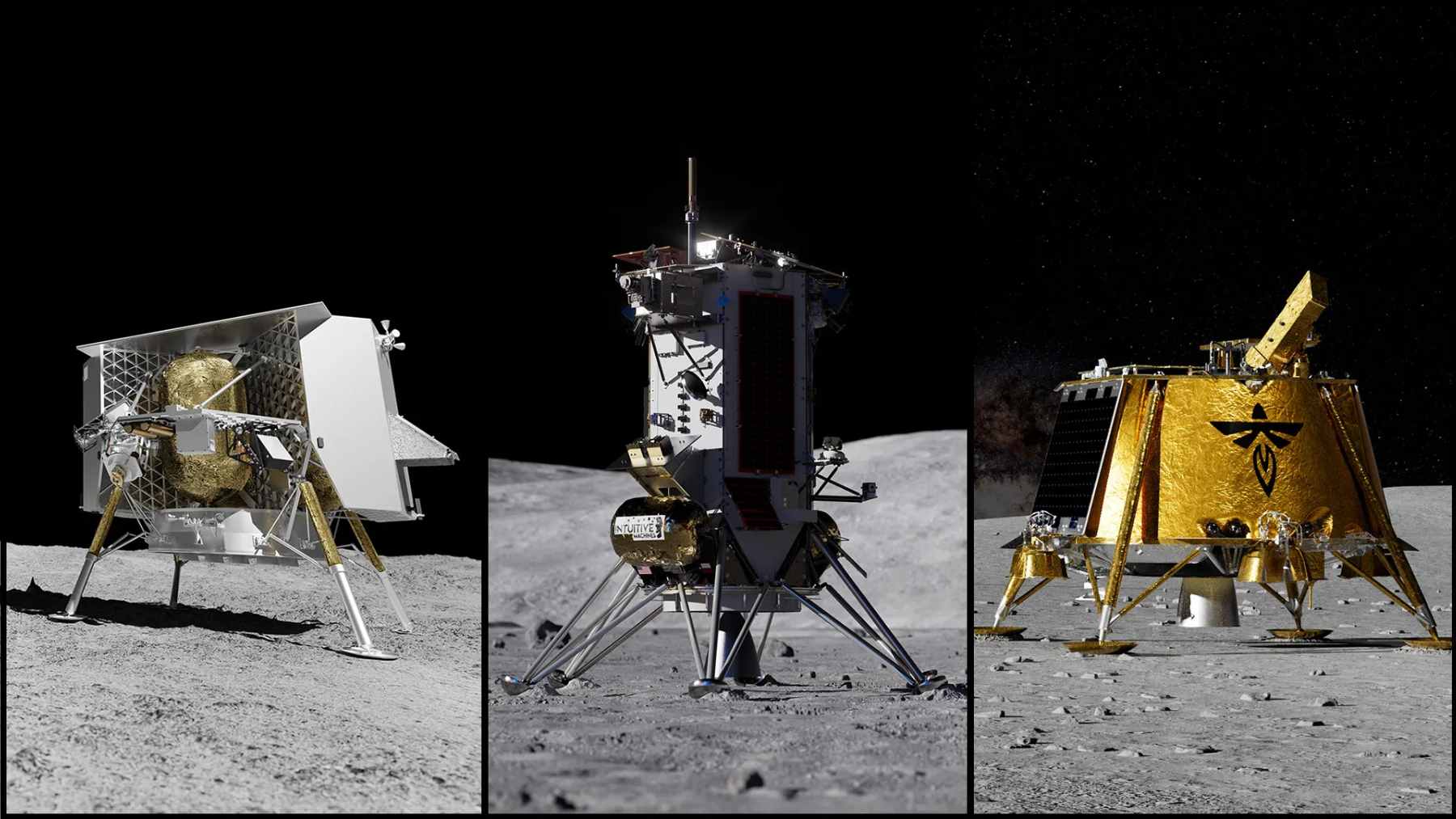
The new awards are part of NASA’s Commercial Lunar Payload Services program, better known as CLPS. Astrobotic received $297.9 million for two deliveries, while Firefly Aerospace received $144.2 million and Intuitive Machines received $148.3 million for one delivery each.
These are not sightseeing missions. Each lander is expected to carry three NASA payloads that will study landing dust, radiation, and location marking on the lunar surface. One camera system will watch how a lander’s engine plume kicks up lunar soil, while another instrument will help measure the radiation environment.
That may sound technical, but in practical terms it is basic homework. If NASA wants heavier landers, rovers, habitats, and power systems to arrive near one another, it has to know how much dust gets blasted across the ground every time a spacecraft touches down.
The Moon has its own weather problem
Joel Kearns, a NASA science official, compared the repeated payloads to having “weather stations” in different places on Earth. It is a useful image, even if the Moon has no air and no rain. The point is that NASA wants a network of environmental data before people start depending on the place for survival.
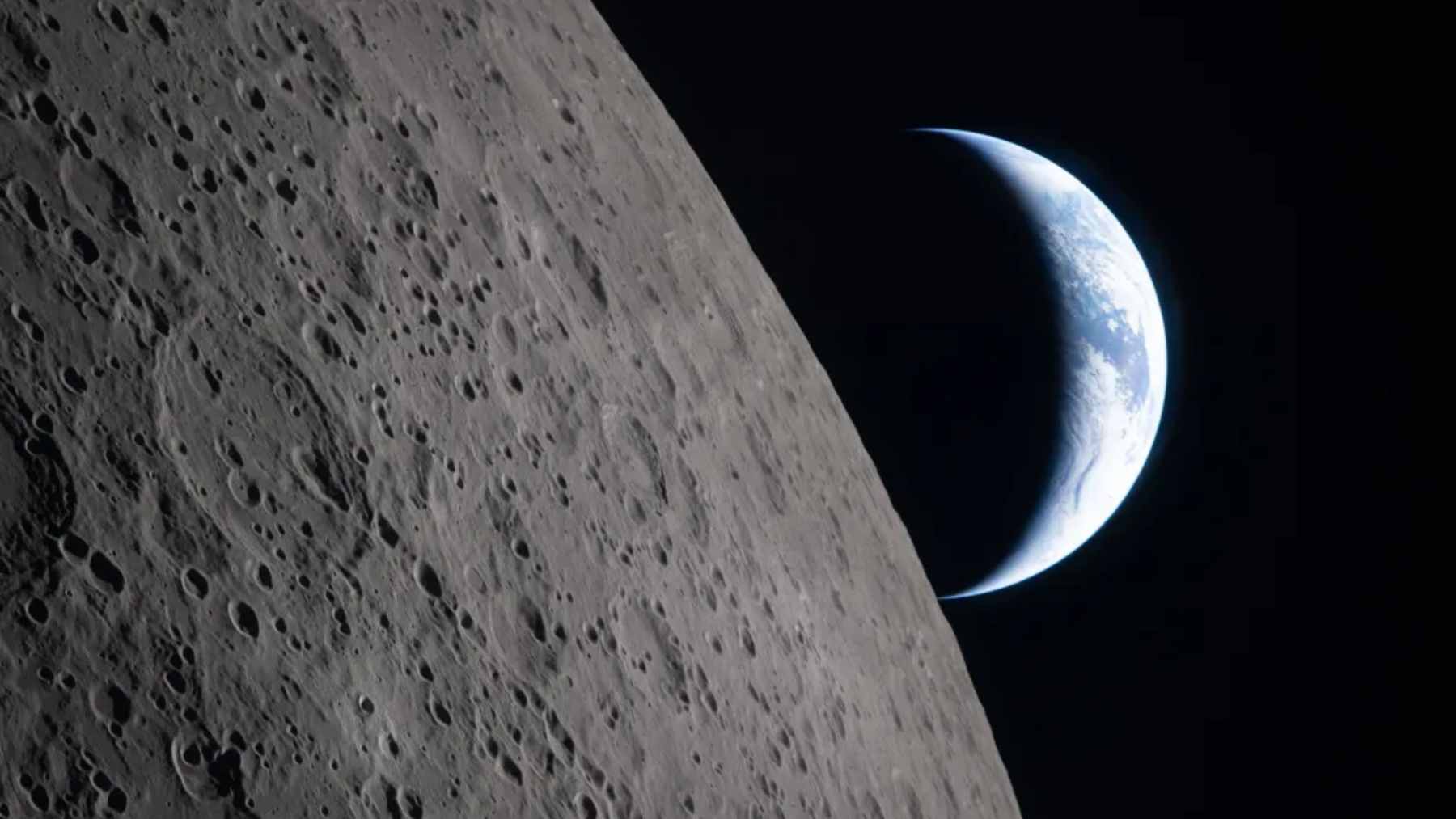
The lunar south pole is especially tempting because permanently shadowed craters are believed to hold ice. NASA says temperatures in the region can swing from more than 130°F in sunlit areas to as low as -334°F inside permanently shadowed craters.
Could that ice someday become drinking water, oxygen, or rocket fuel? That is the dream. The trouble is that nobody can treat lunar ice like a backyard well, because extracting it safely will require maps, power, machinery, and a much better understanding of how human activity changes the local surface.
Private space is the supply chain
NASA’s Moon Base plan leans heavily on American companies. That is the business story behind the science, and it is also the risky part. Firefly’s Blue Ghost Mission 1 delivered 10 NASA payloads to Mare Crisium in 2025, while Astrobotic’s earlier Peregrine mission suffered an anomaly that prevented it from landing on the Moon.
In other words, the agency is trying to move quickly without pretending that every commercial landing is routine. Ryan Stephan, NASA’s acting director of cargo landers for Moon Base, called the effort a “proving ground,” which is probably the most honest way to describe it.
NASA is also considering whether PROMISE, a hybrid engineering development version of Mars rover technology, could be used to characterize the lunar surface and look for resources. That would turn old Mars know-how into a new lunar tool, a practical reuse of technology at a time when schedules and budgets are tight.
Blue Origin is the warning sign
The biggest reminder that space plans can break fast came from Blue Origin. On May 28, 2026, the company experienced what it called a “significant anomaly” during a New Glenn hotfire test at Launch Complex 36 in Florida. Blue Origin later said it lost the lightning tower, transporter-erector, and hydraulic cylinders, though several major systems remained in good shape.
That matters because New Glenn is tied to Blue Origin’s broader lunar ambitions, including Blue Moon lander work. NASA has said Blue Origin’s Blue Moon Mark 1 Endurance lander is part of Moon Base I, targeted no earlier than fall 2026, with payloads meant to reduce risk for later crewed Artemis missions.
Blue Origin says it is investigating the cause and plans to return to flight by the end of this year. Still, the episode shows why NASA is spreading work across multiple providers. A Moon base cannot depend on a single rocket, a single lander, or a single lucky streak.
The defense angle is hard to miss
NASA describes Moon Base as part of a push for sustained human presence near the lunar south pole. The agency also says the effort was announced during its March 2026 “Ignition” event, linked to national space policy and American leadership in space.
That is where science, business, and defense start to overlap. A permanent or semi-permanent U.S. presence on the Moon would not just be a research platform. It would also shape industrial capacity, launch markets, communications systems, and the strategic balance in deep space.
For Congress and the White House, the Moon is increasingly treated as infrastructure, not just exploration. For companies, it is a demand signal. Build reliable landers, rovers, relays, and power systems now, and NASA may keep buying for years.
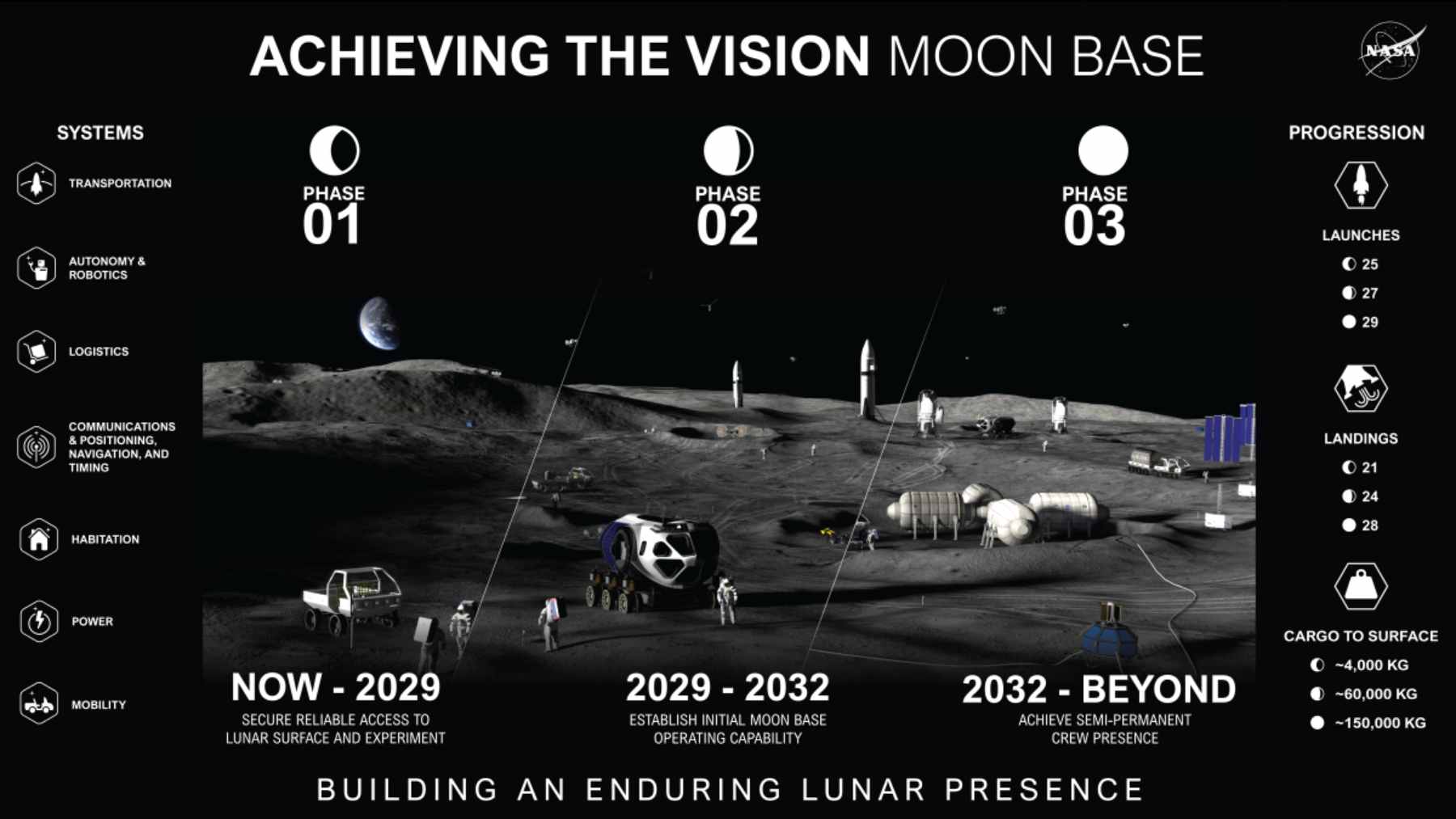
The road to living there
NASA’s phased Moon Base plan begins with a rapid series of robotic missions near the lunar south pole. Phase One, running through 2029, includes up to 25 missions, 21 landings, rovers, MoonFall drones, early power demonstrations, communications work, and about four tons of payload delivered to the surface.
Phase Two, from 2029 to 2032, moves toward early habitation and semi-permanent infrastructure. NASA lists a pressurized rover from Japan’s space agency, site preparation rovers, surface communications systems, and demonstrations involving nuclear and solar power.
Phase Three is where the plan becomes truly ambitious, with habitats, in-situ resource use, logistics, and eventually sustained human presence. It sounds bold because it is. But at the end of the day, the Moon base will only work if the unglamorous pieces work first.
For now, the message is simple: NASA is buying data, redundancy, and experience before it buys permanence.
The official press release was published on NASA.