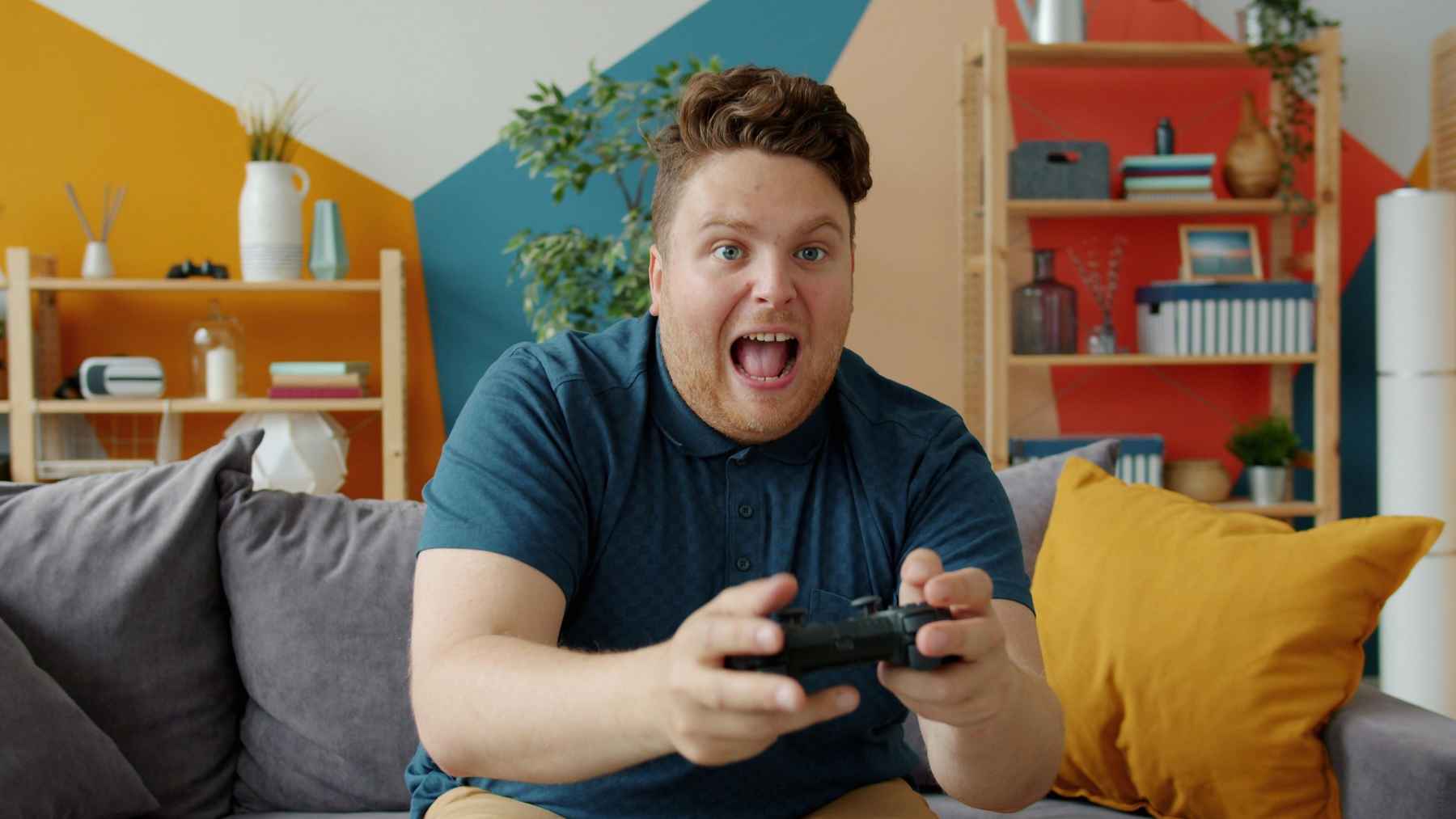
You load the old game, hear the familiar menu music, and expect the same rush. But something is off. The controller is there, the levels are there, and still the feeling refuses to come back.
Psychology suggests the adult is not only looking for entertainment. In many cases, replaying a childhood title is an attempt to reach the person who first played it, with fewer bills, fewer worries, and longer afternoons. That is why the disappointment can feel strangely personal.
The game did not move
Svetlana Boym, a Harvard cultural theorist, described nostalgia as a longing for a home that no longer exists or may never have existed.
In gaming terms, that “home” may be the bedroom, the living room carpet, or the friend sitting beside you with a spare controller. The game becomes the doorway, but the room behind it has changed.
For the most part, players are not chasing pixels. They are chasing a state of life. The old cartridge or download is still available, but the weekend when time seemed endless is not.
Memory edits the save file
The problem starts with memory itself. A systematic review of the reminiscence bump describes how people often remember adolescence and early adulthood more strongly than other periods, partly because those years help shape adult identity. That makes childhood and teen gaming feel bigger than a normal hobby.
Your mind does not replay the past like a video, it rebuilds it. Britannica describes memory as encoding, storage, and retrieval, while research on reconstructive memory shows that remembering often keeps the gist while changing details.
Flow is harder now
Mihaly Csikszentmihalyi described “flow” as that absorbed state when attention locks onto an activity and time seems to slip away. For a child, a new level, or even figuring out which button opens a door can create that state. Everything feels like a challenge, but not an impossible one.
Adults enter the same game with pattern recognition. They spot enemy routines, skip dialogue, read menus faster, and know what the level designer is probably trying to do. The surprise has less room to breathe.
Then real life keeps knocking. A phone buzzes, work is waiting, maybe the electric bill sits on the table while the console is starting up. The game did not lose all its magic, but the mind has more doors open at once.
Gaming changed around us
The Competitive Intelligence Unit reported that Mexico had 72.6 million gamers in the first half of 2025 and that 59.7 million mobile gamers represented 82.3% of the country’s players. Gaming now often happens in short bursts on phones, not only in long sessions on a couch.
That matters because rhythm shapes feeling. A childhood console session could swallow a whole afternoon, with snacks nearby and traffic noise outside the window barely noticed. Today, many players tap through a match while commuting, waiting in line, or half watching another screen.
This does not make modern gaming worse, it makes it different. The same medium now competes with alerts, social feeds, jobs, school, and the tired brain at the end of the day.
Old games become emotional shelters
Endel Tulving, the University of Toronto psychologist associated with episodic memory, helped separate memory for personal events from memory for facts. That distinction matters here because players are often not recalling a game mechanic.
They are recalling a lived scene, like the friend who always picked the same character or the sibling who refused to share the controller.
Research on video game nostalgia is moving in the same direction. Nicholas David Bowman and Tim Wulf wrote in Current Opinion in Psychology that video games can be powerful triggers of nostalgia because players have made lasting memories in digital worlds. They also note that as games mature, players do too.
What does that mean in the end? Replaying an old game can be a small refuge from adulthood, a way to visit a simpler map for an hour or two. But a refuge is not a time machine.
Why it never feels exactly the same
Communication researchers Tim Wulf, Nicholas D. Bowman, Diana Rieger, John A. Velez, and Johannes Breuer argued that older gaming experiences can trigger nostalgia directly through replay and indirectly through memory. Their work connects retro gaming with emotional ties to the past, not just with consumer taste.
That is the uncomfortable part. The game may still be good, but it is no longer carrying the same version of you. You bring adult expectations, adult fatigue, and adult knowledge to a world designed for an earlier mind.
Maybe that is not a failure. Maybe the point is not to recover the exact feeling, because that feeling belonged to a life stage that already did its job. The game can still offer comfort, but it cannot return the person who once sat there, wide-eyed, with the whole afternoon ahead.
The main work on video game nostalgia referenced here has been published in Media and Communication.