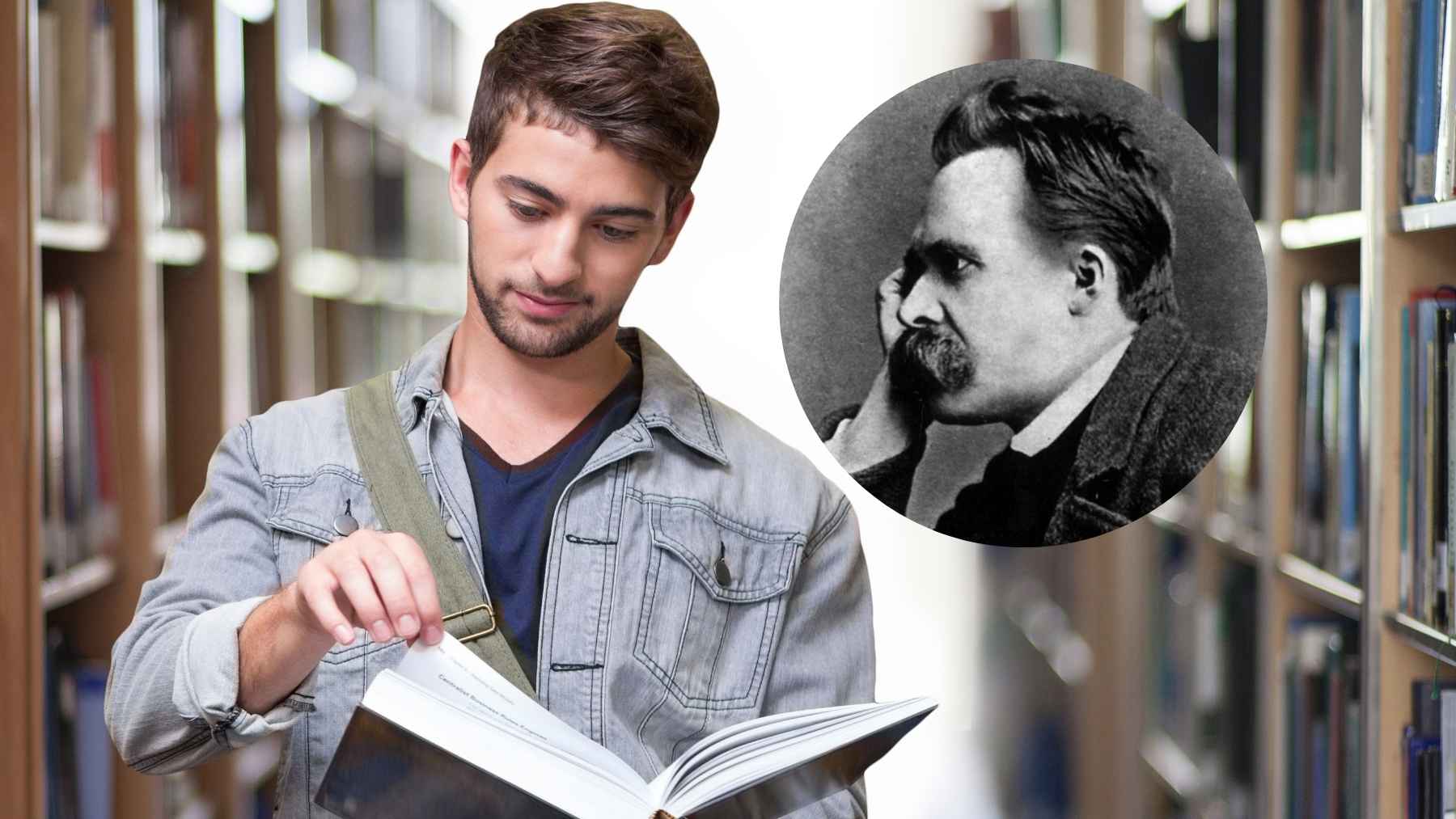
“A man’s intellectual power is measured by the amount of humor he is capable of using.” The sentence is repeatedly attributed to Friedrich Nietzsche and anchors a popular argument that wit reveals an agile, independent mind.
There is an attribution problem with the quote, as evidence behind it is weak, and a respected Italian cultural source credits the wording to somebody else. In any case, modern research does connect humor production with certain kinds of intelligence, but it does not turn every quick joke into a demonstration of IQ.
A quote with the wrong name
Nietzsche Source hosts a digital critical edition of the philosopher’s complete works, posthumous fragments, and correspondence. No verifiable location for the sentence emerged in a search conducted for this article, so presenting it as a confirmed Nietzsche quotation would be unsafe.
RAI Cultura prints the same line under the name of Giorgio de Chirico and notes that the Italian painter was deeply influenced by Nietzsche. That connection suggests a plausible route for the mix-up, but the broadcaster’s page is not a dated primary manuscript, so the quotation’s earliest trace remains unresolved.
What Nietzsche really wrote
The mistaken credit feels believable because the importance of laughter does feature in Nietzsche’s genuine writing. In section 294 of “Beyond Good and Evil,” he says he would rank philosophers by the quality of their laughter, reaching those capable of “golden laughter.”
In “Thus Spoke Zarathustra,” he writes, “Not by wrath, but by laughter, do we slay,” before challenging the “spirit of gravity.” The image pushes back against paralyzing solemnity, guilt, and values carried without critical thought.
That closely matches the supplied article’s theme, but it is not exactly the viral sentence.
Humor does use brainpower
A 2011 study by Gil Greengross and Geoffrey F. Miller tested 400 college students. Participants completed abstract reasoning and vocabulary measures, then wrote captions for three cartoons that independent raters judged for funniness. General and verbal intelligence predicted stronger humor production in the researchers’ model.
A later study compared 31 professional stand-up comedians with 400 college students. The comedians scored higher in verbal intelligence and humor production, supporting the idea that crafting a joke can involve rapid language processing, unusual associations, and creative judgment.
Still, the evidence is narrower than the famous line suggests. These studies measured particular tasks in limited samples and saw associations, not any universal law that the funniest person in the room is likely to be the smartest.
The real skill is reading the room
Why does one joke loosen a tense meeting while another leaves everyone cringing and squirming in their chairs?
A 2024 qualitative study from Deakin University examined 15 interviews and 51 workplace incidents, then identified 5 ingredients for successful humor, including reading the context, choosing an intention, judging whether to proceed, timing the joke skillfully, and being aware of reactions.
In practical terms, humor draws on both cognitive and emotional skills. A sharp line can crumble a weak argument or help coworkers breathe during a stressful day, but a joke that humiliates someone can drive a rift in a group and signal poor judgment. Context matters almost more than cleverness.
Laughter may ease stress
The health claims require the same careful treatment. A 2023 systematic review pooled eight studies with 315 adults and found that laughter interventions were associated with lower levels of cortisol, a hormone involved in the body’s stress response.
The authors described laughter as a possible addition to well-being strategies, not a replacement for medical care.
Can a laugh solve grief, illness, or a serious personal crisis? Generally, no. It may make a hard moment easier to carry, but broader physical health claims remain less settled than social media posts often purport, and one medical review described the measured benefits as small and not yet widely confirmed.
What the quote gets right
The famous sentence may have the wrong thinker attached to it, yet its appeal is easy to grasp. Good humor often calls on language, timing, perspective, and enough mental flexibility to hold two meanings at once.
That does not make laughter provocation a perfect measure of intellect, and the better conclusion is more modest. Creating and using humor well can reveal certain cognitive and social abilities, while Nietzsche’s authentic work shows why laughter can also resist dogma and excessive solemnity.
The main modern study discussed here was published in the journal Intelligence.