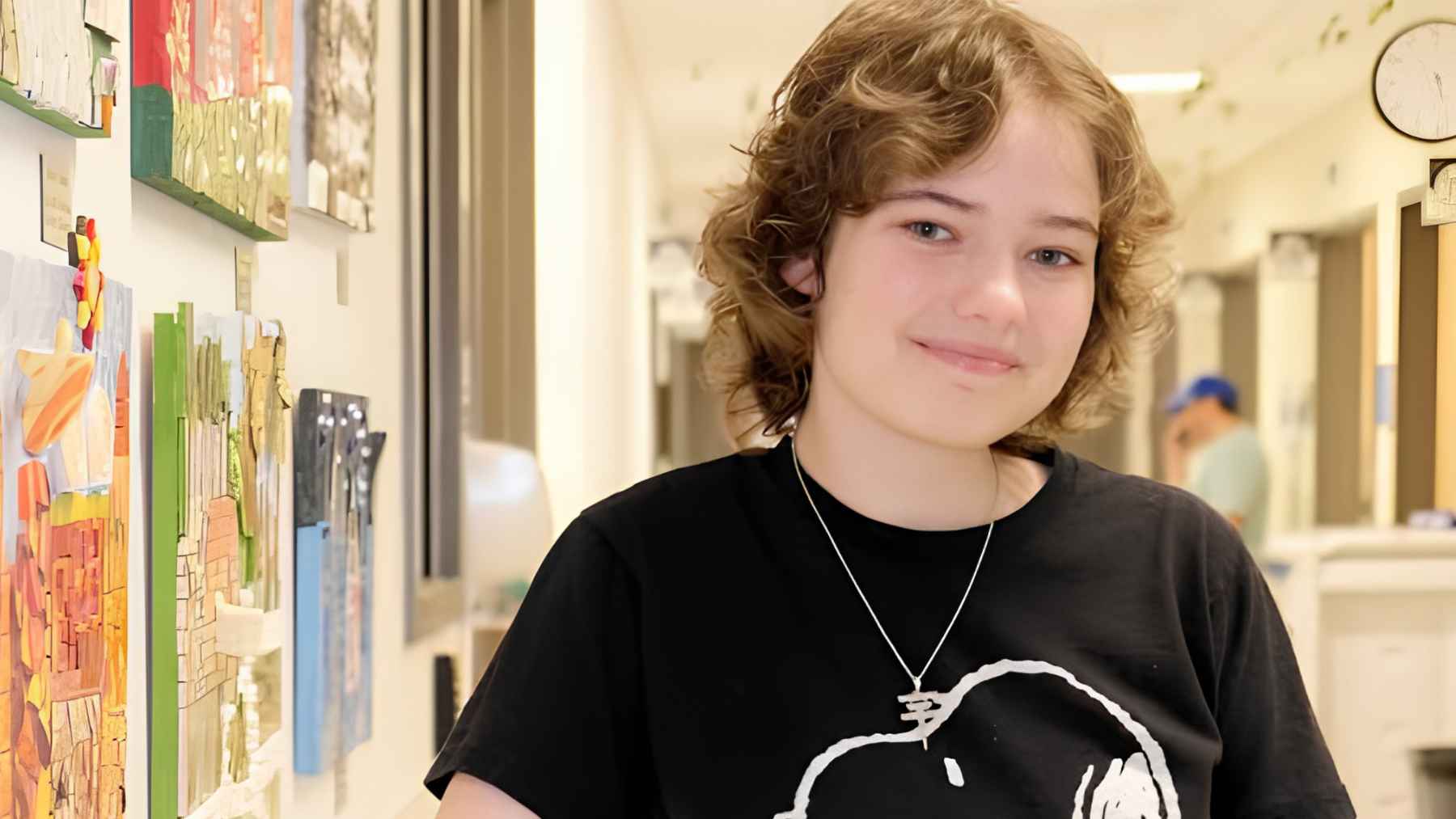
At 15, Sofia Pezet is looking toward school, theater, and an ordinary future after an aggressive lymphoma resisted treatment. She has been in remission since March 2026 after becoming the first teenager in Quebec to receive the commercial CAR T-cell therapy Breyanzi in a pediatric hospital.
The Montreal Children’s Hospital says she is also the youngest Canadian patient to receive this product, which is normally intended for adults.
The result is hopeful, but the story is not finished. Remission means the signs of cancer have decreased or disappeared, not that recurrence is impossible, so Sofia will continue follow-up care. “I hope I can get back to a normal life, like before cancer, before all of this,” she said.
A frightening diagnosis
Several months before her diagnosis in early 2025, Sofia was struggling to breathe. She felt weak and could not stop coughing, symptoms that led doctors to find a mass nearly six inches wide pressing against her lungs and heart.
What followed was brutal. Sofia underwent intensive chemotherapy and spent about five months in the hospital, far from home, with some days so difficult that she could not walk. “That period is a little blurry in my memory because, with all those treatments, I really wasn’t myself,” she recalled.
Doctors identified the disease as lymphoma, a cancer that begins in cells of the lymphatic system, which helps the body fight infection. A federal overview found that lymphoma accounted for 29% of cancer diagnoses among Canadians ages 15 to 19. This was not a minor illness hidden behind an unfamiliar name.
When cancer returned
Only one month after chemotherapy ended, the cancer came back. Doctors tried another form of immunotherapy, which uses the immune system against disease, but Sofia’s lymphoma continued to progress. Radiation helped control the mass, yet her team still needed a way to attack any cancer cells that remained.
With conventional options running out, pediatric hematologist-oncologist Dr. Stéphanie Mourad pressed for a CAR T-cell treatment never used this way in a Quebec pediatric hospital.
Specialists across Canada reviewed Sofia’s case and supported the plan. “The advantage of this treatment is that it remains active in the body for months, or even, hopefully, years,” Mourad said.
How CAR T-cell therapy works
T-cells are white blood cells that patrol the body for threats. In CAR T-cell therapy, doctors collect a patient’s own T-cells and genetically modify them so they carry a receptor that can recognize cancer. Think of it as giving the immune cells a more precise search tool.
Sofia’s cells were sent to a laboratory in California for reprogramming, then shipped back for infusion. Unlike a pill taken from a pharmacy shelf, this treatment had to be made specifically for one patient–her own cells became the raw material.
Once returned to the bloodstream, the modified cells can multiply, hunt their target, and keep working after the infusion. That staying power is one reason doctors considered the treatment when earlier therapies failed. It is not a guarantee, but it can offer another route when the usual road closes.
A researcher inspects a biological sample in a laboratory while working on advanced cell therapy and biomedical research.
Why this case is different
CAR T-cell therapy itself is not brand-new, and certain products are already used for blood cancers. The first in Sofia’s case is more specific. Breyanzi is generally used for adults, while she received it at 15 through a plan tailored to her lymphoma and her lack of remaining options.
Pediatric cancer care cannot simply copy an adult protocol. Side effects, monitoring, and long-term concerns must be considered for a developing body. Sofia’s team had to build a medical and regulatory path while treating a patient who could not afford to wait.
Doctors now hope the experience will make the therapy easier to access for other eligible young patients in Quebec. One case does not show that every child with lymphoma should receive CAR T-cells. It does show that an adult treatment can sometimes be adapted when experts agree the potential benefit justifies the risk.
Powerful treatment, serious risks
CAR T-cell therapy can trigger cytokine release syndrome, an intense immune reaction that may cause fever, low blood pressure, and breathing problems. It can also cause neurological effects such as confusion or seizures. That is why patients need close monitoring by specially trained teams.
Sofia reportedly stayed in the hospital for two weeks after the infusion and experienced only a brief fever. Her follow-up visits will continue because remission is not the same as a guaranteed cure. Good news, but with guardrails.
A future back in view
For Sofia’s father, Alexandre Pezet, the change is difficult to put into words. “She is a very strong girl. This gives us a lot of hope,” he said. The family can now focus on school, friends, theater, and the everyday plans that cancer once pushed aside.
Sofia’s experience is both personal and practical. It gave one teenager another chance, while giving doctors a real-world model for a rare pediatric request involving a personalized treatment. For other families facing the same dead end, that new route could matter.
The official case summary was published by the McGill University Health Centre.