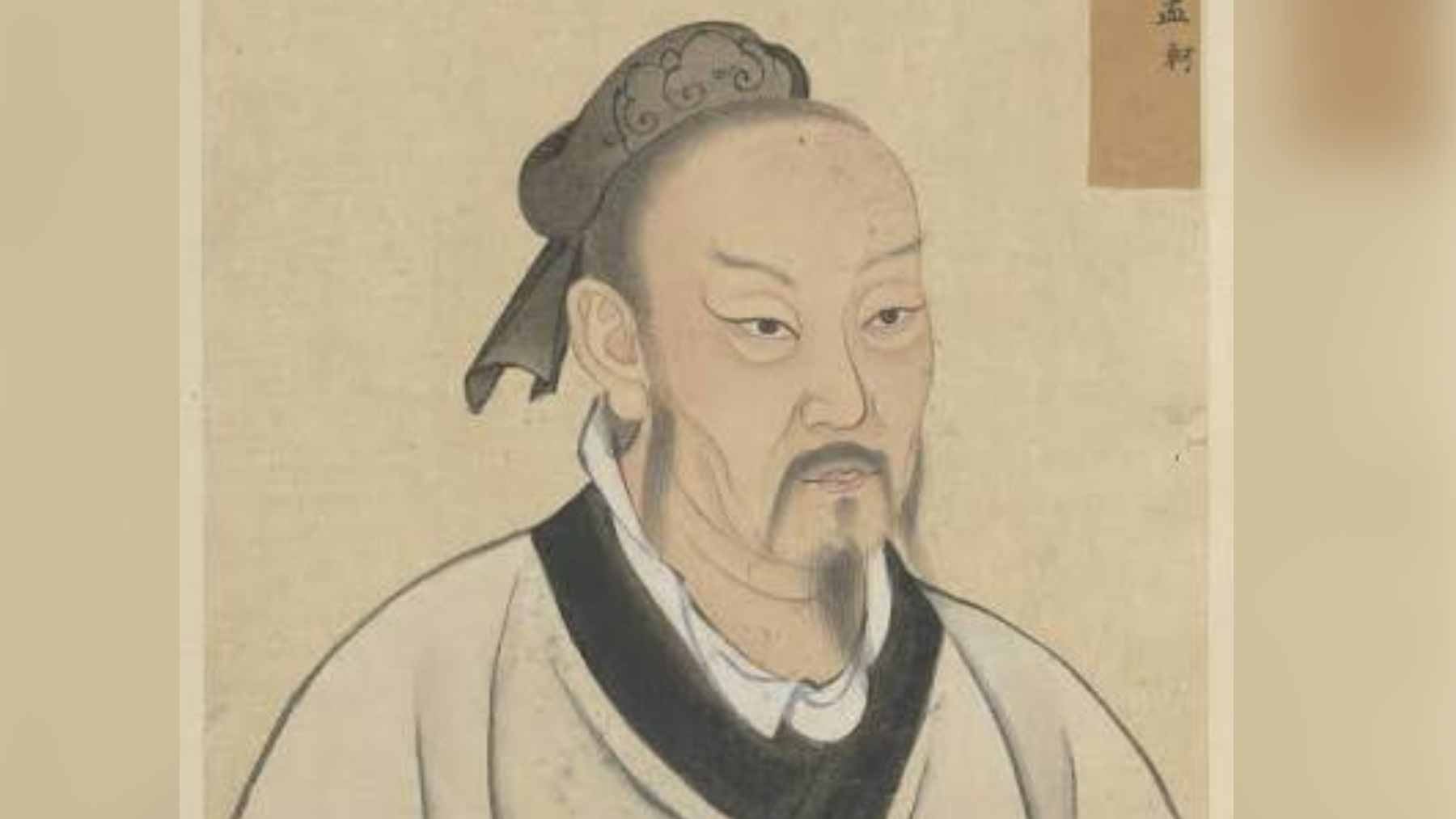
More than 2,300 years ago, the Chinese philosopher Mencius offered a simple rule for human relationships: “He who loves others is constantly loved by them. He who respects others is constantly respected by them.” It sounds like personal advice, but it was also a political challenge.
He lived among rival states fighting for land, soldiers, and influence. His message to rulers was blunt in substance. Fear may produce obedience for a while, but lasting authority depends on how people are treated.
A lesson born in wartime
The thinker lived from about 372 to 289 BCE, during the Warring States era, which ran from roughly 479 to 221 BCE. Powerful families feared assassination, while farmers faced invading armies, banditry, and heavy taxes. Daily life could be shaped by decisions made far away in a royal court.
Against that backdrop, the Confucian thinker traveled between courts and advised rulers on war, public works, and taxation. Records place several of those meetings between 323 and 314 BCE. What good was a larger kingdom if its people were hungry, frightened, and ready to leave?
His argument was not that kindness would make every political problem disappear, it was that coercion has limits. A state held together mainly by punishment is like a wall with cracks hidden under fresh paint.
What the quote means
The famous lines appear in the Mengzi, the collection of conversations and teachings associated with him. In the full passage, benevolence means caring about other people, while propriety means treating them with appropriate respect.
The two virtues are presented as habits that shape the response a person is likely to receive.
That does not make the saying that ‘every kind act will be rewarded’ a promise. The passage immediately describes an “exemplary person,” known as a junzi, facing someone unreasonable. Before blaming the other person, the junzi checks whether he has acted with care, respect, and sincerity.
There is an important limit. After honest self-examination and a sincere effort to behave well, the exemplary person does not accept endless blame for another person’s misconduct.
In modern terms, the lesson combines accountability with boundaries, whether the setting is a family argument, a classroom dispute, or tension at work.
Goodness starts small
The quote rests on a larger claim about human nature. He believed people are born with early tendencies toward compassion, fairness, respect, and moral judgment. He compared them to sprouts, not full-grown trees.
One of his best-known examples asks readers to imagine seeing a child about to fall into a well. Most people would feel alarm and compassion before calculating whether helping might bring praise or a reward. That immediate reaction, he argued, shows that concern for others is already present in a basic form.
Still, a sprout can wither. Education, practice, stable living conditions, and personal effort are needed to turn a passing feeling into reliable character. This is why his view was more demanding than the easy claim that people are simply “good” and need no guidance.
Government begins with basic needs
His moral theory led directly to public policy. He argued that most people cannot maintain steady conduct when hunger and fear dominate their lives, so rulers have a duty to provide conditions in which families can eat, work, and live without constant violence.
Education also mattered because material comfort alone did not create a responsible society.

He repeatedly criticized wars of expansion and taxes that crushed farmers. In one exchange, he rejected the idea of slowly reducing an unjust burden when officials already knew it was wrong. In other words, fixing harm later was not an excuse for continuing it today.
The philosopher also placed the people above the ruler in moral importance and allowed that a leader who destroyed benevolence and justice could lose the rightful claim to rule.
He was not proposing modern democracy, though. His preferred system remained monarchy, guided by a ruler whose legitimacy depended on humane conduct.
Respect is not weakness
Why does an ancient statement still feel familiar? Because respect cannot be ordered into existence. A manager can demand silence, a teacher can hand out punishment, and a government can enforce a law, but none of those actions automatically creates trust.
The same point applies in ordinary life. Listening does not guarantee agreement, and courtesy will not stop every bully. For the most part, though, people are more willing to cooperate when they believe their dignity is recognized.
At the end of the day, the saying is less about being pleasant than about understanding how relationships gain strength. Force can produce compliance, but care and respect are more likely to produce loyalty that lasts. That was the philosopher’s wager, and it still gives leaders and neighbors a clear test.
The original work has been preserved in the Mengzi and is available through the Chinese Text Project.