The phone may seem like the obvious place to organize a busy life. It buzzes, syncs, reminds, updates, and follows us from the kitchen counter to the office desk. But a growing body of research suggests that the old paper calendar may still have one important advantage. It makes the brain work differently.
That does not mean everyone needs to throw out their apps. Digital calendars are useful, especially for shared schedules and quick reminders. Still, for people who feel scattered, overloaded, or tired of constant notifications, writing dates and tasks by hand may offer something screens often do not. A slower, more physical way to think.
Why paper feels different
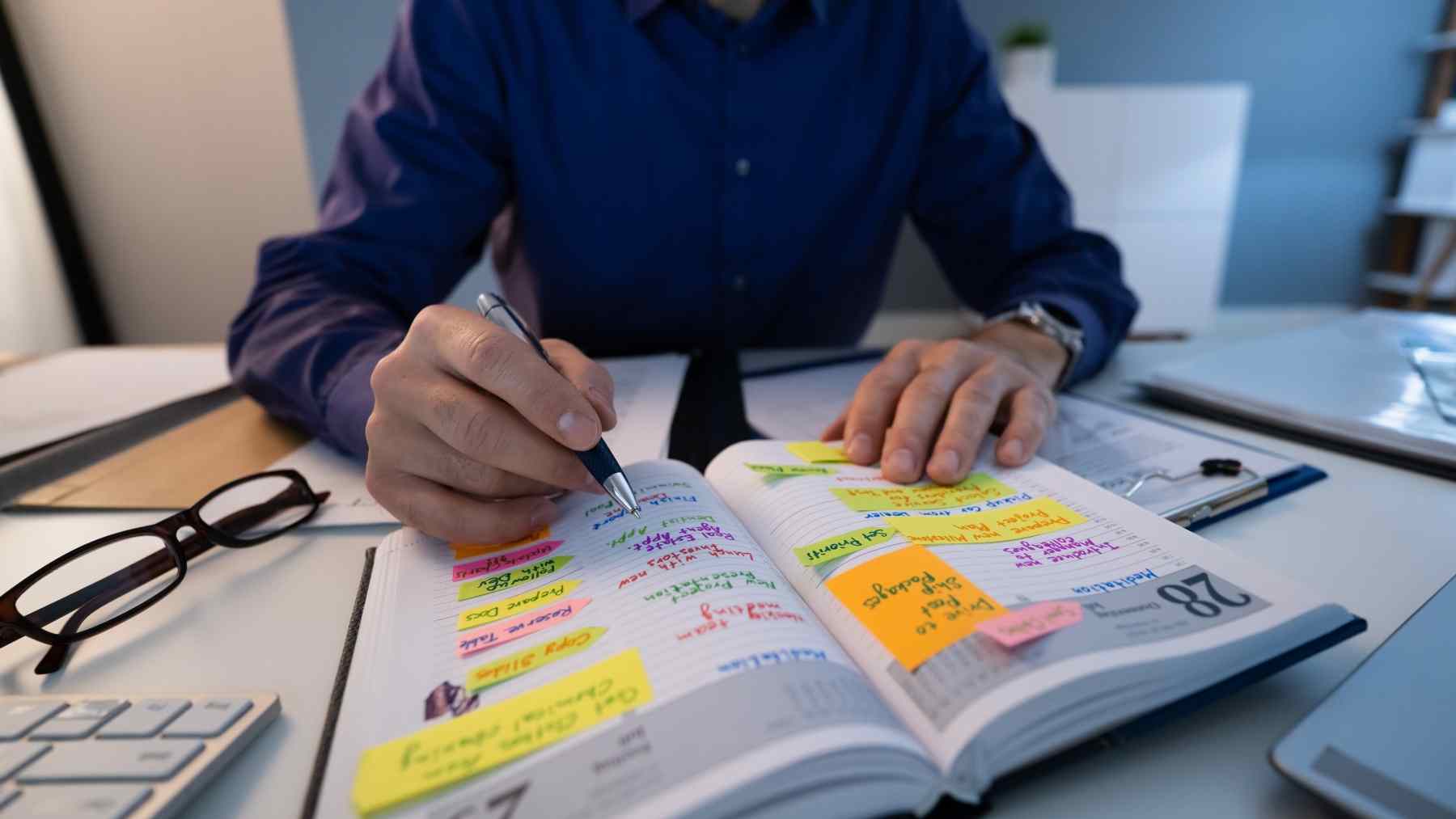
Writing on paper is not just typing in another format. It involves movement, touch, space, and visual memory all at once. When a person writes a birthday, a workout plan, or a doctor’s appointment by hand, the brain may attach that information to the physical location of the page.
That is part of why psychologists say paper calendars can feel easier to remember. The task is no longer floating inside an app next to emails, text messages, and social media alerts. It has a place.
And that matters. A calendar on the fridge or desk can become a daily anchor, especially on mornings when the mind is already racing.
What the study found
A University of Tokyo study compared people who wrote schedule information in a paper datebook with people who used a tablet or smartphone. The study included 48 volunteers ages 18 to 29, who were asked to record fictional appointments, deadlines, and class times before taking a memory test one hour later.
The paper group finished recording the schedule in about 11 minutes. Tablet users took about 14 minutes, while smartphone users took about 16 minutes. Researchers also found stronger brain activity in areas linked to language, visual imagery, and the hippocampus, a region closely tied to memory and navigation.
Professor Kuniyoshi L. Sakai, a neuroscientist at the University of Tokyo, said “paper contains more one-of-a-kind information for stronger memory recall.” In practical terms, that means the uneven page, the handwritten marks, and even the position of an entry may help the brain retrieve information later.
The memory advantage
So, what happens when someone writes “dentist at 9” on a calendar instead of tapping it into a phone? For the most part, the brain has to slow down and process the information more actively.
Handwriting usually requires more effort than typing. That small effort may help turn an abstract plan into something more concrete. The person is not just storing a reminder. They are building a mental map of the week.
The study did not prove that paper is always better for every task. In fact, researchers noted that paper users performed better only on simpler memory questions, while overall task performance was similar across groups. But the brain scans suggest that paper may create richer cues during memory retrieval.
A break from digital noise
There is another reason paper calendars still appeal to many people. They do not beep.
That stillness is part of the appeal. You can look, pause, and think before adding one more thing to the day.
A phone calendar lives inside the same device that brings work emails, breaking news, group chats, shopping alerts, and those tiny red notification bubbles we all know too well. Even a quick check of tomorrow’s schedule can turn into 10 minutes of scrolling.
A paper calendar does one job. It shows time. That simplicity can reduce mental clutter, especially for people who already feel pulled in too many directions during the day.
Planning with your eyes
Paper also gives people a wider view of time. On a wall calendar or desk planner, a person can see the week or month at a glance. That makes it easier to spot an overloaded Tuesday or a weekend that is not as free as it first seemed.
Digital calendars can do this too, of course. But screens often fragment time into swipes, tabs, and reminders. Paper keeps the whole picture still.
The reward of crossing things off
There is also a small emotional payoff in physically crossing out a finished task. It sounds simple, almost silly. But anyone who has scratched a chore off a list knows the feeling.
That little mark gives the brain a visible sign of progress. Unlike a digital notification that disappears after one tap, a crossed-out task stays there as proof that something was done.
For people trying to build healthier routines, this can be surprisingly useful. A checked box next to “walk after lunch” or “meal prep” can reinforce the habit and make the next step feel more manageable.
Not nostalgia, but strategy
Paper calendars are often treated as old-fashioned. But the research suggests the habit is not just about nostalgia or aesthetics. It may support memory by combining handwriting, visual cues, and physical space.
That said, the best system is usually the one a person will actually use. Someone managing shared family schedules may still need a digital calendar. Someone who misses appointments may benefit from phone alerts.
The sweet spot may be combining both. Use the phone for reminders that cannot be missed, and use paper for weekly planning, habits, goals, and anything that needs to feel more grounded.
How to start
No one needs to fill every box or plan every minute. A paper calendar works best when it stays simple. Start with key appointments, weekly goals, workouts, medication reminders, or self-care habits.
Place it somewhere visible, like a desk, kitchen wall, or bedside table. The point is not to create another source of pressure. It is to make time easier to see.
At the end of the day, that may be the real benefit. A paper calendar helps turn a noisy schedule into something the brain can hold, review, and understand.
The study was published on Frontiers in Behavioral Neuroscience.