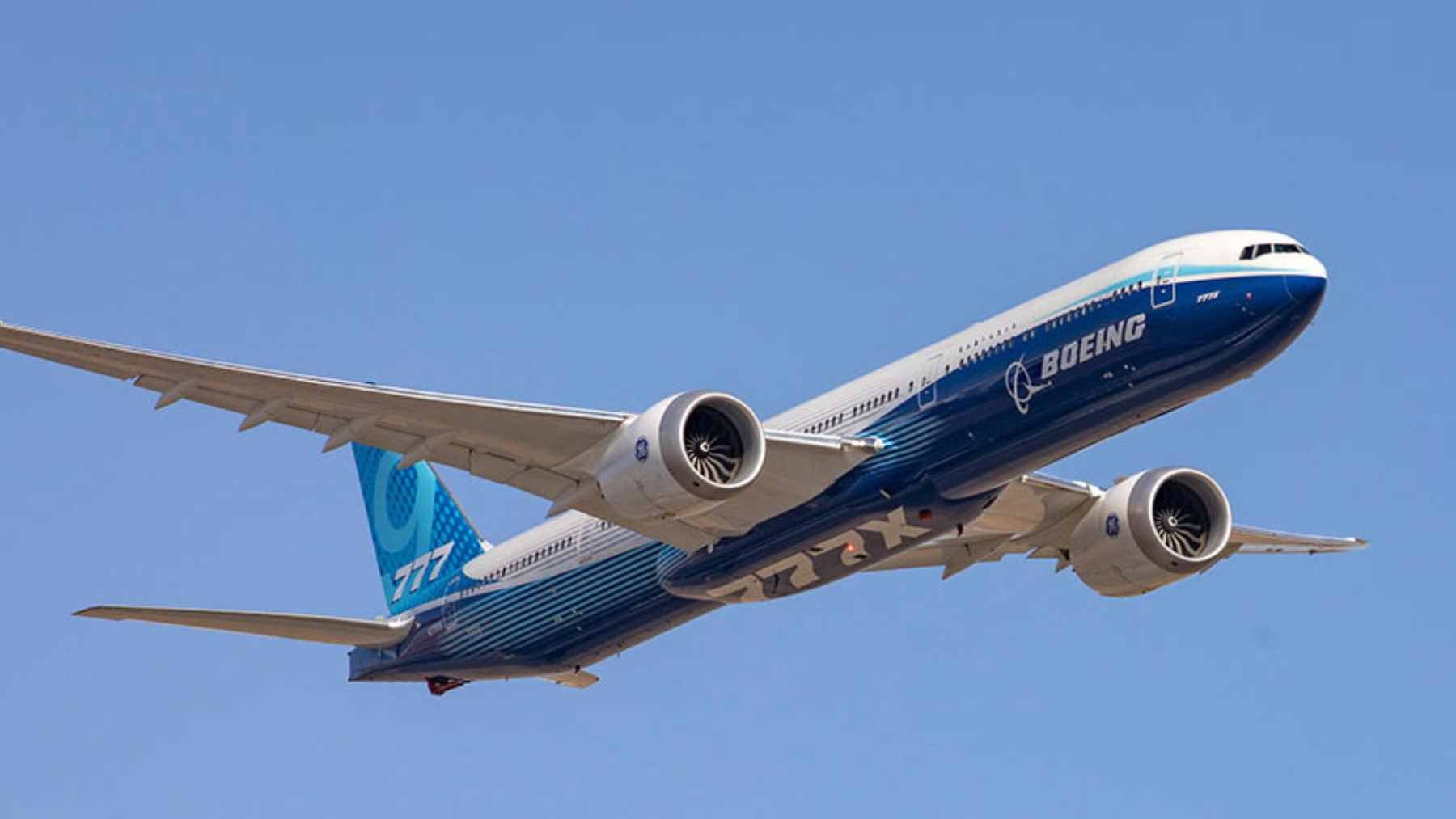
A remote-controlled aircraft usually brings to mind something small enough to fit in the trunk of a car, but his one is different. Popular aviation builder Ramy RC has flown a self-described “world’s largest” remote-control Boeing 777-9X, a fully electric model with a 33-ft. wingspan and a 630-lb. body, with filmmaker Tyler Perry taking the controls for the featured flight.
It is a viral aviation moment, sure, but there is a bigger technology story hiding under the white and blue paint. As aviation looks for cleaner ways to fly, this huge electric model does not solve the carbon problem, but it does make the engineering challenge feel surprisingly easy to understand.
A giant RC jet with real engineering lessons
Ramy RC built the aircraft at 1/7 scale, starting with a digital 3D model before cutting the fuselage, nose, and wings from foam using CNC equipment.
The structure was then strengthened with carbon fiber sheets and protected with a thin plastic coating, which is the kind of material balancing act that matters when every extra pound makes flight harder.
The plane is powered by two large, electric-ducted fans mounted where the real jet’s engines would sit. It also has working landing gear, five actuators for the flaps, and wiring running through the body to power its moving parts.
That may sound like a hobby project turned all the way up. In practical terms, though, it is closer to a flying engineering demonstrator than a toy. You can see the same trade-offs that haunt bigger aircraft, including lift, drag, battery weight, structural stiffness, and the nervous moment when wheels finally leave the runway.
Why the 777X shape matters
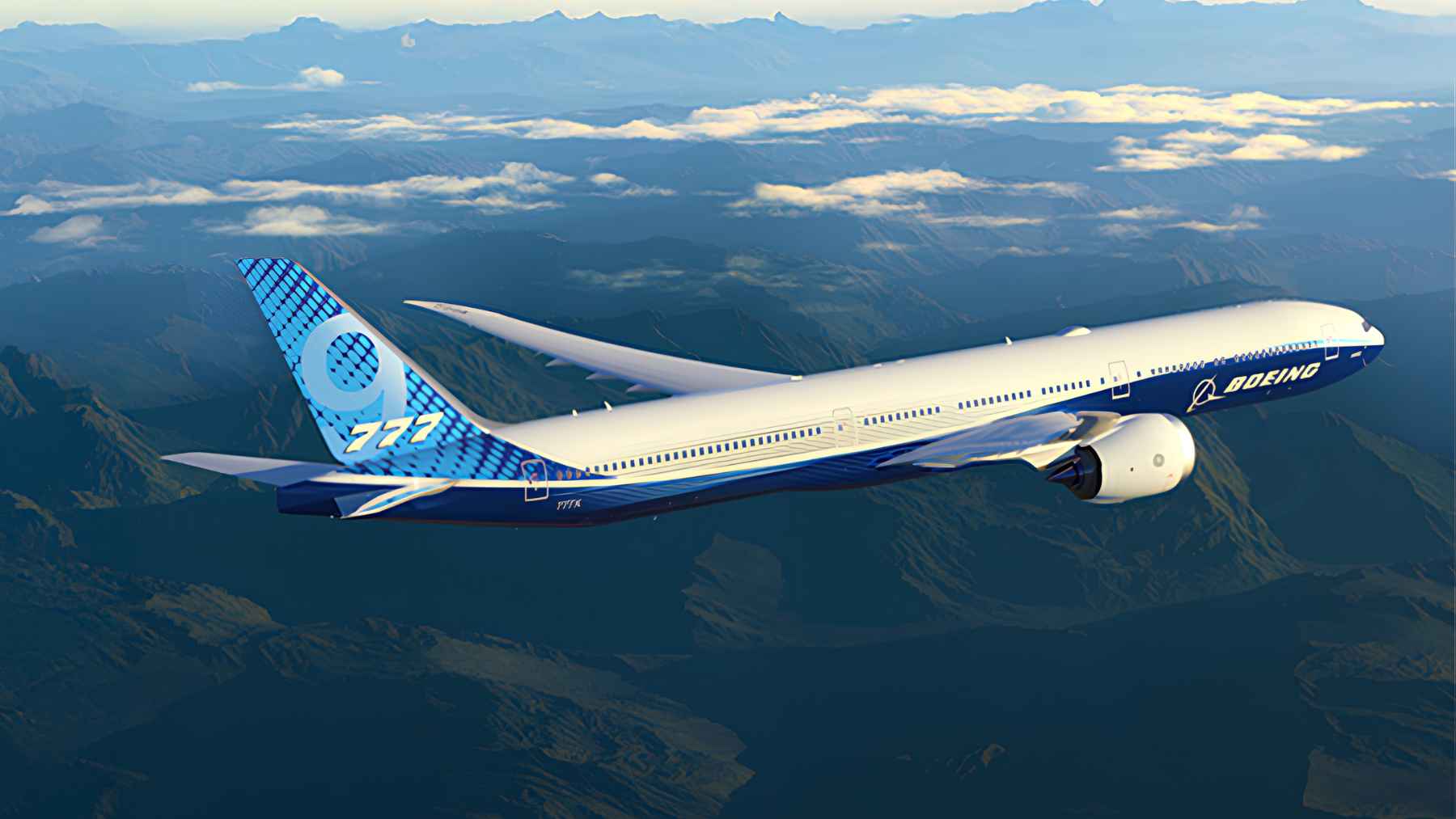
The real Boeing 777X is famous for its enormous wing. Boeing lists the 777-9 at 235’ 5” across with its wingtips extended, then 212’ 9” on the ground when those tips are folded.
That shape is not just for looks. Boeing says the aircraft’s longer wing and folding wingtip are designed to improve aerodynamic efficiency while still allowing the plane to fit airport taxiways and gates.
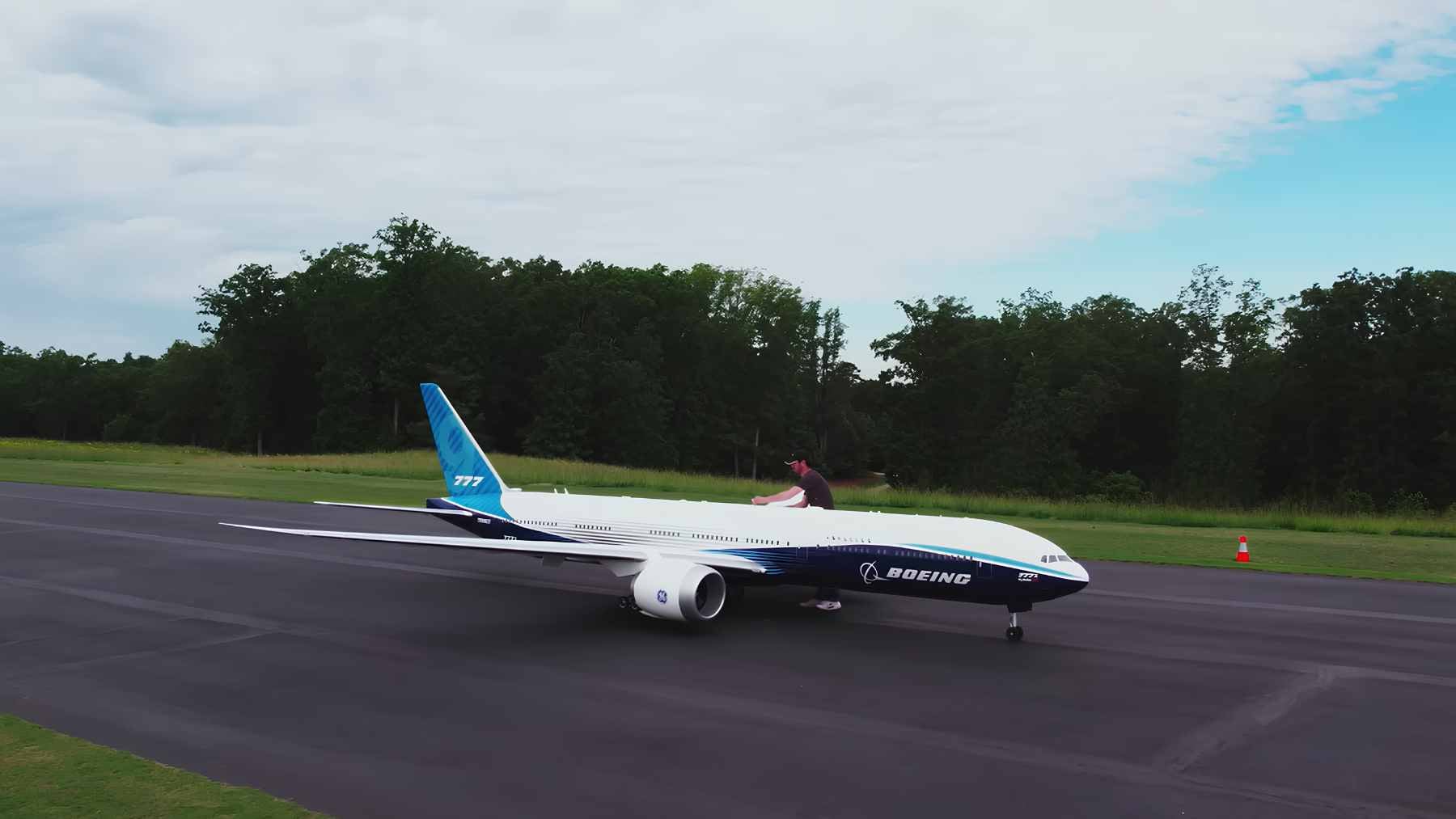
Ramy’s RC version copies the visual drama of that design, but in a much simpler electric package. The result is strange to watch at first, because the brain expects an airliner to roar. Instead, this one rolls forward with the buzz of electric fans and lifts into the sky like a very expensive paper airplane that somehow knows exactly what it is doing.
Tyler Perry takes the controls
The maiden flight had an unexpected pilot. Tyler Perry, best known as a filmmaker and studio owner, is also an RC aircraft enthusiast, and he reportedly has credited giant models like these with helping him overcome a fear of flying.
With the controller in hand, Perry guided the massive model down the runway, lifted it into the air, and flew several passes before bringing it back for a smooth landing. For anyone who has ever crashed a small RC plane into a tree, that landing feels almost unfair.
Still, the calm finish should not hide how much preparation went into it. A 630-lb. aircraft is not something you casually toss into the wind at a park. It needs space, planning, and people who know what can go wrong before it does.
The green angle is small but worth noticing
Aviation has a climate problem that is much larger than any RC aircraft. The International Energy Agency says aviation accounted for 2.5% of global energy-related carbon dioxide emissions in 2023, with emissions reaching over 1 billion tons as travel recovered after the pandemic.
That is why the electric part of this project matters, even if only in a limited way. Ramy’s model does not burn jet fuel in flight, and its ducted fans show how battery-powered propulsion can move a very large, lightweight airframe through the air.
But this concept should not be oversold. A model aircraft is not a passenger jet, and foam, carbon fiber, batteries, and electronics all carry their own environmental costs. The honest takeaway is more modest and more interesting.
Cleaner aviation will depend on thousands of design decisions, and projects like this make those decisions visible to people who might never read an aerospace paper.
Size also brings scrutiny
There is another side to the story, and it has nothing to do with YouTube views. In the United States, the FAA’s small UAS rules apply to unmanned aircraft under 55 lbs., and the agency separately points operators toward different registration information for drones over 55 lbs.
That matters because this Boeing 777-9X replica is far beyond the weight of a normal consumer drone. The available reports do not establish the exact location or authorization pathway for the flight, so the safer lesson is simple. Big RC aircraft need controlled environments, experienced pilots, and serious safety planning.
For the most part, viewers will remember the spectacle: a tiny airliner, a celebrity pilot, and a runway scene that looks like a movie prop coming to life. But the more important story may be the way a homegrown maker project turns aerospace design into something people can see, hear, and understand.
The video was published on YouTube by Ramy RC.