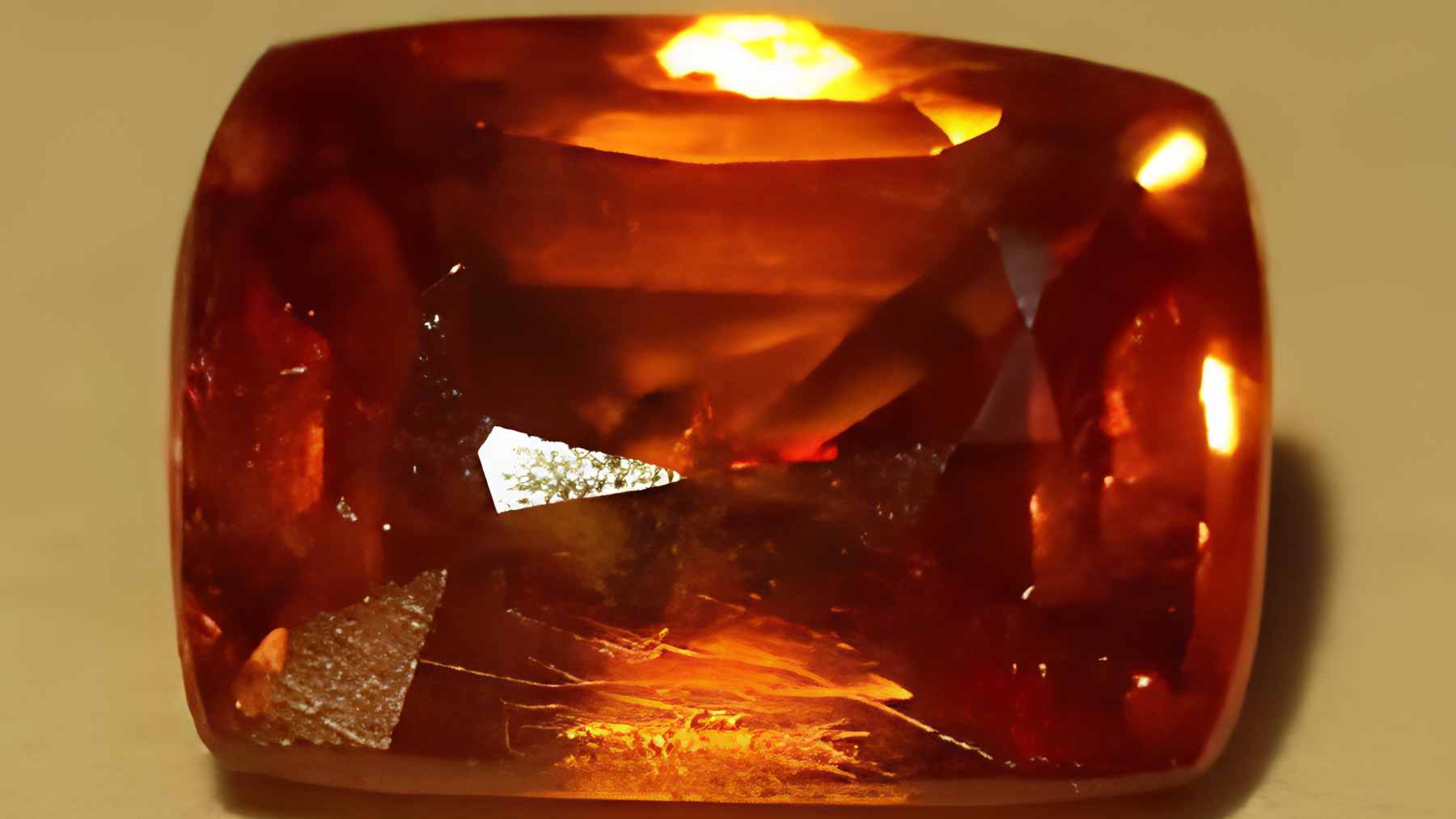
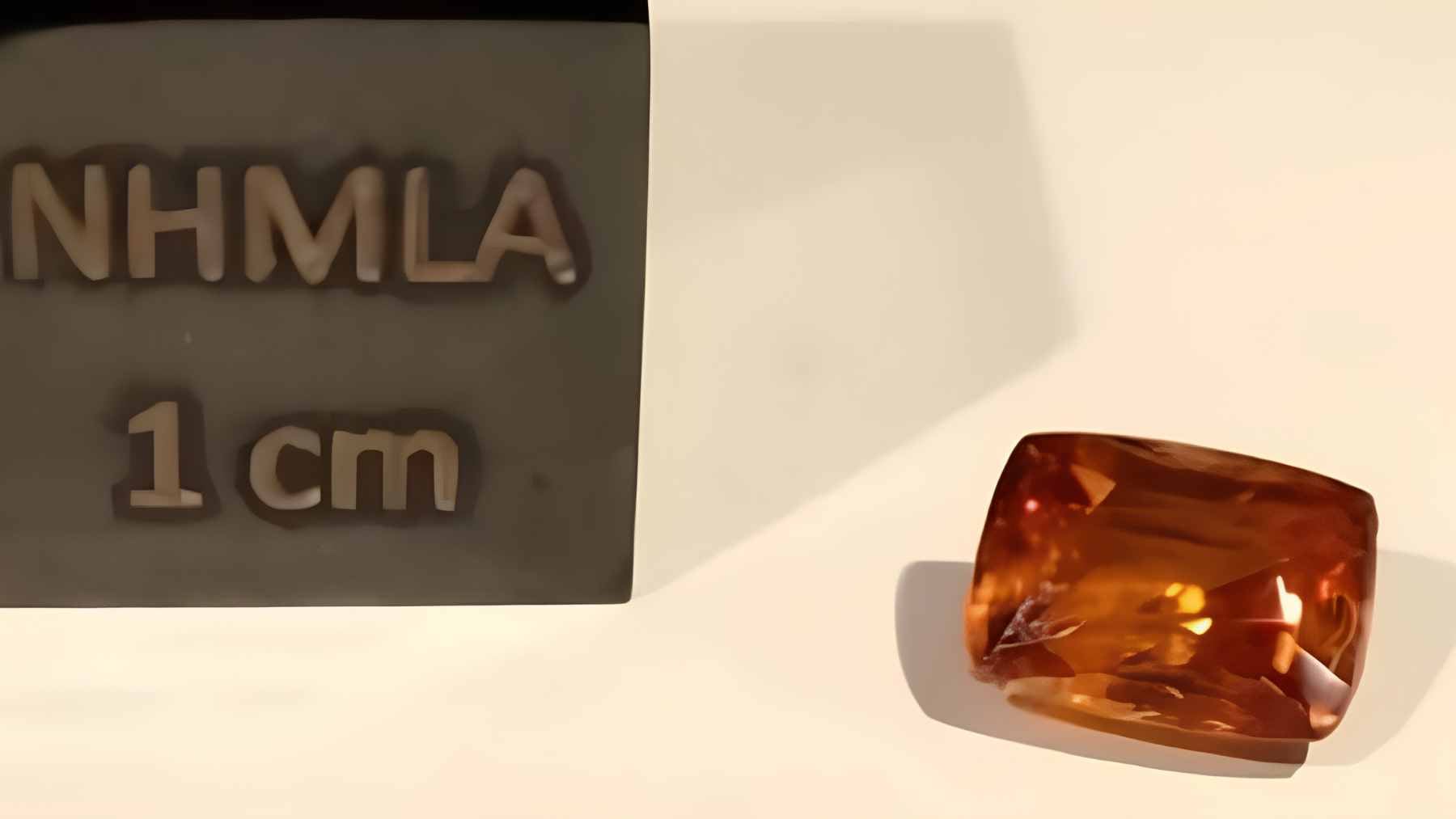
A tiny reddish-orange gem from Myanmar has become one of the strangest reminders that Earth is still full of unfinished business. The mineral is called kyawthuite, and its scientific description is based on a single natural sample faceted into a 1.61-carat gem, which weighs about 0.011 ounces.
That is smaller than many crumbs left on a kitchen counter. Yet this little crystal carries a much bigger message for science, mining, and environmental planning. Even with satellites, advanced lab tools, and global databases, the planet can still produce something so specific that scientists have confirmed it only once.
A mineral with one known sample
Kyawthuite was recognized under the International Mineralogical Association number IMA 2015-078, and the official IMA master list identifies it as an approved mineral from Myanmar. Later, researchers Anthony R. Kampf, George R. Rossman, Chi Ma, and Peter A. Williams described it in detail in a peer-reviewed paper.
That matters because a mineral is not defined only by how it looks. Scientists also need to know its chemical makeup and crystal structure, almost like checking both the ingredients and the recipe. Simply put, kyawthuite is not just a pretty orange stone.
Why this crystal stands apart
The mineral contains bismuth, antimony, and oxygen, with a formula written as BiSbO4 in simplified form. Its structure was distinct enough for scientists to separate it from other known minerals, even though synthetic bismuth antimonate compounds had been studied before.
There is also a modern supply-chain twist here. The U.S. Geological Survey’s 2025 critical minerals list includes antimony, used in lead-acid batteries and flame retardants, and bismuth, used in nontoxic metals, atomic research, and some medical applications.
To be clear, kyawthuite is not a new source of strategic material for batteries, aircraft, or defense suppliers. A single 0.011-ounce crystal cannot feed a factory. What it can do is show how complex and selective Earth’s mineral-making systems really are.
Found in gravel, not in a mine vein
The known crystal was found as a waterworn stone in alluvium near Chaung-gyi-ah-le-ywa, in the Mogok area of Myanmar. Alluvium is loose sediment moved by water, which means the place where the gem was found may not be the exact place where it formed.
Researchers say its composition suggests it likely came from a pegmatite, a coarse-grained rock that can concentrate unusual elements during the final stages of magma cooling. Think of it as nature’s last, tiny pocket of leftovers, where rare chemical combinations sometimes get one chance to appear.
That is where the environmental side comes in. Understanding where rare minerals form helps geologists read landscapes before digging changes them. It is not only about finding value underground, but about knowing what is there before business decisions reshape the surface.
Mogok is no ordinary place
Mogok has long been famous for gemstones, including ruby, sapphire, spinel, peridot, and moonstone. The American Museum of Natural History has described the region as “Ruby Land,” noting its long history and unusual abundance of gem material.
Still, kyawthuite is not simply another rare gem from a famous district. Diamonds, rubies, and emeralds can be scarce in a jewelry case, but they are known from many places. Kyawthuite sits in a different category because its confirmed natural record rests on one documented specimen.
How can one small stone say so much? Because geology is often a game of exact conditions. Heat, fluids, pressure, timing, and rock chemistry all have to line up just right.
Small size, heavy science
The known kyawthuite crystal is reddish orange, transparent, and has an adamantine luster, a bright shine often compared with diamond-like brilliance. Its Mohs hardness is about 5.5, which makes it harder than a copper coin but softer than quartz.
It is also dense. The measured density reported for kyawthuite converts to about 0.30 lbs. per cubic inch, so a larger piece would feel surprisingly heavy in the hand. Of course, no larger natural piece has been confirmed.
The type material is kept in the Mineral Sciences Department of the Natural History Museum of Los Angeles County under catalog number 65602. For museums, that makes careful storage more than housekeeping–it becomes scientific infrastructure.
Rare does not always mean priceless
There is an important distinction here. A gemstone can be expensive because buyers want it, because its color is beautiful, or because jewelers can sell it as a luxury object.
Kyawthuite’s importance comes from something else. Its rarity is scientific, based on confirmed natural occurrence and mineral identity. That does not automatically make it the most expensive stone in the world, but it does make it one of the most extreme examples of mineral scarcity.
That nuance matters. In a world racing for critical minerals, rare earths, battery metals, and defense materials, not every rare mineral is a resource. Some are better understood as clues.
The bigger lesson from one crystal
Earth’s mineral catalog is not finished. It is a living document, updated when researchers find something new, test it carefully, and prove it belongs in the record.
The USGS has said that “mineral criticality is not static, but changes over time”, a point that applies to supply chains, and in a different way, to scientific knowledge itself. What looks like a small laboratory detail today can shape how future geologists think about rocks, resources, and environmental risk.
At the end of the day, kyawthuite is a tiny mineral with an oversized lesson. Before we mine, trade, build, or regulate, we first have to understand what the planet has actually made.
The study was published on Mineralogical Magazine.