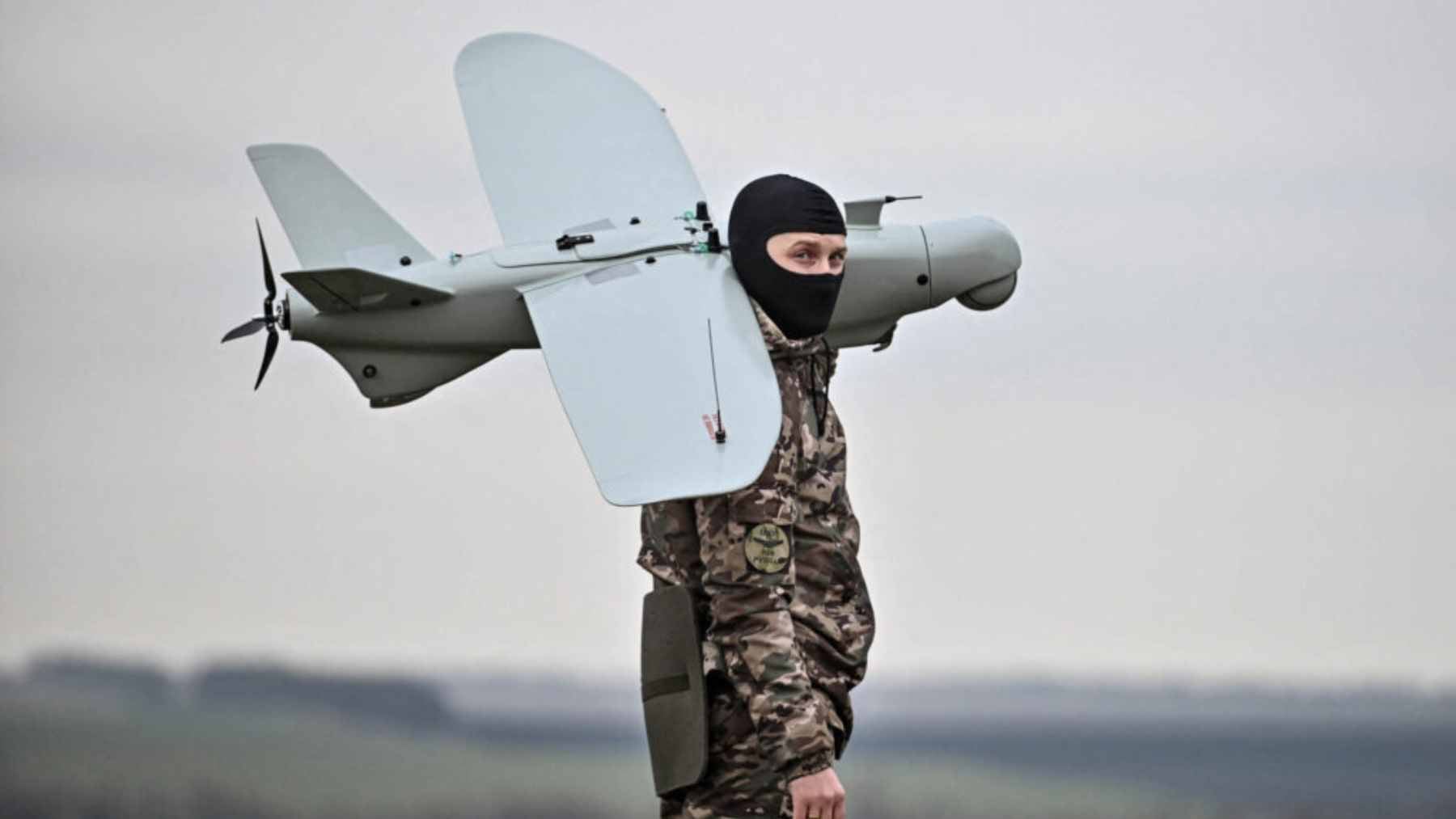
Russia is putting drone operators at the center of its future army. Dmitry Medvedev, deputy chairman of Russia’s Security Council, told trainees at a Leningrad Military District center that people working with unmanned systems are becoming the “backbone of the military elite” Russia says it needs.
He also urged them to protect themselves, calling their skills important for their families and the country.
That statement matters because it captures a larger shift happening in plain sight. The war in Ukraine is no longer only about tanks, artillery, and trenches. It is increasingly a contest of cheap aircraft, cameras, electronic jamming, software, and industrial capacity, and the environmental cost is spreading well beyond the front line.
Drone operators move to the center
Medvedev’s message was aimed at soldiers learning one of the most valuable jobs in modern combat: a drone pilot can watch a road, guide artillery, hit a vehicle, or keep troops pinned down without ever seeing the target face to face.
That is why the job now carries such weight. According to Poland’s OSW research center, Ukrainian battlefield drones are responsible for destroying nearly 85% of enemy military targets on the front line and for 70% to 80% of Russian casualties, including killed and wounded personnel.
Ukraine’s own numbers point in the same direction. Its Defense Ministry said 819,737 video-confirmed drone strikes were recorded in 2025, while President Volodymyr Zelenskiy said drones now destroy more than 80% of enemy targets.
A technology race
Medvedev also said modern armies have not solved the problem of “drone swarms.” He described it as a complex task requiring artificial intelligence and advanced computing, adding that large numbers of drones in the air are difficult to shoot down.
Essentially, that means armies are racing not just to buy drones, but to train people who can use them, jam them, repair them, and learn faster than the other side. It is less like buying one expensive aircraft and more like keeping a moving factory, a software lab, and a training school running at once.
Russia also says its defense industry has changed fast. Medvedev said Russia now produces a “full range” of unmanned aerial vehicles, from small copters and FPV drones to fixed-wing UAVs.
The front line expands
For soldiers and civilians, the most frightening change may be the expanding “kill zone.” Drone-heavy fighting can make ordinary movement dangerous, including a walk to a car, a trip for supplies, or an evacuation under fire.
The United Nations Human Rights Monitoring Mission in Ukraine reported that civilian casualties from short-range drones rose 120% in 2025, with 577 civilians killed and 3,288 injured. Danielle Bell, head of the mission, warned that expanded short-range drone use has made many areas near the front “effectively uninhabitable.”
That is where military technology meets everyday life. Roads go quiet. Shops close. Emergency workers delay trips because a small buzzing object in the sky can turn a routine drive into a fatal one.
Environmental damage grows
There is another layer, and it is easy to miss while counting weapons. Drone warfare can also turn infrastructure into an environmental hazard, especially when energy sites, refineries, ports, or industrial facilities are hit.
Reuters reported that Ukrainian drone strikes on Russia’s Black Sea port of Tuapse in late April 2026 caused toxic black smoke and oil slicks along the coast, while authorities said they had cleared more than 13,300 cubic meters of fuel oil and contaminated soil. Residents were warned to stay indoors, close windows, and drink bottled water.
Ukraine has also suffered a broader toxic legacy from the war. UNEP has documented damage to energy infrastructure, oil storage, refineries, industrial sites, mines, and agro-processing facilities, warning of air pollution and possible contamination of ground and surface waters.
Cleanup will need its own drones
Strangely enough, some of the same technologies changing warfare are also being used to clean up after it. In Ukraine, demining groups are turning to drones, artificial intelligence, and remote-controlled machines to find and remove explosive remnants.
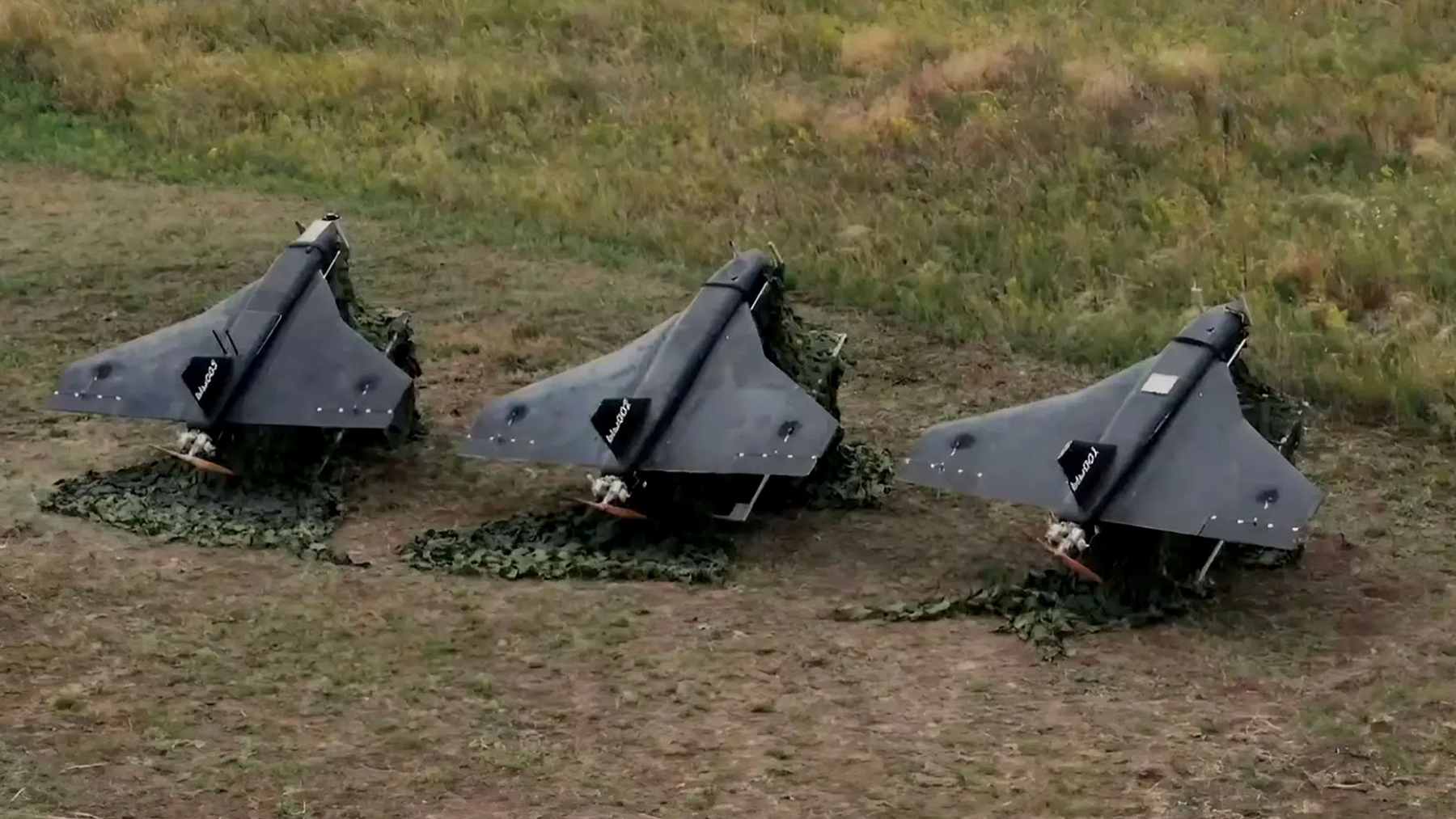
Reuters reported that more than 132,000 square kilometers of land remain contaminated by mines in Ukraine, according to state-run Demine Ukraine. HALO Trust says AI analysis of drone imagery is already identifying mines and explosive remnants with around 70% accuracy.
That does not make drones good or bad by themselves. It shows how quickly they have become tools of power, destruction, repair, and recovery, depending on who uses them and for what purpose.
What to watch next
Medvedev’s remarks should not be read as a throwaway line. They are a signal that Russia sees drone operators not as a temporary wartime fix, but as a permanent military class inside a more automated force.
The question now is whether governments can keep up with the consequences. Training more drone crews may change battlefield tactics, but it also pushes cities, oil hubs, power grids, forests, and farmland deeper into the risk zone.
For the most part, the drone era has arrived faster than laws, cleanup plans, and public understanding. The machines are small. The footprint they leave is not.
The official statement was published on Security Council of the Russian Federation.