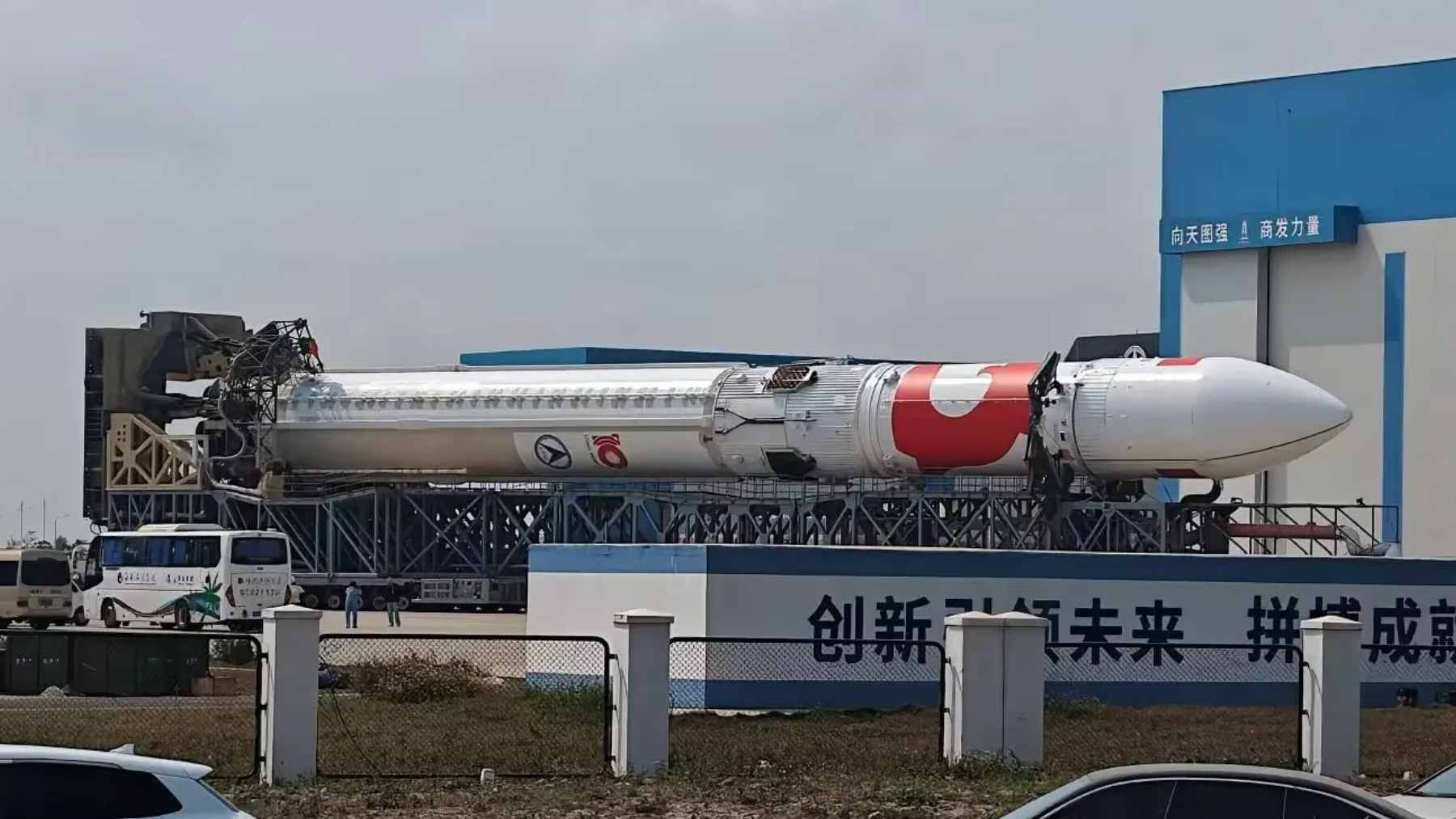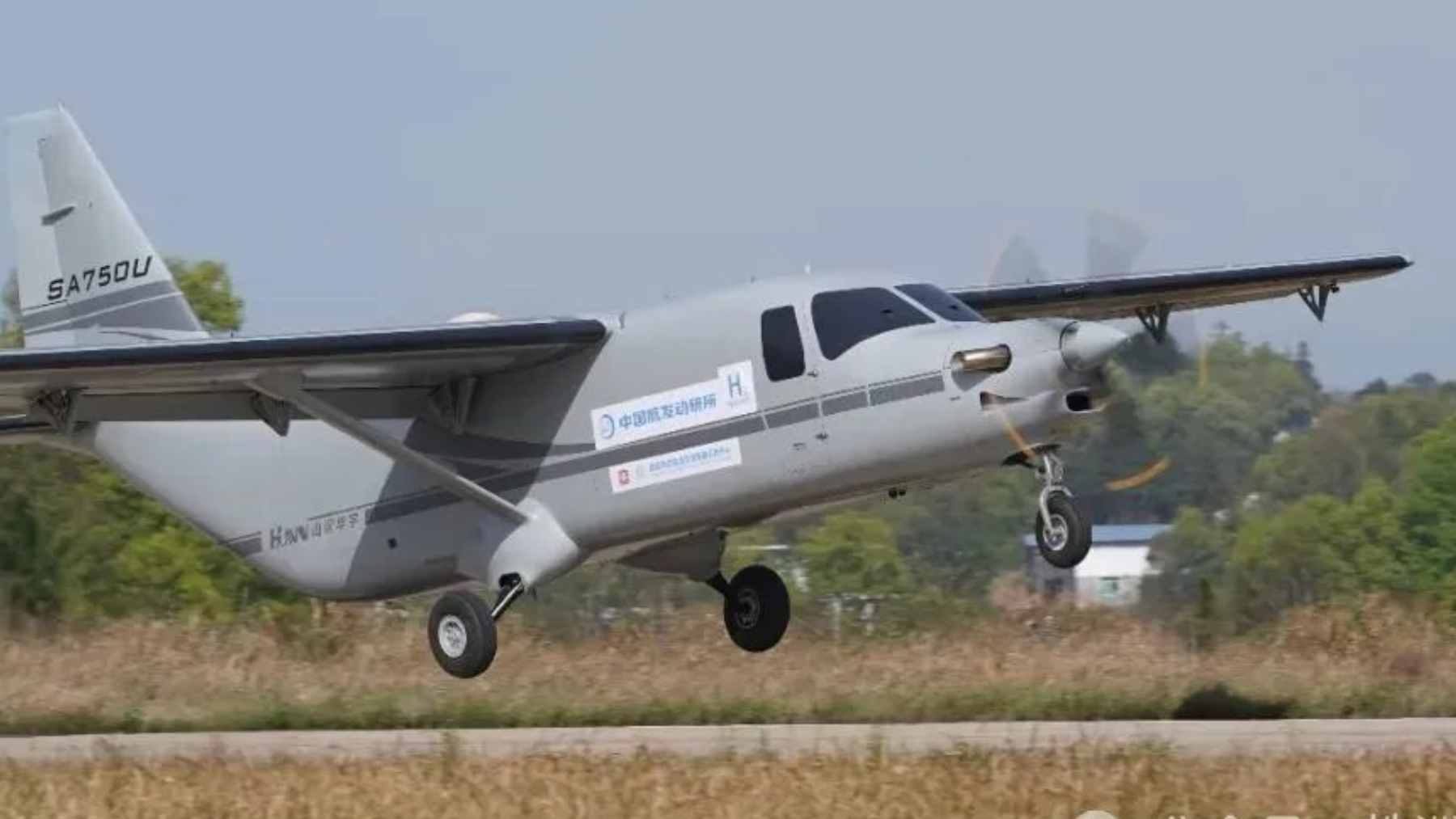
While much of the world is still worrying about oil supplies, China has quietly tested something that points in a very different direction. On April 4, 2026, a heavy, unmanned cargo aircraft took off in Zhuzhou, in central China’s Hunan Province, using a megawatt-class, hydrogen-fueled turboprop engine called the AEP100.
The numbers were modest but important. The aircraft weighed about 16,500 lbs., climbed to roughly 984 ft., flew 22.4 miles at about 135 mph, and landed 16 minutes later with the engine operating normally throughout the test. Xinhua described it as the world’s first test flight of an engine of its class.
Not a water-powered plane
So, did China just fly an aircraft “powered by water”? Not quite. That phrase may sound catchy online, but it skips over the real engineering.
The AEP100 used liquid hydrogen, not water poured into a tank. Hydrogen can be produced by splitting water with electricity, but the aircraft itself flew by burning hydrogen inside an engine, with water vapor as the main exhaust product instead of carbon dioxide from fuel combustion.
That detail matters. If the hydrogen is made using renewable electricity, often called “green hydrogen,” the climate benefit can be much stronger. But if the hydrogen comes from fossil fuels, the environmental math becomes less clean.
Airbus makes the same basic point in its own hydrogen work, noting that hydrogen fuel cells produce water as a byproduct and are close to carbon neutral only when the hydrogen is made with renewable energy.
Why this engine matters
The AEP100 is not the same kind of system Airbus is now emphasizing for its ZEROe concept. Instead of using a fuel cell to turn hydrogen into electricity, China’s engine burns hydrogen directly in a turbine cycle.
In practical terms, that makes it closer to a regular aircraft engine than to a flying battery. A turboprop uses engine power to spin a propeller, which is useful for cargo routes, island logistics, and regional flights where reliability and efficiency matter more than extreme speed.
But the hard part is not only getting the engine to run. Liquid hydrogen has to be kept below -423°F, and the U.S. Department of Energy notes that liquefaction consumes more than 30% of hydrogen’s energy content with today’s technology. That is a tough problem for engineers, airlines, and airports alike.
Oil pressure in the background
The timing gives the test a sharper edge. On March 11, 2026, the International Energy Agency said its 32 member countries had agreed to make 400 million barrels of emergency oil reserves available because of disruptions linked to conflict in the Middle East.
That may feel distant from a single test flight in China, but oil shocks do not stay in policy papers for long. They can show up in shipping bills, ticket prices, grocery costs, and the everyday price of moving goods from one place to another.
That’s why hydrogen aviation is not only an environmental story. For China, and for any country trying to reduce exposure to imported fossil fuels, it is also an energy-security bet. Cleaner skies are part of it, but so is control over the fuel chain.
Aviation’s carbon problem
Aviation remains one of the hardest industries to clean up. Batteries are improving, but they are still too heavy for many longer flights, especially when payload and range matter.
The International Energy Agency says aviation accounted for 2.5% of global energy-related carbon dioxide emissions in 2023. It also estimated that aviation emissions reached almost 1.05 billion tons of carbon dioxide that year as international travel recovered after the pandemic.
That is why hydrogen keeps attracting attention, even with all its complications. The fuel is light, but bulky. It can be clean at the point of use, but expensive to make and store. In other words, it is promising, but it is not magic.
China has a roadmap
China’s broader hydrogen aviation plan is laid out in a peer-reviewed paper by Jun Cao, Wei Li, and colleagues from AECC Hunan Aviation Powerplant Research Institute, with participation from the Science and Technology Committee of Aero Engine Corporation of China.
The study proposes a phased path, with key technology validation by 2028, regional aircraft use by 2035, and wider use in mainline commercial aircraft by 2050. That is not tomorrow, but it is not science fiction, either.
The same study is also clear about the hurdles. It points to aircraft and engine design, liquid hydrogen storage, precise hydrogen control, thermal management, and stable low-emission combustion as major barriers. Put simply, the engine is only one piece of the puzzle.
Airbus is taking another route
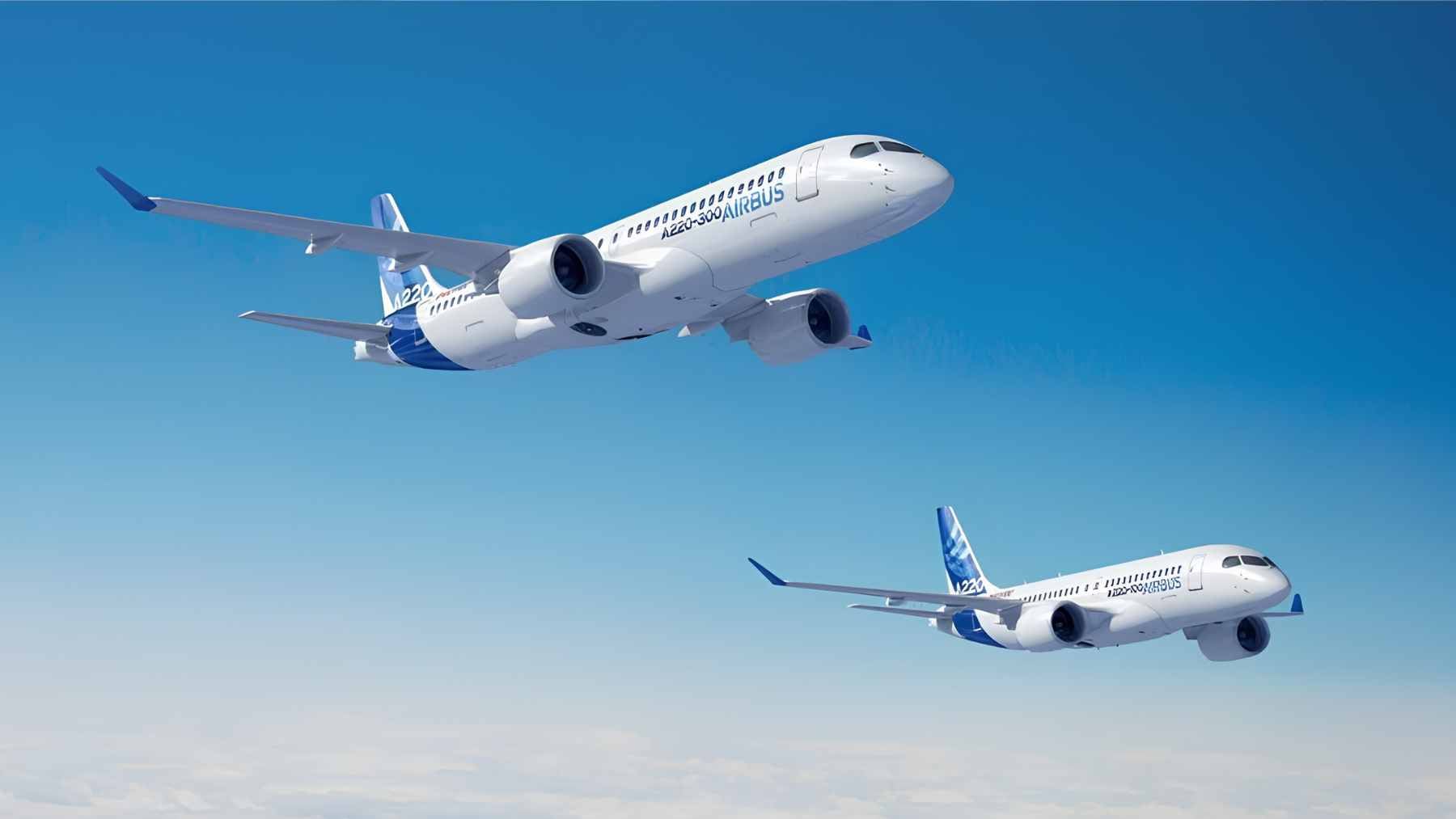
Airbus is betting heavily on fuel cells for its future hydrogen aircraft concept. In 2025, the company said hydrogen fuel cell technology had been selected as the propulsion method for its future ZEROe aircraft, with electric propellers powered by fuel cells.
The European manufacturer has already powered on a 1.2-megawatt hydrogen fuel cell demonstrator. It also says more than 220 airports have signed on to its Hydrogen Hubs at Airports project, which studies how hydrogen could be produced, stored, moved, and distributed for future flights.
That creates an interesting split. Airbus is leaning toward hydrogen-electric propulsion, while China’s AEP100 test shows direct hydrogen combustion may still have a role, especially where higher power is needed. Which path wins? For now, the answer is still in the air.
Cargo comes first
No passenger service date has been announced for the AEP100. That is not surprising. Passenger aviation moves slowly because it has to, and certification for new fuel systems can take years.
Cargo is a more practical starting point. Routes can be controlled, fueling can be concentrated in fewer locations, and operators can learn from real-world use without immediately dealing with crowded terminals, tight schedules, and nervous passengers.
That’s why China’s focus on unmanned air freight, island logistics, and low-altitude operations makes sense. It is a smaller test bed, but one that could teach the aviation industry a lot.
A short flight with a long shadow
This flight lasted only 16 minutes, but it still matters. A heavy unmanned aircraft took off, flew a planned route, and landed safely using a fuel that produces no carbon dioxide at the engine.
The next questions are harder. Green hydrogen must become cheaper, cryogenic storage has to become practical for aviation, airports need new infrastructure, and regulators must be convinced the technology is safe, flight after flight.
The official statement was published on Xinhua.