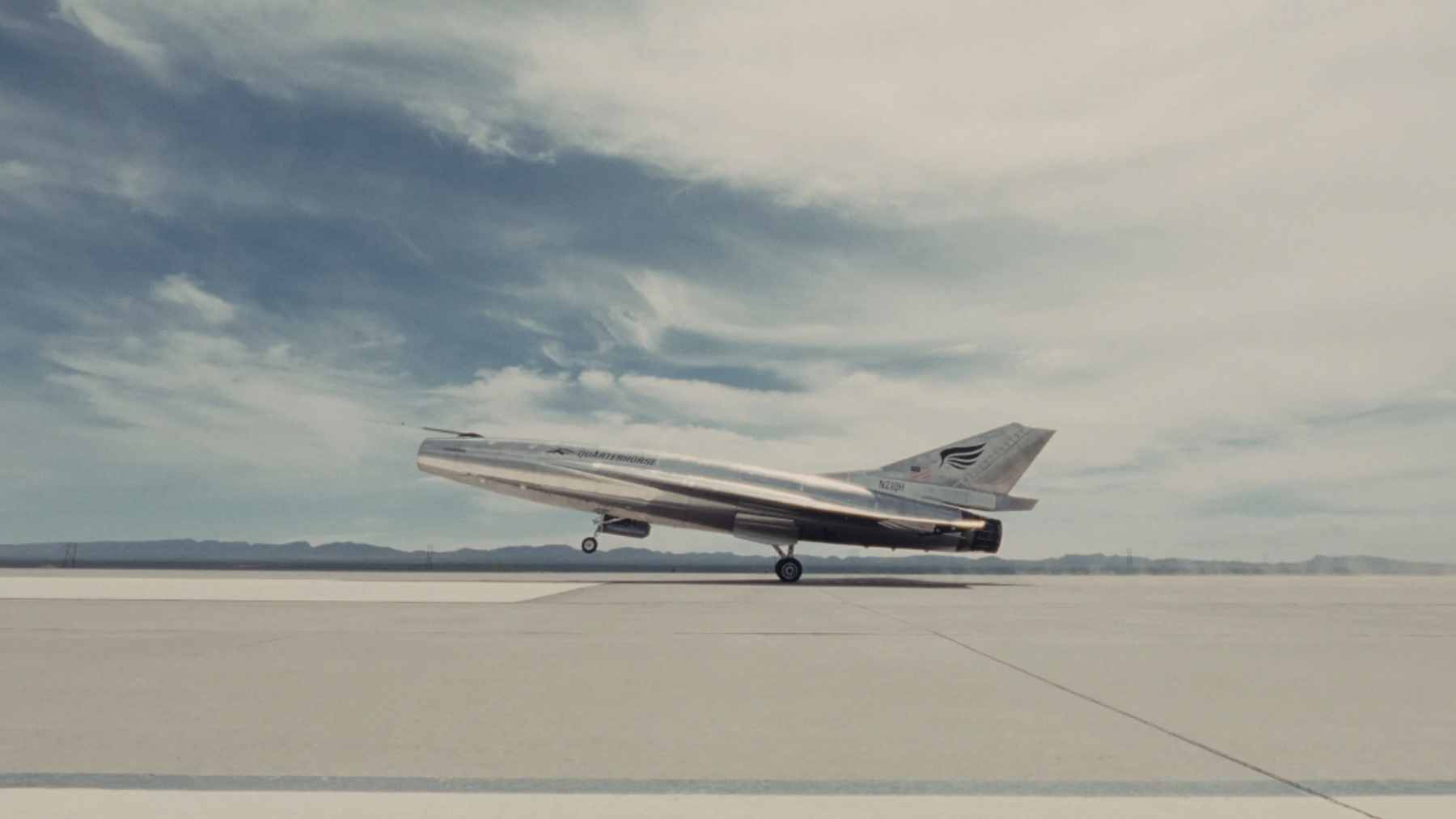
Imagine leaving New York after breakfast and reaching London before your coffee gets cold. That is the promise behind Hermeus’ hypersonic plan, a future passenger aircraft pitched at around Mach 5 and designed to use normal runways. The company is not there yet, but its Quarterhorse test program has moved from bold renderings to real flights.
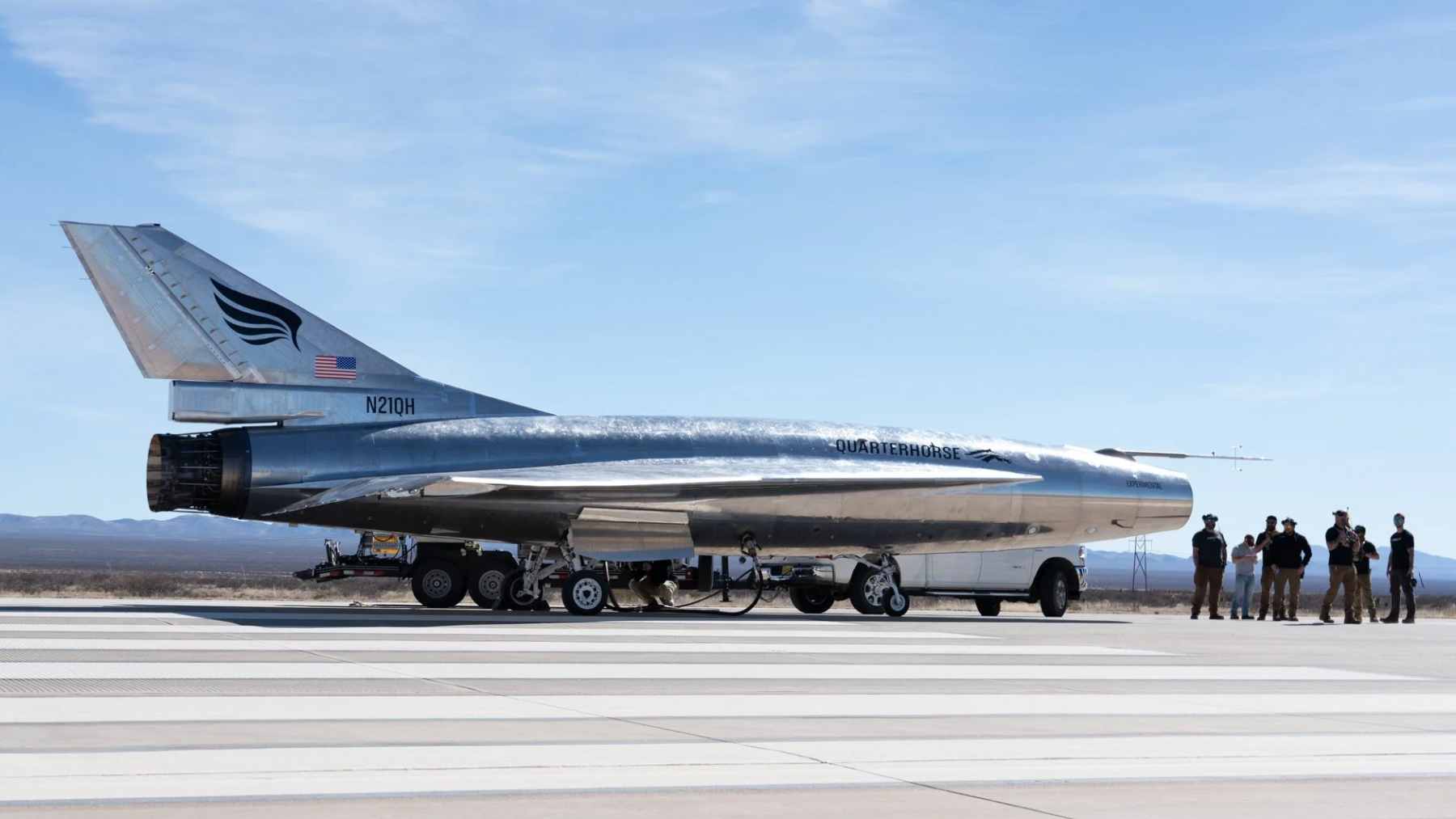
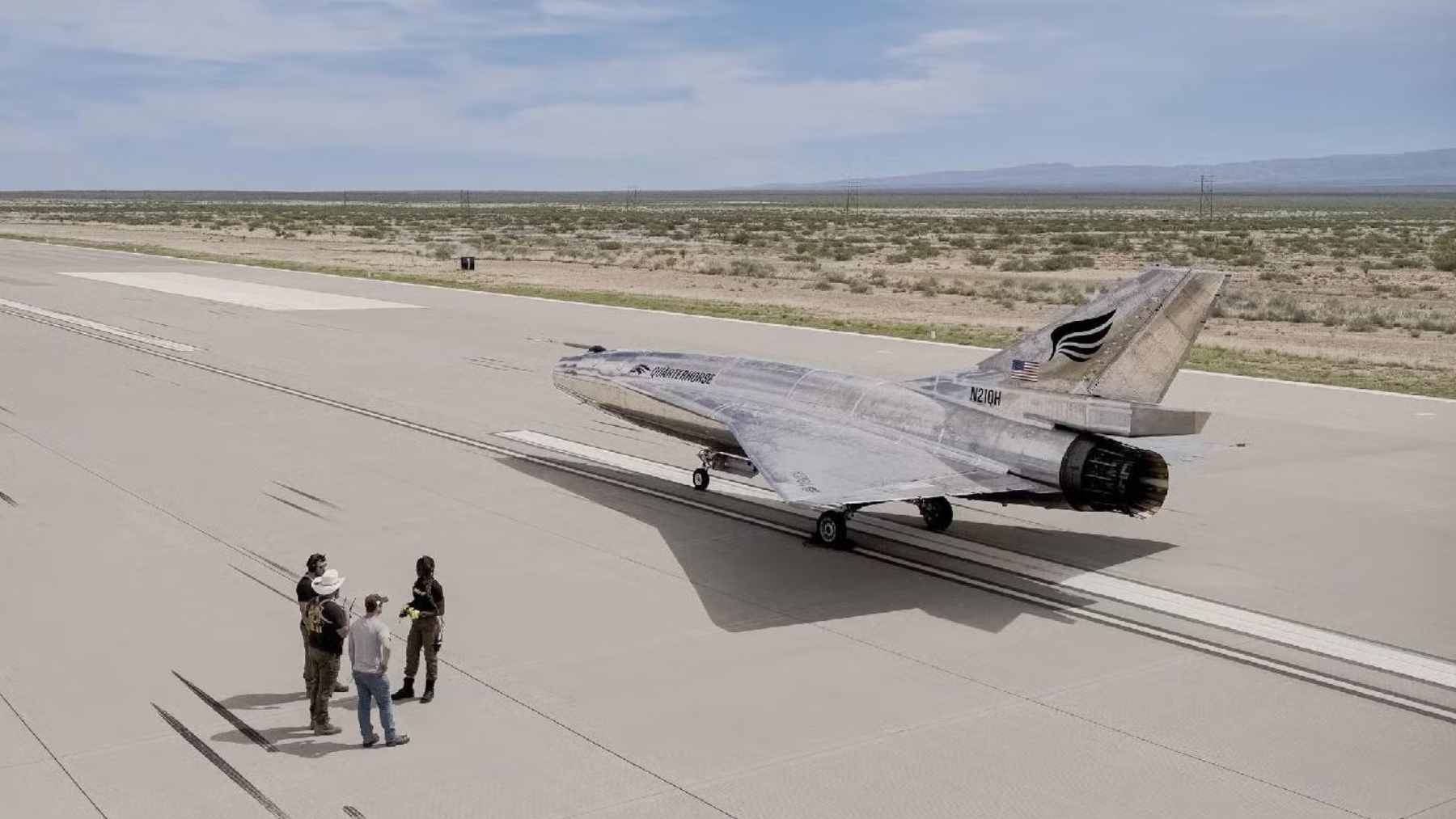
That matters for aviation, for defense, and for the environment. In 2025, Hermeus flew its uncrewed Quarterhorse Mk 1 at Edwards Air Force Base in California. In 2026, it announced that the larger Quarterhorse Mk 2.1 had reached Mach 1.21, making the race less about science fiction and more about what society is willing to accept from ultra-fast flight.
A short flight with a long shadow
Quarterhorse Mk 1 was built to prove something less glamorous than Mach 5, but absolutely essential. Hermeus wanted to validate high-speed takeoff and landing with a large uncrewed aircraft whose shape is driven by future high-Mach flight. The company said the aircraft went from clean sheet to flight-ready in a little over a year.
That sounds simple, but it is not. If a future hypersonic passenger jet is going to operate like an airplane instead of a rocket, it has to use airports, land reliably, and repeat the process without an exotic launch system.
The Mk 1 was powered by a GE J85 engine, a well-known military turbojet family, and Hermeus says the Edwards flight campaign validated aerodynamic models, control systems, fuel systems, thermal management, avionics, and other key subsystems. The point was not to carry passengers, it was to make the next aircraft less of a gamble.
The engine is the gamble
The heart of the plan is Chimera, Hermeus’ turbine-based combined cycle engine. In practical terms, Chimera works like a jet engine at lower speeds, then bypasses incoming air around the turbine at higher speeds so the ramjet can take over. That handoff breaks through one of the famous brick walls of hypersonic aviation.
Hermeus says it demonstrated a turbojet-to-ramjet transition in November 2022, but doing that in real flight is the milestone everyone will watch. Why does that matter? Because a Mach 5 aircraft that can take off under its own power would be far more practical than one that needs a rocket booster or a carrier aircraft.
That is why the Quarterhorse family is being built in steps. Mk 1 handled basic flight operations. Mk 2.1 has now pushed into supersonic territory. The next aircraft are expected to move the program toward sustained high-Mach performance, where the real technical heat begins.
Defense money is setting the pace
Hermeus now looks as much like a defense-tech company as a future passenger-aircraft startup. In 2021, the U.S. Air Force announced a $60 million jointly funded contract to accelerate Hermeus’ hypersonic aircraft and propulsion work. The Air Force said a Mach 5 aircraft could cut a New York-to-Paris trip to about 90 minutes, compared with roughly 7.5 hours on a typical flight.
The defense link has only grown. On May 28, 2026, Hermeus said it had secured a $159 million contract modification with the Defense Innovation Unit, raising the total ceiling to $219 million for high-Mach flight and high-speed payload-release demonstrations. That is not airline money. That is the Pentagon betting that speed could matter in future military operations.
There is also Darkhorse, Hermeus’ planned reusable hypersonic uncrewed aerial system for defense and national security missions. In other words, the road to a passenger plane may run first through military testing. That is often how hard aerospace technology grows up.
The green problem is not small
There is an uncomfortable part. Faster aircraft usually need more energy, and supersonic aircraft often fly higher, where emissions can behave differently than they do in the lower atmosphere.
The National Academies has warned that large commercial supersonic aircraft at Mach 2 to Mach 2.4 can have about twice the drag and burn more fuel per passenger-mile than comparable subsonic aircraft, while higher-altitude emissions can have greater environmental effects.
The International Council on Clean Transportation made a similar warning in 2024 about Boom’s Overture, a different proposed supersonic aircraft. It estimated that a seat on that aircraft would consume two to three times more fuel than business-class seating on today’s widebodies, and seven to ten times more than an economy seat.
Hermeus is a different design and aims for much higher speed, so those numbers should not be pasted directly onto Halcyon. Still, they show why environmental scrutiny will be intense.
Noise is another hurdle. The FAA says civil aircraft flights above Mach 1 over land in the United States are currently prohibited without special authorization. For everyday passengers, that is not just paperwork. It could decide whether ultra-fast aircraft fly only over oceans or become part of regular travel.
What passengers might actually get
The passenger prize is Halcyon, described in the supplied background as a 20-seat aircraft targeting Mach 5 and conventional runway operations. At around Mach 5.5, a New York-to-London crossing could, in theory, take less than an hour, far faster than Concorde’s roughly 3.5-hour transatlantic flights.
However, the route math is easier than certification, fuel cost, noise limits, airport operations, and public trust.
For travelers, it would feel like deleting the Atlantic from the map. For airlines or private operators, it would likely begin as a premium niche unless Hermeus can prove fast turnaround, manageable operating costs, and a credible emissions story. For regulators, the question is even simpler: how much speed is worth how much extra environmental burden?
That is where the hype meets the runway. A Mach 5 passenger jet would not just compete with today’s airplanes, it would also compete with the climate goals that aviation has already promised to meet.
A step, not a revolution
Quarterhorse Mk 1 did not prove to be a passenger jet. Mk 2.1 did not prove Mach 5 travel. But together, they show that Hermeus is moving quickly through real hardware instead of waiting years between prototypes.
That pace is the story, as is the catch. If hypersonic aviation returns as a serious business, it will have to answer two questions at once: can it fly safely, and can it justify its environmental cost?
The press release was published on Hermeus.