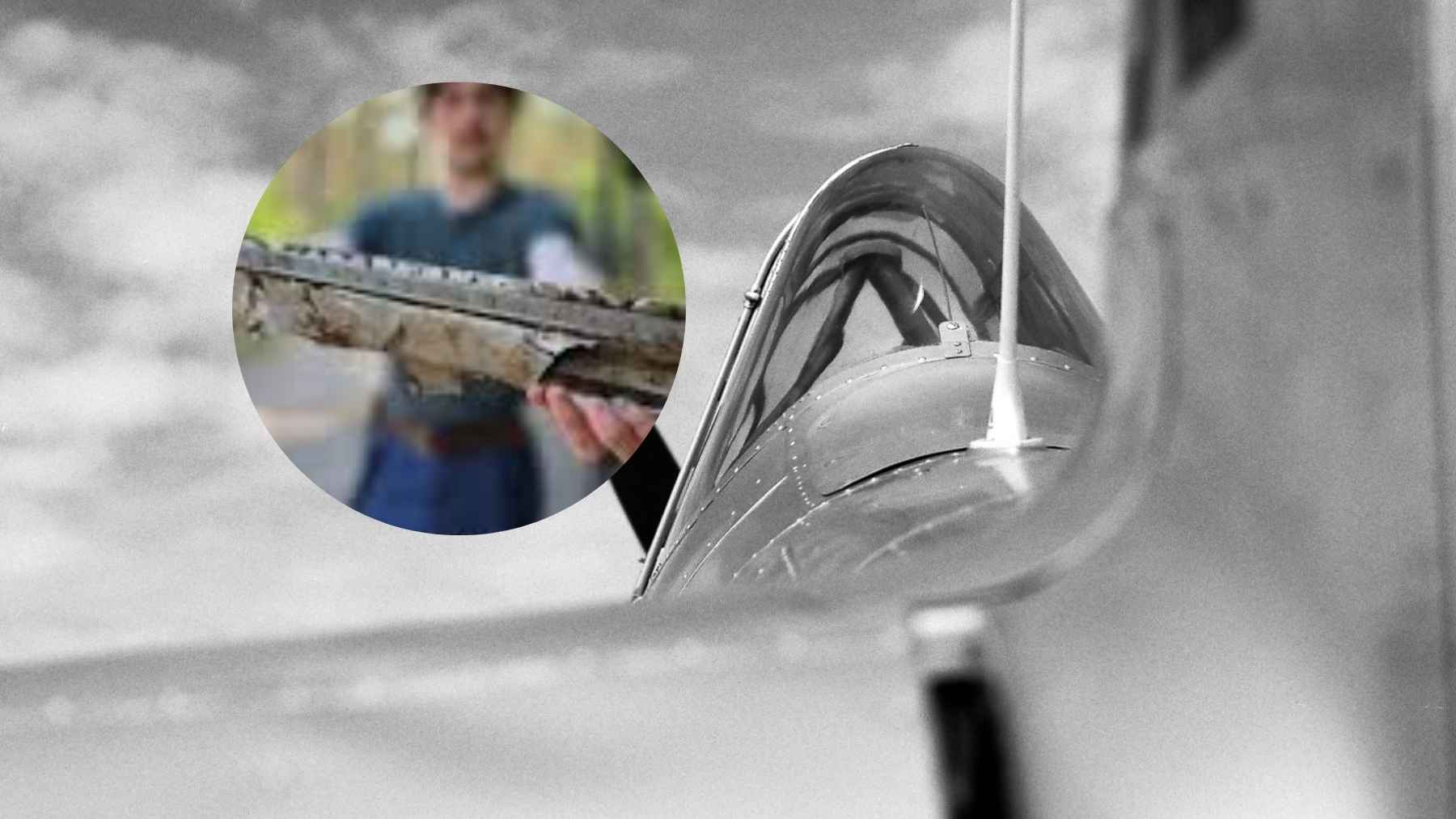
A summer walk to pick berries near Świnoujście, a Baltic port in northwestern Poland, may have led to the discovery of a British aircraft crash site from World War II. The man noticed an unusual depression in the forest, scattered pieces of aluminum, and burned ammunition, and so decided to bring one loose fragment to the nearby Museum of Coastal Defense at Fort Gerhard.
What looked at first like random forest debris quickly turned into a serious military archaeology case.
The latest update makes this story a lot more significant. Provincial officials are now getting ready to carry out limited test excavations because the site may actually contain a Lancaster bomber and the remains of three British airmen who are still missing more than 80 years later. For now, investigators are being careful to say this is likely, not confirmed.
A forest floor full of clues
Museum staff said right away that the first fragment they saw was clearly “not just random scrap metal.” The thin sheet-metal construction, rivet pattern, and nearby ammunition suggested a violent wartime incident rather than discarded equipment. A follow-up inspection turned up dozens more pieces scattered across disturbed ground close to the Baltic coast.
Some of the most useful clues were burned 303 British cartridges, a type of ammunition commonly used in the Browning machine guns fitted to Royal Air Force aircraft. That ammunition alone can not tell you exactly which aircraft this was, but it strongly narrows the field toward a British or British-operated Allied aircraft. That was the first solid step.
A small tube points to Britain
After cleaning off one copper tube, researchers found the marking “T7” on it. Museum staff matched that marking to RAF technical records for seamless tubing used in oil, fuel, gas, engine-starting, and other onboard systems.
They also identified what appears to be an Avimo high-pressure coupling associated with British aircraft systems, including equipment connected to Rolls-Royce Merlin engines. That combination makes a British origin highly likely.
That said, finding a Merlin-related part is not the same as confirming it was a Lancaster. Merlin engines powered several famous aircraft during the war, and similar fittings could show up in more than one model. In practical terms, the tube tells investigators where to keep looking, but it does not reveal the aircraft’s serial number yet.
The Lancaster theory gains ground
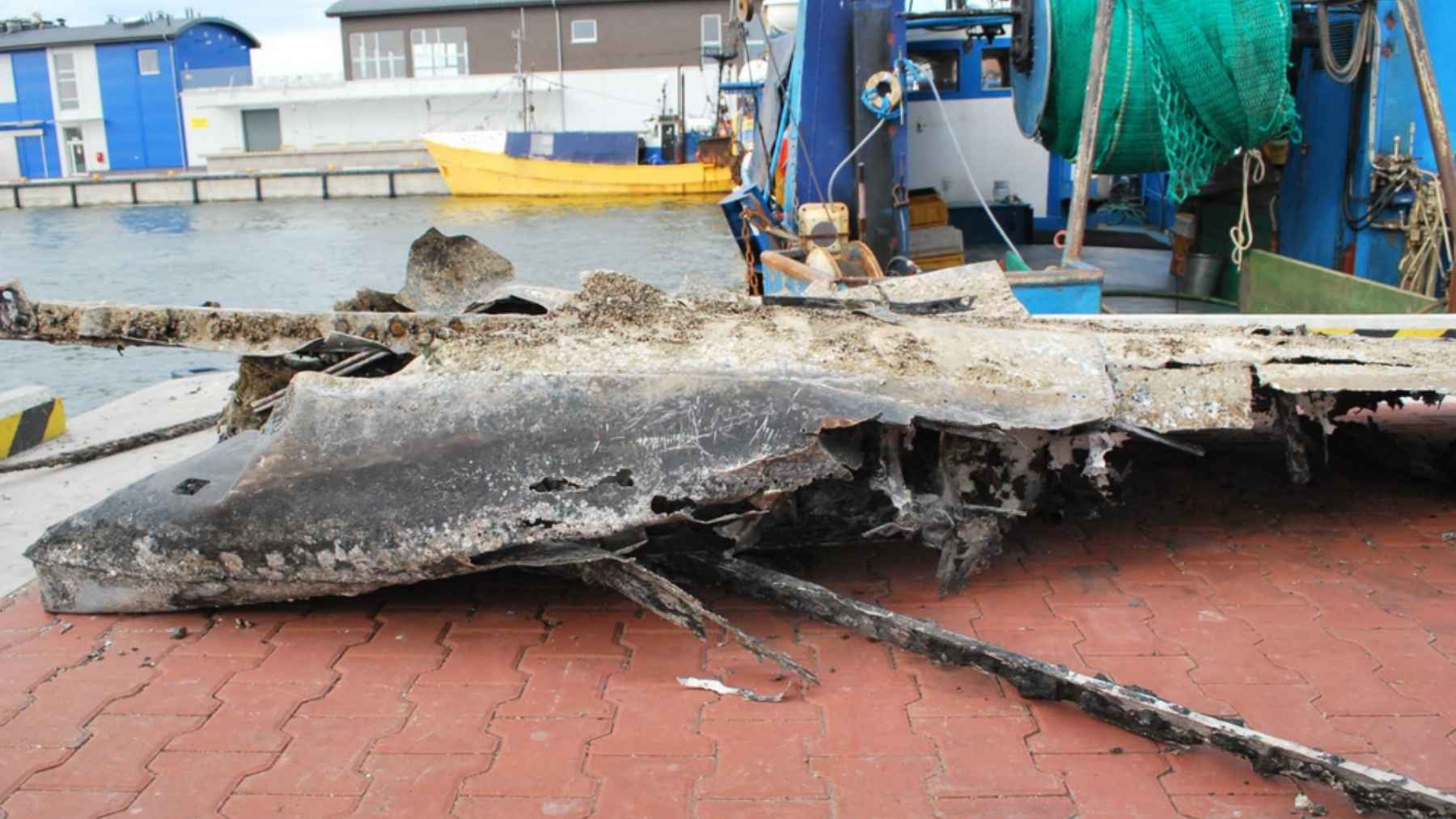
The strongest circumstantial link sits in the museum’s existing collection. In 2009, fishermen pulled a Lancaster wing section roughly 16 feet long and 6.5 feet wide from the Baltic Sea, about 0.6 miles from the newly discovered forest site. Museum director Piotr Piwowarczyk has said, “It could be the same aircraft.”
The landscape adds another layer. Officials noted an unnatural crater, uneven ground, a broad patch without old trees, and further metal below the surface during a magnetic survey. None of those details prove that a fuselage is buried there, but together they make the site difficult to dismiss.
A 1944 mission may fit the evidence
Museum researchers are now comparing the debris with archival accounts of a Lancaster lost during an August 1944 operation to lay mines near the entrance to the German-held port then known as Swinemünde. According to the account cited by officials, an explosion sent the rear portion toward the water while the rest of the aircraft descended toward land.
A wing in the sea and a debris field in the forest would fit that sequence.
Lancasters were large four-engine bombers with a wingspan of about 102 feet, usually operated by a seven-person crew. Their Merlin engines and defensive armament made them central to RAF Bomber Command, but low-altitude minelaying near a defended port exposed crews to searchlights and anti-aircraft fire. The location was dangerous by design.
The site may be a war grave
The museum’s working theory now focuses on more than machinery. Officials say the aircraft they are investigating had a seven-person crew and that three airmen remain unaccounted for. Piwowarczyk said the discovery’s greatest cultural value may be the chance to identify a war grave and restore the missing crew members to public memory.
The West Pomeranian provincial administration has started procedures used for protected war graves. Planned work is expected to involve military archaeology specialists, Poland’s Institute of National Remembrance, the provincial monuments conservator, and the landowner. The area under review covers roughly 1.2 acres, so even a targeted search will take care.
What investigators still need
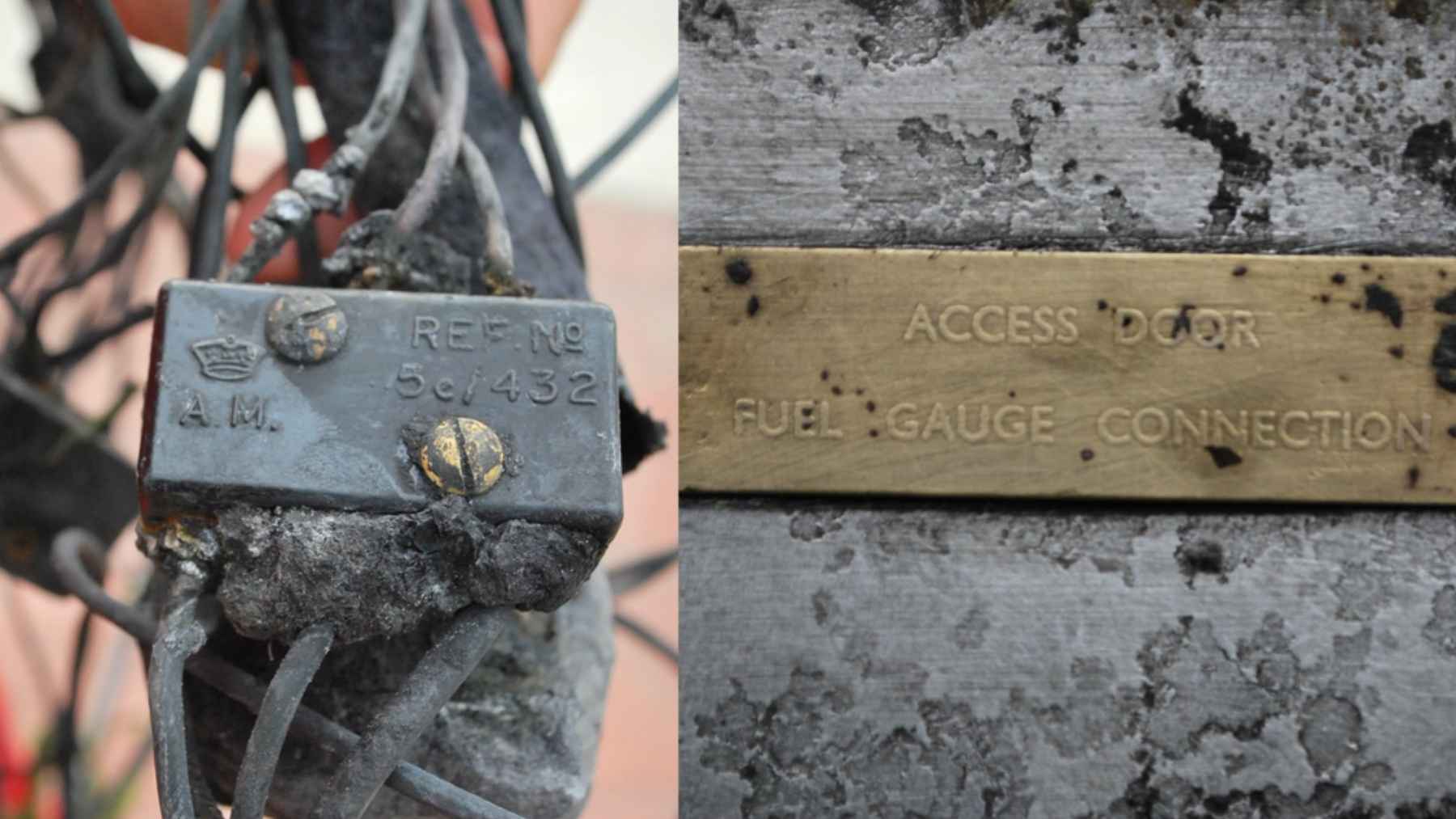
The decisive evidence will likely come from controlled excavation, not surface fragments. A serial plate, a uniquely identifiable structural component, matching damage patterns, or records tied to recovered human remains could turn the Lancaster theory into a confirmed identification. Until then, every conclusion needs a qualifier.
There is also a safety and ethics issue. The presence of burned ammunition requires trained personnel, while any human remains must be handled under legal and forensic procedures. That is why the site has not been publicly marked and why museum staff have warned souvenir hunters to stay away.
A discovery bigger than the aircraft
At first glance, this is the kind of story built for a striking headline, with a berry picker, a hidden bomber, and a forest keeping an 80-year secret. But the real value may be quieter. The investigation could connect scattered metal, wartime records, and three missing people into one documented place.
That would turn an accidental find into something far more lasting than a museum display. It would give families and historians a clearer answer while treating the forest not as a source of collectibles but as a possible burial ground.
The latest official update was reported by Radio Szczecin through the Polish Press Agency.