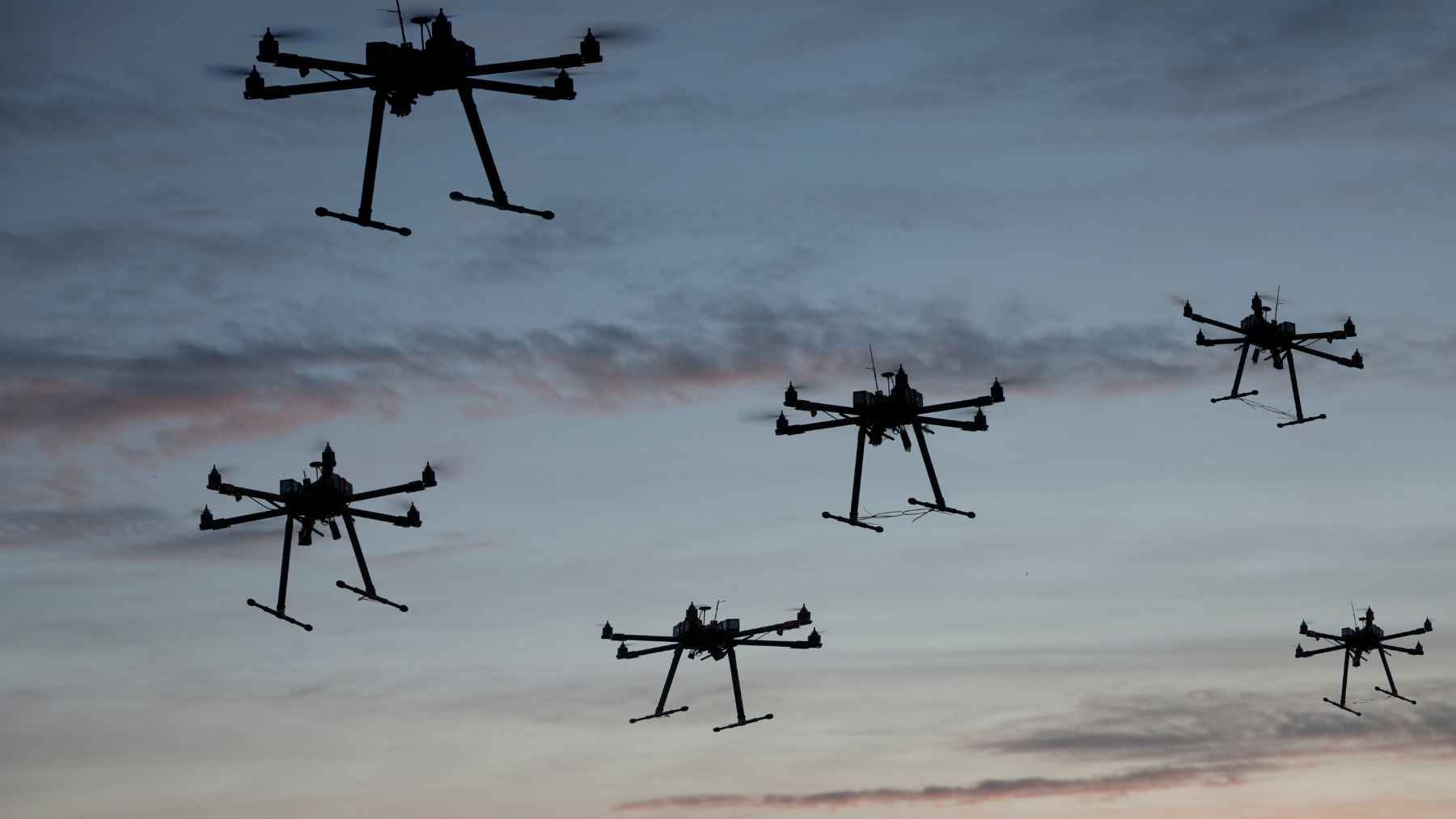
Drone swarms have turned modern air defense into an unforgiving math problem. When dozens of inexpensive aircraft arrive together, firing one costly missile at each target can drain a defensive unit’s magazines and budget long before the threat disappears.
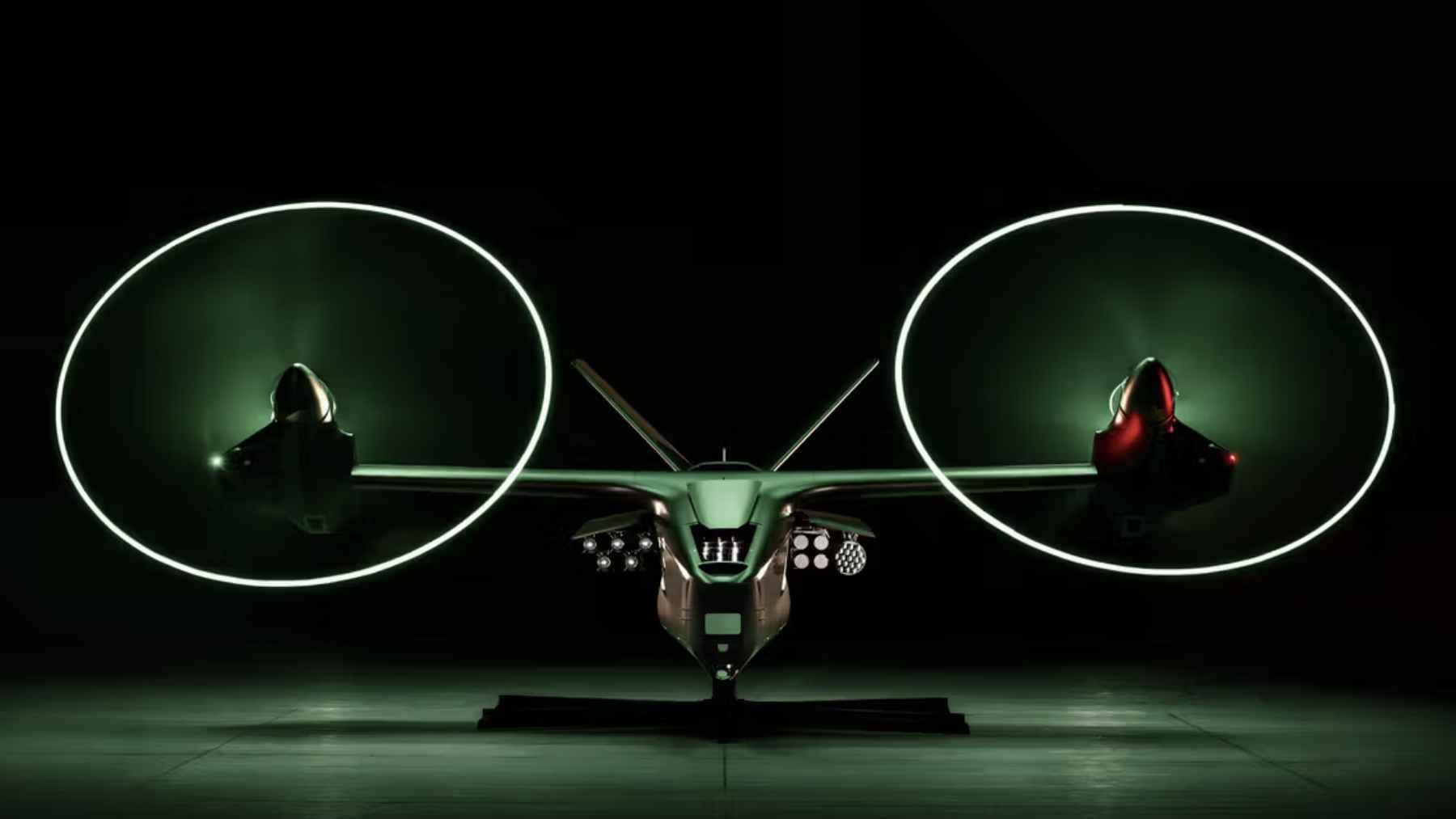
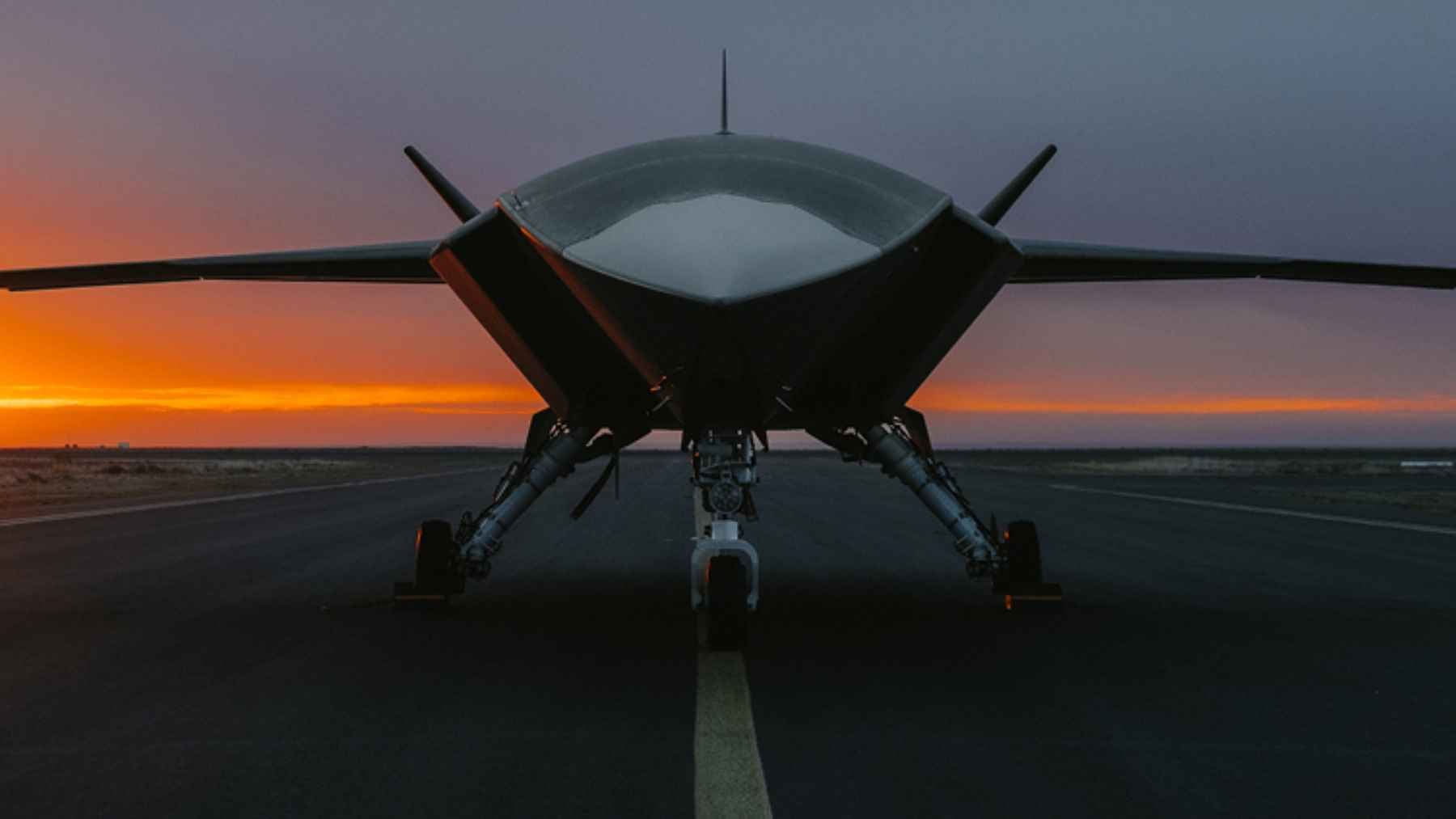
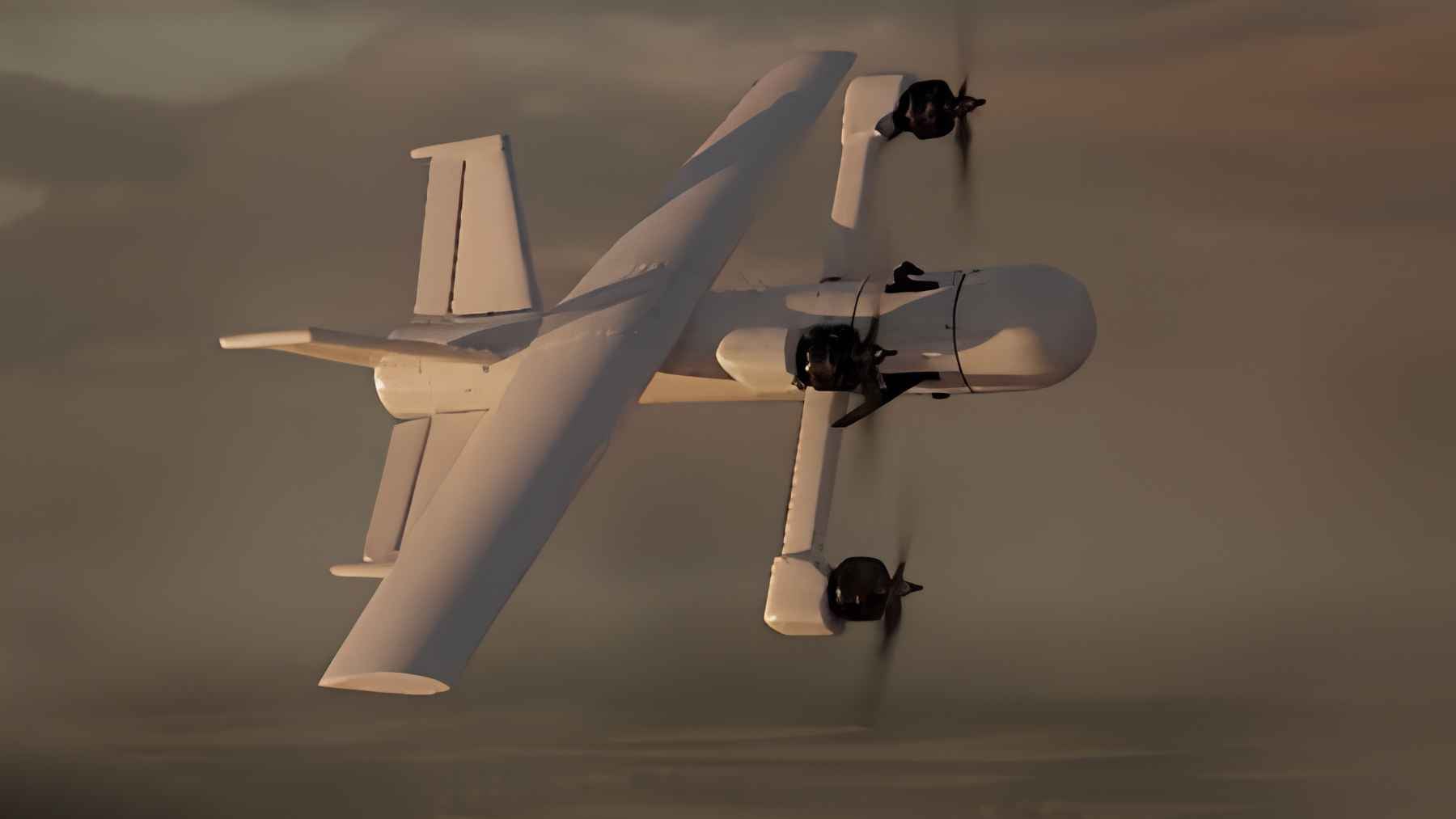
Lockheed Martin says its new MORFIUS X-Rotor offers a different answer. Unveiled at the Farnborough International Airshow on July 20, 2026, the ground-launched aircraft carries a high-power microwave payload, is designed to be returned for reuse, and can neutralize more than 50 hostile drones in a single flight, according to the company.
That is a striking claim, although the publicly available evidence so far comes primarily from Lockheed Martin itself.
One aircraft against a swarm
MORFIUS is described as a “one-to-many” counter-drone system. Rather than physically colliding with a target or launching a separate interceptor at every aircraft, it flies toward a swarm and uses concentrated microwave energy to disrupt the electronics that keep hostile drones operating.
Tim Cahill, president of Lockheed Martin Missiles and Fire Control, said the system is designed to move from drone to drone before returning to base for recharging and another mission. The aircraft is meant to behave less like a single bullet and more like a reusable electronic patrol vehicle.
The company also says MORFIUS is independent of any particular sensor or command-and-control network. That does not mean it works without detection data. It means operators should be able to connect it to existing battlefield systems without buying a dedicated fire-control radar solely for the interceptor.
Why the cost equation matters
The central selling point is not simply the number of drones MORFIUS may defeat. It is the proposed cost per engagement. Randy Crites, a Lockheed Martin vice president, said the design aims at “delivering a high kill rate while keeping the cost per kill low.”
That focus reflects a wider shift in defense planning. The U.S. government has warned that cheap unmanned systems are changing the battlefield and threatening troops, installations, and critical assets. The uncomfortable question is simple. How long can a force keep spending premium-interceptor money on mass-produced targets?
Lockheed Martin reinforced the affordability theme at Farnborough by introducing PAC-3 ACE on the same day. The company says that the missile will cost less than half as much as a PAC-3 MSE, showing that the search for deeper, cheaper defensive magazines extends well beyond small drones.
Tests are promising, but details remain thin
Lockheed Martin says MORFIUS recently completed work in Arizona, California, and Oklahoma involving flight, interception, and lethality conditions. Earlier versions of the MORFIUS family have flown since 2017, while the X-Rotor uses the same broader family of high-power microwave effectors.
The company is now accelerating production of prototypes for both the aircraft and its microwave payload. More flight tests are planned, which suggests the system is moving quickly, but it is still in a development and demonstration phase rather than established large-scale service.
Several important figures remain undisclosed. The public announcement does not provide operational range, endurance, power output, recharge time, acquisition cost, or detailed results from an independent military evaluation. “More than 50” is therefore a manufacturer claim to watch, not yet a complete battlefield record.
Reuse could reduce waste
There is also an environmental and logistics angle, although it should not be exaggerated. A recoverable aircraft that can be recharged and sent out again could reduce the consumption of single-use interceptors, along with some of the manufacturing, packaging, and transportation they require.
That is an inference from the reusable design, not a life-cycle result published by Lockheed Martin.
Using microwave energy may also avoid the blast and fragmentation created when an explosive interceptor is used against each target. Still, the engagement is not impact-free. Disabled drones can fall onto land or water, leaving damaged batteries, composite materials, wiring, and electronics that may require recovery.
Lockheed Martin has not published a full life-cycle assessment for MORFIUS. Its energy demand, recovery rate, maintenance burden, component replacement cycle, and performance after repeated missions will all shape whether reuse produces meaningful material savings in practice. That is where the greenest claim would have to be proven.
What troops would still need
MORFIUS may be sensor-agnostic, but no counter-drone weapon operates in a vacuum. Units would still need reliable detection, identification, tracking, command authorization, and coordination with friendly aircraft. A reusable microwave interceptor is one layer of defense, not a complete shield by itself.
Operators would also need confidence that the aircraft can work in cluttered airspace and return safely after engaging a swarm. The system’s value will depend on how it handles real-world complications such as electronic interference, mixed drone types, moving formations, and repeated launches from austere locations.
That is why the upcoming tests matter so much. A demonstration can show that the concept works under planned conditions. Troops will want to know whether it remains dependable when the sky is crowded, communications are strained, and there is little time to reset between attacks.
The real test comes after Farnborough
MORFIUS X-Rotor points toward a different way of thinking about air defense. Instead of matching every cheap drone with another expensive object, it tries to reuse one airborne energy weapon against many targets.
If the system performs as advertised, that could improve magazine depth, lower operating costs, and reduce some of the material waste created by one-for-one interception.
But the gap between an exhibition claim and a fielded capability can be wide. For now, MORFIUS is best understood as a promising prototype with an unusually ambitious target count, a practical reuse concept, and several unanswered questions about cost, range, resilience, and independent verification.
The official press release was published by Lockheed Martin.