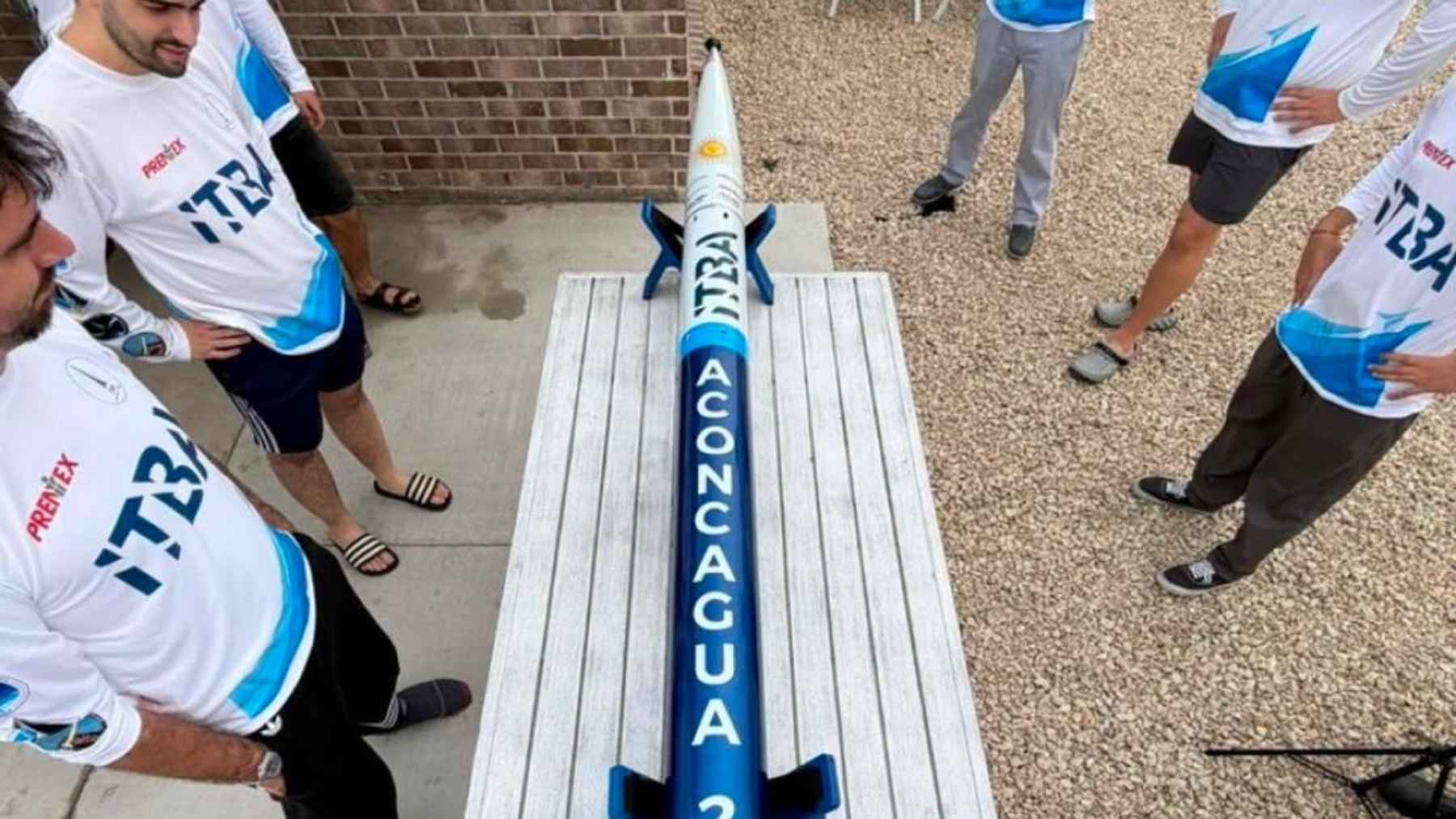
More than 60 students from the Instituto Tecnológico de Buenos Aires have put Argentina at the top of one of the hardest engineering tests at the 2026 International Rocket Engineering Competition.
Their Aconcagua rocket earned first place and a perfect score in “Design and Build Quality,” while the team finished seventh in the 30K COTS flight category and 11th for its technical report.
That result needs context. ITBA did not win 30K COTS overall, which went to Mississippi State University, but its design award shows how quickly a young university team can master avionics, structures, composites, recovery systems, and project management. In a global space economy valued at $613 billion, the engineers behind the vehicle may matter more than the trophy.
A demanding Texas field
The 19th annual IREC brought 144 university teams to West Texas from an initial pool of 196 applicants. Presentations began in Midland on June 15, while launch operations ran in Saragossa from June 17 through June 20, with recovery work continuing into June 21 after high winds disrupted the schedule.
Aconcagua entered the 30K COTS division, where Mississippi State placed first, the University of Texas at El Paso finished second, and Chulalongkorn University took third. ITBA’s seventh-place result therefore came in a field packed with established aerospace programs. Not bad for a team created only four years ago.
Why the design award matters
IREC does not judge rockets only by how high they fly. Under the 2026 rules, design and implementation account for up to 240 points, or 24% of the total score, split evenly between design quality and build quality.
Judges examine whether the physics makes sense, whether key decisions are supported, and whether the finished vehicle can withstand realistic launch conditions. Flight performance is worth 500 points, half the total, with points tied to altitude accuracy and successful recovery.
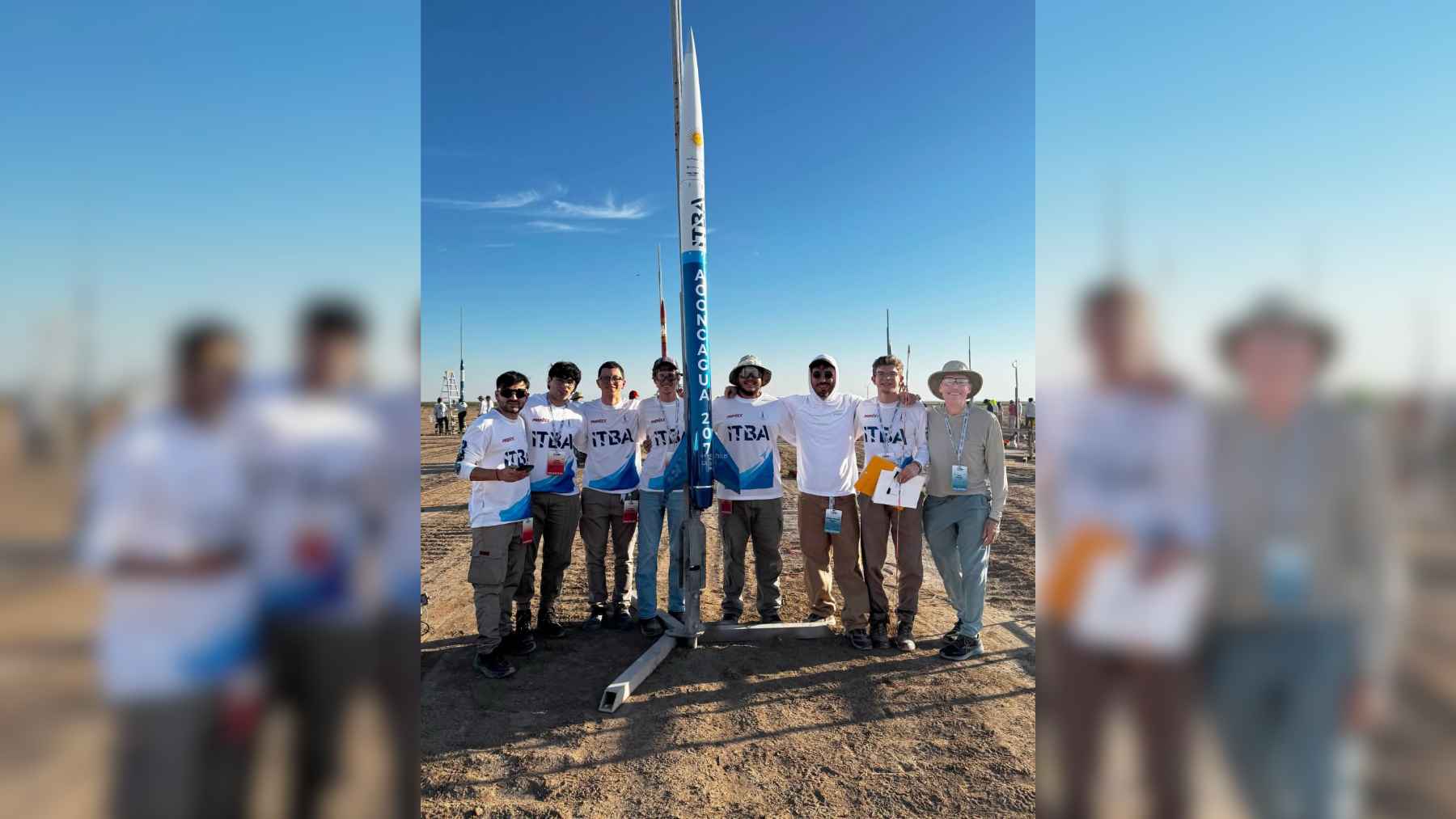
That is why a team can lead the design assessment and still finish seventh in its flight category. A beautiful rocket is not enough.
Inside Aconcagua
“30K COTS” means the rocket uses a commercially available motor and aims for an apogee of 30,000 feet, about 5.7 miles above the launch site. Competition rules also require a payload of at least 4.4 pounds, while students remain responsible for the vehicle around the motor.
That includes the airframe, aerodynamics, avionics, telemetry, payload integration, separation hardware, and parachute recovery. Aconcagua was engineered for speeds near Mach 2, roughly twice the local speed of sound. At that pace, a small alignment error on the workshop floor can become a serious stability problem in the sky.
Using a commercial motor does not make the job simple. It lets judges compare how well teams solve the rest of the vehicle, from structural calculations to the moment the parachutes open.
A team working like a company
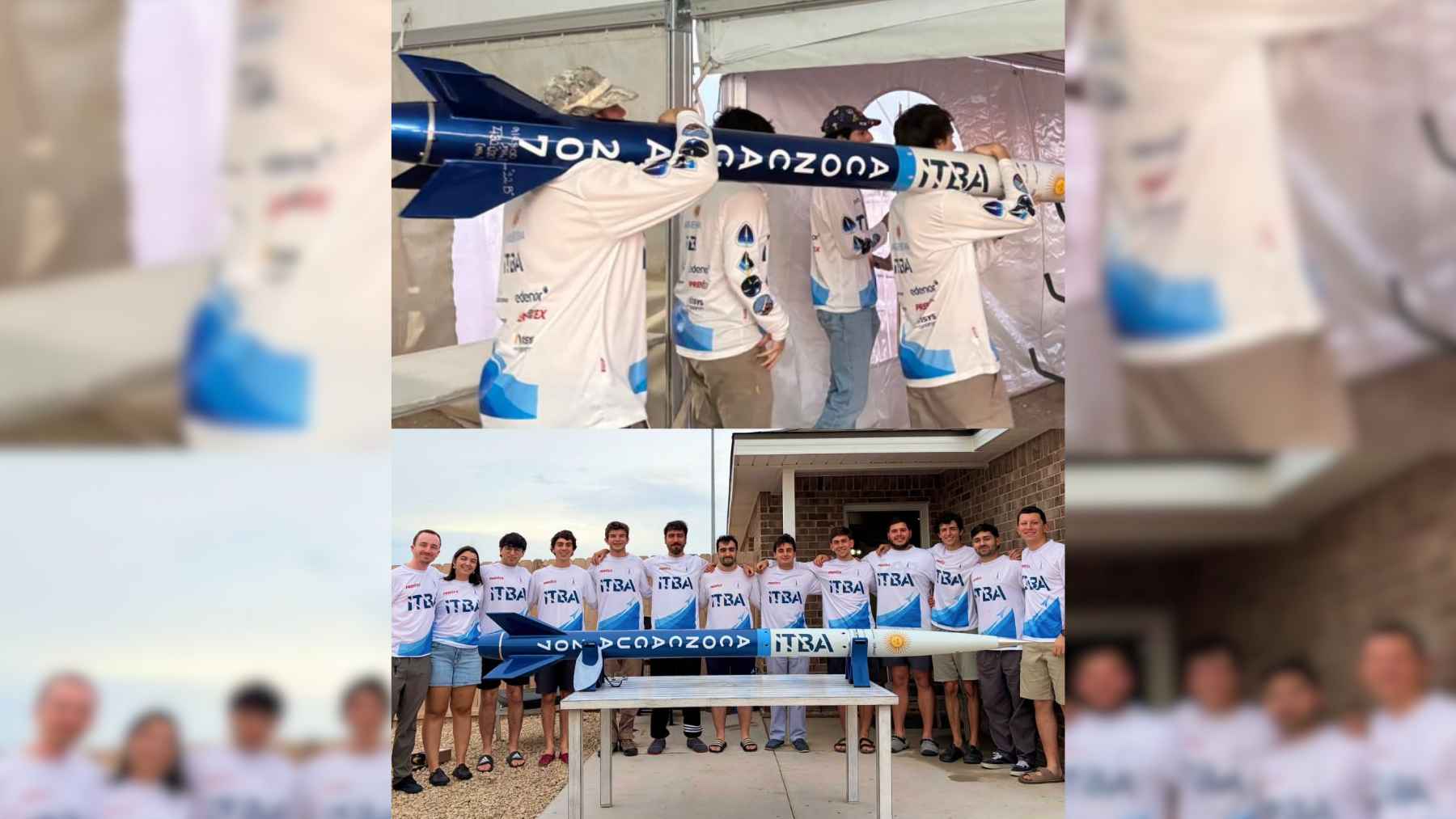
The project brought together students from mechanical, electronic, industrial, and computer engineering, along with bioengineering and analytics. Professor and researcher Patricio Pedreira supervised work spanning conceptual design, simulation, manufacturing, integration, testing, and validation.
Picture a small aerospace company where most employees also have exams. One group may be checking fin loads while another debugs sensors, sources a component, documents a safety risk, or verifies the recovery system. A missed connector can stop a launch just as surely as a bad equation.
Team leader Martina Parera described the result as “a great source of pride for the country” in an interview with Argentina’s Radio Nacional. The harder achievement was turning dozens of students from different programs into one functioning engineering organization.
Four years of progress
The ITBA Rocketry Team was formed in 2022 to place Argentina in the international university rocketry circuit. It finished fourth in Design and Build in 2023, reached third place in an SRAD category involving student-developed propulsion in 2024, and remained among the competition’s top 20 in 2025.
The move to 30K COTS in 2026 tripled the target altitude compared with the team’s earlier 10K work. That brought more speed, greater aerodynamic stress, longer communications range, and a recovery sequence that had to work after a far more demanding ascent.
Progress in rocketry rarely arrives in one dramatic leap. It is usually a stack of small corrections, better test data, cleaner manufacturing, and lessons carried from one vehicle to the next. Aconcagua is that stack made visible.
A strategic talent pipeline
Space Foundation reported that the global space economy reached $613 billion in 2024, up 7.8% in one year, with commercial activity accounting for 78% of the total. The OECD has also warned that parts of the space workforce are aging and that unfilled vacancies are common.
University teams help close that gap because students graduate with experience in systems integration, testing, risk analysis, technical writing, and teamwork under deadlines. Those are not classroom abstractions anymore.
The capabilities are also dual-use. Aconcagua is an educational rocket, not a weapons program, but avionics, composite structures, telemetry, and flight simulation matter across civilian space, aviation, telecommunications, environmental sensing, and defense. That is why industry watches competitions like IREC.
The environmental connection
The link to ecology is indirect, but real. NOAA satellites support weather, climate, and environmental monitoring, including observations of sea surface temperatures, vegetation, floods, volcanic eruptions, and forest fires.
A student rocket is not a weather satellite. Still, both depend on reliable electronics, lightweight structures, sensors, data handling, and systems that must work in harsh conditions. NASA also uses sounding rockets as relatively low-cost platforms for atmospheric and space research.
The same student who protects an altimeter from vibration today could later help build an instrument that tracks wildfire smoke, ocean conditions, or atmospheric gases from above. That is where a campus project starts to look like national capability.
What the result really proves
Aconcagua does not turn Argentina into a major launch power overnight, and one award cannot replace long-term investment in research, manufacturing, and infrastructure. What it proves is that a university team can reproduce many disciplines used by professional aerospace organizations and compete successfully on an international stage.
The next challenge is keeping that momentum alive through laboratories, industry pathways, and ambitious research projects. The rocket has landed, but the talent pipeline is only beginning to lift off.
The official announcement was published on ITBA Universidad.