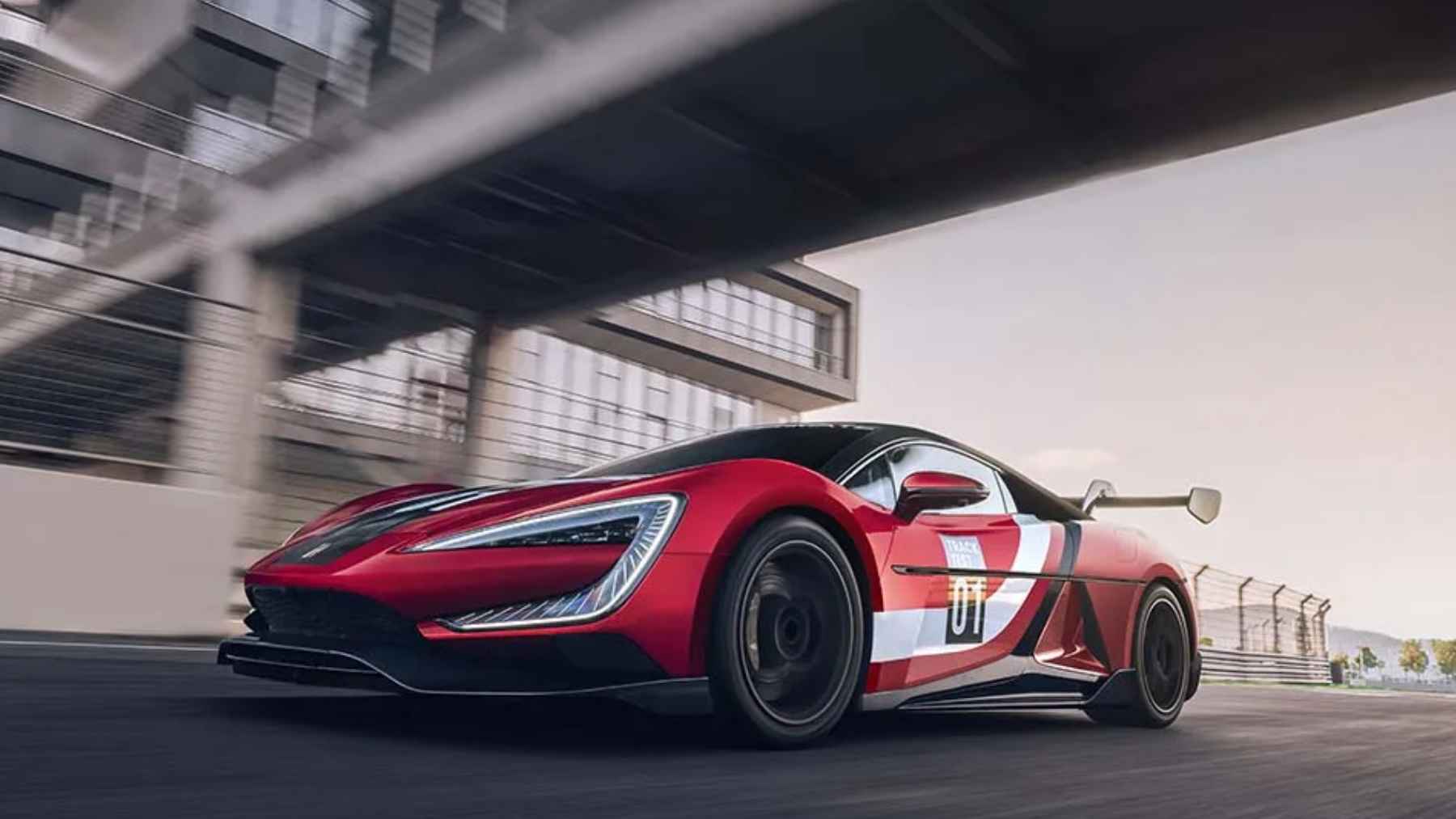
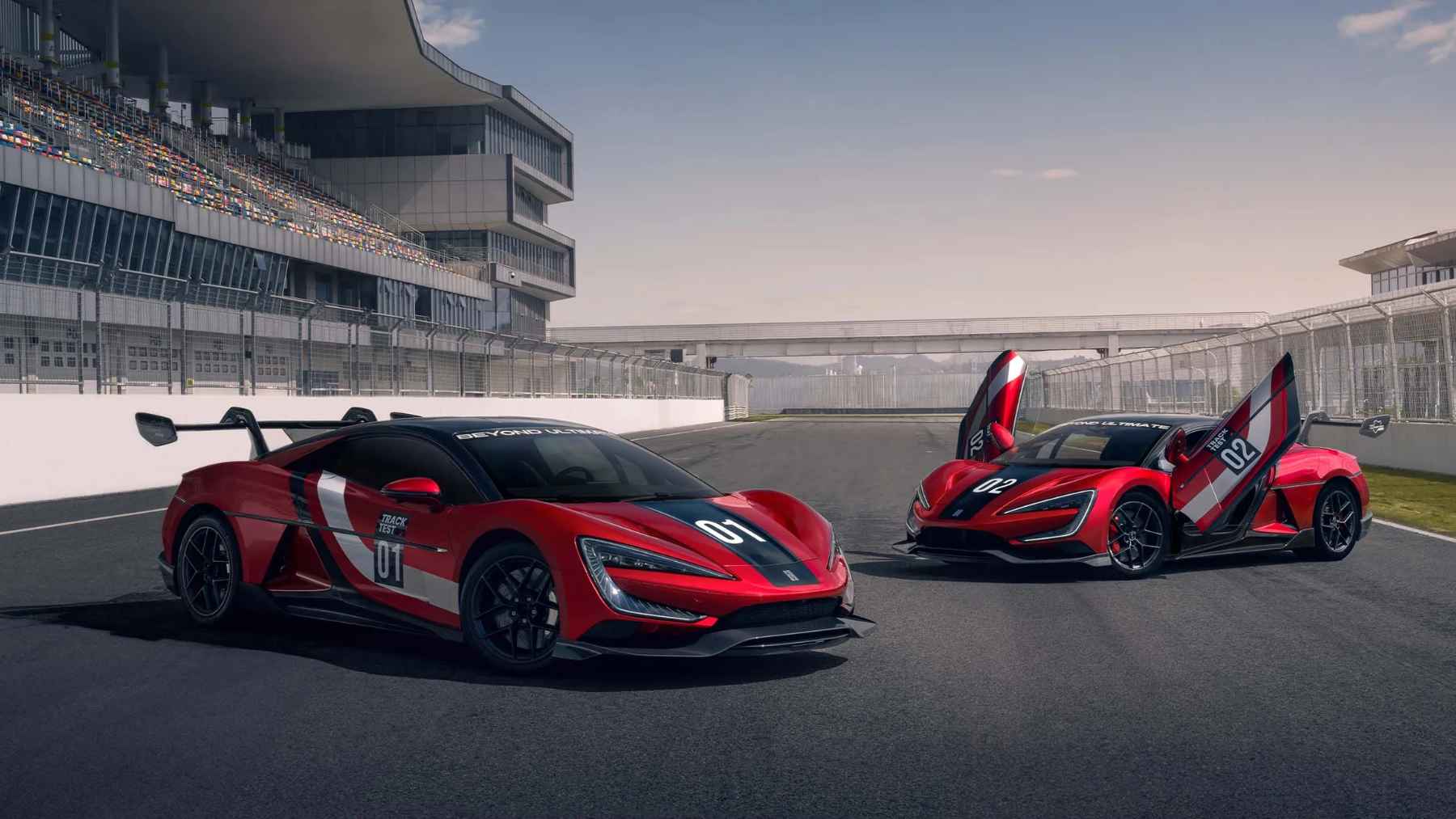
BYD is preparing to send its Yangwang U9 Xtreme back to Germany in November 2026 with one blunt goal. The nearly 3,000-horsepower electric hypercar will try to become the first production model to exceed 311 mph in a verified run.
The target looks realistic because the U9 Xtreme already reached 308.4 mph at ATP Papenburg in September 2025. Yet the remaining 2.4 mph could settle only part of the argument, since the meaning of “fastest production car” changes with the rules being used and how closely the record machine matches the cars delivered to customers.
Only 2.4 mph from history
At the 2026 Goodwood Festival of Speed, BYD Executive Vice President Stella Li backed a second attempt after the test team said the car still had unused performance. The plan is to return in November and push beyond the symbolic 311 mph line.
That may sound like a tiny improvement. At more than 300 mph, though, another 2.4 mph is nothing like nudging the cruise control on an empty highway, because aerodynamic resistance and heat become increasingly difficult to manage.
“It’s terrific that the fastest production car in the world is now electric,” Li said after the 2025 run. The new attempt suggests BYD sees 308.4 mph as a stepping stone rather than the finish line.
A shorter runway than Bugatti had
The setting makes the first result even more striking. ATP Papenburg’s high-speed oval is 7.6 miles long, but each straight measures only about 2.5 miles, leaving the car very little time to accelerate, stabilize, and slow down safely.
Bugatti’s Chiron Super Sport 300+reached 304.773 mph in 2019 on a 5.5-mile straight at Ehra-Lessien. BYD beat that peak figure on a much shorter straight, and the U9 Xtreme team reportedly believed there was still performance left before the braking point.
The record has an asterisk
BYD has published 308.4 mph as a peak top speed, just as Bugatti published its earlier 304.773 mph result. That makes the U9 Xtreme the faster car under that like-for-like comparison, but it is not the same procedure traditionally used for an undisputed production-car speed record.
A two-way average requires a car to run in opposite directions so wind and road gradient have less influence on the result. SSC North America’s Tuatara completed that test at an average of 282.9 mph, using northbound and southbound passes measured by Racelogic.
That does not make BYD’s speed less real. It means two different scoreboards are often being treated as one, which is why a 311 mph peak run would be historic without ending every argument.
What makes the U9 Xtreme so fast
The U9 Xtreme uses four independent electric motors, one for each wheel, with total output of nearly 3,000 horsepower. Its 1,200-volt electrical architecture, high-discharge lithium iron phosphate Blade Battery, and motors capable of turning at 30,000 rpm are built to release enormous power in a very short window.
The four-motor layout allows software to adjust the torque sent to each wheel without relying on a conventional mechanical differential to divide the power. BYD also added semi-slick tires and recalibrated its DiSus-X suspension to cope with loads that ordinary road cars will never encounter.
Heat is the quiet enemy here. For its Nürburgring program, Yangwang redesigned the cooling system and fitted titanium-alloy carbon-ceramic brakes, showing that the challenge is not producing power but keeping the car controllable when the battery, motors, tires, and brakes are all under severe stress.
Is it truly a production car
BYD says the U9 Xtreme is available to customers and will be limited to no more than 30 units. The production version was presented in April 2026 with a reported price above $2.9 million, putting it in a market occupied by collectors rather than everyday EV buyers.
A production run of 30 cars is extremely small, but rarity alone does not turn a vehicle into a prototype. The more important test is whether customer cars receive the same powertrain, aerodynamics, battery software, tires, and speed capability as the machine used for the record.

That question deserves scrutiny because record cars often need safety equipment and careful setup for a particular track. Until delivered examples are independently tested, it is reasonable to describe the U9 Xtreme as a limited-production hypercar while keeping some distance from BYD’s broader marketing claim.
Straight-line speed is not everything
The U9 Xtreme is more than a one-trick drag machine. It completed the 12.94-mile Nürburgring Nordschleife in 6 minutes and 59.157 seconds, becoming the first car in its electric super sports class to break seven minutes.
Still, the wider comparison adds perspective. The Mercedes-AMG ONE has completed the circuit in 6 minutes and 29.090 seconds, while the 518-horsepower Porsche 911 GT3 RS recorded 6 minutes and 49.328 seconds.
So, nearly 3,000 horsepower does not automatically make the Yangwang the world’s best cornering or braking car. A top-speed run tests power, aerodynamics, stability, and nerve, while a full lap asks the entire vehicle to perform repeatedly through bumps, elevation changes, and 73 corners.
A green headline with limits
The U9 Xtreme produces no tailpipe emissions, but a $2.9 million hypercar built in a run of 30 will not transform transportation by itself. The U.S. Environmental Protection Agency notes that EVs typically have a smaller carbon footprint than gasoline cars, although electricity generation and battery manufacturing still matter.
The more meaningful environmental payoff would come if its 1,200-volt electronics, battery cooling, motor control, and power-management lessons reach ordinary electric cars. A 311 mph record is the showroom poster, but the real value would arrive later in quieter, more efficient vehicles parked outside schools, offices, and grocery stores.
Whether Yangwang clears 311 mph or falls just short, the November run will test more than velocity.
The statement on the U9 Xtreme was published on BYD U.K. Media.