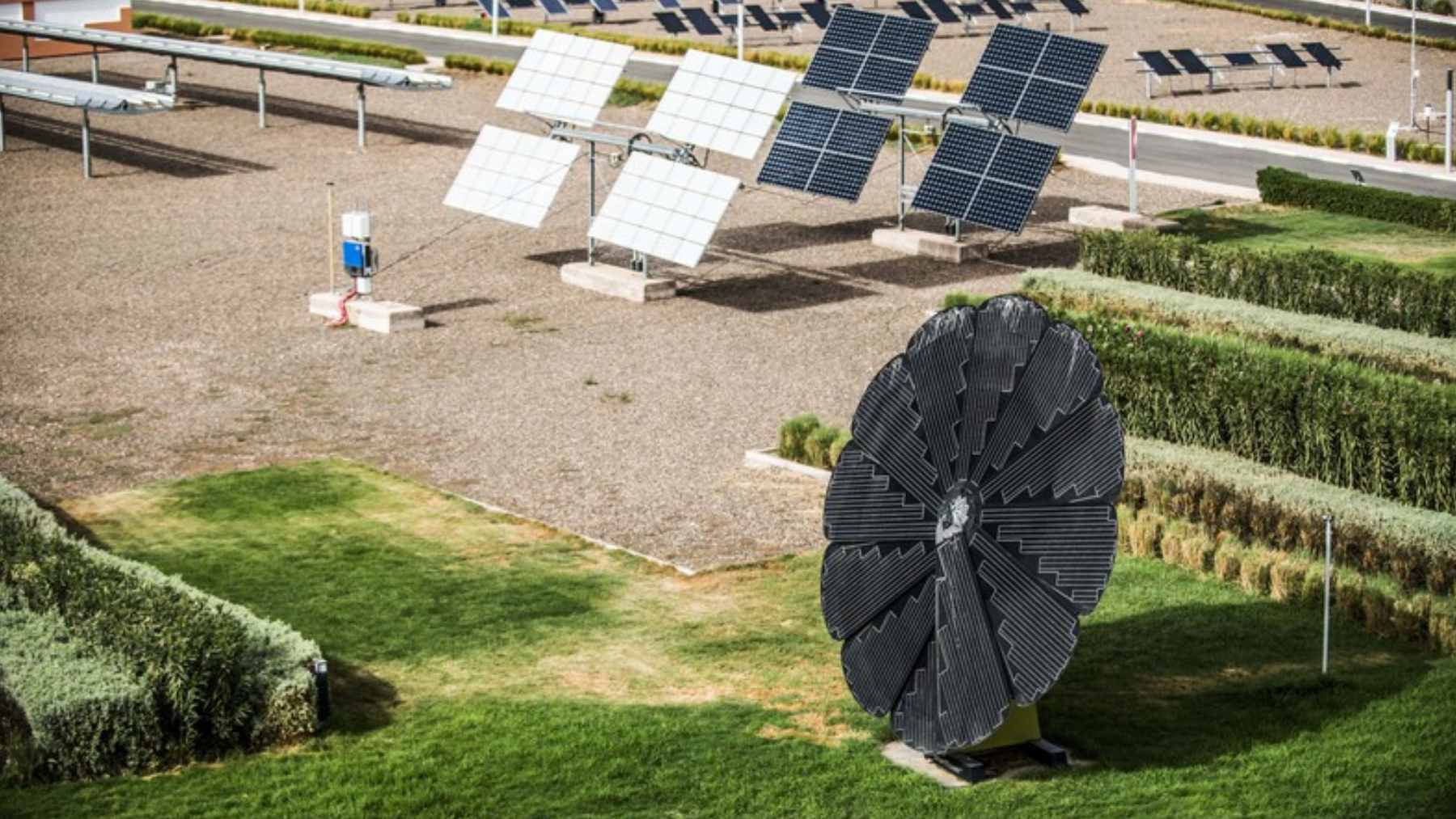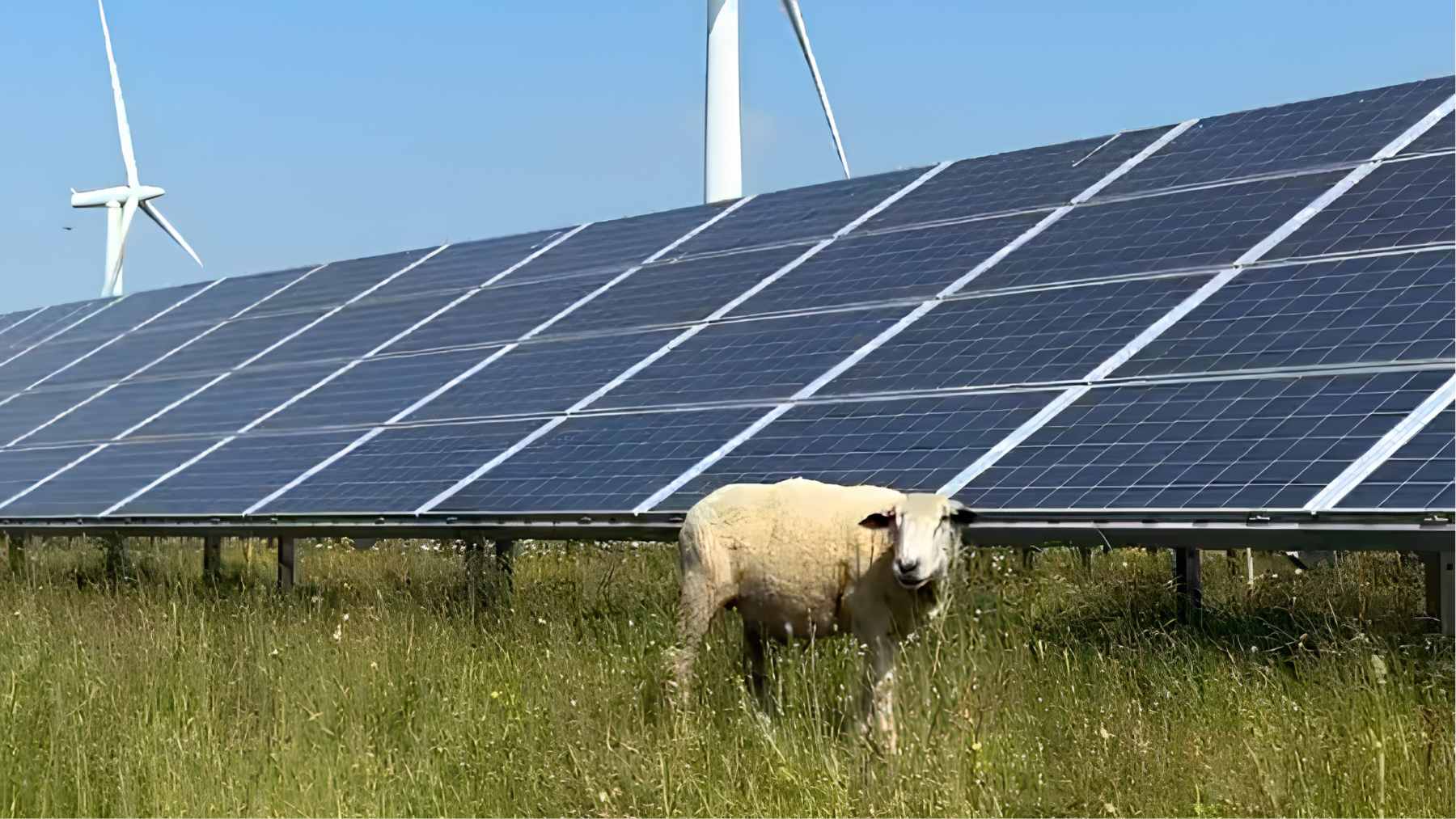
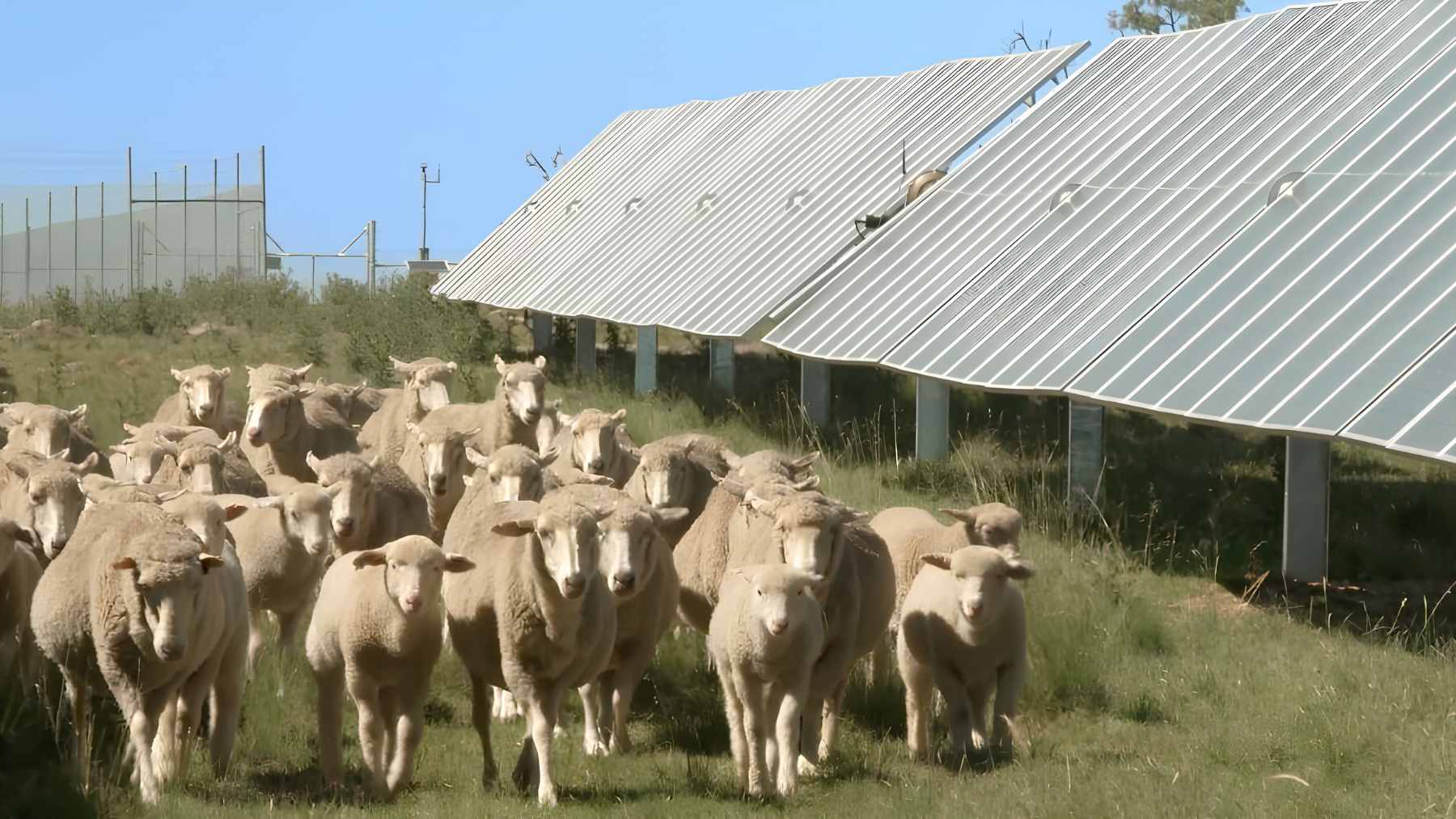
A flock of roughly 40 Cotswold and Lincoln sheep is doing far more than trimming grass at Westmill Solar on the Oxfordshire and Wiltshire border in southern England. The animals graze among more than 20,000 panels, keep dominant plants in check, and use the arrays as shelter from wind and rain.
The result is a practical lesson for the solar industry. Clean power sites do not automatically become nature reserves, but Westmill shows that when panel design, grazing schedules, and habitat management are planned together, the same 30 acres can generate electricity, support livestock, and create better conditions for wildlife.
One field doing two jobs
Westmill is an example of “agrivoltaics”, which means producing solar electricity and agricultural goods on the same land. Its 30-acre solar park generates about 4.5 gigawatt-hours a year, enough electricity on average for roughly 1,600 homes, while avoiding about 1,820 U.S. tons of carbon dioxide annually when it displaces gas-fired generation.
Why bring sheep into the equation? Solar sites need vegetation kept low enough to avoid shading equipment and blocking maintenance access, and sheep can reach areas beneath panels that are awkward for machinery. They turn that plant growth into food while reducing the need for repeated mowing or chemical control.
Why winter grazing matters
Westmill did not simply fence off a solar array and release a flock. After construction, the site was seeded with a mixture of local plants, and regular grazing now helps prevent one vigorous species from crowding out more delicate wildflowers.
The project describes this as “intermediate disturbance.” In practical terms, carefully managed feeding pressure can keep the plant community from becoming a one-species carpet, but timing and intensity matter. Too many animals for too long could produce the opposite result.
That is why the sheep graze mainly in winter, when they are less likely to disturb nesting birds and when important pollinator plants are not flowering. Claims about “soil regeneration” should still be handled carefully, since the published material cited by Westmill does not isolate the flock as the sole cause of soil recovery.
The stronger conclusion is that varied vegetation, targeted grazing, and limited intervention can support a healthier soil food web than single-purpose land management.
The panels became shelter
The arrangement also appears to help the animals. Westmill says shepherdess Vera Hoenen has seen the sheep use the panels for protection from the weather, while the wider variety of plants helps them “gain weight more effectively.” Older sheep also have access to different plant species that may be easier on worn teeth and jaws.
That observation fits a growing body of agrivoltaic research. An Oregon State University study found that lambs in solar pastures gained about as much weight as lambs in open pastures, despite lower overall forage volume, because the shaded forage was higher in quality.
A California study also found that sheep with access to panels spent more time grazing and had forage with higher digestibility and protein content.
Still, there is no universal stocking formula. A 2025 New York study found that about three sheep per acre best balanced flock health and vegetation control at its particular solar site, while panel shade reduced forage yield directly underneath the arrays. Different soils, climates, breeds, and panel layouts will change that calculation.
Biodiversity is not automatic
A row of solar panels does not heal an ecosystem by itself. Outcomes depend on the seed mix, grazing pressure, seasonal timing, water access, fencing, and whether operators monitor what is actually growing and living on the site. Recent research still identifies important knowledge gaps involving long-term soil effects, native plant communities, parasites, and animal welfare.
Westmill does have encouraging evidence beyond its sheep. A study published in April 2026 documented five Corn Bunting nests inside the solar park between 2019 and 2023, plus 36 nests within about 0.6 miles of its boundary.
The researchers described it as the first published evidence of a ground-nesting farmland bird nesting at a UK solar park, while birds observed inside spent the largest share of their time foraging.
But the authors also issued an important warning. Westmill has an unusually open design and low-intervention management, so its results should not be treated as proof that every solar development will benefit birds. More sites need to be studied.
Why energy companies are watching
For solar operators, the appeal is partly environmental and partly commercial. Sheep can provide vegetation management without sending mowers repeatedly between electrical equipment, while grazing contracts can give flock owners access to land and an additional source of revenue. That makes the field work two jobs instead of one.
The engineering choice matters too. Westmill says its panels were selected with sheep grazing in mind, and the shepherdess later reduced extra protections after learning how sturdy the structures were. Planning for animals, access, water, fencing, and seasonal rotations from the start is likely easier than forcing livestock into a site designed only for machines.
Forty sheep will not solve every conflict over solar land, and poorly managed grazing can create new problems. But Westmill makes a convincing case that clean energy infrastructure can do more than occupy a field when farmers, ecologists, and engineers design the site as one system.
The official project statement was published on Westmill Energy.