Norway has moved one of Europe’s boldest maritime projects closer to construction. The Norwegian Coastal Administration has awarded AF Gruppen the design-build contract for the Stad Ship Tunnel, a 1.1-mile passage through the Stad Peninsula that would let ships avoid the dangerous Stadhavet Sea on Norway’s west coast.
At first glance, it sounds like pure engineering spectacle. But the real story is bigger than that. Norway is betting that a safer shortcut through solid rock can protect seafood exports, reduce delays, lower fuel use in some conditions, and make coastal shipping more reliable, even as the price tag has climbed to about $879 million under Parliament’s latest cost framework.
A tunnel for ships
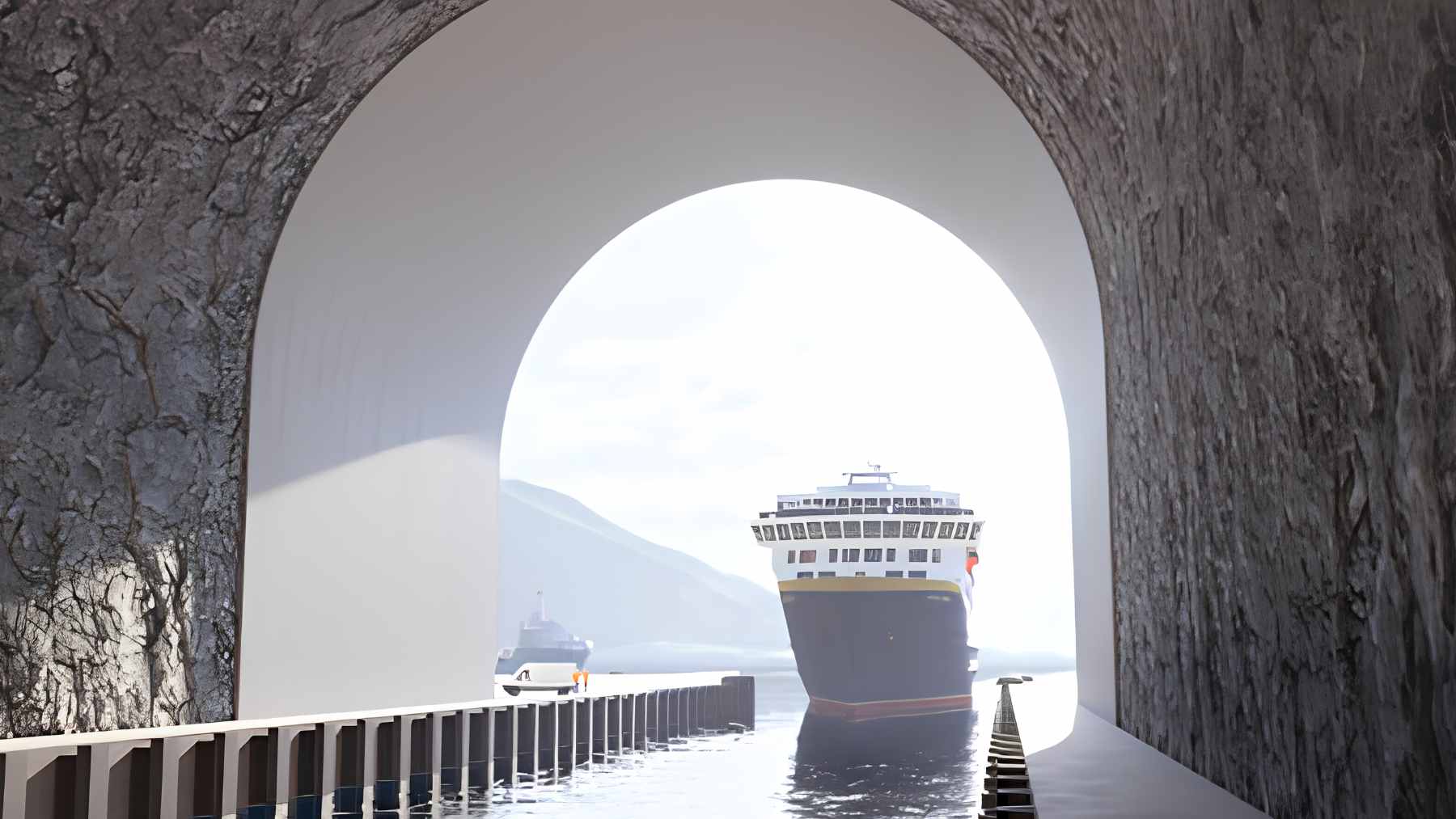
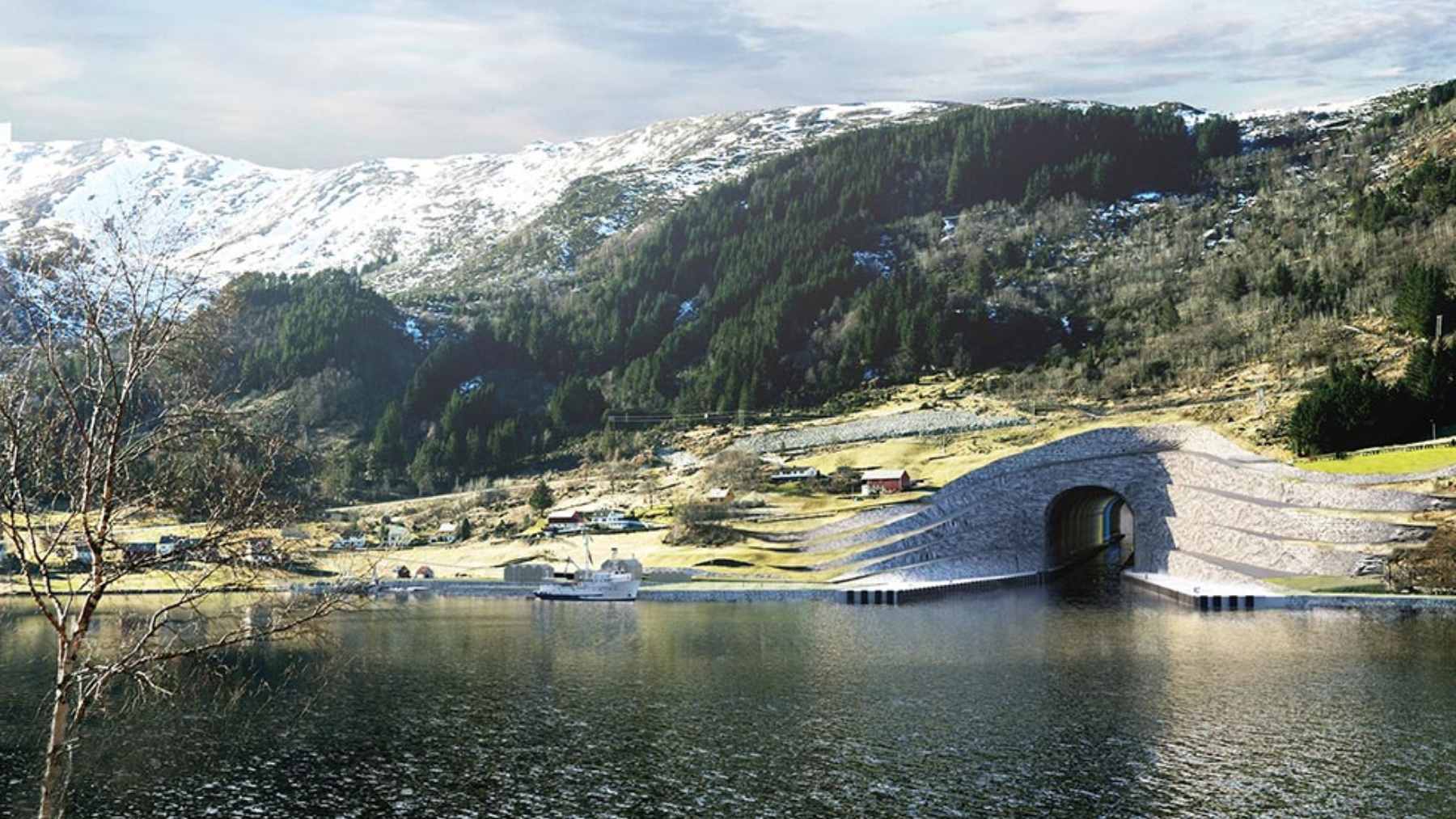
The tunnel will connect Kjødepollen in Vanylvsfjorden with Moldefjorden near Selje, cutting through the narrowest part of the Stad Peninsula. Including its entrance areas, the full route will stretch about 1.4 miles from one side to the other.
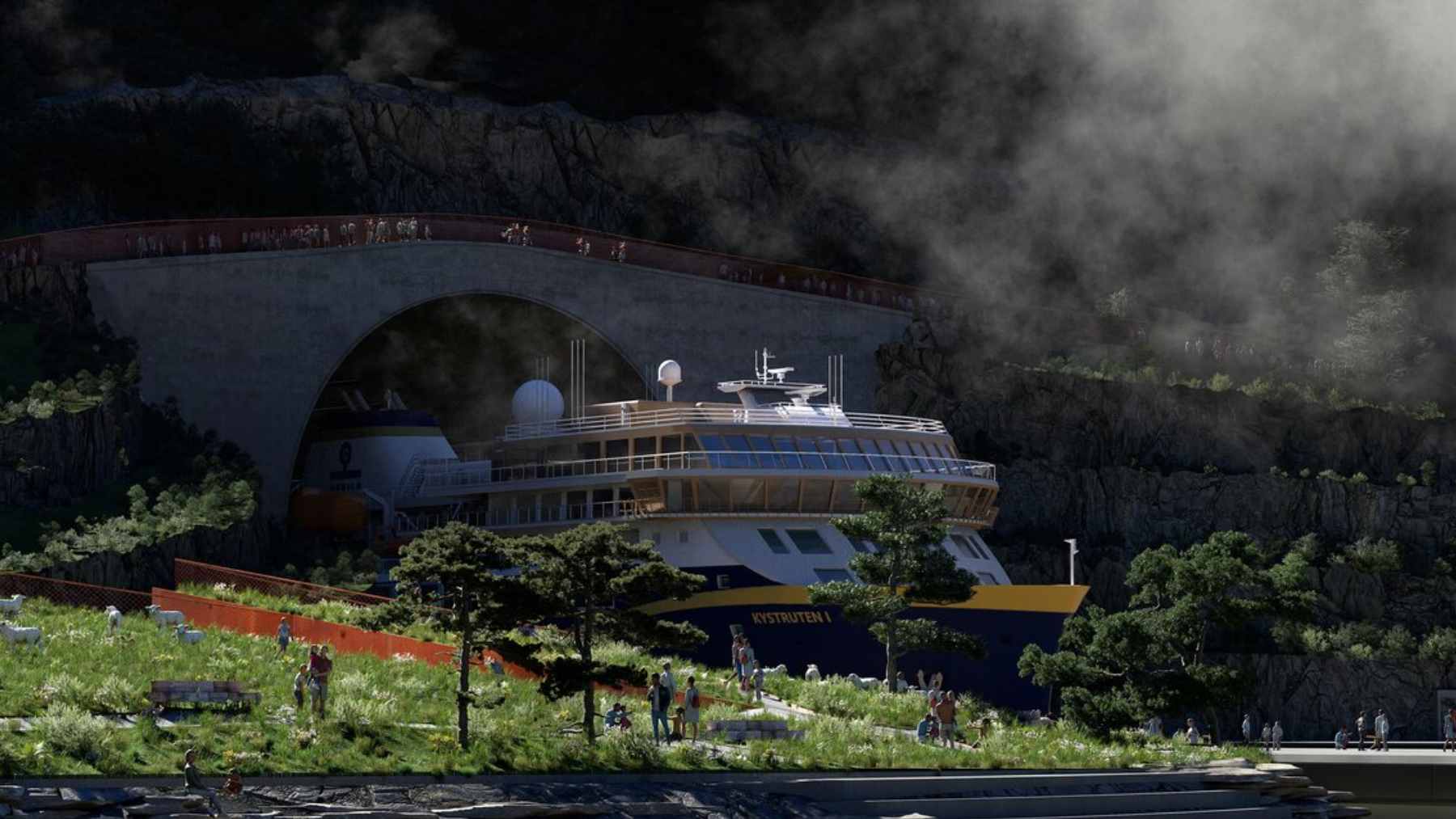
This will not be a narrow canal tucked under a hillside. The opening is planned to stand about 164 feet high and 118 feet wide, with about 108 feet of clearance from the sea surface to the ceiling. That is large enough for vessels up to the size of Norway’s coastal route ships, including Hurtigruten and Kystruten.
In practical terms, that means ferries, cargo vessels, fishing boats, aquaculture ships, and many coastal cruise vessels could sail through a mountain instead of rounding Stad in open water. It is a simple idea, but not a small one.
Why Stad matters
The waters around Stad are feared for a reason. Project materials describe Stadhavet as the most weather-exposed and dangerous sea stretch along Norway’s coast, where wind, currents, and seabed shape can create highly unpredictable waves.
Kråkenes lighthouse, just south of Stad, has recorded many years with more than 100 storm days. Waves can reach about 98 feet and arrive from several directions at once, which is exactly the kind of sea that makes captains wait, sometimes for days, before moving on.
That waiting time has a very real business cost. Fresh fish does not care about weather delays. In project materials, Tore O. Sandvik warned that exporters “cannot risk the salmon getting stuck at Stad in bad weather,” joking that it could arrive as fermented fish rather than sushi.
The climate promise
The environmental argument is straightforward. If ships spend less time fighting rough seas or waiting for a safe weather window, they can burn less fuel. That’s the compass behind the project’s green pitch.
A report cited by the Stad Ship Tunnel project compared the current outside route with a simulated route through the tunnel under normal winter wave conditions. It projected fuel reductions of up to 60 percent for ships around 131 feet long, and about 30 percent for ships around 459 feet long.
Still, there is an important caveat. Those savings are projections, not measured operating results, because the tunnel has not opened yet. The construction itself will also require blasting, dredging, transport, and heavy equipment, so the environmental case depends largely on how often ships use the route and how much traffic shifts from roads and rail to sea.
A huge build
AF Gruppen’s design-build contract is worth about $573 million before value-added tax. The company will handle detailed design and construction, including the tunnel, approach structures, commercial areas near both portals, fenders, technical systems, rock support, excavated rock transport, and dredging at Saltasundet near Selje.
The excavation will be closer to carving a giant mountain hall than drilling a typical road tunnel. Kystverket says about 106 million cubic feet of solid rock will be removed, equal to about 191 million cubic feet of blasted rock, or roughly 750,000 truckloads. Much of it is expected to be transported by barge.
Picture a mountain being hollowed out just enough for a ship to glide through. That is the scale here.
Politics got rough too
The sea has not been the only obstacle. In May 2026, Norway’s government proposed stopping the project, saying the cost had risen too far and that the benefits did not justify the expense. Its assessment put the project’s negative net benefit at about $604 million, with costs nearly four times higher than the estimated gains.
Then Parliament brought it back. On June 19, lawmakers approved a new cost framework of about $879 million, giving the Coastal Administration authority to move ahead with the project.
That tension is what makes the Stad Ship Tunnel more than a novelty. Supporters see safety, seafood, tourism, and cleaner shipping. Critics see a very expensive shortcut. To a large extent, both views can be true at the same time.
What happens next
The contract is scheduled to be signed in August, after a short standstill period. Before the main excavation begins, the parties will enter a collaboration phase to settle working methods, design details, and early site challenges.
“The major construction works will not begin until 2027,” project manager Harald Inge Johnsen said. Preparatory work may include site offices, accommodation, road upgrades, temporary access roads, water pipelines, and demolition near the tunnel area.
Once operating, vessels are expected to receive passage slots from a traffic center, somewhat like aircraft. Some vessels could pass through at about 9 mph, with a trip through the tunnel taking roughly 10 minutes. Not bad for crossing a mountain by sea.
Norway’s risky bet
If the project works as planned, the Stad Ship Tunnel will be less about spectacle and more about routine. Ships that now wait outside one of Europe’s roughest coastal crossings could instead move through protected water, keeping seafood fresher and schedules tighter.
The ecological promise is not automatic, and experts will still need to watch the real-world numbers once ships begin using the route. But if the fuel savings hold for regular traffic, Norway may turn a mountain into a cleaner maritime shortcut.
The official statement was published on Kystverket.